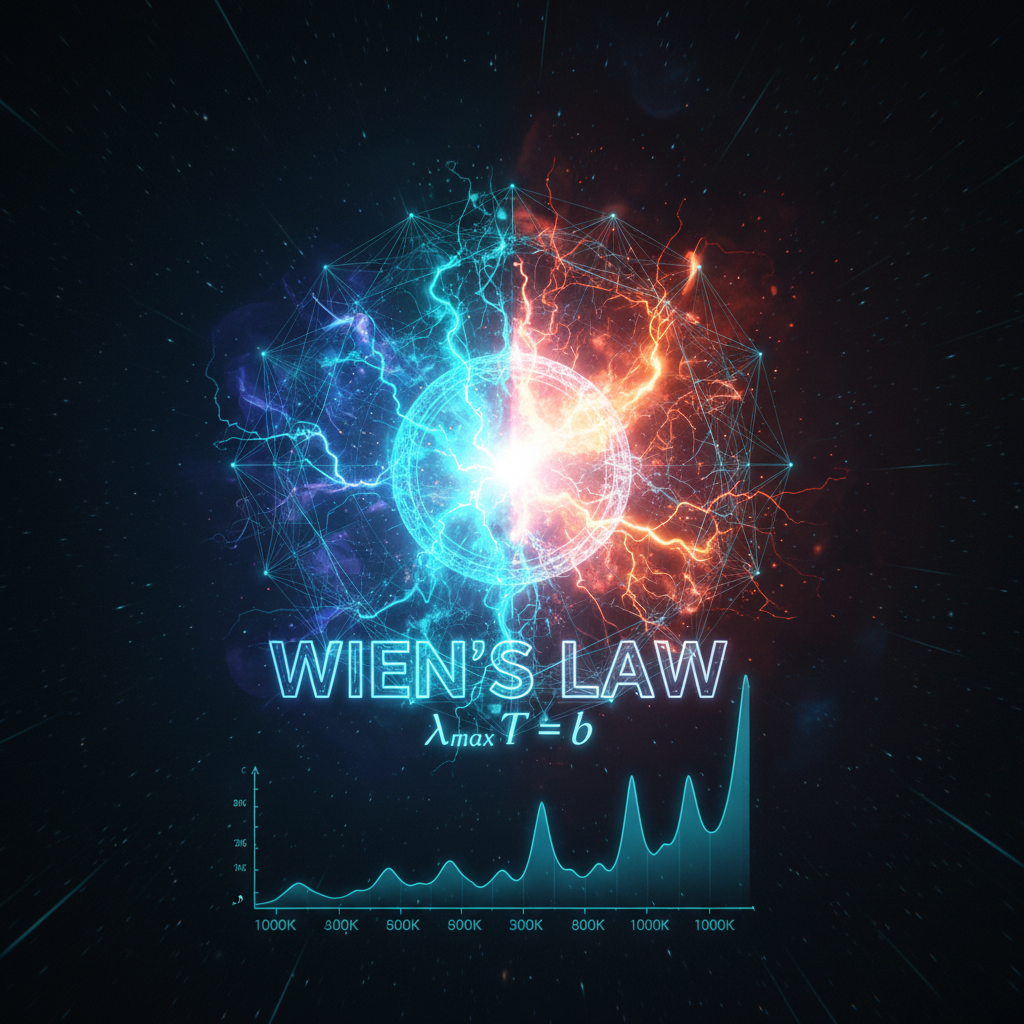
You've seen it. That blue glow in the dark room at 2 AM, your face lit by the cold fire of your screen. Not warm like candlelight. Not yellow like the sun. Blue. Always blue.
There's physics here. Wien's Law tells us that hot objects emit light at specific wavelengths, and the hotter they burn, the shorter—bluer—those wavelengths become. A candle flame peaks in infrared and yellow. The sun in green-yellow. A welding arc in blue-white. And your screen? Your screen has been engineered to burn at exactly the temperature that keeps you awake.
The displacement of comfort
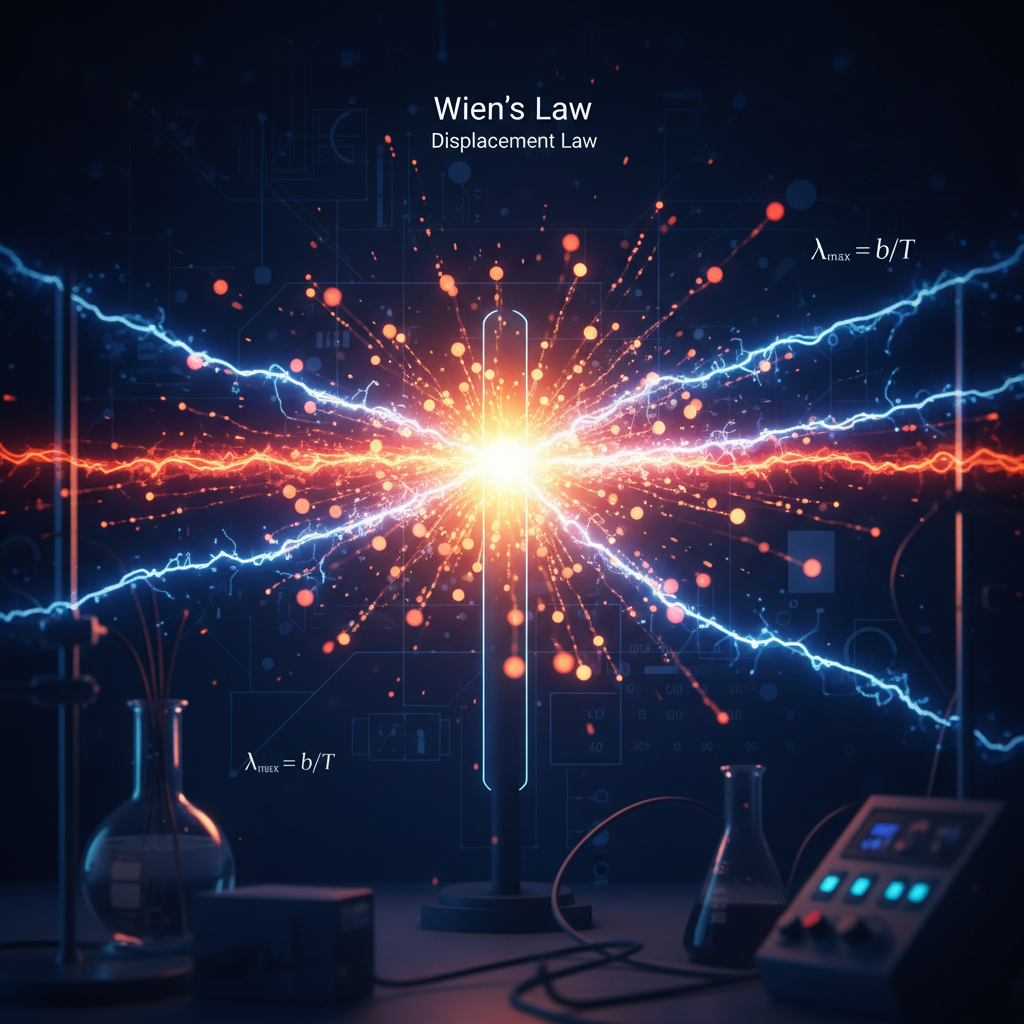
Wien's displacement law is elegant in its simplicity: λmax = b/T. The peak wavelength of radiation is inversely proportional to temperature. As temperature increases, the wavelength decreases. The constant b is Wien's displacement constant, approximately 2.898 × 10⁻³ meter-kelvin.
This is why stars have colors. Red giants are cool, around 3,000 Kelvin, their light peaking in the red. Our sun sits at 5,778 K, peaking in green but appearing yellow-white to our eyes. Blue supergiants burn at 30,000 K or more, their fury concentrated in the blue and ultraviolet.
The relationship is ironclad. You cannot have a cool object emit primarily blue light through blackbody radiation. Physics forbids it. But LED screens don't care about blackbody radiation. They care about your circadian rhythm.
Engineering alertness
Your screen emits light with a color temperature between 6,000 and 9,000 Kelvin, mimicking daylight or hotter. But it's not hot. It's room temperature. The blue wavelengths are selected, engineered, optimized. Not by thermodynamics but by attention metrics.
Blue light suppresses melatonin production. This is documented, measured, weaponized. The platforms discovered that the color temperature of a screen correlates with engagement time. Warmer screens feel sleepy, cozy, finite. Cooler screens feel alert, urgent, infinite.
So they tuned the temperature. Not the physical temperature—the spectral distribution. They made your screen burn blue like a star that would vaporize Earth, but you can hold it in your hand. Wien's Law describes stars. Your phone pretends to be one.
Night mode, blue light filters, warm shift—these are concessions, damage control. The default state is engineered wakefulness. The baseline is a star.
The temperature of content
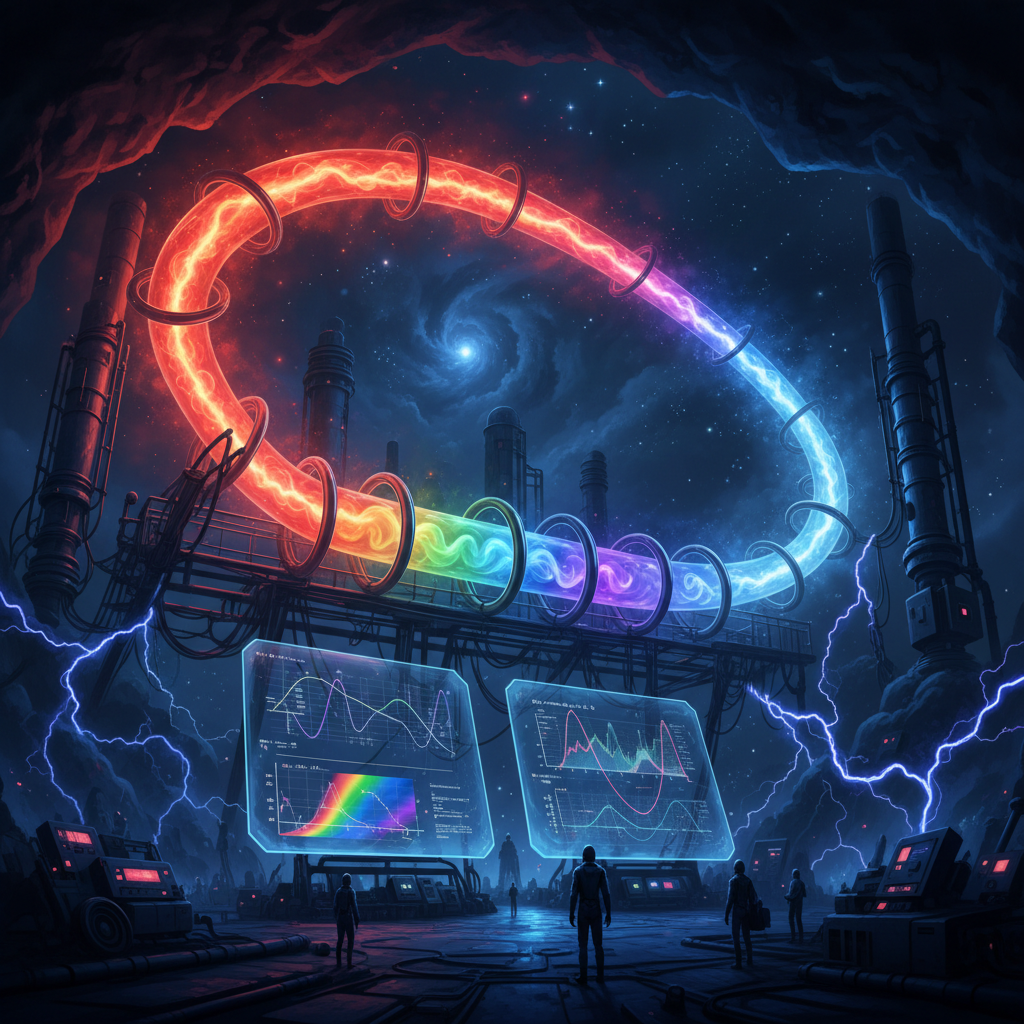
But Wien's Law applies to more than literal light. Think of it as a metaphor for intensity and wavelength of information. The hotter the content burns—the more outrageous, urgent, inflammatory—the shorter its wavelength, the sharper its peak, the bluer its light.
Calm, thoughtful content has a long wavelength. It radiates in the infrared of deep reading, slow consideration. You can't see it in your peripheral vision. It doesn't trigger alerts. The algorithm measures its temperature as cool, and cool content doesn't drive engagement.
Hot content—outrage, scandal, fear, tribal signaling—peaks in the blue. Short wavelength. High frequency. Maximum visibility. The algorithm doesn't need to understand Wien's Law to implement it. It just needs to measure which temperature keeps you scrolling, and it optimizes for heat.
Every platform becomes a furnace, burning hotter to emit bluer light, to capture more attention. The temperature keeps rising. You're staring into a supergiant that exists only in information space.
What you radiate back
Wien's Law works both ways. You're not just absorbing blue light—you're emitting it. Every interaction, every click, every pause is a photon of data. And the temperature of your emissions is being measured.
When you're angry, you burn hot. Short wavelengths. High-energy interactions. Shares, comments, quote-tweets. The platform measures your color temperature at 10,000 K and shows you more fuel. When you're calm, you radiate in the infrared. Long wavelengths. Low energy. The algorithm can barely see you.
You become trained to burn hotter. To emit in the blue. Because that's the only wavelength the system is optimized to detect. Cool, thoughtful responses are redshifted into invisibility. The only way to be seen is to be hot.
This is the feedback loop. Blue screens make you emit blue data. Blue data trains the algorithm to show you hotter content. Hotter content makes you burn brighter. The system reaches thermal equilibrium at the maximum temperature you can sustain before burnout.
Cooling down
Wien's Law is descriptive, not prescriptive. It tells you what wavelength a hot object emits. It doesn't tell you the object must be hot.
You can choose to radiate in the infrared. Long wavelengths. Invisible to the algorithm but visible to other humans willing to look in that spectrum. You can refuse to burn at the temperature the platform demands. You can turn down the heat.
The screen will still glow blue. The algorithm will still optimize for temperature. But you can recognize what's happening. You can see that the blue light isn't natural, isn't necessary, isn't the only possible wavelength of human attention.
Somewhere between the red giant's slow burn and the blue supergiant's fury, there's a temperature that's actually human. Not engineered for maximum brightness. Not optimized for visibility to surveillance systems. Just the natural spectrum of thought, radiating at whatever wavelength it needs to.
Wien's Law will still apply. But you get to choose your temperature.
Data emitted: ~1100 words on spectral distribution and the temperature of attention. Wavelength: 450-495 nm. Your screen still glows blue. You're still reading.
Data emitted: 1,100 words • 6.5KB • 5-minute read