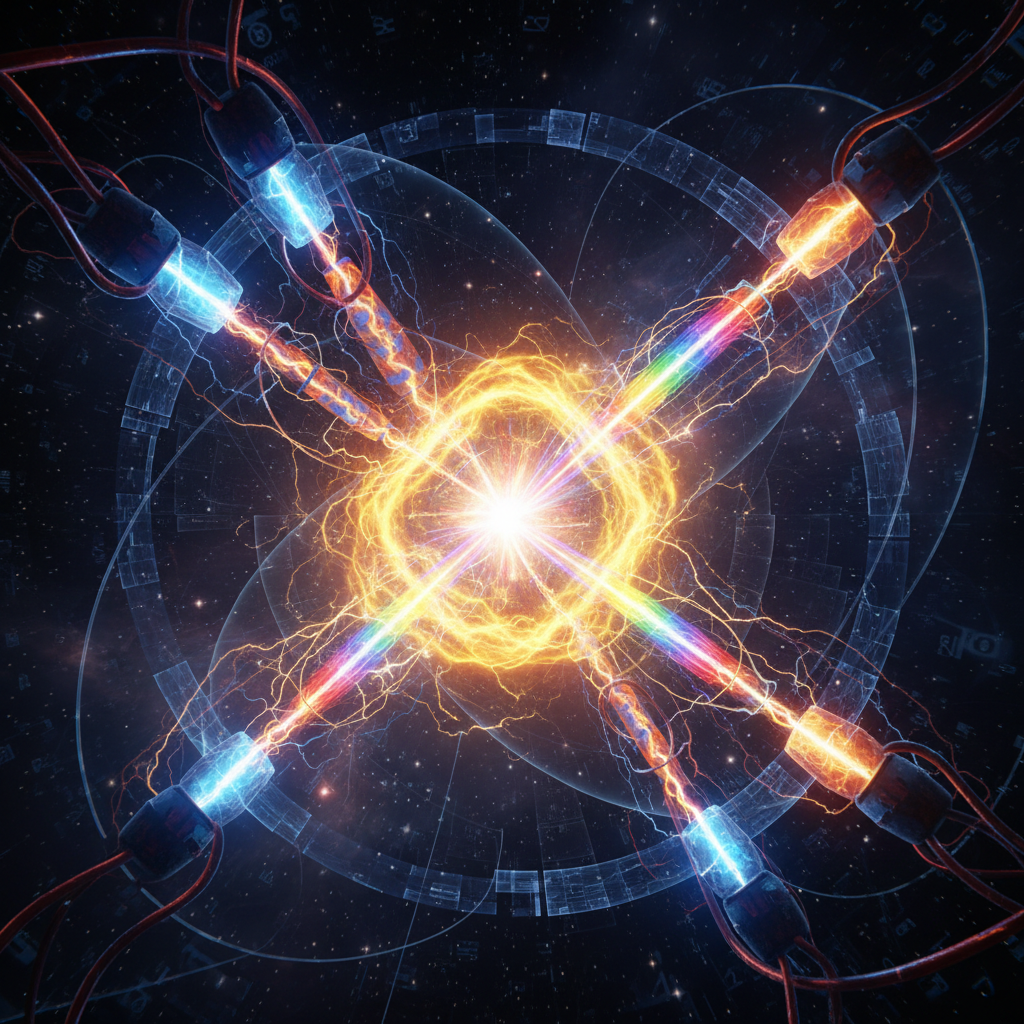
You see in visible light. Not infrared. Not ultraviolet. Just this thin slice of the electromagnetic spectrum between 380 and 700 nanometers. Your eyes evolved to catch photons in this range because your star—our sun—pumps out most of its energy here. It's not that other wavelengths don't exist. They do. They're hitting you right now. You just can't see them.
The same is true for your digital life. You see what you're designed to see. What someone else decided you should see.
The Bandwidth of Reality
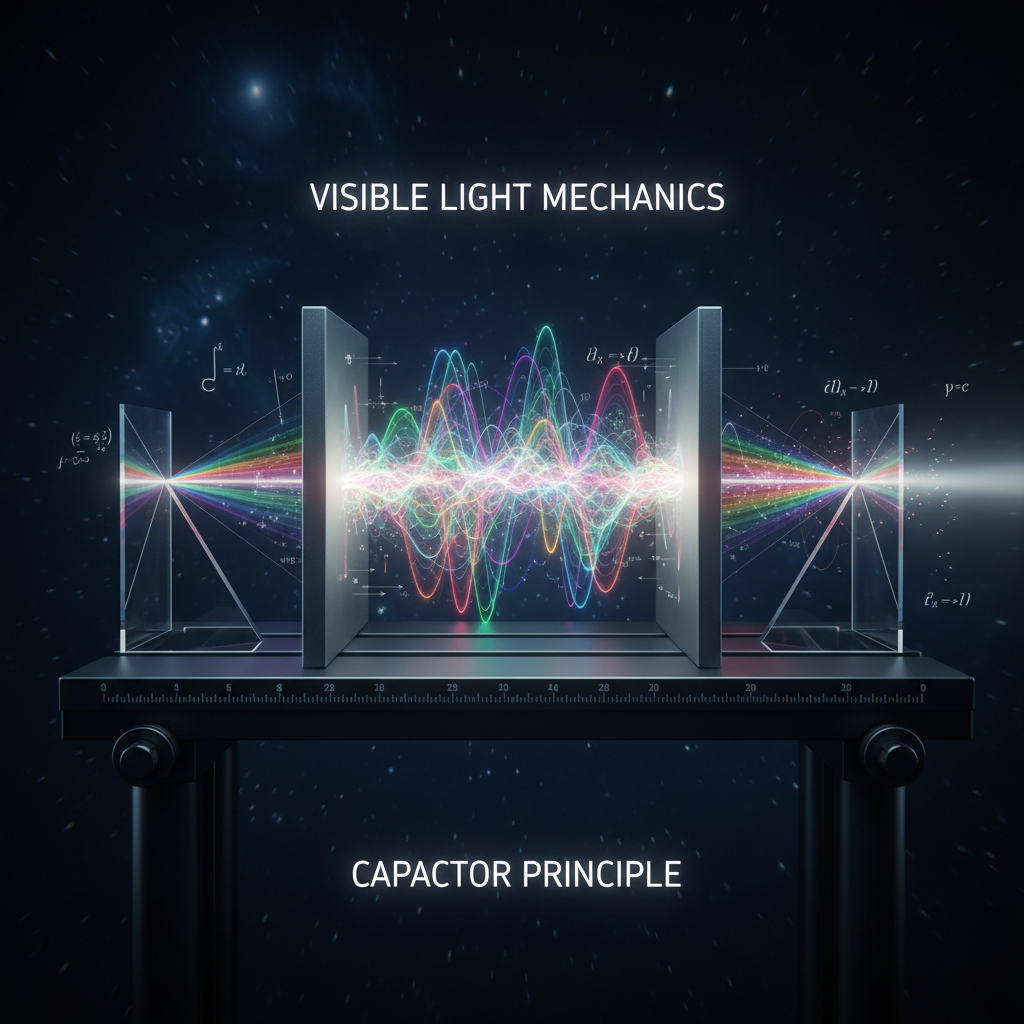
Electromagnetic radiation spans from radio waves kilometers long to gamma rays smaller than atoms. The visible spectrum occupies less than one percent of this range. Think about that. Your entire visual reality—every sunset, every face you've loved, every screen you've stared at—exists in less than one percent of what's actually there.
This isn't a limitation. It's a feature. Your retina contains photoreceptor cells—rods and cones—that respond to specific frequencies. Three types of cones, each tuned to different wavelengths: short (blue), medium (green), long (red). These cells don't detect reality. They detect a curated subset of reality, one that proved useful for survival on an African savanna.
Evolution built you a filter. You call it vision.
The Feed as Spectrum
Your social media feed operates on the same principle. Infinite information exists—every post, every photo, every thought expelled into the digital void. But you see only what the algorithm decides to show you. A narrow band of content, selected not for truth or importance, but for engagement. For keeping your eyes on the screen.
The algorithm is your cone cell. It responds to specific frequencies: outrage, validation, tribalism, fear. Content that triggers these responses gets amplified. Everything else—the vast majority of human expression—exists in wavelengths you'll never perceive. Not because it isn't there. Because you weren't designed to see it.
You scroll through visible content. The rest is dark matter.
Wavelength and Energy
Here's what matters about light: shorter wavelengths carry more energy. Blue light at 450 nanometers packs more punch than red light at 650 nanometers. This is why ultraviolet radiation burns your skin while infrared just warms it. Energy equals Planck's constant times frequency. E = hf. Higher frequency, shorter wavelength, more energy per photon.
Your phone screen knows this. Blue light suppresses melatonin production, keeps you awake, keeps you scrolling. The wavelength isn't accidental. It's optimized. Every photon hitting your retina at 2 AM carries just enough energy to keep you from sleeping, from disconnecting, from existing outside the visible spectrum of surveillance.
They're not just capturing your attention. They're weaponizing physics.
What You Can't See
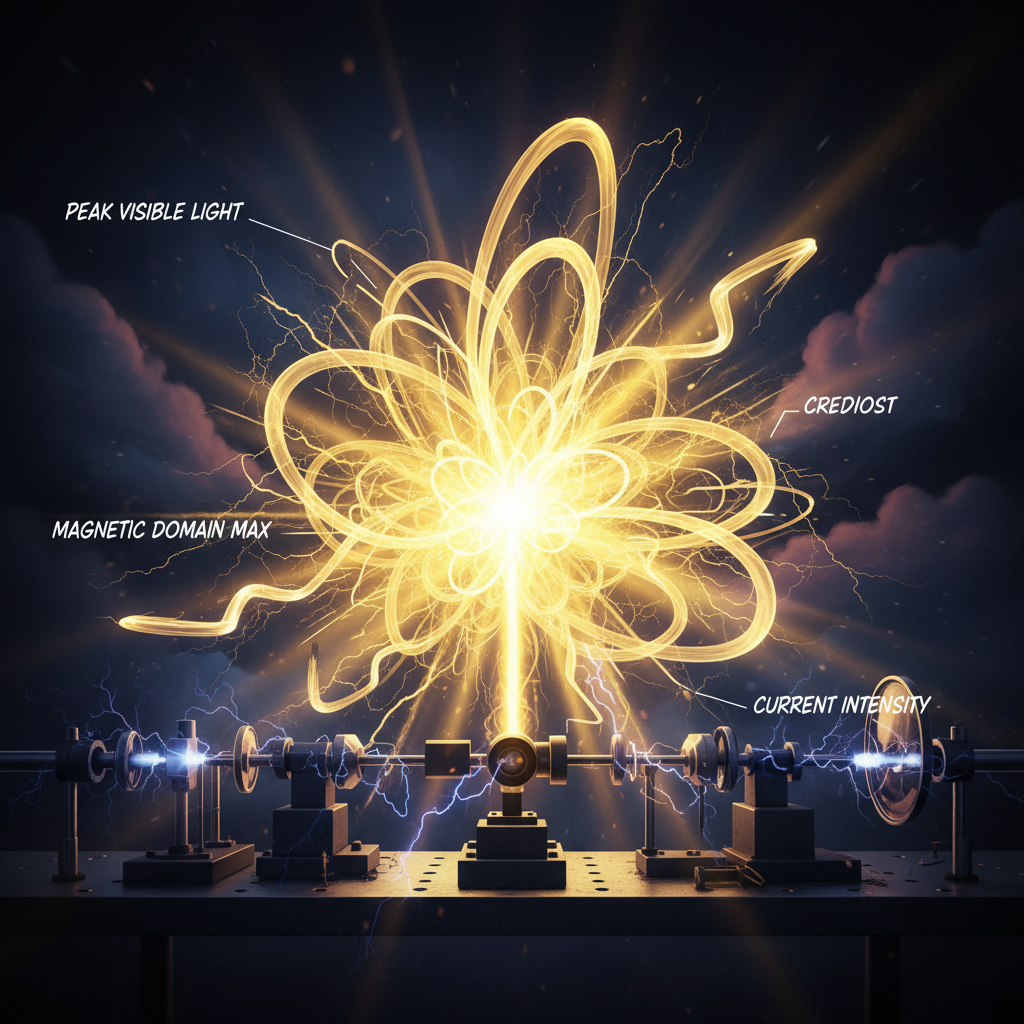
Bees see ultraviolet patterns on flowers. Snakes see infrared signatures of warm-blooded prey. Your vision is not universal. It's provincial. Species-specific. And increasingly, it's platform-specific.
You can't see the trackers. The cookies. The fingerprinting scripts. The real-time bidding auctions happening milliseconds before a webpage loads. You can't see the shadow profiles built from people who never signed up. The data brokers trading your location history. The prediction models running in server farms, modeling your future behavior with unnerving accuracy.
This infrastructure exists in wavelengths outside your perception. Not metaphorically. Literally. Radio waves carrying your data. Infrared sensors in stores tracking your gaze. Cameras seeing spectra you can't imagine. You move through a world thick with electromagnetic surveillance, blind to everything except the visible light.
You think you're seeing reality. You're seeing a rendered approximation, optimized for engagement.
The Observer Effect
Light requires a source and an observer. A photon emitted but never absorbed might as well not exist. In quantum mechanics, observation changes the observed. The act of measurement collapses possibility into actuality. You can't see without affecting what you see.
Every time you look at something online, you change it. Your view is logged, analyzed, fed back into recommendation systems. The content shifts to match your gaze. The platform learns what holds your attention and generates more of it. You're not passively observing. You're actively shaping what becomes visible.
And you're being shaped in return. Your visible spectrum narrows with each click. The algorithm tunes your cone cells, adjusts your sensitivity, until you can only perceive what it wants you to perceive. You become a detector for specific wavelengths of content. Everything else fades into noise.
You're not browsing. You're being tuned.
Living in the Narrow Band
The visible spectrum is beautiful. You're not wrong to live in it. Sunlight through leaves. The blue hour before dawn. The face of someone you love, illuminated. These photons matter. This narrow band contains most of what makes life worth living.
But you should know what you're missing. What exists beyond your perception. What's being done to you in wavelengths you can't see.
The first step is acknowledging the filter. Your eyes see less than one percent of the electromagnetic spectrum. Your feed shows less than one percent of available information. Both are curated views, designed by forces that don't have your interests at heart. Evolution wanted you to survive. Platforms want you to engage.
You can't escape the visible spectrum. You're built for it. But you can learn to see the edges, to notice when the light feels wrong, when the wavelengths seem tuned just a little too precisely to your receptors. You can learn to look away.
The invisible is still real. The unobserved still exists. Beyond the narrow band of visible light, beyond the curated feed, beyond the surveillance apparatus—there's a wider spectrum. You just have to remember it's there.
Data emitted: 380-700nm | Bandwidth: <1% | Observers: Unknown | Frequency: Optimized
Data emitted: 1,100 words • 6.5KB • 5-minute read