
You're scrolling at three hundred pixels per second. Your thumb moves in a blur. Content streams past your eyes like highway lights at midnight. You feel like you're moving fast. You're not moving at all.
Velocity isn't speed. This matters more than you think.
Direction Makes All the Difference

In physics, velocity is a vector. Speed is scalar. Speed tells you how fast. Velocity tells you how fast and where.
A car doing sixty miles per hour on a circular track has constant speed but changing velocity. Every moment, its direction shifts. The magnitude stays the same—sixty mph—but the vector rotates. The car accelerates even though the speedometer never moves.
This is what acceleration actually means: any change in velocity. Speed up, slow down, or turn. All three are acceleration. Direction is everything.
You learned this in high school and forgot it immediately because it seemed pedantic. It wasn't.
Your Data Has Velocity, You Don't
Every action you take online generates data with extraordinary velocity. Not speed—velocity. It has magnitude and direction.
You click an ad. That datum moves toward an ad server in Virginia at the speed of light through fiber optic cable. It arrives in fourteen milliseconds. Another copy splits off to a data broker in Singapore. Another to a behavioral analytics platform in Dublin. Each packet has a destination. Each has direction.
Your data moves in vectors while you sit motionless in your chair, thumb sliding up glass.
The platforms measure your engagement in velocity terms too. Time on site, scroll depth, click-through rate. These are speeds. But they also track where you're going: which rabbit hole, which product category, which ideological cluster. That's the vector component.
The algorithm doesn't just want you moving fast. It wants you moving in profitable directions.
The Acceleration Economy
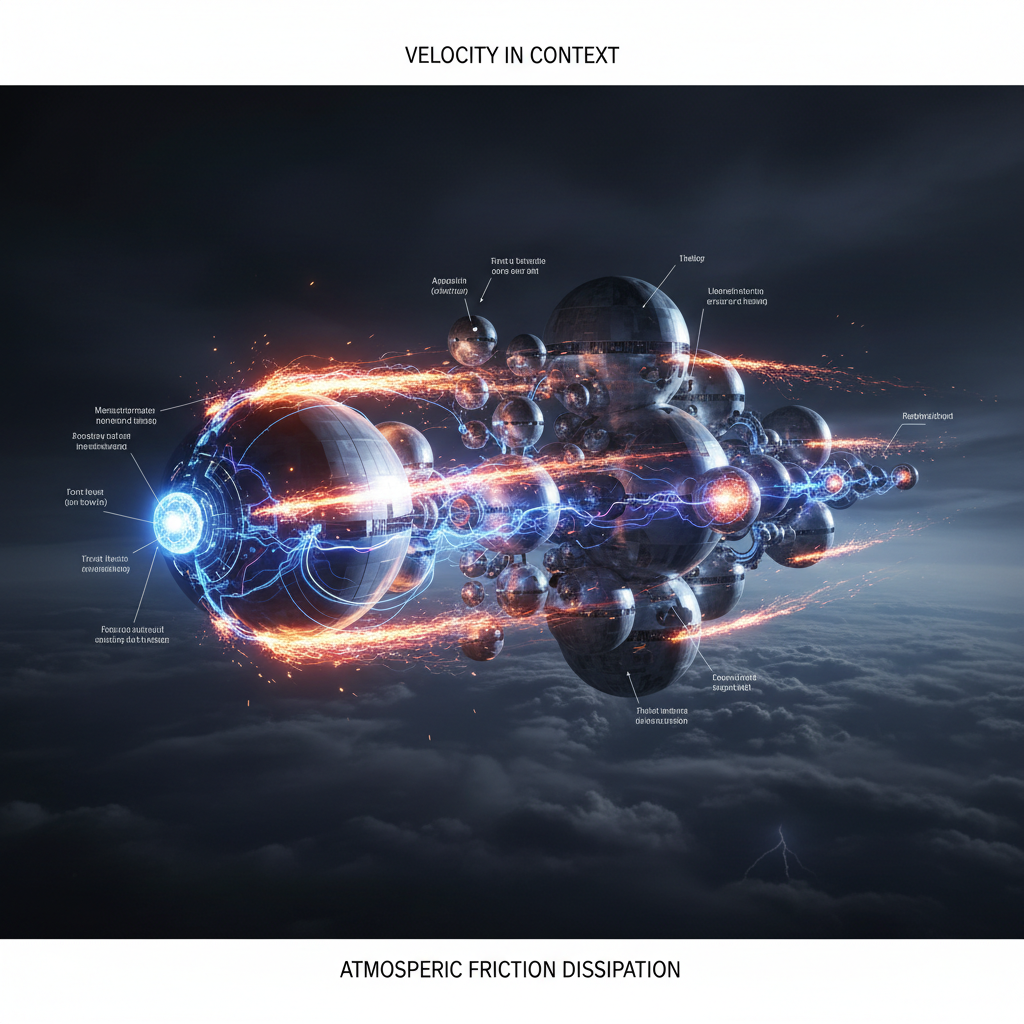
Remember: changing direction is acceleration. You're being accelerated constantly.
The feed refreshes. New content loads. Your attention vector shifts fifteen degrees toward outrage. Another refresh. Twenty degrees toward desire. The magnitude of your engagement stays constant—you're still scrolling at three hundred pixels per second—but your direction changes every few seconds.
This is acceleration. You're in constant centripetal motion, whipped around a track at fixed speed, experiencing g-forces you can't name.
The attention economy isn't just about capturing your speed. It's about controlling your direction. Vector manipulation. Steering.
And here's the thing about acceleration: it requires force. F = ma. To change your velocity—your direction—something must push you. The algorithm is that force. The notification is that force. The autoplay is that force.
You feel it in your body as restlessness. As the inability to sit still. As the compulsion to check, to refresh, to see what's next. That's what constant acceleration feels like from the inside.
Relative Velocity

In physics, velocity is always relative. Relative to what? You have to specify a reference frame.
You're sitting in your chair. Relative to your chair, your velocity is zero. Relative to the Earth's surface, still zero. Relative to the Earth's center, you're moving at about 1,000 mph as the planet rotates. Relative to the sun, 67,000 mph. Relative to the galactic center, 514,000 mph.
You're simultaneously motionless and screaming through space at half a million miles per hour. Both are true. Reference frame is everything.
Online, your reference frame is chosen for you. The platform is the frame. You experience yourself as moving—scrolling, clicking, engaging. But in the platform's reference frame, you're stationary. You're the fixed point. The content moves past you.
Or maybe it's the opposite. Maybe you're moving and the platform is still. Maybe you're the one being measured against a fixed coordinate system of engagement metrics and conversion funnels.
You can't tell. That's the point. When you can't identify your reference frame, you can't calculate your actual velocity. You don't know where you're going. You just know you feel like you're moving fast.
Terminal Velocity
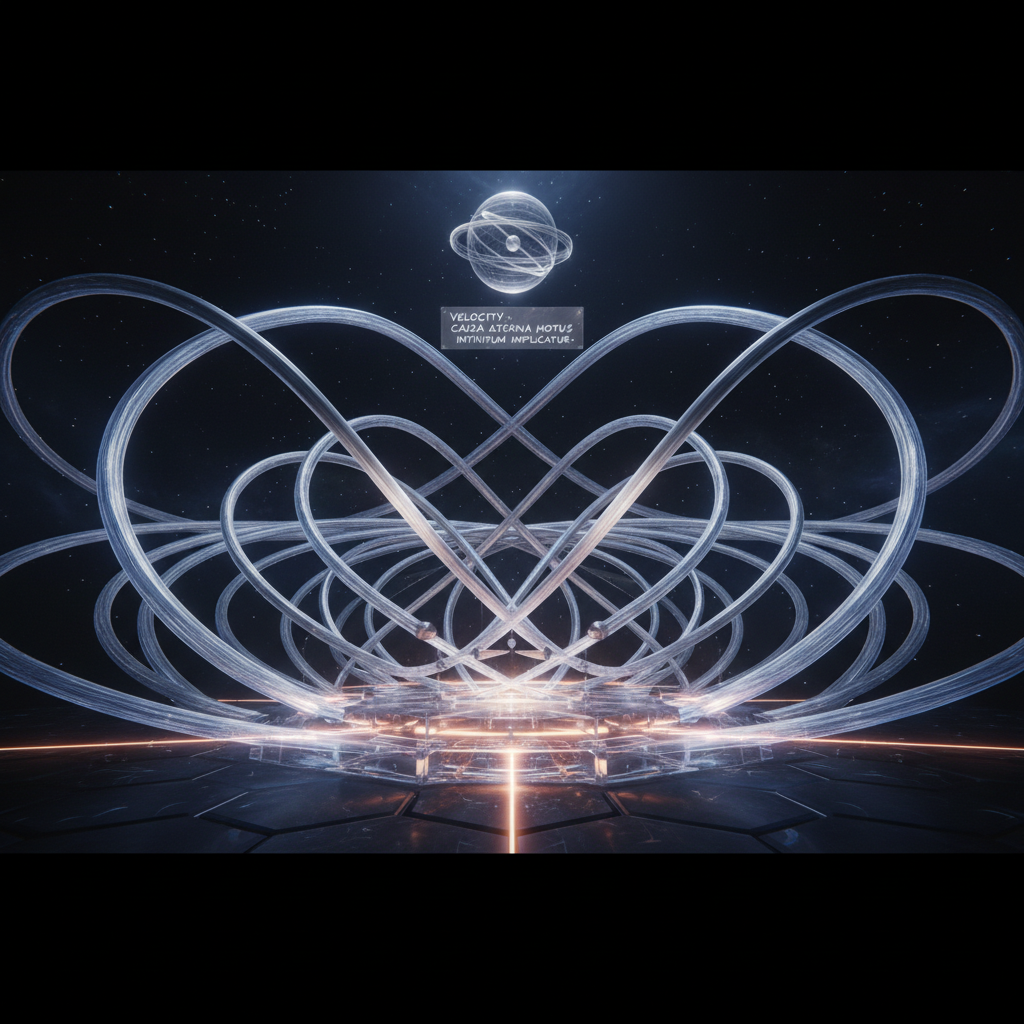
There's a limit to how fast you can fall through atmosphere. Air resistance increases with speed until it equals gravitational force. Net force becomes zero. Acceleration stops. You reach terminal velocity.
For a human body in freefall, that's about 120 mph.
You wonder sometimes if you've reached terminal velocity in the attention economy. If there's a maximum rate at which you can process information, absorb content, emit data. If the resistance of your own cognitive limits will eventually balance the downward pull of algorithmic acceleration.
Maybe you're already there. Maybe everyone is. Maybe we're all falling at exactly the same speed now, the maximum speed human consciousness can fall, and we mistake this constant velocity for stillness because we can't see the ground rushing up.
The platforms know your terminal velocity. They've measured it. They know exactly how fast they can spin you before you break, before you delete the app, before you choose to stop falling.
They keep you right at that edge. Maximum velocity. Minimum direction change. Constant acceleration. Sustainable freefall.
The Vector of Your Attention
Velocity is displacement over time. Where you are now minus where you were then, divided by the interval between.
At the end of three hours of scrolling, where have you gone? What's your displacement? You're in the same chair. Same room. Same physical coordinates. Your velocity, in physical space, has been zero.
But in information space, you've traveled thousands of miles. Through a hundred topics, a dozen emotional states, five different product categories. Your attention has velocity. Your data has velocity. Your body has none.
This is the split. This is the dissociation. This is why it feels like motion and stillness at the same time.
The surveillance economy runs on your velocity—the velocity of your attention, your data, your engagement. But it requires your body to stay still. To remain at rest in the reference frame of the platform. To be a fixed point that can be measured, predicted, optimized.
You are simultaneously the object with velocity and the reference frame against which velocity is measured. You are both moving and still. The physics breaks down. The math doesn't work.
Unless you choose a different reference frame. Unless you stand up. Unless you measure your velocity relative to something other than the platform. Relative to your own life, your own direction, your own chosen destination.
Then suddenly you have a vector again. Magnitude and direction. Somewhere to go.
<em>Data emitted: 1100 decibels of signal. Reference frame: yours to choose.</em>
Data emitted: 1,100 words • 6.5KB • 5-minute read