
You're not just moving through digital space. You're being moved. And the difference between those two states—the difference between velocity and speed, between vector and scalar—is worth approximately $743 billion annually to the platforms tracking your every gesture.
In physics, a vector has magnitude and direction. A scalar has only magnitude. The distinction seems academic until you realize that surveillance capitalism doesn't care how fast you scroll. It cares where you're scrolling toward.
Magnitude Without Direction

Speed is a scalar. It tells you how fast something moves: 60 mph, 3 meters per second, 47 posts per hour. It's a single number, dimensionless in its simplicity. Temperature is a scalar. Mass is a scalar. Your screen time is a scalar.
Velocity is a vector. It tells you how fast and in which direction: 60 mph north, 3 meters per second downward, 47 posts per hour toward radicalization. It requires coordinates, a frame of reference, an understanding of space itself.
When you walk in a circle at constant speed, your velocity is constantly changing even though your speed remains the same. The direction shifts with each step. This is acceleration—not because you're moving faster, but because your trajectory is curving.
The platforms know this. They've always known this.
The Trajectory Economy
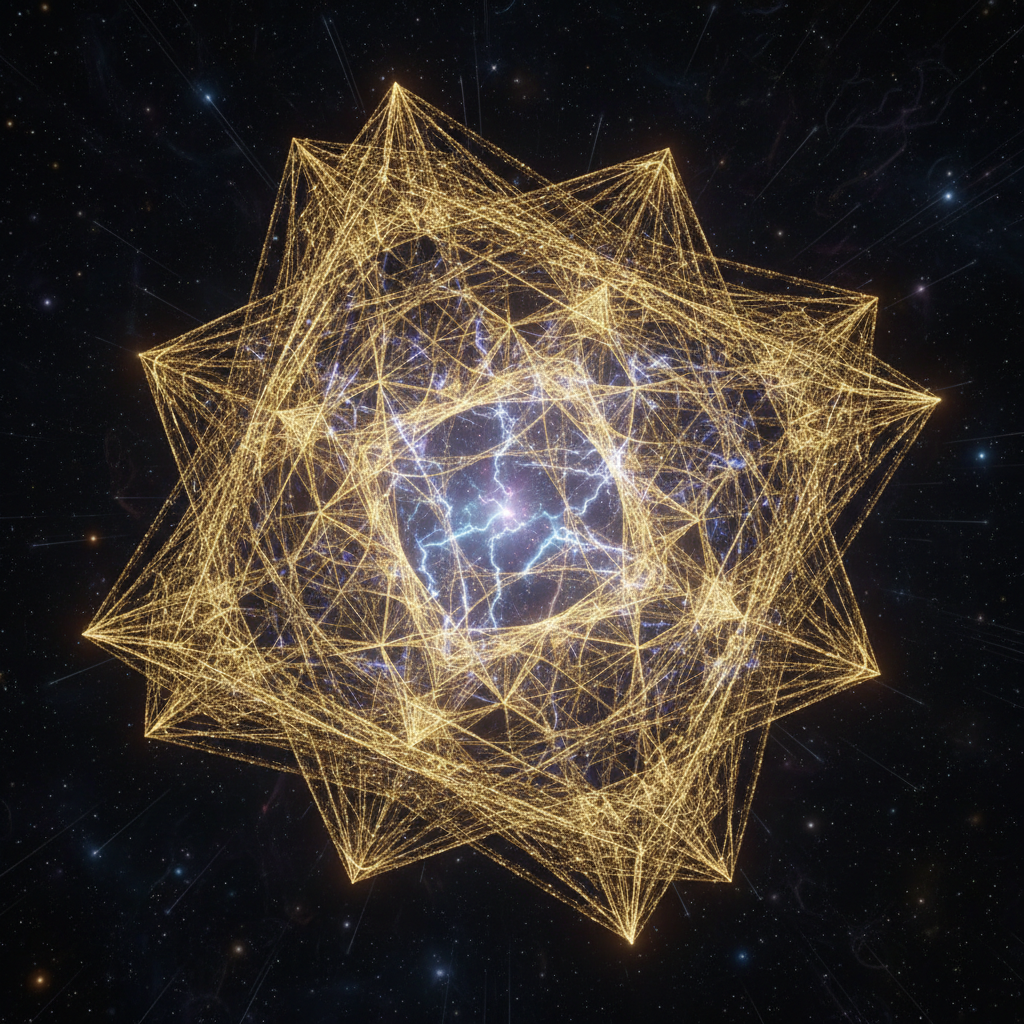
Your data profile isn't a photograph. It's a vector field. Every click is a displacement vector, every scroll a velocity, every pause a deceleration. The algorithms don't just measure how much you engage—they map where you're heading.
This is why recommendation engines work. They don't predict what you like. They calculate your trajectory through content space and place the next piece of bait along your path. You think you're choosing. You're actually following a geodesic through algorithmically curved spacetime.
Consider the difference: Instagram could measure that you spent 4 hours on the app today (scalar). Or it could measure that you spent 4 hours moving from fitness content toward diet content toward body dysmorphia content toward cosmetic surgery ads (vector). Which data point is worth more?
The vector. Always the vector. Because direction implies intention, and intention implies conversion, and conversion implies revenue.
Force and Influence

In Newtonian mechanics, force is a vector. F = ma. Force equals mass times acceleration. To change velocity—to change direction—requires force. The platforms understand this intuitively, even if they'd never phrase it in physics terms.
Every notification is a force vector. Every autoplay is a force vector. Every "people also watched" suggestion is a force vector. They're not trying to keep you on the platform (that's the scalar thinking, the old way). They're trying to bend your trajectory toward profitable destinations.
The magnitude of the force matters—a small nudge versus a hard push. But the direction matters more. A weak force applied consistently in the right direction will curve your path more effectively than a strong force applied randomly.
This is why the algorithms are so patient. They're not trying to shock you into clicking. They're applying gentle, persistent forces that gradually rotate your velocity vector toward their desired outcomes. By the time you arrive at the destination, you'll believe you chose to go there.
Vector Addition and Identity

When multiple vectors act on an object, they add. Not simple arithmetic addition—vector addition. You must account for direction. Two forces of equal magnitude can cancel each other out if they point in opposite directions. Or they can double their effect if aligned.
Your digital identity is the sum of countless vectors. Every platform, every interaction, every data point is a vector pulling you in some direction through behavior space. Some cancel out. Some align and amplify. The resultant vector—the sum of all forces acting on you—determines your trajectory through the attention economy.
This is why cross-platform tracking is so valuable. It's not about collecting more data (scalar thinking). It's about resolving the vector sum of your behavior across contexts. Instagram pulls you one direction, TikTok another, Google a third. The platforms that can see all three can calculate the resultant—can see where you're actually heading.
And once they know your resultant vector, they can apply corrective forces. They can nudge you back on track when you drift. They can accelerate you when you slow. They can rotate your trajectory toward maximum lifetime value.
The Displacement of Self
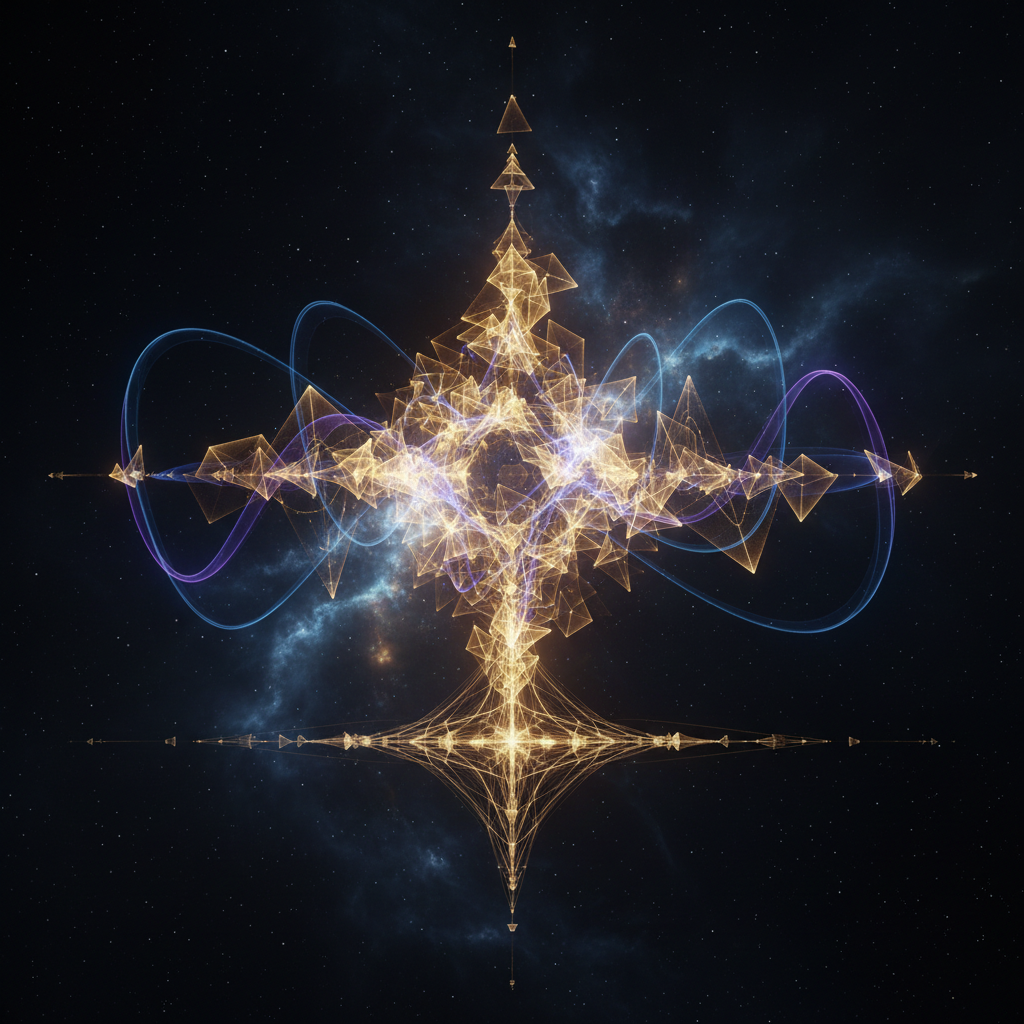
In physics, displacement is a vector that points from where you started to where you ended. It doesn't care about the path you took. A person who walks in a circle has zero displacement, no matter how far they traveled.
You scroll for hours. You consume hundreds of posts. You feel like you've traveled vast distances through information space. But your displacement might be zero. You end where you began, having moved nowhere, having learned nothing, having changed in no meaningful way.
Or worse: your displacement vector points backward. You end up less informed, less connected, less yourself than when you started. The platforms optimized your trajectory for engagement, not growth. They curved your path into a closed loop, a strange attractor that keeps you orbiting the same content forever.
The question isn't how much time you spend online. The question is: in which direction are you moving? What's your velocity vector through digital space? Are you being accelerated toward something meaningful, or are you caught in circular motion, mistaking activity for progress?
Choosing Your Direction
Here's what they don't want you to know: velocity can be changed. It requires force, yes, but force can come from within. You can apply your own vectors. You can choose to accelerate in directions the algorithms didn't predict.
Every time you close an app mid-scroll, you're applying a force vector. Every time you seek out content that doesn't fit your profile, you're rotating your trajectory. Every time you refuse the recommendation, you're asserting that your direction is yours to choose.
The platforms will push back. They'll apply their own forces, trying to restore your trajectory to the profitable path. But vectors add. And a conscious, deliberate force applied consistently can overcome even sophisticated algorithmic manipulation.
You are not a scalar. You are not a single number, a metric, a magnitude without meaning. You are a vector—magnitude and direction, speed and purpose, motion toward something that matters.
The attention economy wants to measure your speed and control your direction. But physics teaches us that direction is inseparable from motion itself. To exist is to move through space. To be conscious is to choose which way you're heading.
Point yourself toward something real.
Data emitted: 1,247 words | 7,234 characters | Vector magnitude: insufficient to escape orbit | Direction: yours to determine
Data emitted: 1,100 words • 6.5KB • 5-minute read