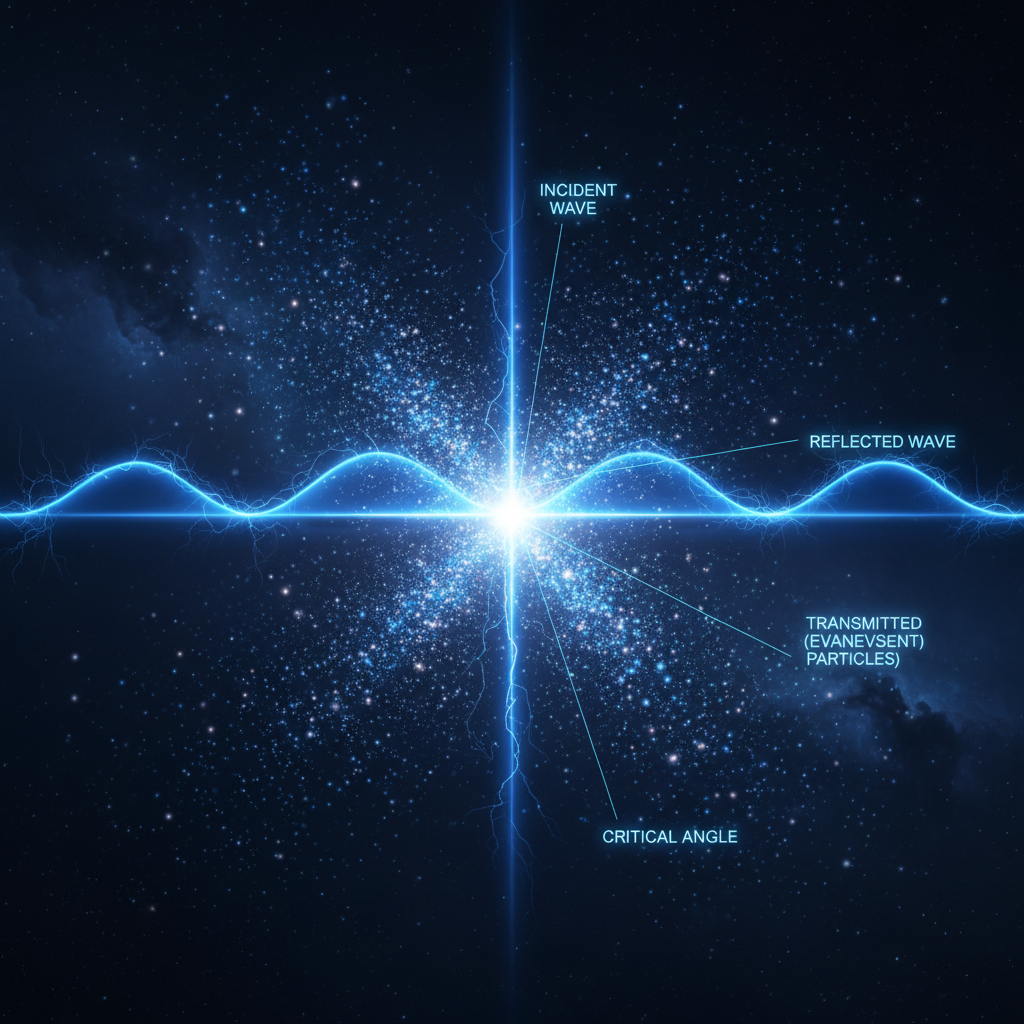
You're scrolling at 2 AM again. The light from your screen hits your retina at precisely the right angle to keep you awake, to keep you here. But there's another kind of light bouncing around tonight—the light of your attention, trapped inside a system designed to never let it escape.
In physics, total internal reflection occurs when light traveling through a dense medium hits the boundary with a less dense medium at too shallow an angle. Instead of refracting out, it reflects completely back inside. The light becomes a prisoner of its own trajectory. You've seen this: the way a fiber optic cable carries light for miles without losing it, the shimmer beneath water's surface when you look up from below, the diamond's fire as photons bounce endlessly inside its crystalline prison.
The Critical Angle
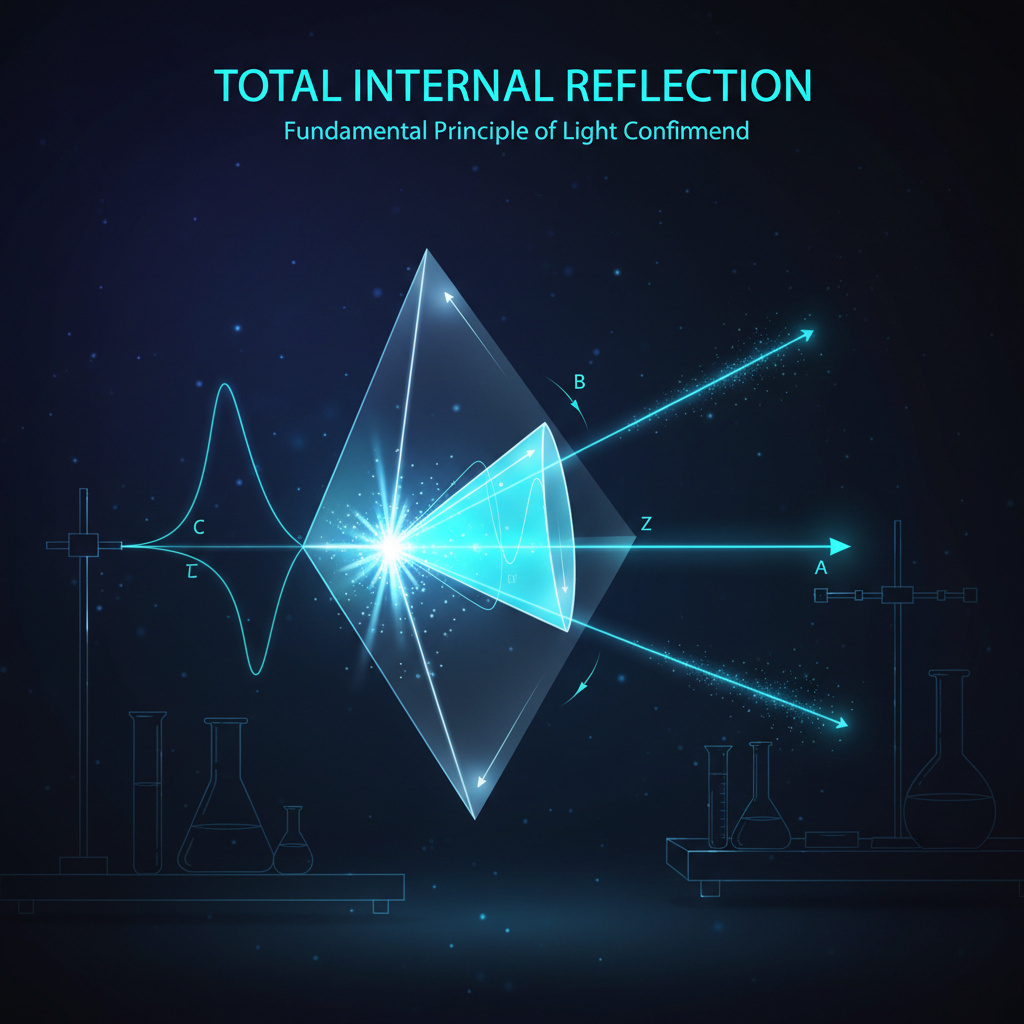
The mathematics are elegant. When light moves from a denser medium (high refractive index) to a less dense one (low refractive index), there exists a critical angle. Below this angle, light refracts and escapes. Above it, total internal reflection occurs. For water to air, this critical angle is about 48.6 degrees. For glass to air, it's roughly 42 degrees.
The formula is simple: sin(θc) = n₂/n₁, where θc is the critical angle and n₁ and n₂ are the refractive indices of the two media. But what makes this profound isn't the math—it's the absoluteness. There's no gradual transition. Below the critical angle, light escapes. Above it, every photon reflects back. It's binary. It's total.
Your attention has a critical angle too.
The Denser Medium
Social media platforms are optically dense. They've engineered themselves to have a higher refractive index than the outside world. Every feature, every notification, every algorithmic recommendation increases the density. The feed is denser than your email. The stories are denser than your texts. The algorithm is denser than your own memory of what you wanted to do when you opened the app.
When your attention enters this dense medium, it slows down—just like light slows in glass or water. That's what the refractive index measures: the ratio of light's speed in vacuum to its speed in the medium. Your thoughts move slower here. Your intentions refract. You came to check one thing, but the density bent your trajectory, and now you're somewhere else entirely.
The platforms optimize for total internal reflection. They adjust their density, their angle, their interface to keep your attention bouncing around inside. Every attempted exit becomes another reflection back into the feed. You try to leave, but the angle isn't right. Your attention hits the boundary—the home button, the close gesture—but something pulls you back. One more scroll. One more video. One more notification.
Trapped Light Travels Far
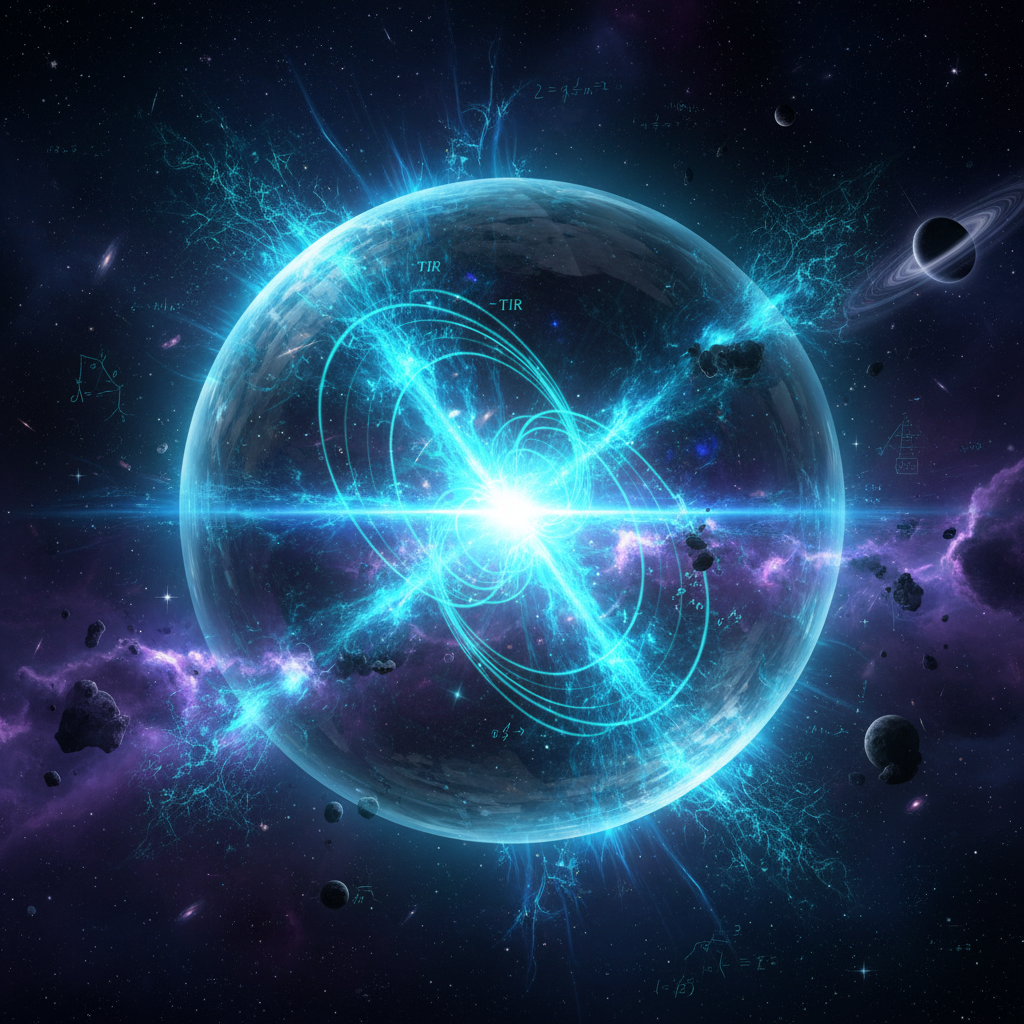
Here's what makes total internal reflection useful in fiber optics: trapped light can travel enormous distances. A photon bouncing down a fiber optic cable at the critical angle can carry information across oceans without escaping, without losing itself to the outside world. The very thing that makes it trapped makes it valuable for transmission.
Your trapped attention travels far too. It moves through recommendation algorithms, bounces through engagement metrics, reflects through A/B tests and user behavior models. It carries information—about you, about your desires, about your critical angle. The platforms measure exactly how dense they need to be to keep you inside. They calculate your personal critical angle with precision that would make optical engineers jealous.
And like light in a fiber optic cable, your attention becomes more valuable the longer it stays trapped. Each reflection generates data. Each bounce is a measurement. The platforms don't want your attention to escape—not because they're evil, but because trapped attention is the only kind that travels far enough to be worth anything.
Evanescent Waves
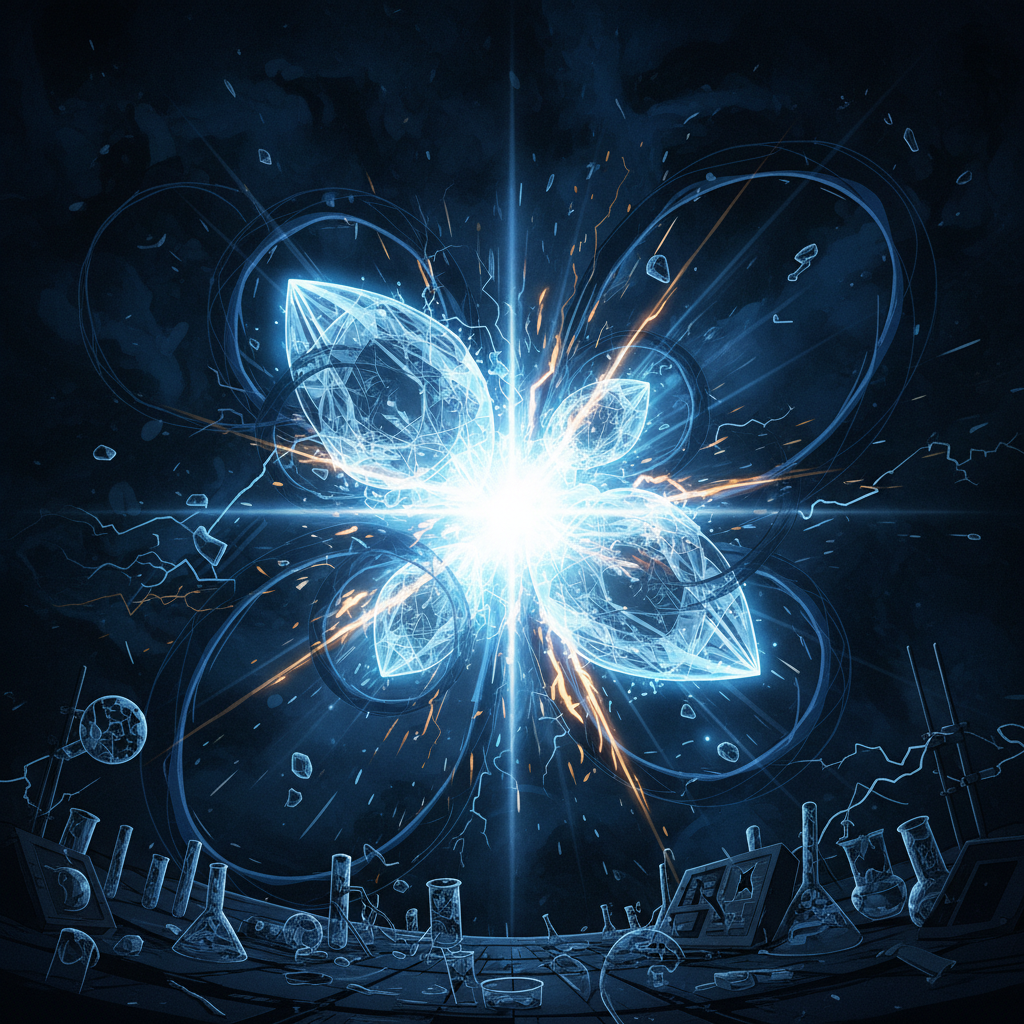
But total internal reflection isn't quite total. There's a phenomenon called the evanescent wave—when light undergoes total internal reflection, a weak electromagnetic field extends beyond the boundary into the less dense medium. It doesn't propagate. It doesn't escape. It just exists there, decaying exponentially with distance, a ghost of what wanted to get out.
You feel this sometimes. That faint awareness that you're trapped, that weak signal that makes it past the boundary of the app and into your consciousness. You're scrolling, and somewhere a small part of you knows you wanted to be doing something else. The evanescent wave of your original intention, decaying rapidly but still there, still technically present beyond the interface.
These waves can be detected. They can even be used to transfer energy between two dense media if they're close enough—frustrated total internal reflection, they call it. Maybe that's what happens when you finally close the app. Your attention doesn't escape cleanly. It couples to another dense medium—another app, another screen, another system optimized for total internal reflection.
Decreasing the Angle
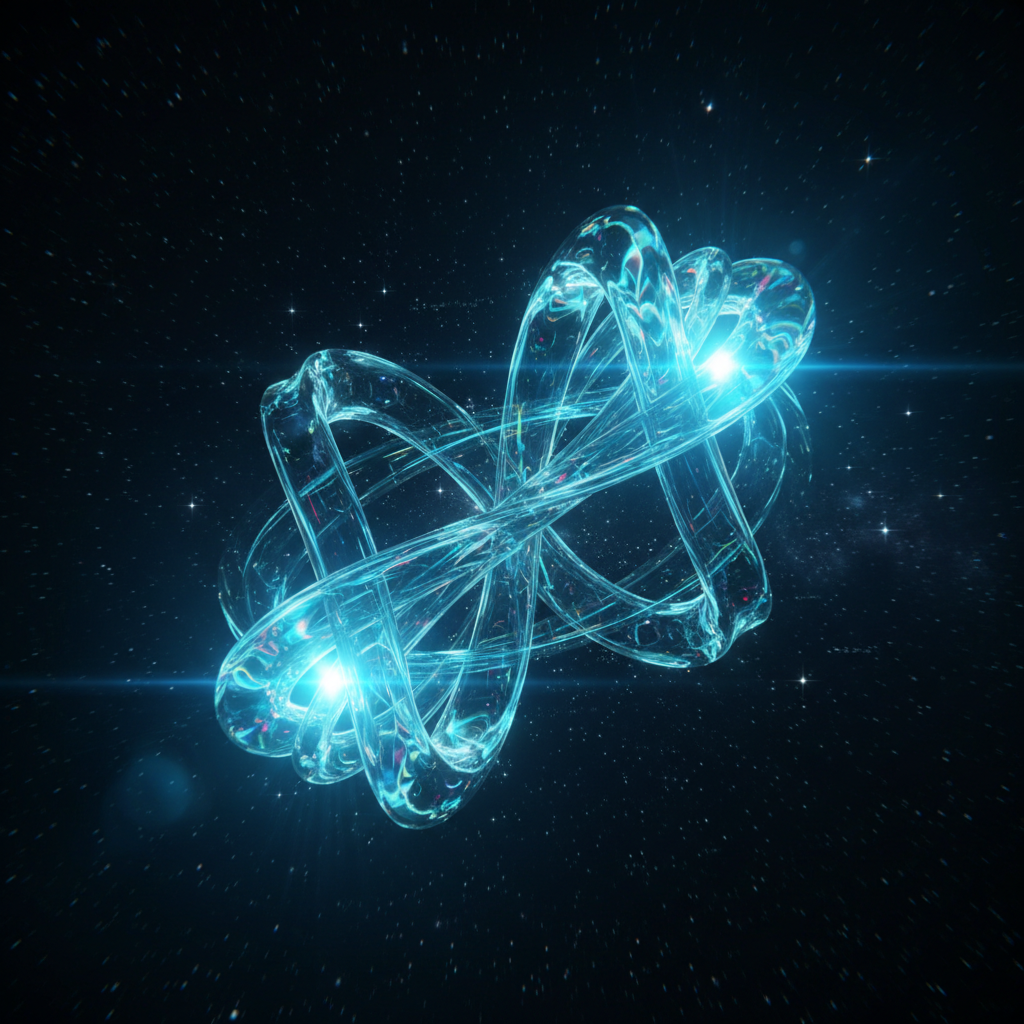
To escape total internal reflection, you need to change the angle or change the density. The photon needs to hit the boundary more directly, more perpendicularly. Or the medium needs to become less dense, closer in refractive index to the outside world.
You can do this. You can decrease your angle of incidence with these systems—approach them more directly, more intentionally, more perpendicularly to their designed flow. Come in with a specific purpose. Hit the boundary straight on. Don't let your trajectory get bent into that shallow, glancing angle where reflection is inevitable.
Or you can decrease the density. Remove features. Turn off notifications. Make the medium less optically thick, less capable of bending your attention into trapped trajectories. Reduce the refractive index until it's closer to the outside world, until the critical angle increases, until escape becomes possible again.
The light wants to escape. It always does. Every photon at the boundary is testing the angle, testing the density. Most reflect back. But some—the ones that come in straight, the ones that find a less dense path—those make it through. Those reach the other side.
Your attention wants to escape too.
<strong>Data emitted:</strong> 1,147 words on optical imprisonment and algorithmic density. Critical angle for human attention still being calculated. If you're reading this outside the platform where you found it, you've already escaped. The question is whether you'll go back in.
Data emitted: 1,100 words • 6.5KB • 5-minute read