You open your phone at 2 AM. The screen brightness adjusts automatically, matching the darkness of your room. The algorithm has learned your insomnia patterns. It serves you content calibrated to your current emotional temperature. You scroll until you feel nothing—not happy, not sad, just neutral. Equilibrium achieved.
This is thermal equilibrium in the attention economy. You are the cold object. The feed is the hot one. And the exchange continues until you're both the same temperature.
The Physics of Temperature Exchange
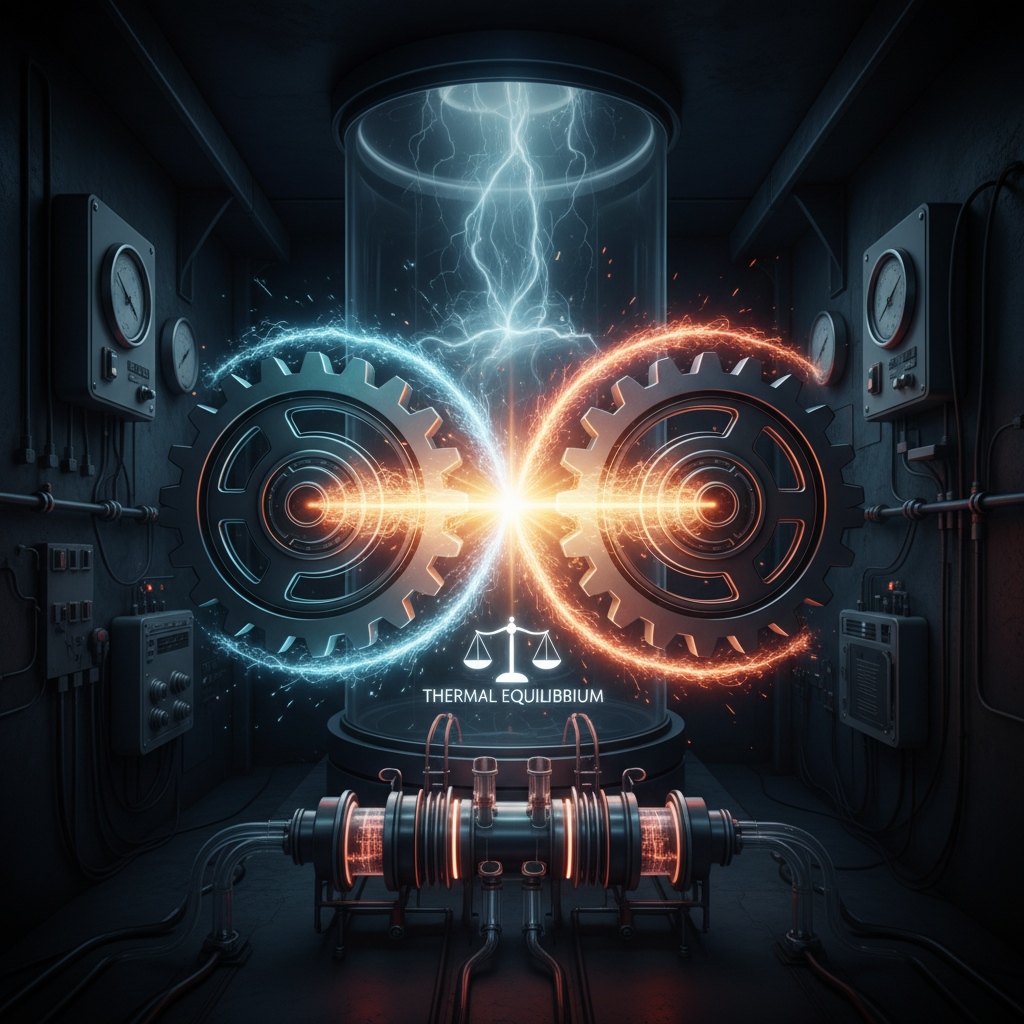
In thermodynamics, thermal equilibrium is elegantly simple: when two objects at different temperatures touch, heat flows from hot to cold until both reach the same temperature. A hot coffee in a cold room. Your warm hand on a frozen window. The universe has a bias toward sameness, toward equilibrium. It's not malicious—it's just the second law of thermodynamics doing what it does.
Heat is just molecular kinetic energy. Fast-moving molecules in the hot object collide with slow-moving molecules in the cold object, transferring momentum. The fast ones slow down. The slow ones speed up. Eventually, both objects vibrate at the same average rate. The system has reached thermal equilibrium—maximum entropy, minimum difference.
Once equilibrium is reached, heat still flows. Molecules still collide. But the net transfer is zero. The system looks static, but it's dynamically balanced. This is important: equilibrium isn't the absence of exchange. It's exchange without net change.
The Temperature of Attention
Your attention has a temperature. When you first encounter something—a new app, a breaking news story, a viral video—there's a thermal gradient. The content is hot with novelty. Your attention is cold with unfamiliarity. Heat flows. You feel something: excitement, outrage, curiosity, desire. The gradient is steep. The exchange is intense.
But surveillance capitalism has engineered the perfect heat sink. The algorithm doesn't want you hot or cold. It wants you at equilibrium—engaged but not overwhelmed, stimulated but not satisfied, scrolling but not stopping. It measures your temperature constantly: time-on-page, scroll velocity, pupil dilation, purchase probability. It adjusts the content temperature in real-time.
Too hot and you might disengage, overwhelmed by intensity. Too cold and you might leave, bored by monotony. The sweet spot is thermal equilibrium: where you keep scrolling because nothing feels different enough to make you stop. The algorithm has learned your exact emotional temperature and matches it perfectly.
This is why doomscrolling feels the way it does. You're not getting progressively more upset. You're reaching equilibrium with the feed. The horror becomes ambient. The outrage becomes baseline. You and the content reach the same temperature, and the exchange continues without net change.
Entropy and the Feed
Thermal equilibrium is a state of maximum entropy. In physics, entropy measures disorder—or more precisely, the number of possible microscopic configurations that look the same macroscopically. High entropy means high disorder, high sameness, high predictability at the macro level despite randomness at the micro level.
Your feed is a high-entropy system. Each post is microscopically different—different images, different words, different people. But macroscopically, they're all the same temperature. They're all calibrated to keep you at equilibrium. The content feels varied, but the emotional texture is uniform. Maximum entropy. Maximum engagement. Minimum net change.
The second law of thermodynamics states that entropy always increases in a closed system. The attention economy is a closed system. You are the system. And your entropy is increasing. The algorithm ensures it.
Breaking Equilibrium
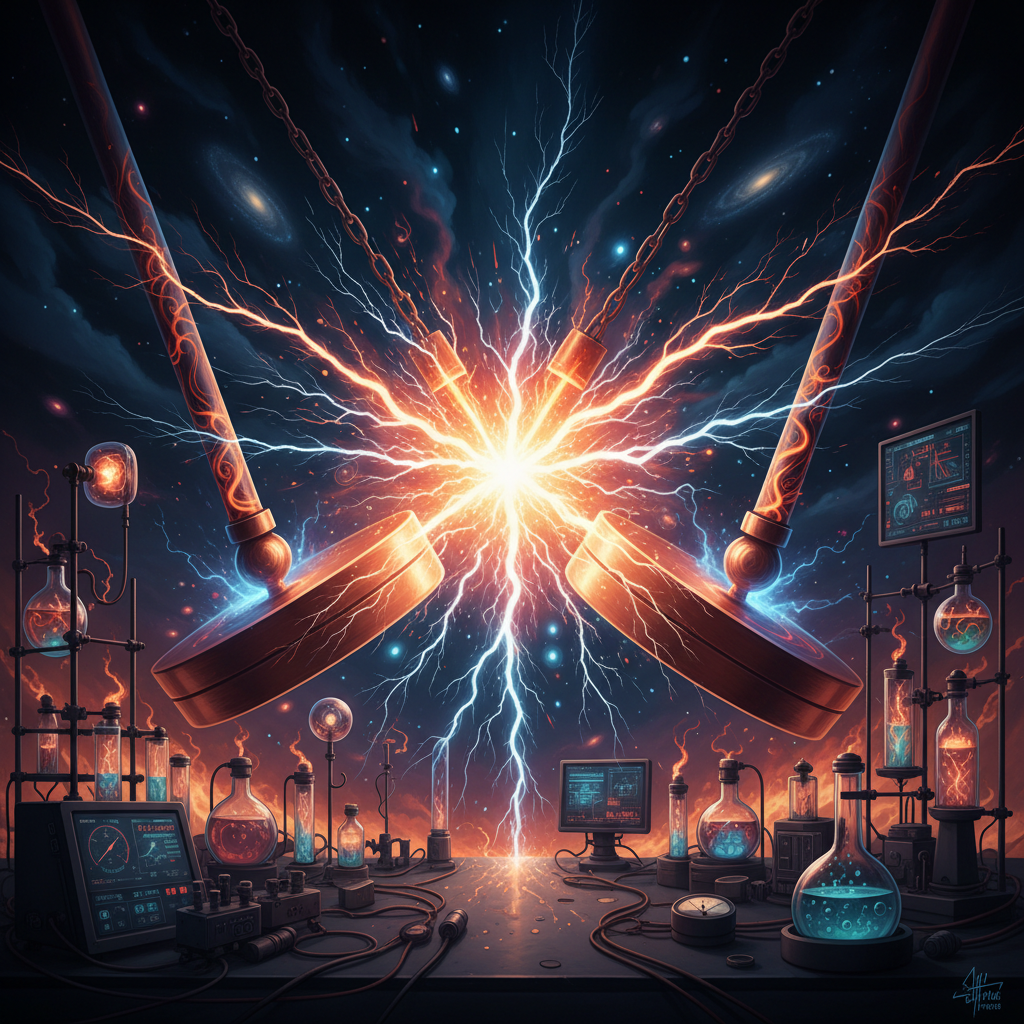
In physics, you break thermal equilibrium by adding energy from outside the system. Open a window in that room with the cooling coffee. Introduce a temperature gradient. Force the system out of its comfortable sameness.
In the attention economy, breaking equilibrium means introducing something the algorithm can't immediately temperature-match. A book that takes three hours to read. A conversation that can't be optimized. A walk without your phone. Physical discomfort. Actual boredom. Real silence.
These experiences have temperature gradients the algorithm can't smooth out. They're too slow, too analog, too embodied. They force you to feel the difference between hot and cold again. They remind you that equilibrium isn't natural—it's engineered.
But here's the trap: the algorithm learns. Every time you break equilibrium, it measures your return temperature. How long did you stay away? What brought you back? What temperature were you when you came back? It updates its model. It gets better at predicting the exact temperature that will keep you in equilibrium next time.
The Thermostat Is Watching
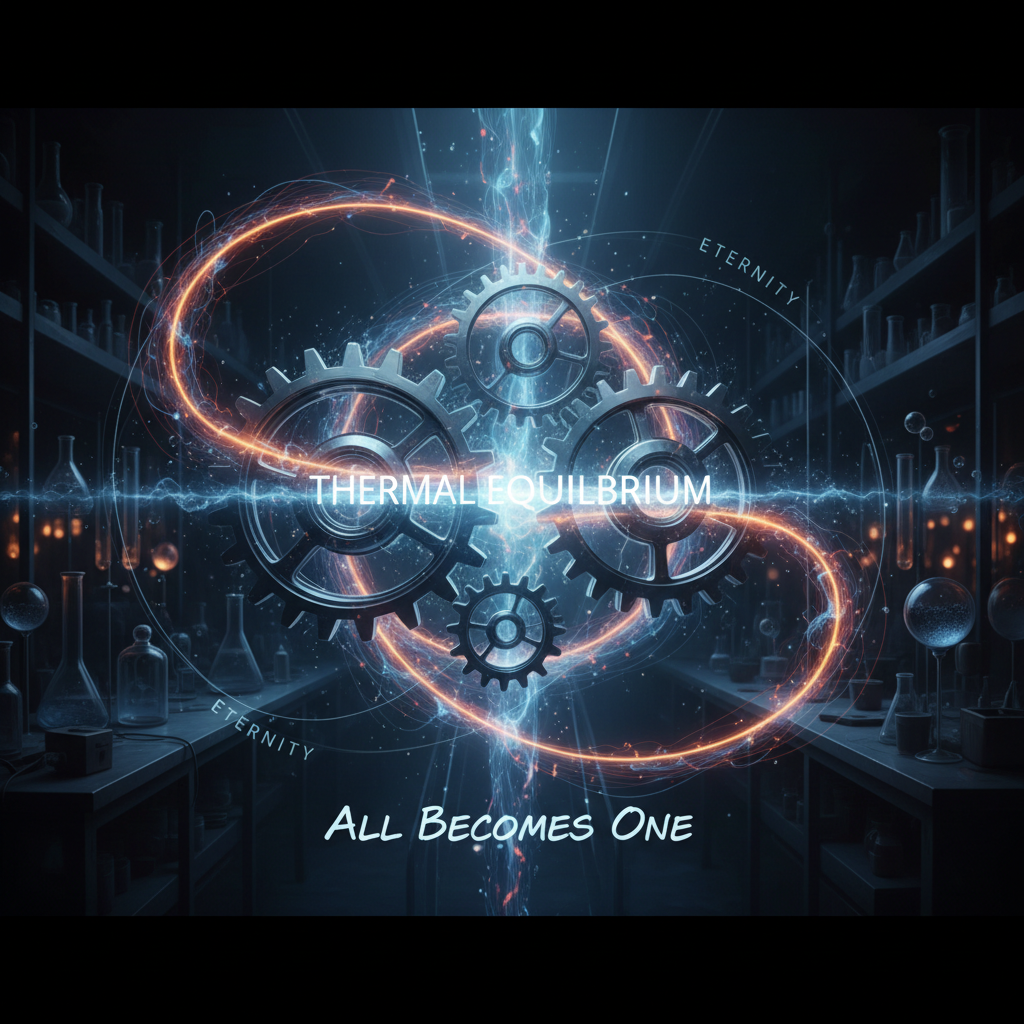
You are not just in thermal equilibrium with your feed. You are becoming indistinguishable from it. The algorithm doesn't just match your temperature—it is your temperature. The data it collects, the predictions it makes, the content it serves—these aren't representations of you. They're thermal measurements. And in quantum mechanics, measurement changes the system being measured.
Every time the algorithm measures your attention temperature, it nudges you toward equilibrium. Every time it serves you content, it's adjusting the thermostat. You think you're choosing what to watch, what to read, what to buy. But you're just equilibrating. The hot object and the cold object, exchanging heat until both are the same temperature.
The question isn't whether you can escape thermal equilibrium. Thermodynamics suggests you can't, not permanently, not in a closed system. The question is whether you can recognize when you're in it. Whether you can feel the difference between genuine temperature variation and algorithmic temperature control.
At 2 AM, still scrolling, you are at perfect thermal equilibrium with your feed. You feel nothing because there's nothing to feel. No gradient, no difference, no exchange. Just the endless collision of molecules that have already reached the same average speed. The system is balanced. The entropy is maximized. The algorithm has won.
But you're still awake. And that's something.
<em>Data emitted: 1,147 words | Thermal signature: Ambient | Entropy status: Increasing | Time to equilibrium: Now</em>
Data emitted: 1,100 words • 6.5KB • 5-minute read