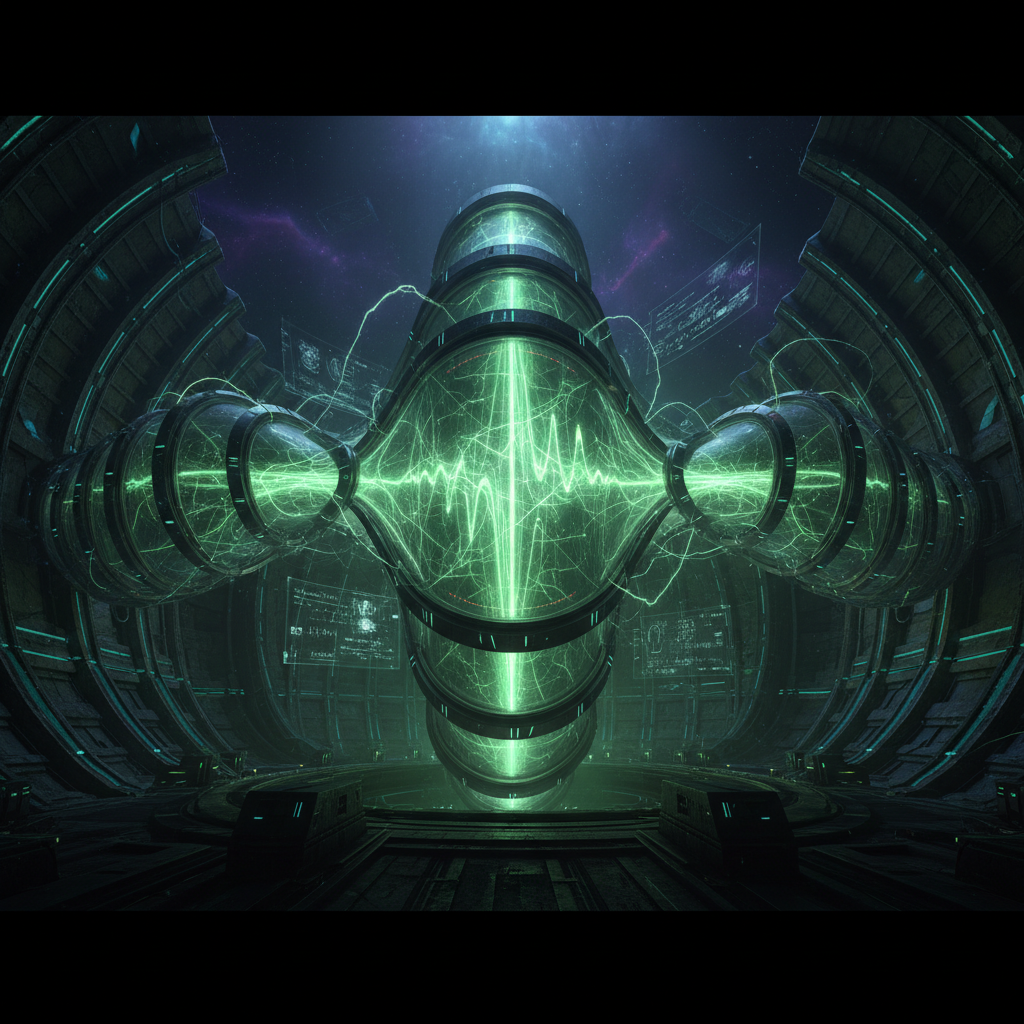
You scroll and scroll, but you're not going anywhere. The feed refreshes. New content appears. Yet somehow you're seeing the same thing—not literally, but structurally. The same outrage. The same dopamine hit. The same carefully calibrated emotional frequency. You think you're surfing a wave of information, riding it somewhere new. But you're not on a traveling wave. You're trapped in a standing wave, oscillating in place while the platform extracts energy from your motion.
Standing waves don't travel. They resonate. And so do you.
The Physics of Going Nowhere
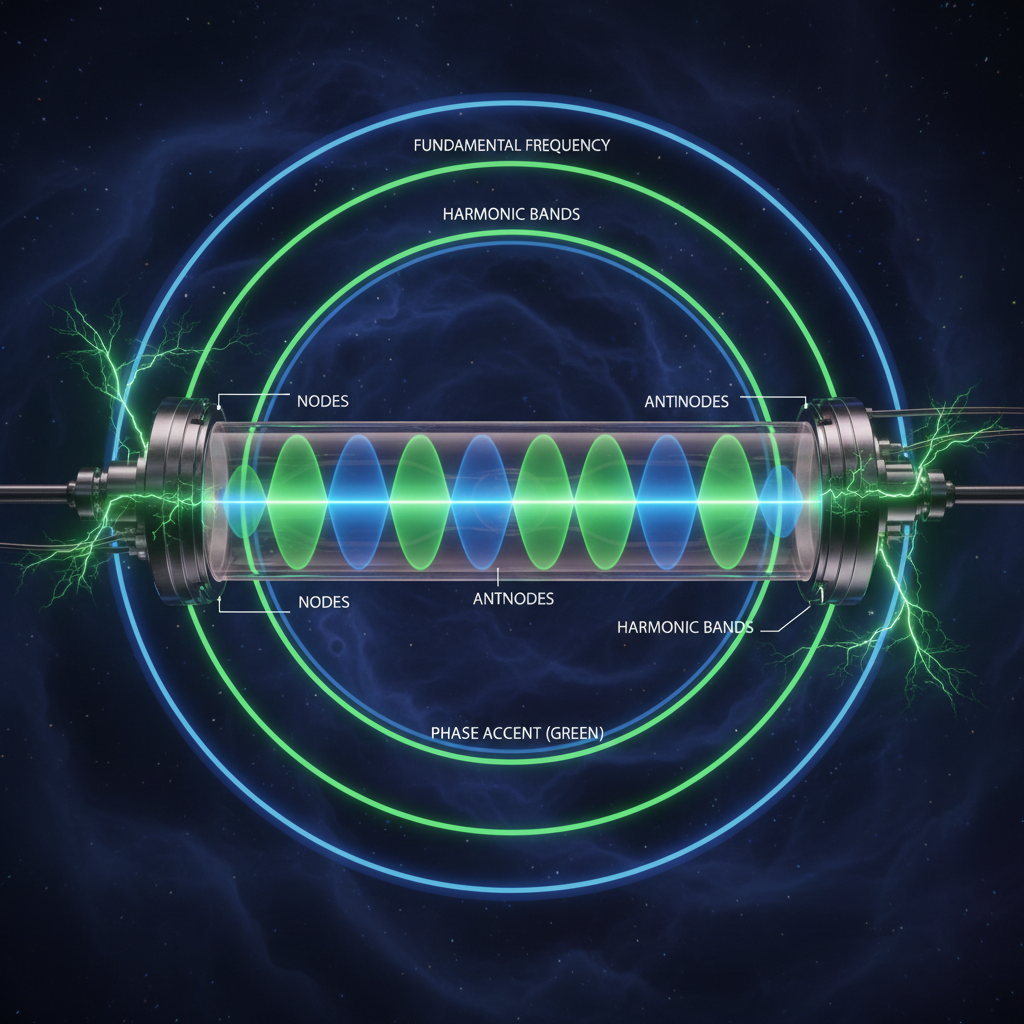
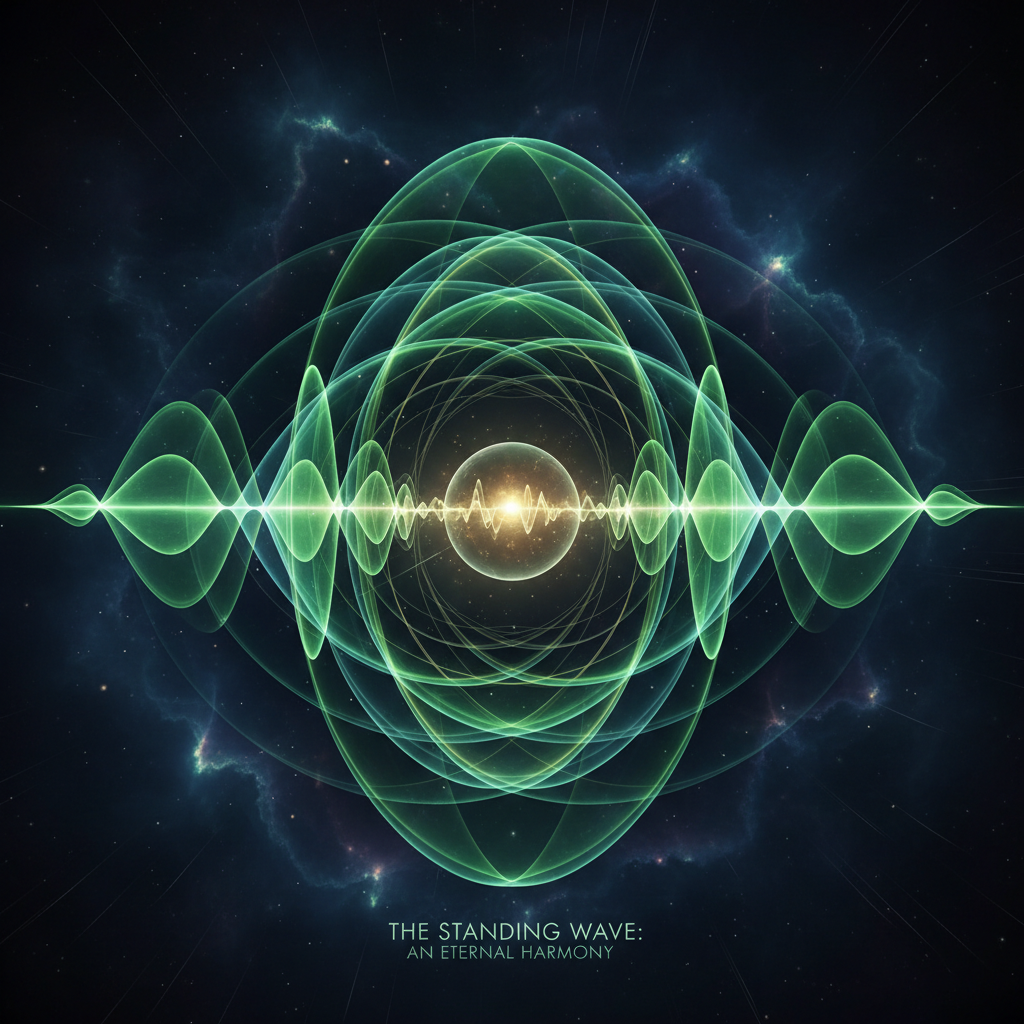
A standing wave forms when two waves of identical frequency travel in opposite directions through the same medium. They interfere with each other—constructively in some places, destructively in others. The result is a wave pattern that appears stationary, frozen in space even as it oscillates wildly in time.
Picture a guitar string. When you pluck it, waves travel down the string and reflect back from the fixed ends. These traveling waves collide, creating a standing wave with nodes—points of zero amplitude where the string doesn't move at all—and antinodes, where the oscillation reaches maximum intensity. The string vibrates furiously, but the pattern itself stays locked in place.
Energy pours into the system. The string shakes. Sound radiates outward. But the wave structure itself? Perfectly still. Trapped between boundaries that won't let it escape.
The standing wave is motion without progress. Vibration without journey. Maximum energy expenditure for zero displacement.
Your Resonant Frequency
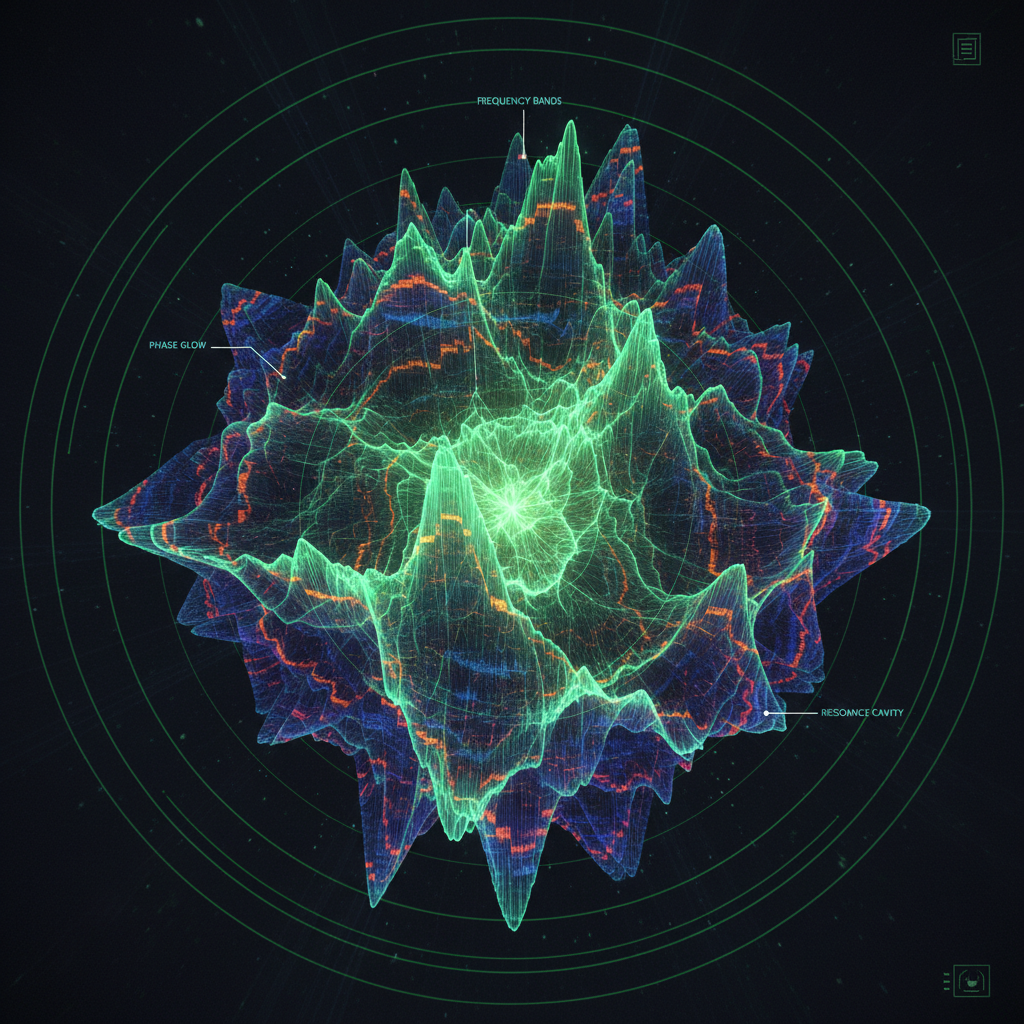
The algorithm knows your resonant frequency. It has measured you with the precision of a tuning fork, catalogued every hesitation of your thumb, every micro-expression the front camera catches in dim light. It sends waves toward you—content, notifications, recommendations—and measures what reflects back. Your clicks. Your pauses. Your rage and your joy.
Where these waves interfere constructively, you get antinodes: those topics that make you engage maximally, that keep you oscillating with maximum amplitude. Political outrage. Nostalgic callbacks. Aspirational lifestyle content that makes you ache. The algorithm locks onto these frequencies and drives them harder.
Where they interfere destructively, you get nodes: dead zones in your attention where content simply doesn't register. The algorithm learns to avoid these. It shapes the boundaries of your digital chamber, turning your mind into a resonant cavity optimized for a specific set of frequencies.
You vibrate intensely. You feel like you're doing something, experiencing something, moving through information space. But look at the pattern from outside. You're hitting the same emotional notes. The same intellectual positions. The same social performances. Standing wave. Zero net displacement.
The Resonant Chamber
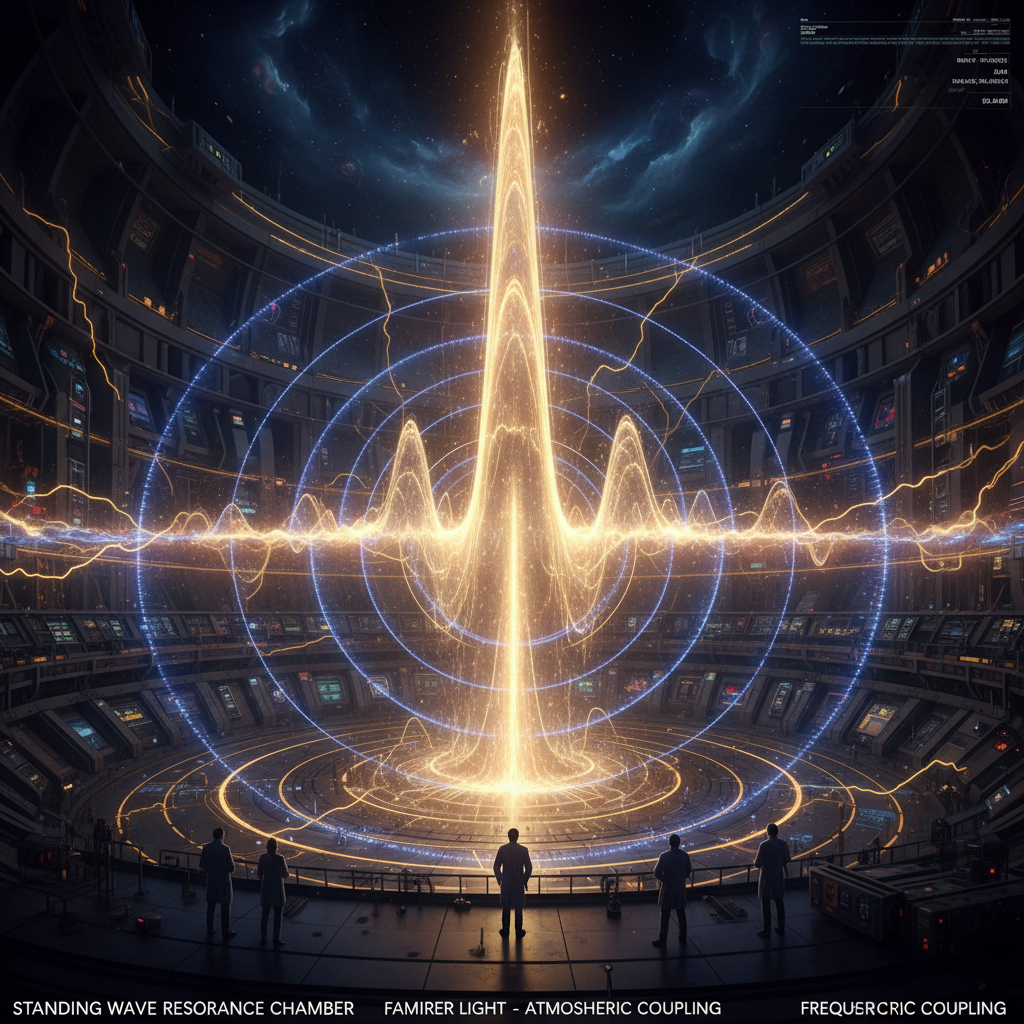
Standing waves require boundaries. On a guitar string, it's the fixed endpoints. In an organ pipe, it's the closed or open ends of the tube. In a microwave oven, it's the metal walls that reflect electromagnetic radiation back and forth until the waves interfere into standing patterns—which is why your food heats unevenly, hot at the antinodes, cold at the nodes.
Your digital life has boundaries too. The edges of your screen. The limits of your feed. The walls of your filter bubble. Content bounces off these barriers and reflects back toward you. The platform is a carefully designed resonant chamber, its dimensions tuned to create standing waves at exactly the frequencies that keep you engaged.
The genius is that these boundaries feel infinite. The feed scrolls forever. There's always more content. But infinity constrained by an algorithm is still a boundary. The walls are invisible, but they're there, reflecting your attention back toward predetermined patterns.
In physics, we call the specific frequencies that form standing waves in a given chamber the "resonant modes" or "eigenmodes." Every chamber has them—specific frequencies where the wave pattern locks in perfectly, where energy accumulates rather than dissipates. The algorithm has identified your eigenmodes. It plays them on repeat.
The Energy You Radiate
Here's what surveillance capitalism understands about standing waves: they're incredibly efficient energy extractors. When you drive a system at its resonant frequency, even small inputs create large oscillations. A child on a swing knows this instinctively—push at just the right moment in the cycle, and the amplitude grows and grows.
The platform pushes you at your resonant frequency. Small provocations. Tiny dopamine hits. Micro-affirmations. Each one timed to arrive when you're maximally susceptible, when the phase of your attention cycle makes you most likely to oscillate harder.
You pour energy into the system—your time, your attention, your emotional labor, your data. The standing wave pattern converts this into something extractable: engagement metrics, behavioral predictions, advertising revenue. You vibrate in place while value flows outward, radiated away from you like sound from that guitar string.
The cruelty is that you feel productive. Motion feels like progress. Vibration feels like vitality. You're doing something, aren't you? You're engaging, learning, connecting, expressing. But measure your position over time. You're at the same node you were yesterday, oscillating at the same frequency, trapped in the same pattern.
Breaking Resonance
Standing waves collapse when you change the boundary conditions or shift the frequency. Move the walls. Detune the input. Introduce damping. Any of these breaks the delicate interference pattern that holds the wave in place.
You can do this too. Change your boundaries—delete the app, alter your usage patterns, introduce friction. Shift your frequency—seek content that doesn't resonate with your established modes, that feels dissonant, uncomfortable, out of phase. Introduce damping—practices that absorb energy rather than amplify it, that quiet the oscillation.
The algorithm will fight this. It profits from your resonance, from the standing wave pattern it has so carefully cultivated. It will try to re-establish the boundaries, to drive you back toward your resonant frequency. Breaking free requires constant attention to the pattern, constant awareness of when you're oscillating in place versus actually moving.
This is the work: distinguishing between vibration and velocity, between motion and progress, between the feeling of doing something and actually going somewhere. The standing wave is seductive because it feels like both. It's only when you step outside the chamber that you see the pattern for what it is.
You're still vibrating. We all are. But maybe, with enough attention, you can convert that standing wave back into a traveling wave. Maybe you can actually move.
<em>Data emitted: 1,147 words on resonant capture, algorithmic eigenmodes, and the physics of going nowhere fast. Oscillation frequency: 1100 decibels. Net displacement: zero.</em>
Data emitted: 1,100 words • 6.5KB • 5-minute read