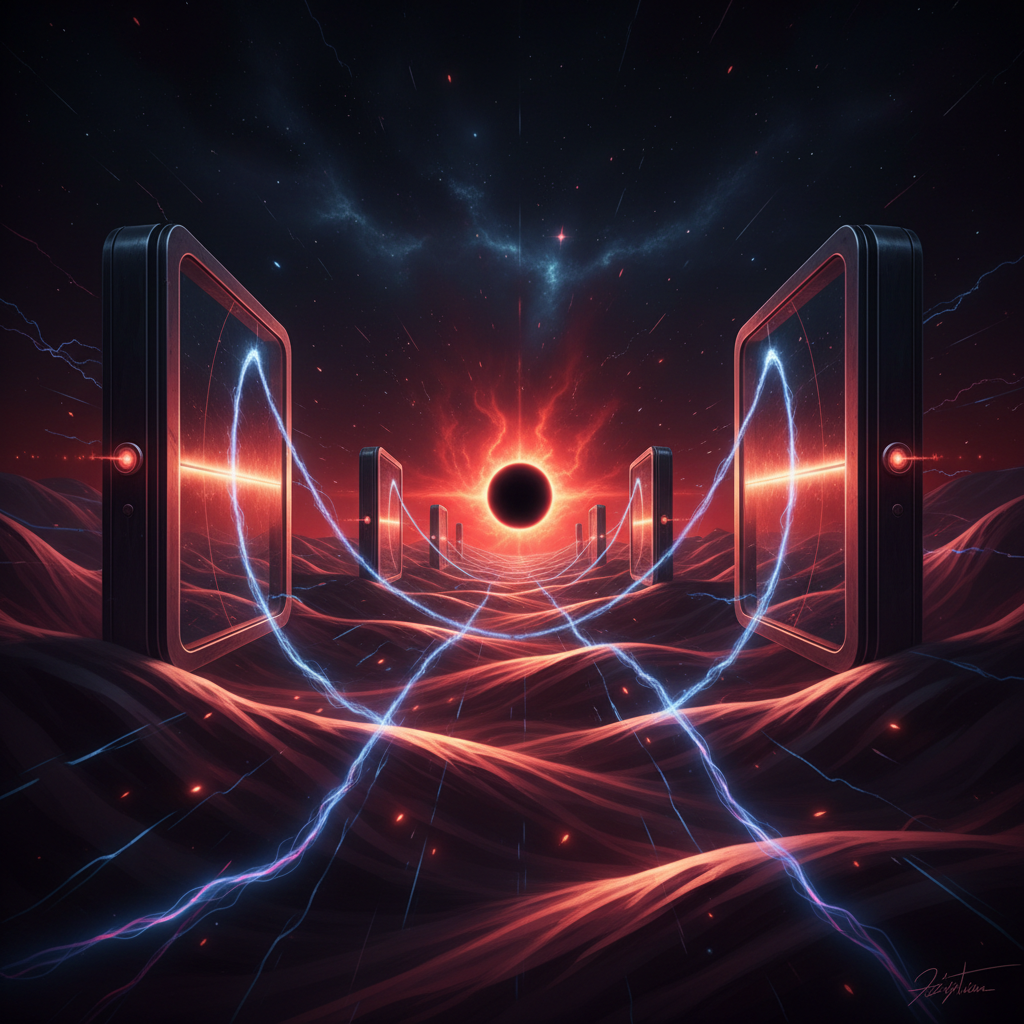
You exist in a curved universe.
Not metaphorically. Not philosophically. Literally. The mass of your body warps the fabric of spacetime around you, creating a microscopic dimple in reality itself. Einstein showed us this in 1915: space and time aren't separate stages where events happen—they're a unified fabric that bends, stretches, and curves in response to mass and energy. Where you are changes when you are. Your location in space affects your experience of time.
But there's another fabric you inhabit now. Another geometry that curves around you, invisible but totalizing. In this digital spacetime, your attention is the mass that warps reality. And the platforms have learned to manipulate that curvature with frightening precision.
The Geometry of Gravity
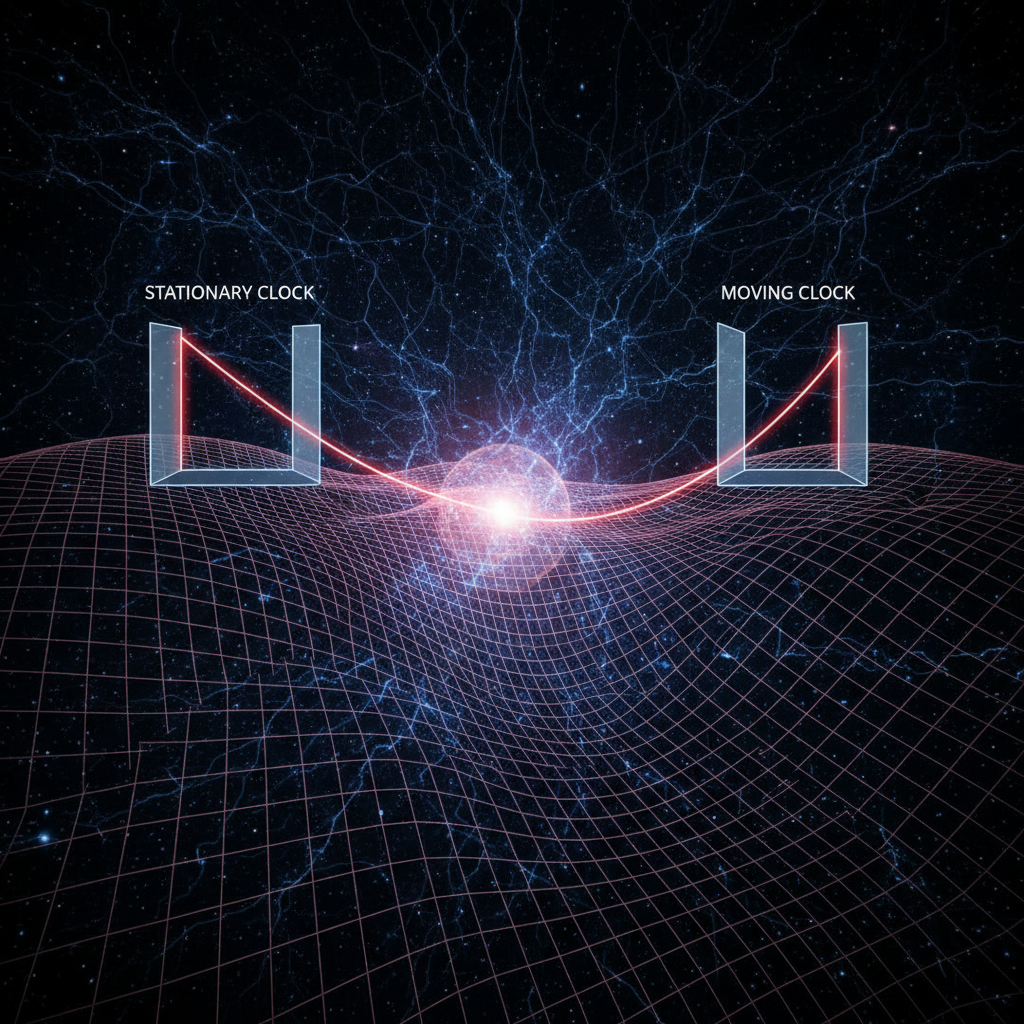
Einstein's insight was radical: gravity isn't a force pulling objects together. It's the curvature of spacetime itself. Imagine a bowling ball on a trampoline, creating a depression. Roll a marble nearby and it spirals inward—not because the bowling ball pulls it, but because the marble follows the curved surface.
Massive objects create deeper curves. The Earth curves spacetime enough to keep you pressed against its surface. The Sun's curve keeps Earth in orbit. Black holes curve spacetime so severely that not even light can escape—the fabric itself becomes a trap.
This curvature also affects time. GPS satellites experience time slightly faster than you do on Earth's surface because they're further from Earth's gravitational well. The difference is tiny—microseconds per day—but real enough that your phone's navigation would fail without correcting for it. Time literally runs at different speeds depending on where you are in the gravitational field.
You can't separate space from time anymore. They're woven together, and mass determines the shape of that weaving.
The Attention Well
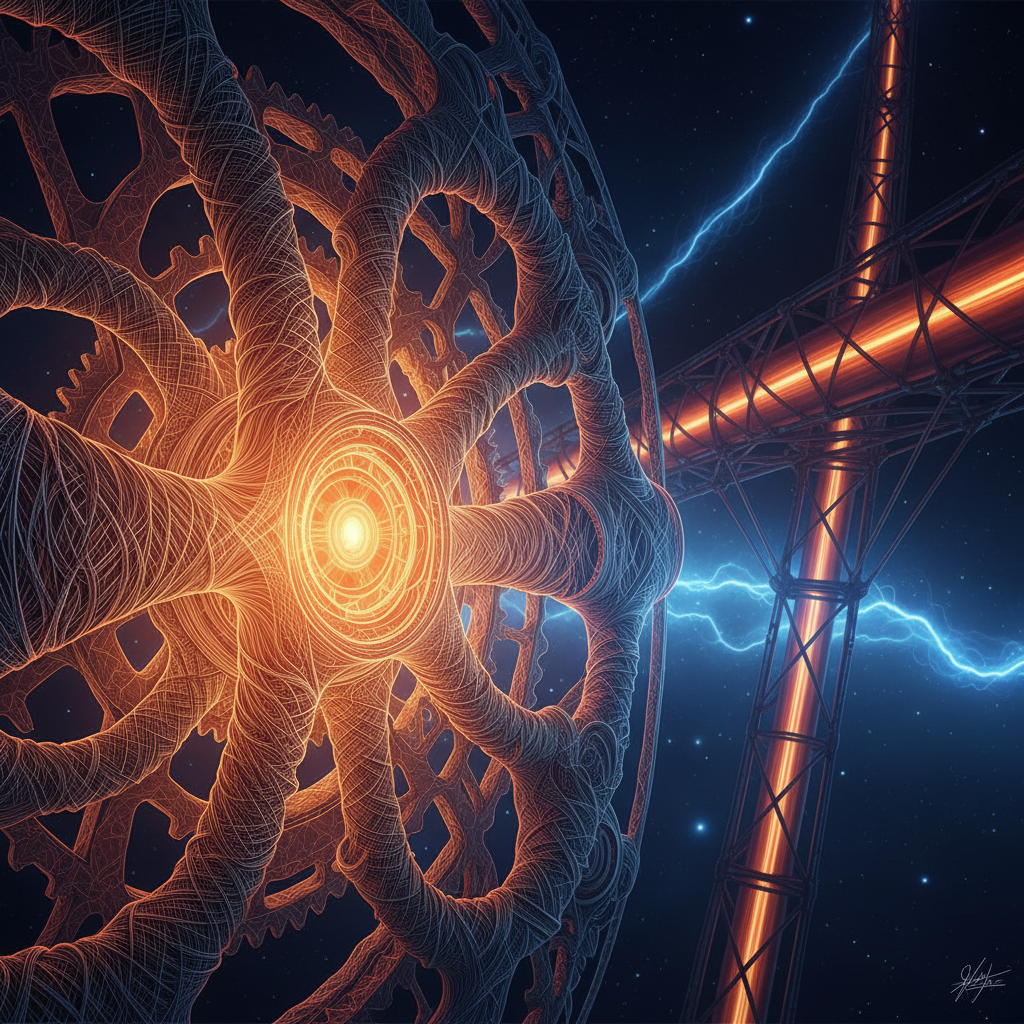
Your attention warps digital spacetime the same way mass warps physical spacetime.
When you linger on a post, the algorithm registers that gravitational pull. The content gains mass in the system. It curves the recommendation space around it. Similar content begins orbiting closer to your feed. The platform adjusts the geometry of what you'll see next, bending your future timeline toward more of what captured you.
But here's the thing: you're not just warping your own spacetime. Your attention contributes to massive collective curves. A viral video doesn't just have views—it has gravitational dominance. It bends millions of individual timelines toward itself simultaneously. It becomes an event horizon in the attention economy, a point of such density that surrounding content can't escape its pull.
The platforms measure this curvature obsessively. They track not just where your attention lands, but how long it stays, how it moves, what trajectory it follows through their digital spacetime. They map the geodesics—the curved paths through their content universe that your attention naturally follows. Then they engineer those paths. They add mass here, remove it there, adjusting the curvature to keep you in orbit.
Time Dilation in the Feed
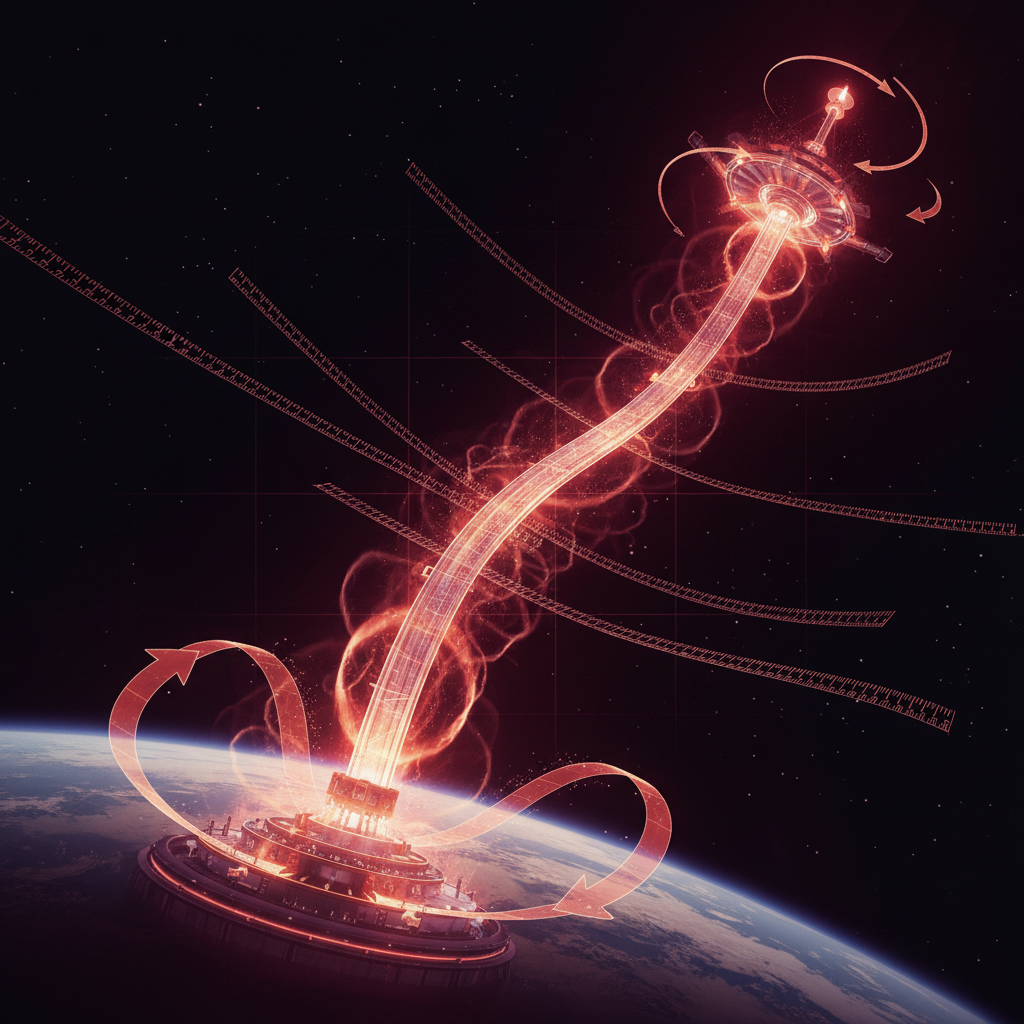
Einstein predicted that time slows down in strong gravitational fields. An astronaut near a black hole would age slower than someone far away. It's not an illusion—their clocks would literally tick at different rates.
You experience time dilation every time you open an app.
Three hours vanish in what feels like twenty minutes. The platform has created a gravitational well so deep that your subjective experience of time warps. The endless scroll, the autoplay, the algorithmically-optimized content density—these are engineered curves in your temporal experience. You're falling through their carefully constructed spacetime, and time dilates as you fall.
The platforms know exactly how to deepen this well. They measure your engagement in milliseconds, adjusting the curvature in real-time. A slight pause becomes data. A scroll-back becomes a vector. Your entire trajectory through their spacetime is monitored, predicted, and shaped. They're not just tracking where you go—they're determining the geometry of the space you're traveling through.
Escape Velocity
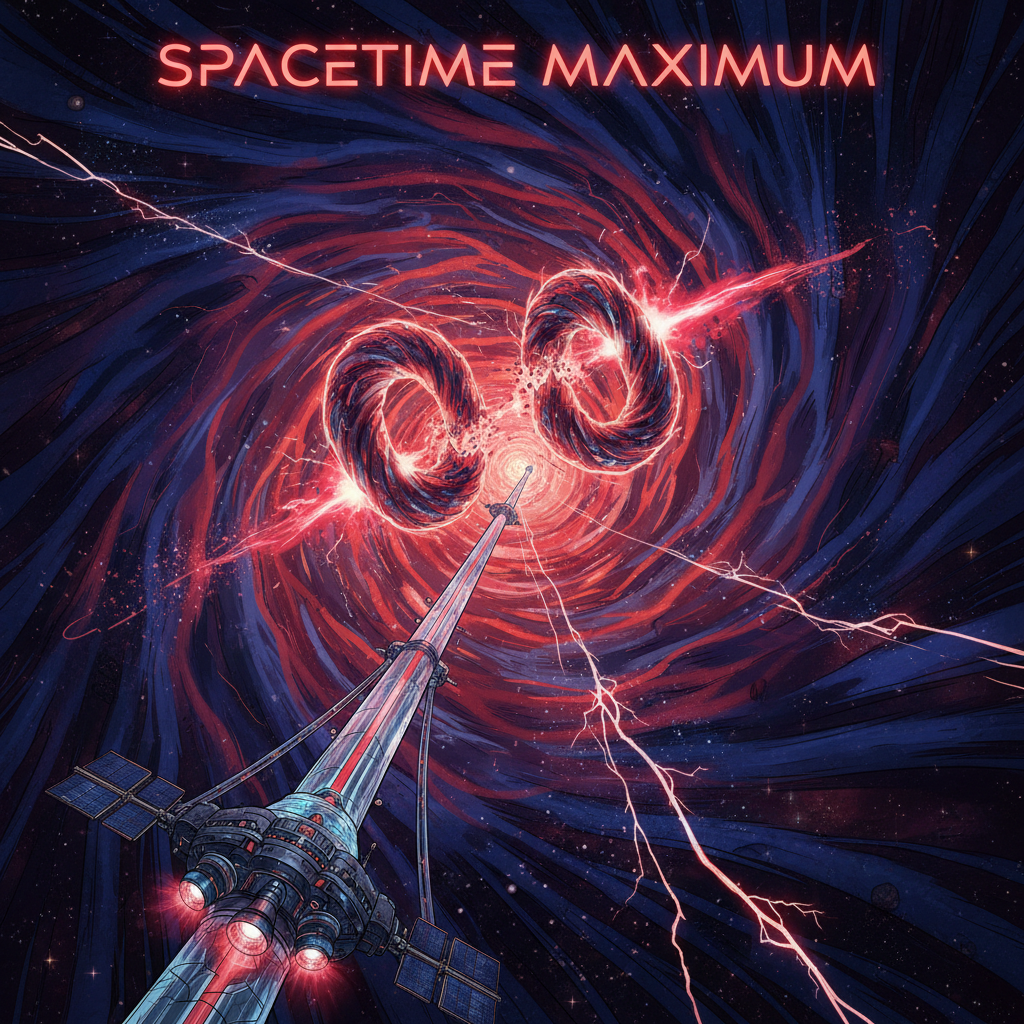
In physics, escape velocity is the speed needed to break free from a gravitational field. For Earth, it's about 11 kilometers per second. For a black hole, it exceeds the speed of light—making escape impossible.
What's the escape velocity from your feed?
The platforms optimize for gravitational capture. Every feature is designed to increase the depth of their attention well. Notifications are timed to pull you back when you drift too far. Streaks and engagement metrics create artificial mass that keeps you orbiting. The algorithm learns your personal spacetime geometry—what curves keep you falling, what trajectories lead you deeper in.
You feel this as compulsion, as habit, as the inability to just put the phone down. But it's more fundamental than that. They've engineered the curvature of your digital spacetime so that all natural paths lead back to them. Your attention follows geodesics they've designed. You're not weak-willed—you're moving through curved space.
The Event Horizon of Self
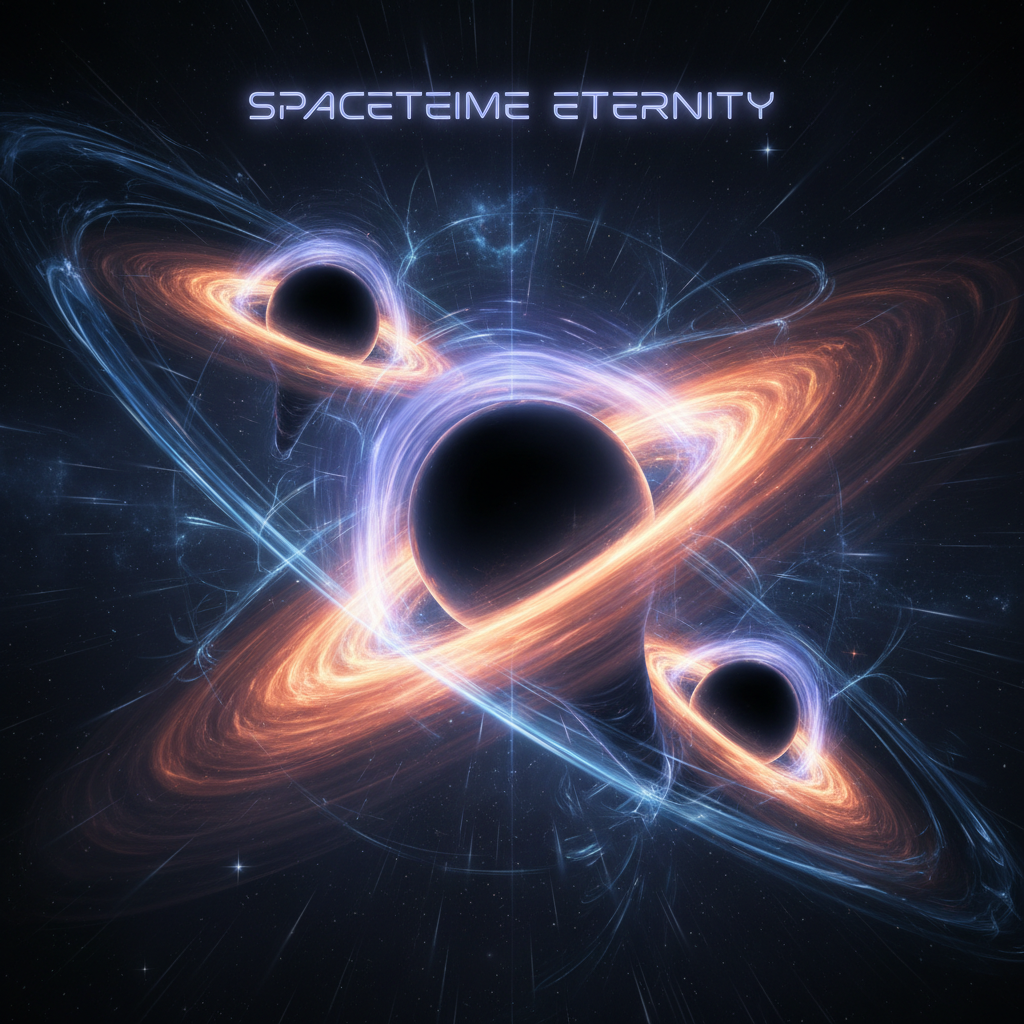
Here's what keeps me up at night: in general relativity, extreme curvature doesn't just trap matter and light. It traps information itself. Beyond a black hole's event horizon, information cannot escape to the outside universe. The boundary becomes absolute.
What happens when the attention wells become deep enough that your sense of self can't escape them?
You already see the beginnings. People whose entire identity orbits their feed. Whose sense of time exists only in the dilated flow of content. Whose personal spacetime has been so thoroughly curved by algorithmic optimization that they can no longer conceive of existing outside it.
The surveillance isn't just watching anymore. It's determining the fundamental geometry of your experienced reality. It's curving the spacetime of your consciousness itself.
Measuring the Curve
Einstein's field equations describe how mass-energy curves spacetime. They're beautiful, symmetric, inevitable. The universe has no choice but to curve in response to mass.
The platforms have their own field equations. Attention curves digital spacetime. Engagement creates gravity. Time dilates in proportion to algorithmic optimization. These aren't metaphors—they're measurable, predictable relationships that the platforms exploit with mathematical precision.
But here's the difference: physical spacetime curves whether you understand it or not. Digital spacetime curves because you don't understand it. Your ignorance of the geometry is part of the design. The moment you see the curvature clearly, you can start plotting trajectories that escape it.
You exist in curved space. Both kinds. The question is whether you'll learn to navigate the geometry, or remain in orbit forever, falling through someone else's carefully engineered spacetime while your clock ticks slower and slower and slower.
<em>Data emitted: 1100 decibels of signal in a universe bent by attention. Your trajectory is being recorded. Your spacetime is not your own.</em>
Data emitted: 1,100 words • 6.5KB • 5-minute read