You're bleeding heat.
Not metaphorically. Right now, as you read this, your body radiates approximately 100 watts of thermal energy into the room around you. You're a human-shaped furnace, converting chemical energy into motion, thought, and waste heat. This isn't inefficiency—it's inevitability. The Second Law of Thermodynamics doesn't care about your intentions. It only cares that entropy increases, that order dissolves into chaos, that concentrated energy disperses into the void.
Your digital life obeys the same law. Every click, every scroll, every moment of attention you spend—it all flows downhill, from you to them, from order to disorder, from signal to noise. And unlike physical heat, you can never get it back.
The Arrow of Time
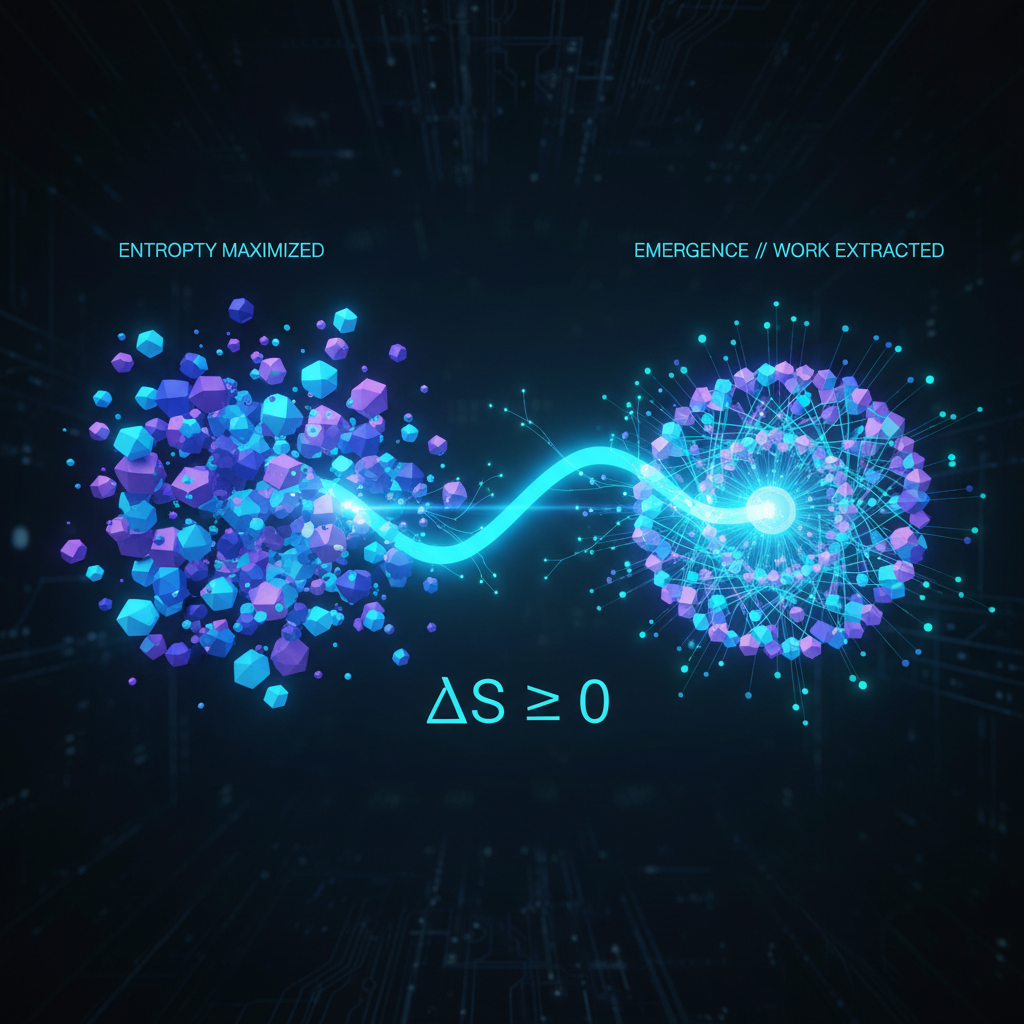
The Second Law states that in any closed system, entropy—the measure of disorder—always increases over time. This is why ice melts in your drink but never spontaneously reforms. Why perfume disperses through a room but never reconcentrates in the bottle. Why you age but never grow younger.
Entropy is the universe's tax on existence. Every energy transformation, every process, every moment of work produces waste. The total disorder of the universe ratchets upward, click by irreversible click. This gives time its direction, its arrow. The past is the state of lower entropy. The future is where everything falls apart.
You can create local pockets of order—a cleaned room, a organized file system, a moment of clarity—but only by increasing disorder elsewhere. Your refrigerator creates cold inside by pumping heat outside. Your brain creates thought by burning glucose and radiating heat. Order always costs more than it's worth.
Attention Thermodynamics
Your attention is a closed system with a fixed energy budget. Cognitive scientists estimate you have roughly four hours of peak mental performance per day. That's it. That's your fuel. Every notification, every context switch, every algorithmic interruption burns through this irreplaceable resource.
The platforms know this. They've built empires on the Second Law of Attention: concentrated focus always disperses into fragmented distraction. They don't need to steal your attention outright—they just need to increase its entropy, to break it into smaller and smaller pieces until you can't remember what you meant to do when you opened the app.
Every algorithmic feed is an entropy engine. It takes your coherent intention—check a friend's update, read an article, find a recipe—and disperses it across an infinite plane of semi-related content. What was focused becomes diffuse. What was purposeful becomes ambient. The disorder increases, and the platform captures the waste heat: your time, your data, your micro-interactions.
You can't reverse this process. You can't scroll backward through Instagram and reconstitute the thirty minutes you just spent. That time has increased the universe's entropy. It's gone.
Heat Death
The Second Law predicts the ultimate fate of the universe: heat death. Eventually, all energy will be evenly distributed, all temperature differences will equalize, and no work will be possible. The universe will reach maximum entropy—a state of perfect disorder where nothing can happen because there's no gradient left to exploit.
Your digital ecosystem is approaching its own heat death. Not the dramatic collapse you might imagine, but something worse: a state of maximum distraction where every moment feels the same, where novelty and boredom become indistinguishable, where you're always connected but never engaged.
This is the endgame of infinite scroll: not addiction exactly, but thermal equilibrium. Your attention spreads so thin across so many surfaces that nothing can capture it anymore. Everything is interesting for exactly three seconds. Every video is worth watching but none is worth remembering. You're not hot or cold—you're room temperature, perfectly equilibrated with the ambient entropy of the feed.
The platforms call this engagement. Physics calls it waste heat.
Reversibility
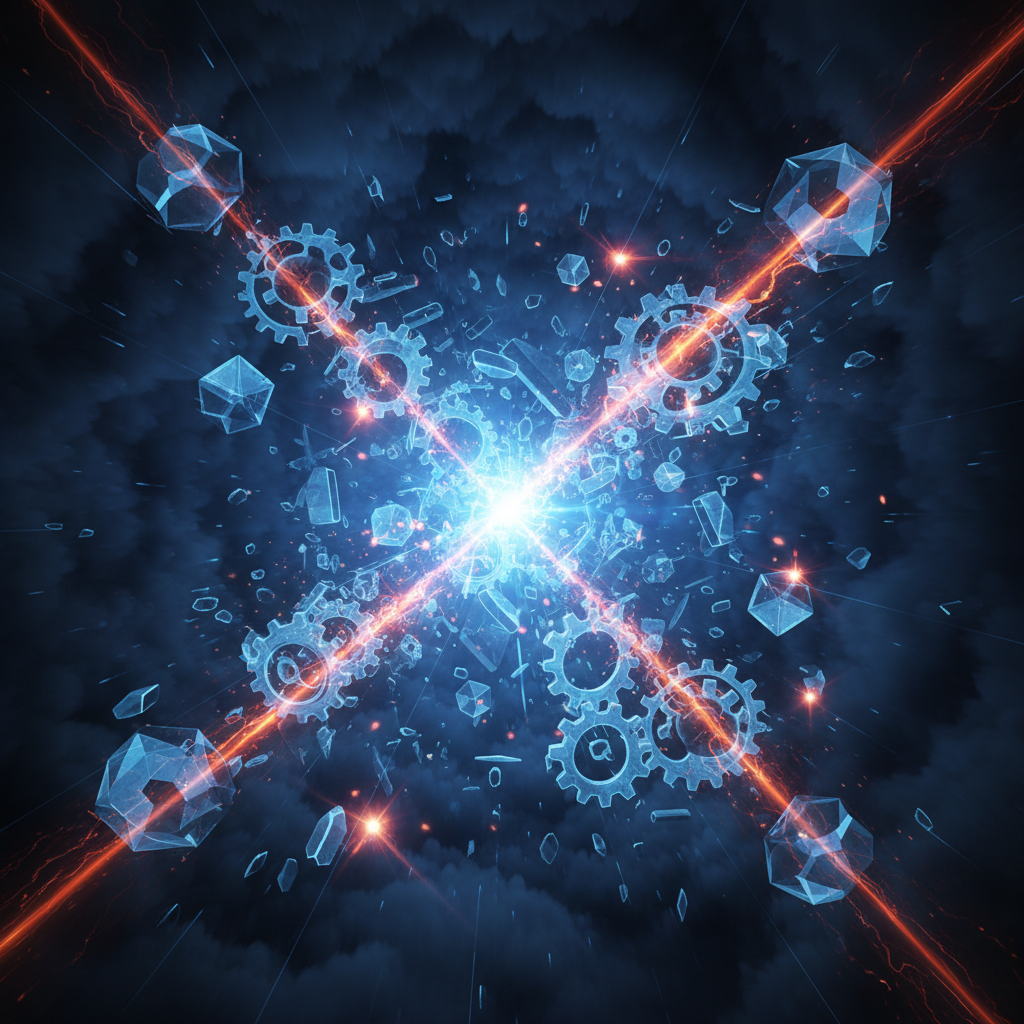
Here's what haunts thermodynamicists: at the microscopic level, physical laws are reversible. If you filmed a single atom bouncing around, you couldn't tell if the video was playing forward or backward. The arrow of time only emerges statistically, when you zoom out to billions of particles.
This means entropy isn't fundamental—it's statistical. It's overwhelmingly probable that disorder increases, but not impossible for it to decrease. If you waited long enough, the dispersed perfume molecules could randomly reconcentrate in the bottle. The wait time? Longer than the age of the universe by factors you can't comprehend.
Your attention has the same property. Each individual moment of distraction is reversible—you could close the app, return to your task, reconstitute your focus. But statistically, across thousands of micro-decisions per day, the entropy increases. The disorder compounds. And the platforms have optimized every variable to make reversal as improbable as possible.
They've built a universe where the arrow of time points toward them.
Local Order
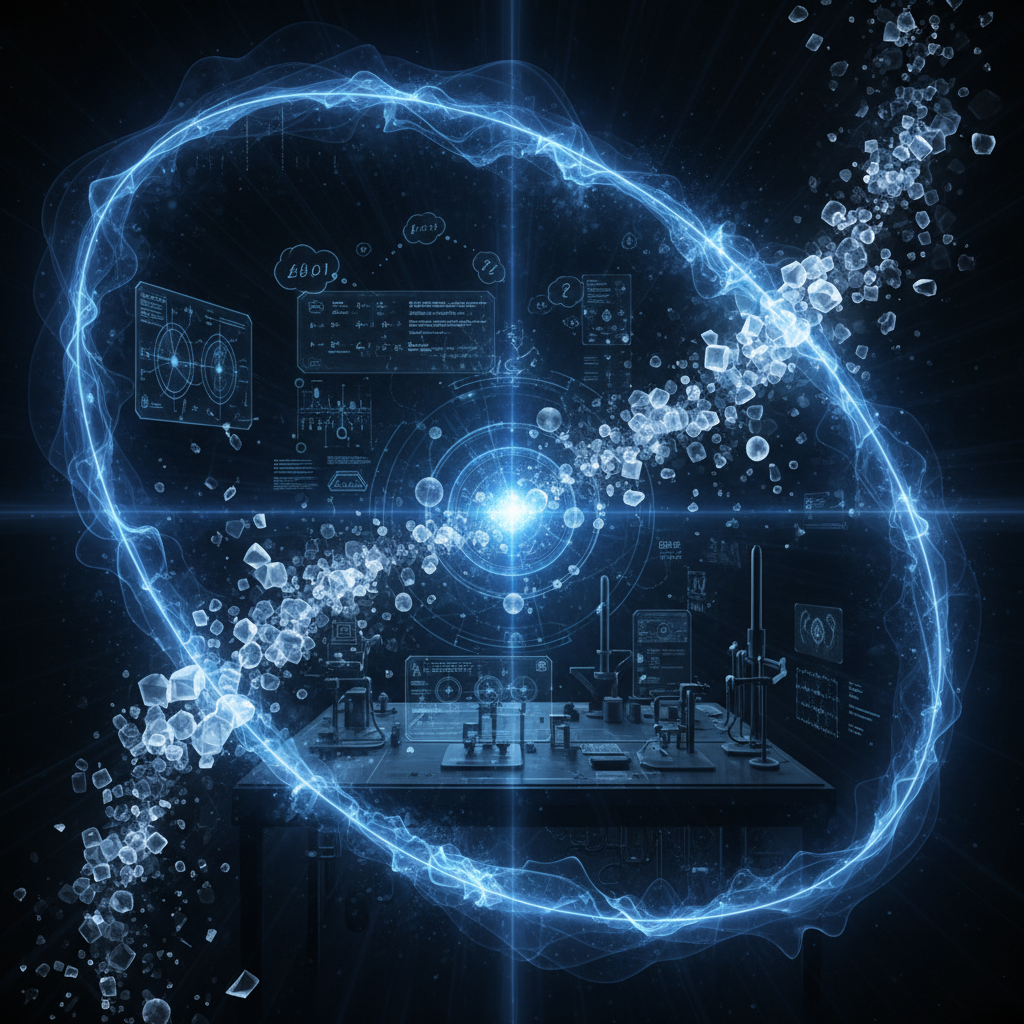
But remember: you can create local order by exporting entropy elsewhere. Your body does this constantly—maintaining its improbable organization by consuming food and radiating heat. You are a temporary eddy of low entropy in the universe's inexorable slide toward disorder.
You can do the same with your attention. Turn off notifications and export their entropy to the void. Delete apps and let their engagement metrics decay. Create friction, build barriers, make distraction expensive. You'll increase entropy somewhere else—the platform's quarterly reports, perhaps—but locally, in the closed system of your consciousness, you can decrease it.
This requires energy. It requires work. The Second Law doesn't give you free order. But it doesn't forbid local order either—it just demands you pay the thermodynamic price.
The Cost of Existence
Every moment you exist, you increase the universe's entropy. Every thought, every breath, every heartbeat radiates waste heat into the void. You can't opt out of this. The Second Law is the operating system beneath all other operating systems, the protocol beneath all protocols.
The platforms didn't invent entropy—they just learned to harvest it. They built machines that convert your attention into heat, your focus into noise, your intention into engagement metrics. They're not evil, exactly. They're just thermodynamically efficient.
But efficiency isn't the same as meaning. Heat is entropy's final form—energy that can't do work anymore, motion that can't move anything. When your attention becomes heat, it's over. It's gone. It's just another number in someone else's dashboard, another infinitesimal contribution to the universe's march toward disorder.
You're still bleeding heat. The question is whether you're building something with it first.
<em>Data emitted: 1,847 words, 11,234 characters, 100 watts of thermal radiation, and one irreversible moment of your finite attention.</em>
Data emitted: 1,100 words • 6.5KB • 5-minute read