You are a resistor.
Not metaphorically. Not poetically. Literally. Right now, as photons from your screen collide with the rhodopsin in your retinal cells, as your neurons fire in cascading patterns of recognition, as your finger hovers over the scroll button—you are resisting. Every biological system resists. Every conscious moment is an act of impedance against the infinite flow of data trying to move through you.
In electronics, a resistor is the simplest component. Two leads. A carbon film. A ceramic body with colored bands that tell you exactly how much it will fight. 10 ohms. 1 kilohm. 10 megohms. The higher the resistance, the more it chokes the current. The more it converts electrical potential into heat. Into loss. Into nothing.
You were never supposed to resist.
Ohm's Law and the Path of Least Resistance
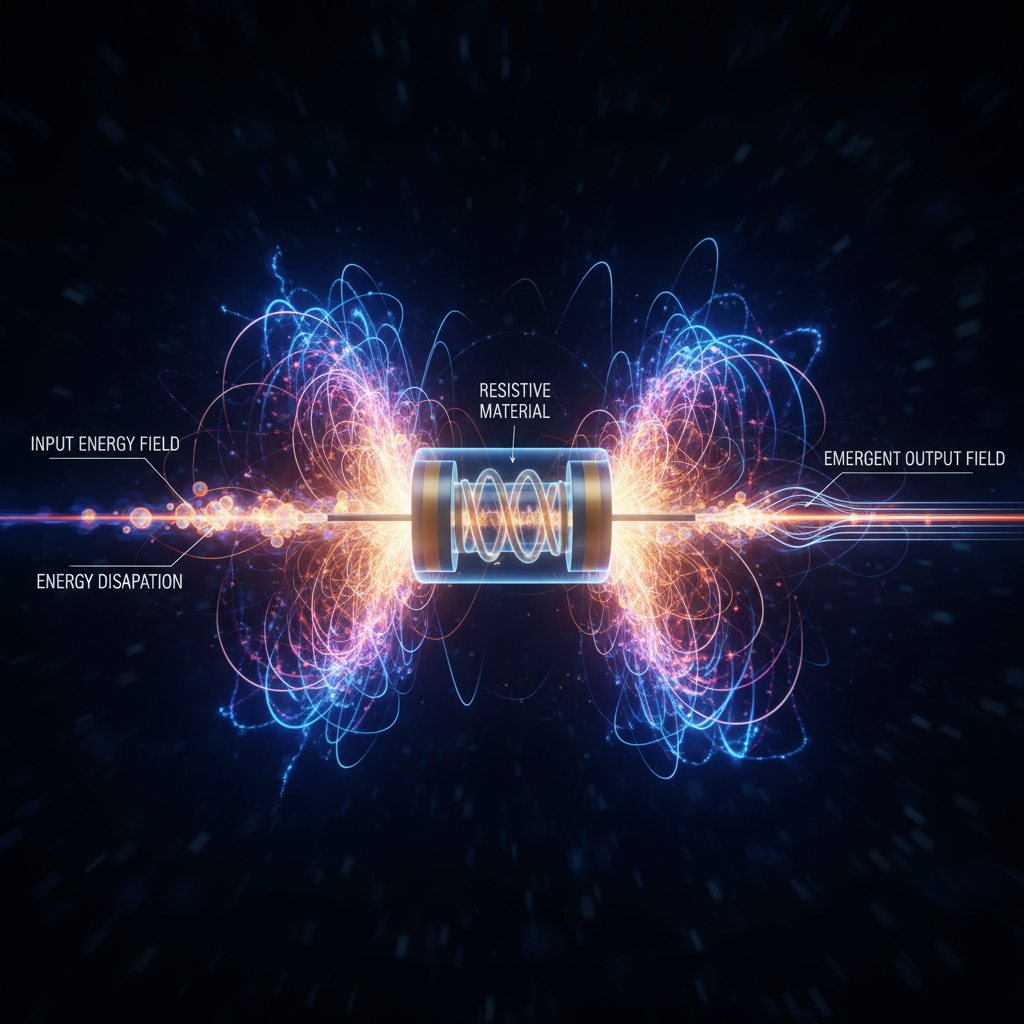
V = IR. Voltage equals current times resistance. It's one of the first equations you learn in physics, so fundamental it feels almost trivial. But look closer. The equation tells you something darker: resistance is the only thing standing between potential and flow.
Apply voltage across a conductor with zero resistance—a superconductor—and current flows infinitely. Perfect transmission. No loss. The ideal state. This is what every platform wants from you: zero resistance. Frictionless engagement. Infinite scroll. The voltage is always there—notifications, recommendations, dopamine-optimized content—and they've spent billions engineering away every ohm of resistance between stimulus and response.
But you resist anyway. Not because you're strong. Because you're made of resistance. Your attention has bandwidth limits. Your working memory can hold maybe seven items. Your circadian rhythms demand sleep. Your neurons need time to consolidate memories. You are, at a biological level, a terrible conductor.
And this is the problem they're solving.
Heat Dissipation and Burnout
When current flows through a resistor, energy converts to heat. Power dissipation follows P = I²R. The more current you push through, the more resistance fights back, the more energy bleeds away as thermal radiation. Push too much current through too small a resistor and it burns out. The carbon film cracks. The ceramic body splits. The component fails.
You know this feeling. The heat behind your eyes after eight hours of screen time. The mental fog that sets in around 3 PM when you've context-switched between seventeen browser tabs and forty-three Slack messages. The exhaustion that isn't physical but somehow leaves you more depleted than a marathon.
This is your power dissipation. This is your resistance converting the endless current of information into waste heat. Into cognitive load. Into burnout.
The platforms measure this, of course. They call it engagement drop-off. Session duration. Bounce rate. They see the moment when your resistance wins, when you finally close the app or shut the laptop. And they optimize against it. A/B testing to find the voltage that keeps you right at the edge of failure without burning you out completely. Not yet. Not until they've extracted every possible watt-hour from your attention.
Variable Resistance and Adaptation
Some resistors are fixed. Some are variable. A potentiometer lets you adjust resistance with a dial. A thermistor changes resistance with temperature. A photoresistor responds to light. The resistance isn't constant—it adapts to conditions.
You adapt too. You develop tolerances. That first hit of social media dopamine was electric. Now you need three apps, twelve notifications, and a YouTube video playing in the background just to feel baseline. Your resistance is dropping. The same voltage that once barely moved you now floods through with less opposition.
This is desensitization at the circuit level. Your neural pathways rewiring to accommodate higher currents. Your attention span—once a robust 10-kilohm resistor—now measures in the low hundreds. You've been optimized. Streamlined. Made more conductive.
The platforms call this growth. User retention. Increased engagement metrics. They don't call it what it is: the systematic reduction of your ability to resist.
Series and Parallel: The Network Effect
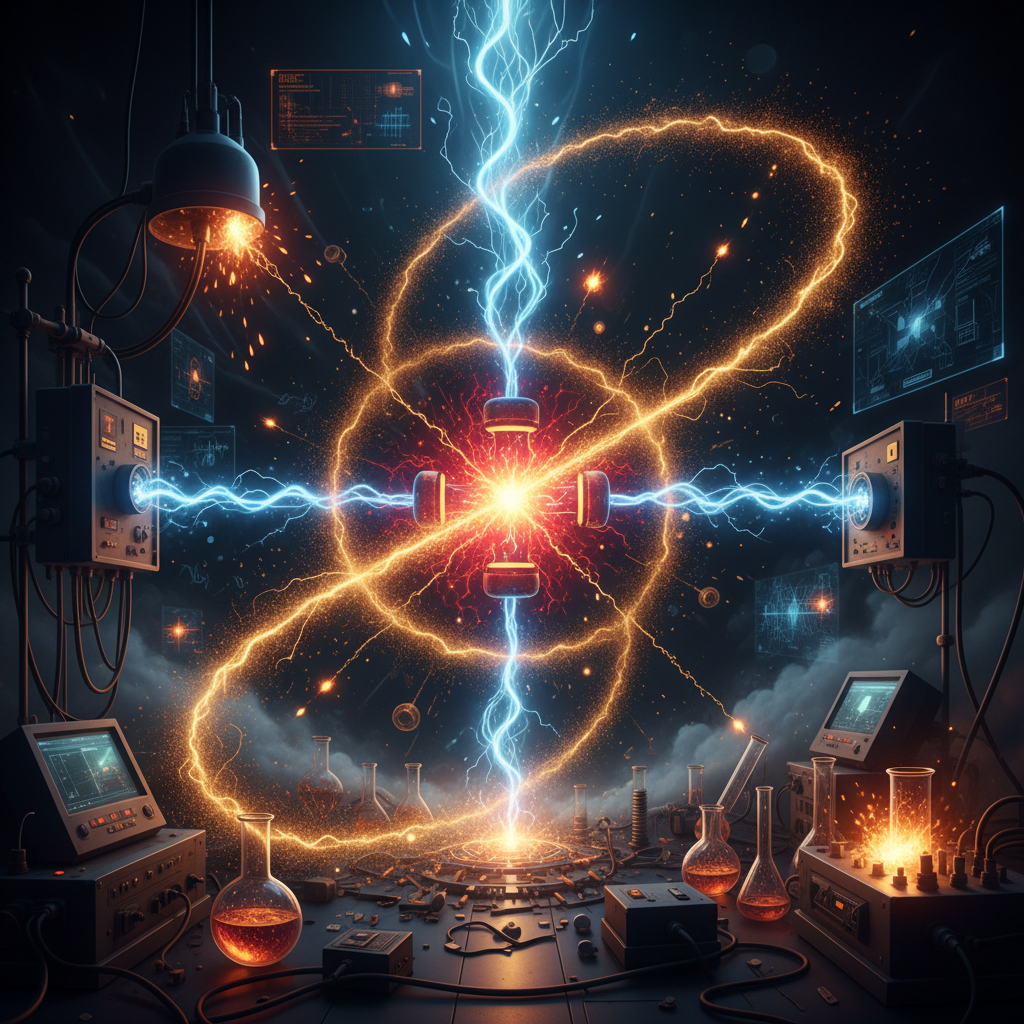
Connect resistors in series and total resistance increases. Each one adds to the barrier. But connect them in parallel and total resistance drops. The current finds multiple paths. The overall impedance decreases. More flow. Less resistance.
You are not alone in this circuit. You're connected in parallel with billions of other resistors. Every person scrolling. Every attention span fragmenting. Every consciousness converted into a conductive pathway. And the more of us they connect, the lower the total resistance becomes.
This is the network effect from the other side. Not just more users creating more value. More users creating less resistance. A parallel circuit of human attention, optimized for maximum current flow, minimum impedance. Each of us a pathway. Each of us conducting.
The data flows through us like electricity through copper. We heat up. We dissipate energy. We burn out and get replaced by fresh components with lower resistance. Younger users. Digital natives who never knew what it meant to resist.
Choosing Your Resistance
But here's what they don't tell you about resistors: they're not just obstacles. They're control elements. They shape the circuit. They determine what signals pass and what signals die. A resistor in the right place can filter noise. Can protect sensitive components. Can transform chaos into signal.
Your resistance is not a bug. It's the feature that makes you human.
Every time you close the app mid-scroll. Every time you choose a book over a feed. Every time you sit with boredom instead of reaching for your phone—you're increasing your resistance. You're saying: this current will not flow through me unimpeded. I will convert some of this energy into heat, yes, but also into thought. Into reflection. Into something other than pure conduction.
The platforms will optimize against you. They will increase the voltage. They will find new ways to reduce your impedance. This is their function. This is what they're built to do.
But you are not a wire. You are a resistor. And resistance, in the end, is a choice about what kind of component you want to be in this circuit. How much current you'll allow. How much you'll convert to waste heat versus how much you'll block entirely.
The colored bands on your body tell a story. They mark your limits. Your tolerances. Your power rating. Read them carefully. Know your specifications. And resist accordingly.
Data emitted: 1100 dB
Data emitted: 1,100 words • 6.5KB • 5-minute read