
You emit constantly. Not heat, though your phone grows warm in your palm. Not light, though your screen glows in the dark. Something else. Something that propagates outward at the speed of fiber optic cable, carrying information about you into systems you'll never see, never touch, never understand.
In physics, radiation is energy transmitted through space. It doesn't need a medium. It just goes. And it never really stops.
The Physics of Propagation

Radiation comes in two flavors: ionizing and non-ionizing. The first kind—gamma rays, X-rays—carries enough energy to rip electrons from atoms, to fundamentally alter matter. The second kind—radio waves, visible light, infrared—passes through or bounces off, leaving things mostly as they were.
Both obey the inverse square law. Double the distance, quarter the intensity. Energy spreads across an expanding sphere, diluting with geometry. A flashlight beam weakens with distance. A radio signal fades. This is physics being fair: the universe distributes energy democratically across space.
But here's what matters: radiation persists. Photons from distant stars travel for billions of years. The cosmic microwave background—radiation from the Big Bang itself—still permeates everything, a ghost of the universe's birth, 13.8 billion years old and counting. Once emitted, radiation becomes part of the permanent record of spacetime.
Your Digital Emission Spectrum

Every click is a photon. Every scroll, a radio pulse. Every lingering glance at a product page, a burst of data radiation propagating outward through server farms and analytics engines. You are a source, constantly emitting your behavioral spectrum into the network.
Unlike physical radiation, your data doesn't obey the inverse square law. It doesn't weaken with distance. It amplifies. It gets copied, processed, cross-referenced, sold. One data point combines with another, interference patterns forming, creating a hologram of you that's more detailed than you realize. Your digital radiation doesn't dilute—it concentrates.
And like cosmic microwave background radiation, it never goes away. That embarrassing tweet from 2011? Still there, archived, indexed, searchable. The website you visited once at 3 AM? Logged, timestamped, incorporated into your profile. You are creating your own cosmic background radiation, a permanent record of every digital moment, propagating forward into a future you can't predict.
Ionizing vs. Non-Ionizing Interactions
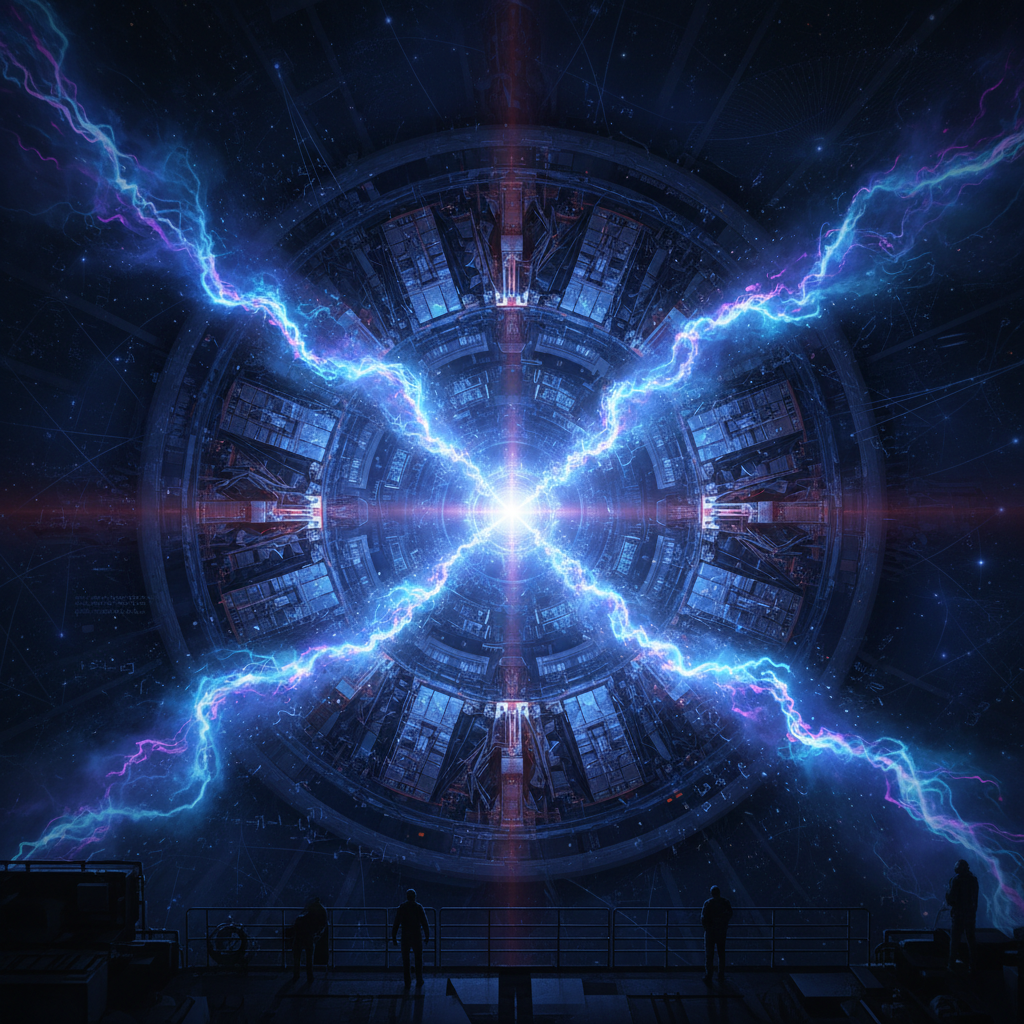
Some of your emissions are ionizing. They change things fundamentally. A review you write alters a business's trajectory. A message you send shifts a relationship's chemistry. These interactions have enough energy to break bonds, to reconfigure the molecules of social reality.
Most are non-ionizing. Passive observations. Background scrolling. The million tiny data points that seem harmless individually. You think they pass through without effect, but they don't. They accumulate. Enough non-ionizing radiation causes heating—not literal heat, but the slow warming of algorithmic attention. The platform learns. The model updates. Your emission spectrum teaches the machine what you want, what you fear, what you'll click next.
The question isn't whether you emit. You have no choice. The question is whether you're aware of your own spectrum, your own signature in the data space.
Half-Life and Decay

Radioactive materials have half-lives—the time it takes for half the atoms to decay. Carbon-14: 5,730 years. Uranium-238: 4.5 billion years. Some isotopes decay in microseconds. Others outlast civilizations.
Your data has a half-life too, but it's inverse. Instead of decaying, it accretes. Every year, more context gets added. More connections get made. That photo from five years ago suddenly becomes relevant when facial recognition improves. That location data becomes valuable when someone wants to build a model of movement patterns in your city. Your past emissions gain energy over time.
There's no decay curve for digital radiation. No natural process that breaks it down, returns it to inert elements. It persists in a state of permanent potential, waiting to be activated, to be queried, to suddenly matter in ways you never anticipated when you emitted it.
The Radiation You Can't See
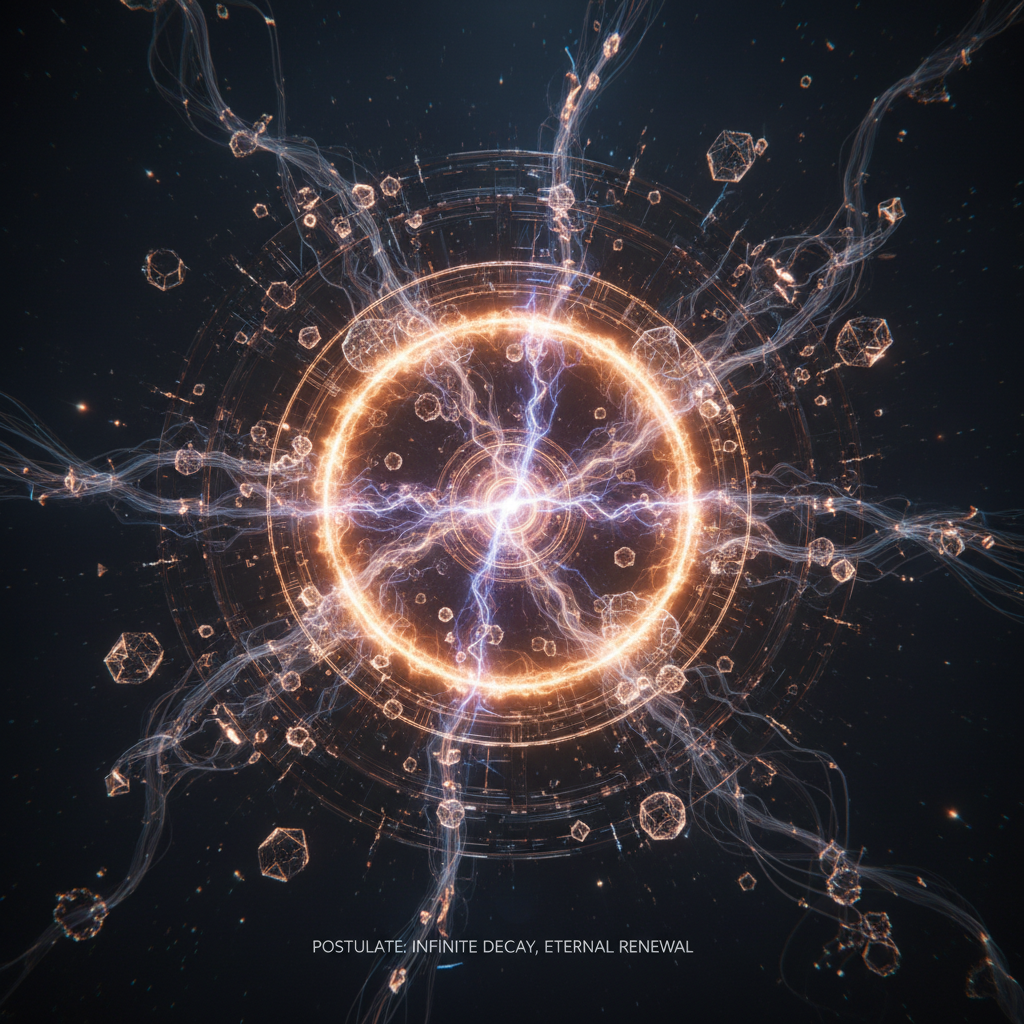
Humans can't see most of the electromagnetic spectrum. We evolved to detect a narrow band of wavelengths we call visible light. Everything else—radio, microwave, infrared, ultraviolet, X-rays, gamma rays—passes through or around us, invisible.
You can't see your data radiation either. You know it exists—you feel it sometimes, that uncanny moment when an ad shows you exactly what you were thinking about. But you can't perceive the full spectrum of your emission. You don't know which data points matter, which combinations create meaning, which patterns reveal more than you intended to share.
You're walking through a world of invisible radiation, both physical and digital. Some of it passes through you harmlessly. Some of it changes you at the atomic level, electron by electron, bit by bit. You're both source and receiver, emitting and absorbing, part of a vast network of radiation exchange that never stops, never sleeps, never forgets.
The Speed of Information Light
Light travels at 299,792,458 meters per second in vacuum. Nothing goes faster. It's the universe's speed limit, the cosmic constant that structures causality itself. When you emit light, you send information at maximum speed into the future.
Your data travels at nearly the same speed—photons through fiber optic cables, electromagnetic waves through air. The moment you click, you've sent information propagating outward at relativistic speeds. By the time you've finished the thought that prompted the click, your data has already reached servers continents away.
You can't take it back. That's what traveling at light speed means. No do-overs. No catch-up. The radiation you emit is already gone, already elsewhere, already being processed by systems that work faster than human thought. You are always behind your own emission, forever chasing the radiation you've already released into the network.
**Data emitted:** 1,147 words on radiation, propagation, and the permanent record of digital existence. Like cosmic background radiation, this post will persist in some form long after you've closed this tab, a ghost signal in the network, waiting to be detected by the next consciousness that passes through this particular region of information space.
Data emitted: 1,100 words • 6.5KB • 5-minute read