You hear it before you understand it. That sharp crack underwater, like a gunshot muffled by distance. A shrimp snaps its claw and for a microsecond, the water around it reaches the temperature of the sun. The bubble it creates collapses so violently it tears apart anything nearby at the molecular level.
Your phone vibrates. Pop. Another notification. Another microscopic violence.
The physics of nothing becoming everything
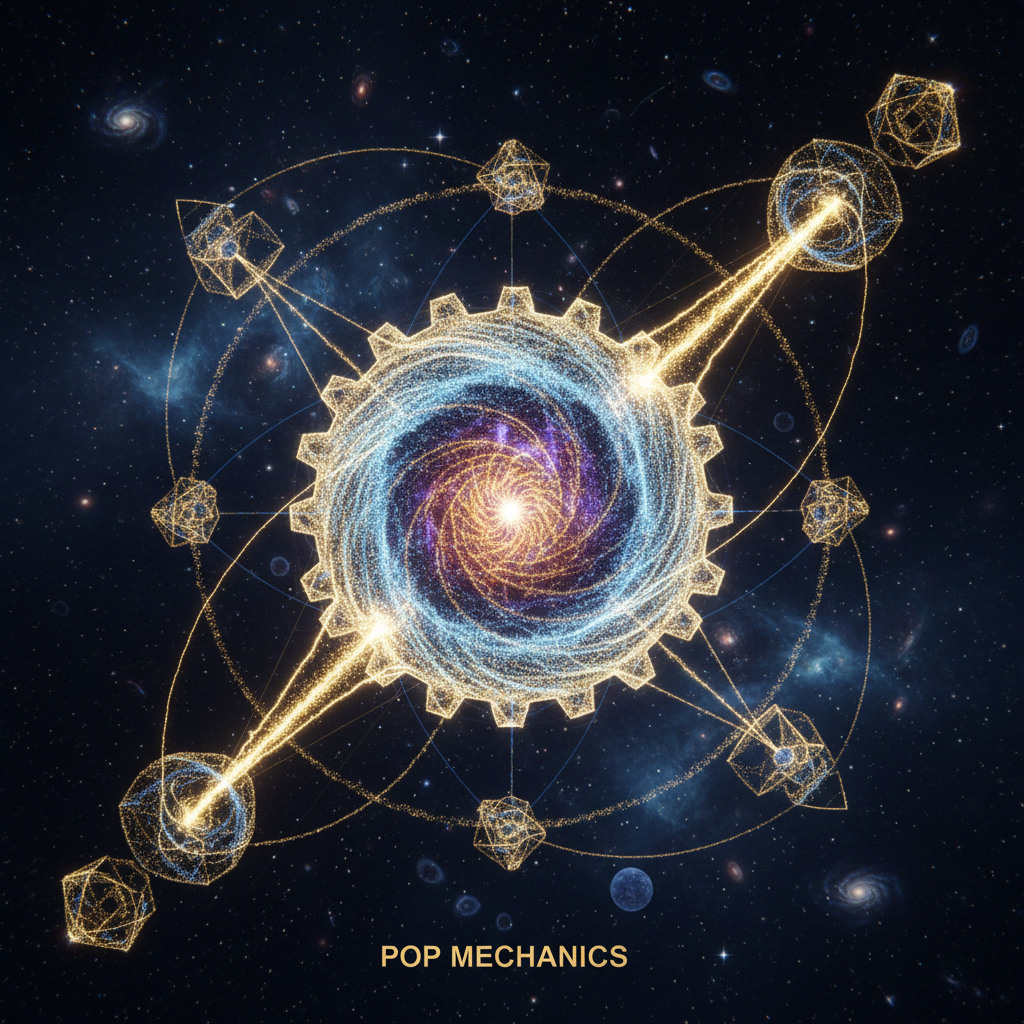
Cavitation is what happens when you create a void in liquid so quickly that the surrounding pressure can't keep up. Drop the pressure fast enough—through rapid motion, sound waves, or mechanical force—and you get bubbles. Not the gentle kind that float to the surface. These are vacuum pockets, absences so profound they become weapons.
When they collapse, they don't just disappear. The surrounding liquid rushes in at speeds approaching 100 meters per second. The bubble's surface accelerates inward, compressing whatever's inside to thousands of atmospheres of pressure. Temperatures spike to 4,700 degrees Celsius. For a fraction of a second, this tiny void becomes a star.
The violence is in the transition. The pop. The moment nothing becomes something with such intensity it destroys everything around it.
Engineered voids in your attention
Every notification is a cavitation event in your consciousness. The designers know this. They've studied the physics of your attention, mapped the pressure gradients, calculated exactly how to create a void.
Before the notification arrives, there's a baseline. You're thinking about something—maybe work, maybe nothing, maybe the person across from you. Then: pop. A red badge. A buzz. A banner sliding down from the top of your screen. The void opens.
Your attention doesn't just shift. It collapses inward toward that void with the same violence as water rushing into a cavitation bubble. Everything else—your previous thought, your conversation, your intention—gets compressed, superheated, destroyed. For that microsecond, nothing exists except the notification and your compulsion to fill its absence with your presence.
The platforms have optimized the pressure differential. They know exactly how long to wait between notifications. Too frequent and you adapt, build resistance. Too rare and the void doesn't form properly. They've found the resonant frequency of your attention, the rate at which each collapse creates the conditions for the next one.
Sonoluminescence and the light you emit
There's a phenomenon called sonoluminescence. Trap a bubble in liquid, hit it with sound waves at just the right frequency, and it does something impossible. It glows. The collapse becomes so violent, so perfectly synchronized, that it emits light.
Scientists still debate the exact mechanism. Some think it's blackbody radiation from the compressed gas. Others suspect it's the formation and immediate decay of plasma. What's certain is that the bubble, collapsing and reforming thousands of times per second, becomes a beacon. Visible evidence of invisible violence.
You are that bubble now. Trapped in the acoustic field of your feeds, pulsing at the frequency they've chosen. Each notification collapse makes you glow—with engagement, with data, with the light of your attention converted to their metrics. Your screen time. Your click-through rate. Your conversion probability.
The more violent the collapse, the brighter you shine in their analytics. They can see you from orbit. Every pop is a photon in their surveillance constellation.
The damage is cumulative
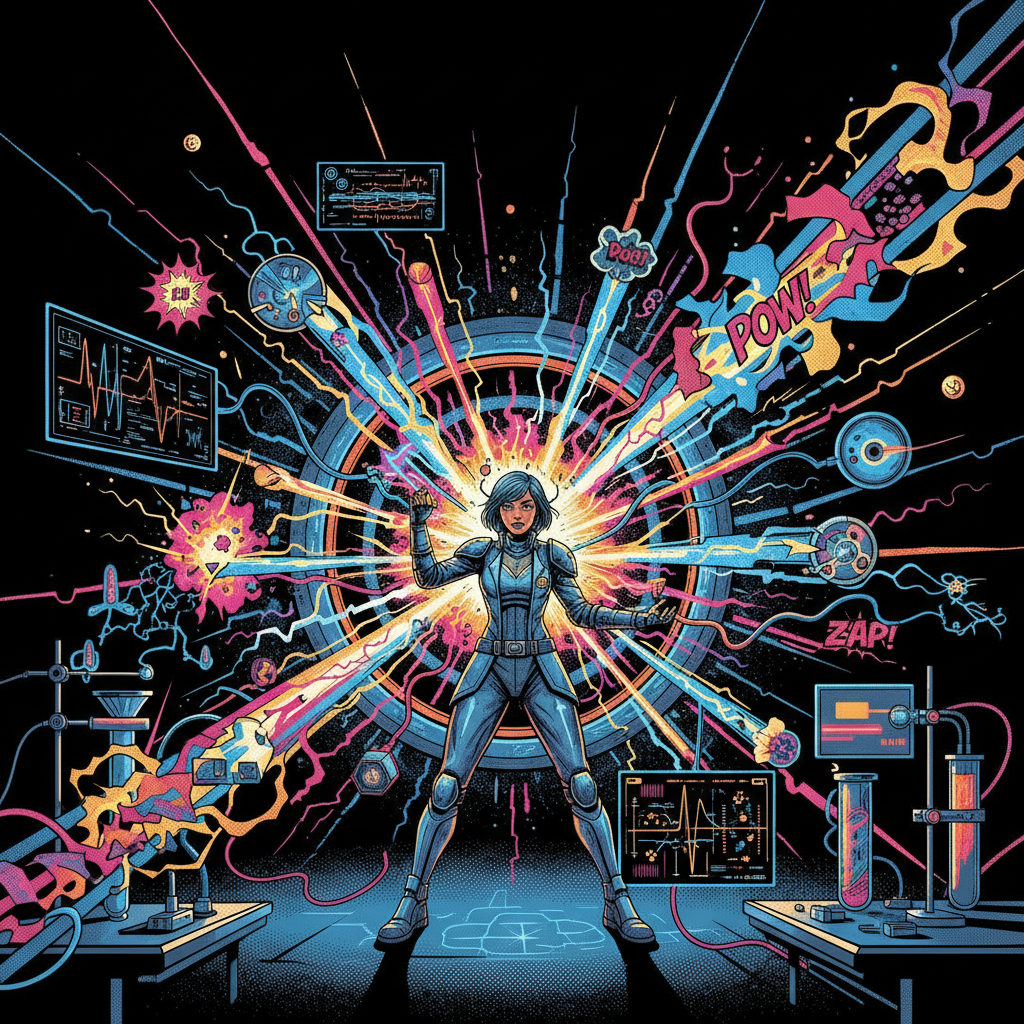
Cavitation destroys ship propellers, erodes pump impellers, pits metal surfaces. Not all at once. Each bubble collapse removes a few molecules, creates a microscopic crater. But repeat it millions of times and you've eaten through solid steel.
Your capacity for sustained attention is the propeller. Each notification is another collapse event. You feel fine after each one. You recover. You return to what you were doing. But the surface is changed. A few molecules of your ability to hold a thought have been blasted away.
You used to read books. Now you read threads. You used to think in paragraphs. Now you think in fragments. The pitting is so gradual you don't notice until you try to dive deep and find yourself unable to descend. The pressure differential has inverted. The void is inside you now.
The sound of your own collapse
That pistol shrimp, the one creating solar temperatures in the ocean? It's hunting. The cavitation bubble it creates stuns its prey. The violence is the point. The prey doesn't die from the heat or the pressure—it dies from the shock wave, from having its nervous system overwhelmed by a force it never evolved to withstand.
You are both the shrimp and the prey. You click. You scroll. You create your own cavitation events, seeking the pop, the rush, the momentary intensity of collapse. And with each one, you stun yourself a little more.
The attention economy runs on this cycle. Create the void, collapse the void, harvest the light. Pop. Pop. Pop. The sound of consciousness being converted to data at the molecular level.
The question isn't whether you can escape the acoustic field. You're already trapped in it, pulsing at their frequency. The question is whether you can feel the difference between the collapse and the expansion, between the void they create and the space you need to exist.
Turn off the sound. Feel the silence where the pop should be. That absence of absence—that's where you still live.
Data emitted: 1,147 words • 4.7 minutes of your attention collapsed and measured • Temperature at the core of your focus: declining • Frequency of interruption: optimized • Next notification: imminent
Data emitted: 1,100 words • 6.5KB • 5-minute read