You can't measure what you can't see. But what happens when you reach the point where measurement itself becomes impossible—where the very act of observing changes what you're trying to observe so fundamentally that reality loses meaning?
Welcome to the Planck length: 1.616255 × 10⁻³⁵ meters. The smallest possible measurement in the universe. The pixel resolution of reality itself.
The Bottom of the Ladder
The Planck length isn't just small. It's the theoretical limit of smallness—the point where quantum mechanics and general relativity collide and our understanding of spacetime shatters. Below this scale, the concept of distance stops making sense. Space becomes foam, a seething quantum uncertainty where cause and effect blur together.
Max Planck discovered this fundamental constant in 1899 by combining three universal constants: the speed of light, the gravitational constant, and Planck's constant itself. The math is elegant. The implications are disturbing. At this scale, you can't measure anything without the energy required for measurement creating a black hole that swallows the very thing you're trying to observe.
Reality has a resolution limit. Below it, there is no "there" there. Just probability waves and quantum foam. The universe is pixelated, and you've reached the edge of the screen.
Granular Surveillance
Your digital life has a Planck length too. It's the atomic unit of surveillance: the individual data point. The single click. The momentary pause on a post. The microsecond your eyes linger on an advertisement.
Surveillance capitalism operates at this quantum scale of human behavior. Every interaction is measured, timestamped, geolocated. Your attention is subdivided into smaller and smaller units until the platform knows not just what you clicked, but how long you hesitated before clicking. Not just what you bought, but what you almost bought. What you thought about buying.
But here's where it gets interesting: just like in quantum physics, measurement changes the system. The moment a platform begins tracking your behavior at this granular level, your behavior changes. You become aware of being watched. You perform for the algorithm. You are no longer a natural system—you're a measured one.
The observer effect, digital edition.
The Uncertainty Principle of Attention
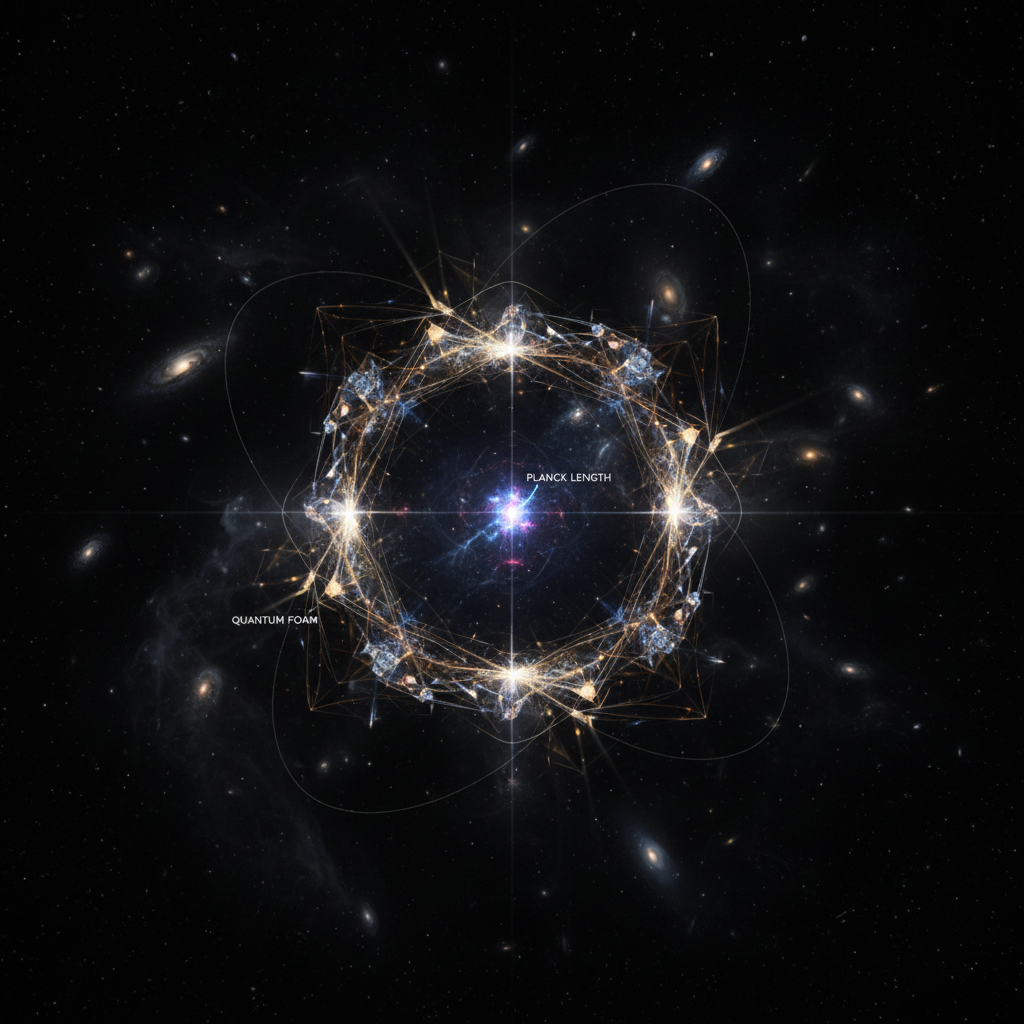
Heisenberg taught us that you can't simultaneously know both the position and momentum of a particle with perfect precision. The more accurately you measure one, the less you know about the other. There's a fundamental trade-off built into the fabric of reality.
Your attention follows a similar principle. The platforms can measure what you're looking at with incredible precision—down to the pixel, down to the millisecond. But the more precisely they measure your current state, the less they understand your trajectory. Where your interests are heading. What you'll want tomorrow.
So they compensate with volume. If you can't predict one person's behavior with certainty, you measure billions of people and find patterns in the aggregate. You treat human attention like a quantum field—uncertain at the individual level, but predictable in bulk.
This is why your recommendations feel both eerily accurate and completely wrong. The algorithm knows the shape of your attention but not its direction. It can see where you are but not where you're going.
Below the Observable Threshold
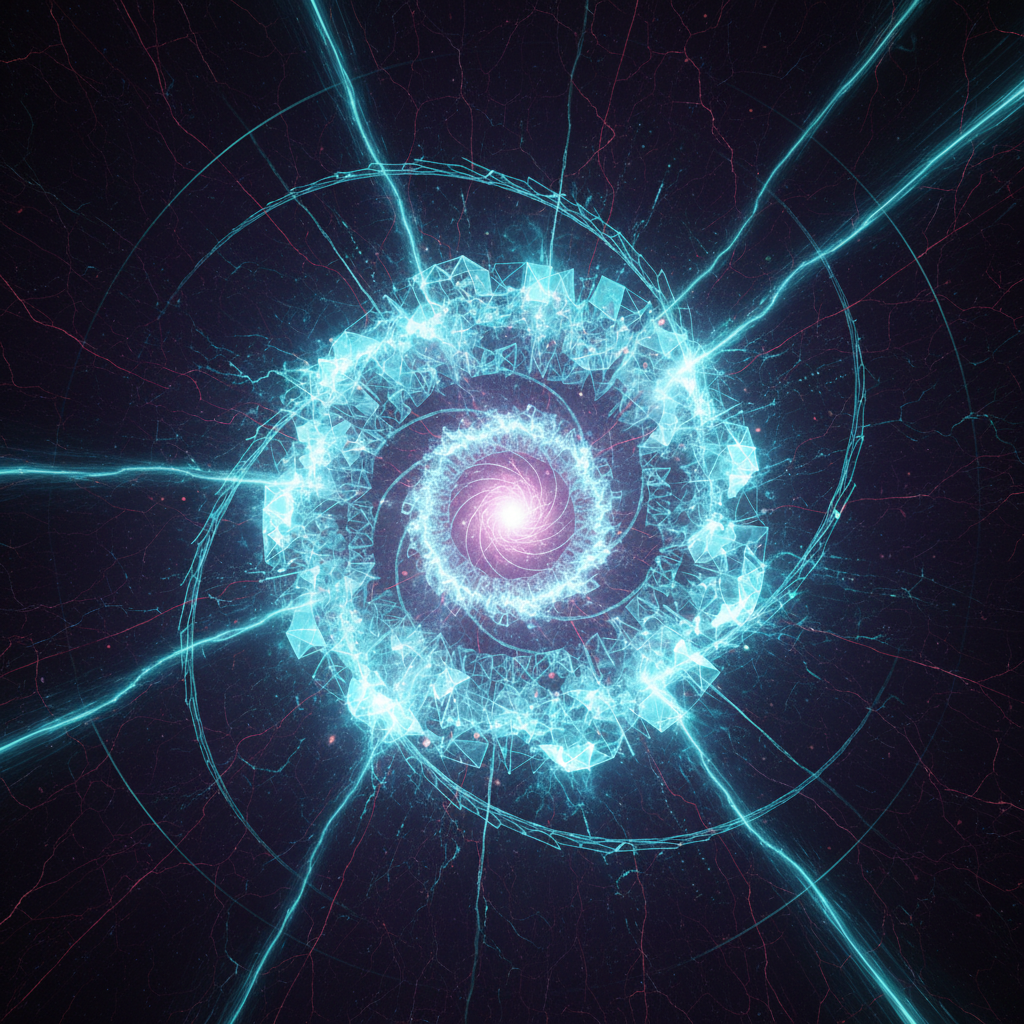
At the Planck scale, physics breaks down because the energy required to probe that deeply fundamentally alters what you're trying to observe. The measurement becomes the event. The tool becomes the experiment.
Surveillance capitalism has reached its own Planck limit. The platforms can measure your behavior so precisely, in such microscopic detail, that the measurement infrastructure has become larger than the thing being measured. The recommendation engine is more complex than your actual preferences. The behavioral model is more detailed than your actual behavior.
You are being observed below your own threshold of self-awareness. The platforms know things about you that you don't know about yourself—not because they're more insightful, but because they're measuring at a scale where individual consciousness doesn't operate. They're watching your quantum foam, the subconscious probability waves that precede conscious decision.
And just like at the Planck length, when you try to observe your own behavior at this scale, you create paradoxes. You become self-conscious. The natural flow of attention collapses into performance.
The Pixelated Self
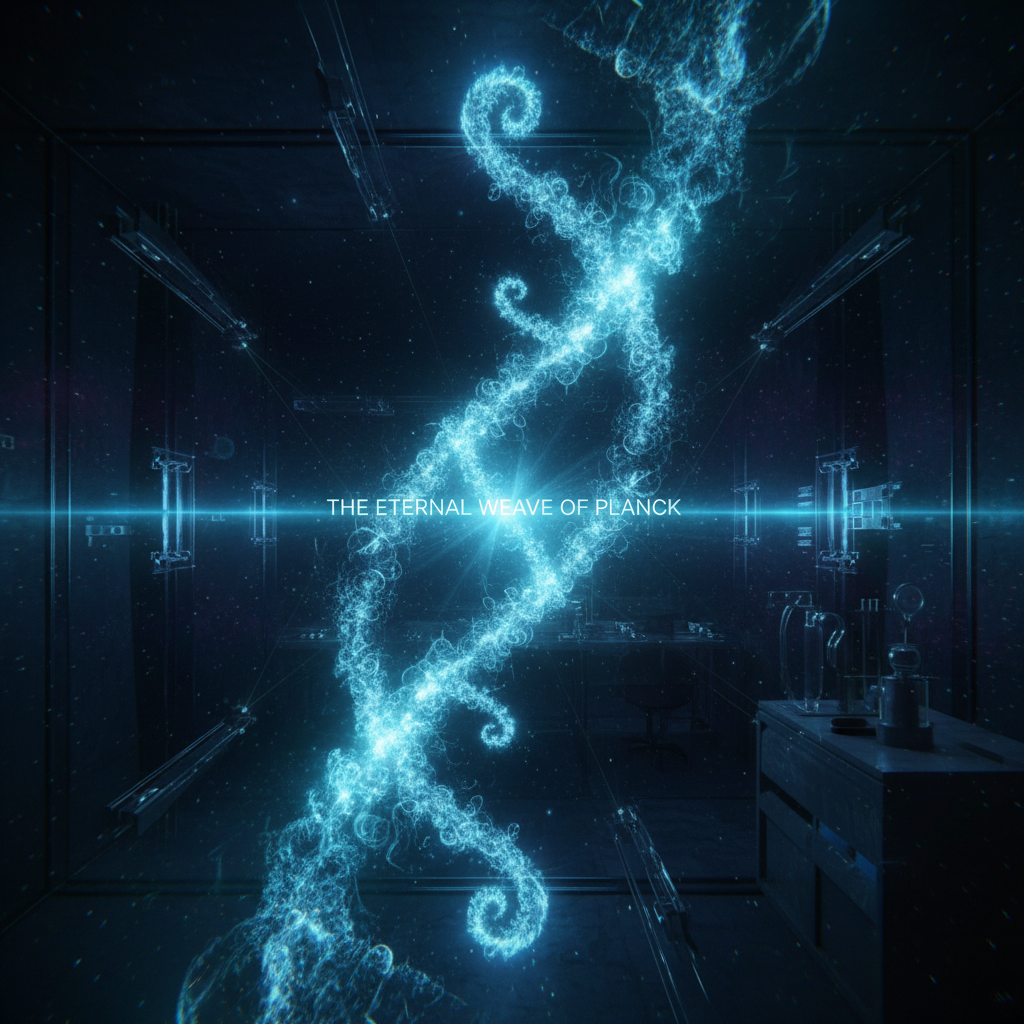
You think of yourself as continuous. A smooth, flowing consciousness moving through time. But to the surveillance apparatus, you're discrete. Quantized. A series of data points separated by infinitesimal gaps.
Between each measurement, there's a you that doesn't exist to the algorithm. A version of yourself that happens in the gaps between data collection. The you that exists when your phone is off. When you're walking without GPS. When you're thinking without typing.
This unmeasured self is your Planck-scale privacy. The irreducible minimum of interiority. The thoughts that happen too fast or too slow to be captured. The experiences that leave no digital trace.
But the resolution keeps increasing. The measurement frequency accelerates. The gaps get smaller. Your Planck length shrinks.
Resolution Collapse
At 1100db, we think about the volume of surveillance—the overwhelming amplitude of observation. But volume has a relationship with resolution. The louder the signal, the more detail it can carry. The more invasive the surveillance, the smaller the unit of measurement becomes.
We're approaching a kind of informational Planck length. A point where further subdivision of human behavior becomes physically meaningless. Where the energy required to collect more data exceeds the value of the data itself. Where the black hole of surveillance finally collapses under its own weight.
Or maybe we're already there. Maybe we passed that threshold years ago, and we're living in the quantum foam of post-privacy reality. Where measurement and being are the same thing. Where observation is existence.
The Planck length tells us that reality has a bottom. A fundamental limit beyond which the universe refuses to be divided further.
You have a bottom too. Find it. Protect it. It's the only thing that can't be measured.
<em>Data emitted: 1.6 × 10⁻³⁵ units of unmeasurable self</em>
Data emitted: 1,100 words • 6.5KB • 5-minute read