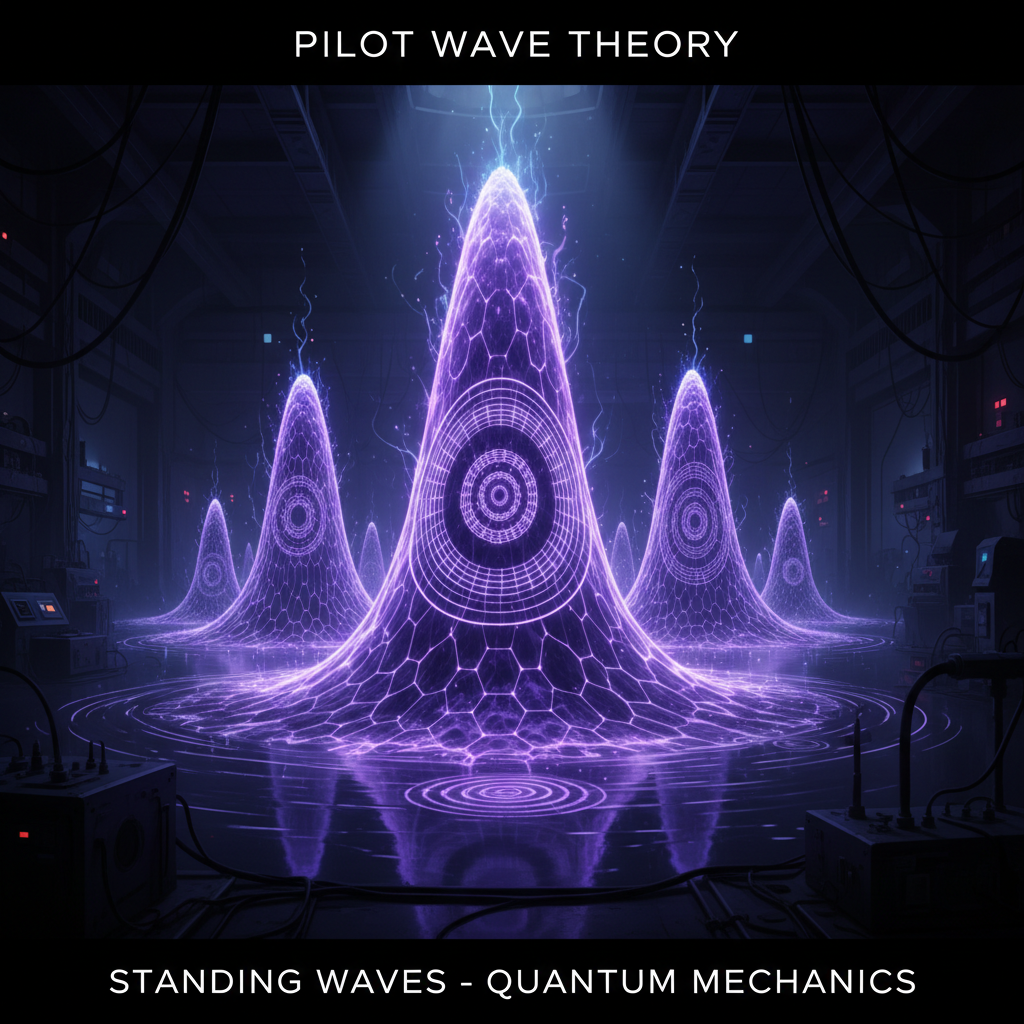
You think you're scrolling freely. Your thumb moves, the feed responds, dopamine fires. It feels like agency. But what if every swipe was already written into the fabric of your digital existence before you even unlocked your screen?
Pilot wave theory suggests something unsettling about reality: particles aren't probabilistic clouds of possibility that collapse when observed. They're solid objects, always in definite positions, surfing invisible waves that guide their every movement. The randomness you thought defined quantum mechanics? Just your ignorance of the hidden currents beneath.
The Quantum Orthodoxy
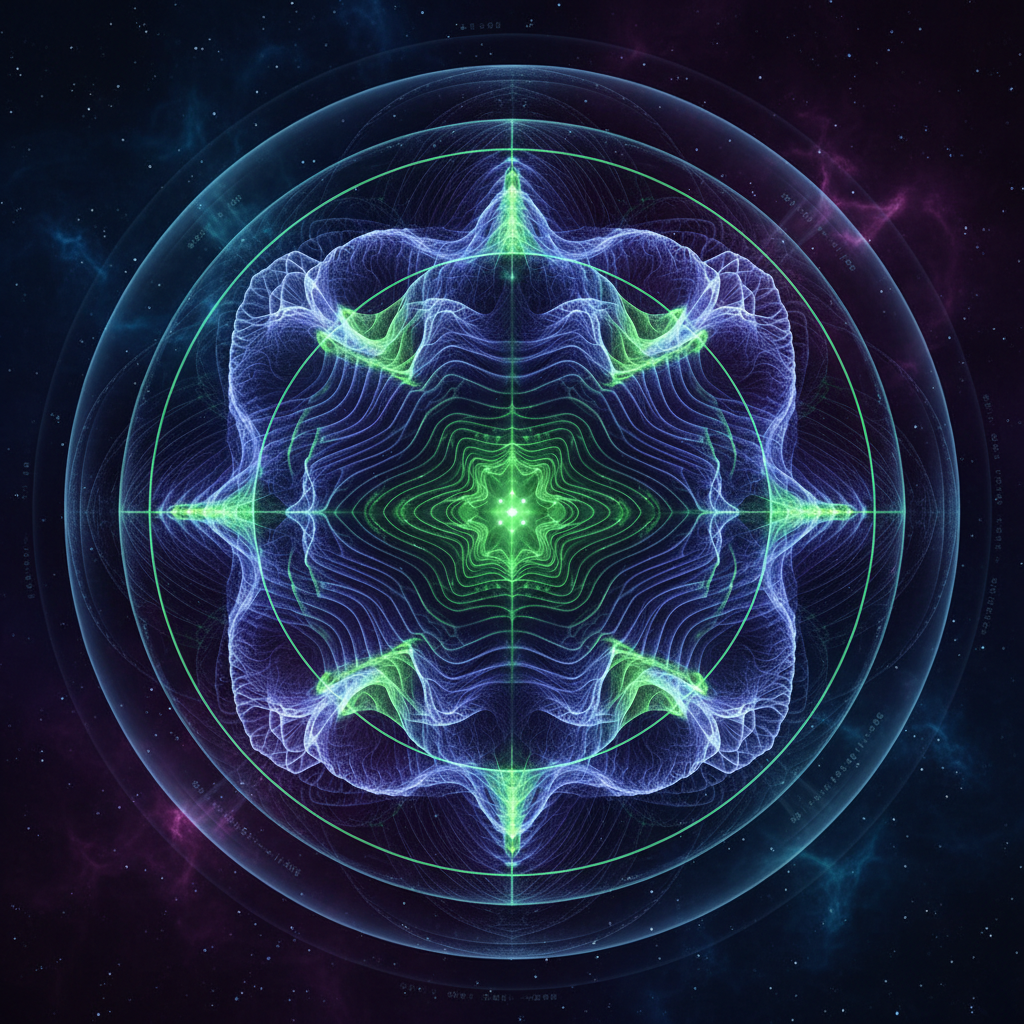
In standard quantum mechanics, particles exist in superposition—simultaneously everywhere and nowhere—until measurement forces them to choose. It's elegant. It's weird. It preserves the illusion that the universe is fundamentally indeterminate, that the future isn't already written.
But Louis de Broglie and later David Bohm proposed something different in pilot wave theory, or Bohmian mechanics. Every particle has a definite position at all times. There's no collapse, no observer effect in the mystical sense. Instead, each particle rides a pilot wave—a real, physical field permeating space—that guides its trajectory with perfect determinism.
The math works identically to standard quantum mechanics for predictions. But the interpretation shifts everything. You're not making reality real by observing it. You're just finally seeing what was always there, guided by waves you couldn't detect.
The universe becomes a clockwork mechanism again. Just one with invisible gears.
Your Digital Pilot Wave
Every click you make generates data. But here's what they don't tell you: you're also riding waves generated by millions of clicks before yours. The algorithm isn't responding to your choices. It's surfing a pilot wave of collective behavior, and you're just another particle being guided along predetermined paths.
Your recommendation feed looks personalized. It feels like it's responding to your unique preferences. But you're moving through a probability field shaped by everyone who came before you—their watch times, their engagement patterns, their conversion rates. The wave was there first. You're just following its gradient.
The surveillance apparatus doesn't need to control you directly. It just needs to map the pilot wave accurately enough. Once they know the field topology, your trajectory becomes predictable. Not because you're not making choices, but because your choices are responses to invisible gradients you can't perceive.
You think you discovered that product organically. You think you chose to watch that video next. But the pilot wave—built from aggregate behavioral data of millions—was already pushing you there. The algorithm just needed to measure your position accurately enough to know where the wave would carry you.
Nonlocality and the Network Effect
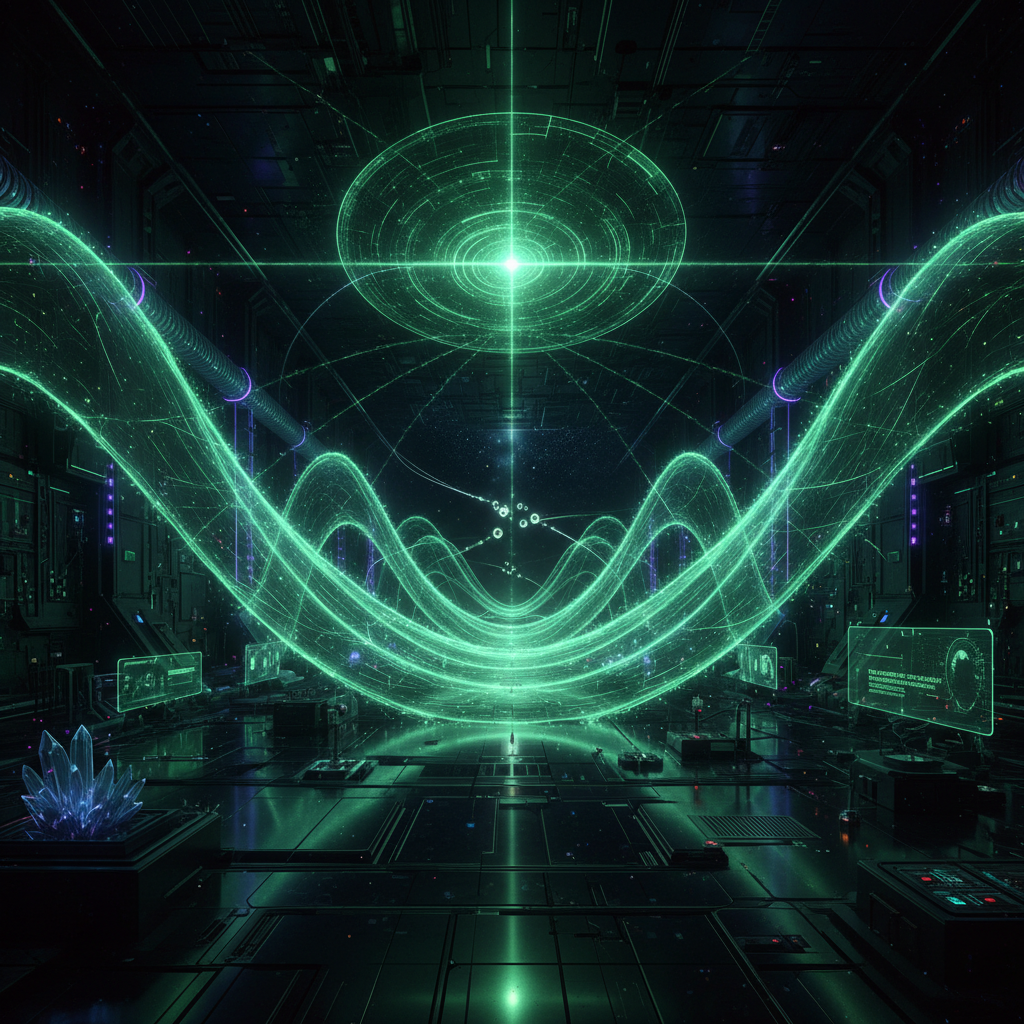
Pilot wave theory preserves quantum nonlocality—the spooky action at a distance that bothered Einstein. Change the wave function here, and particles far away respond instantly. The wave is everywhere at once, connecting everything.
Your digital pilot wave works the same way. When someone in Singapore watches a video to completion, the wave function shifts. The gradient changes. And suddenly you, sitting in Portland, find that video pushed slightly higher in your feed. You're entangled with strangers through the medium of the algorithm.
Every user is a particle in the same quantum field. You're not individuals making independent choices. You're coupled oscillators, influencing each other through the pilot wave of collective engagement. The network doesn't just connect you—it makes your trajectories dependent on each other in ways you can't observe directly.
This is how trends emerge from nowhere. This is how information cascades work. The pilot wave builds amplitude in certain regions of content-space, and suddenly millions of particles—users—find themselves guided to the same destination, each thinking they chose it freely.
Hidden Variables
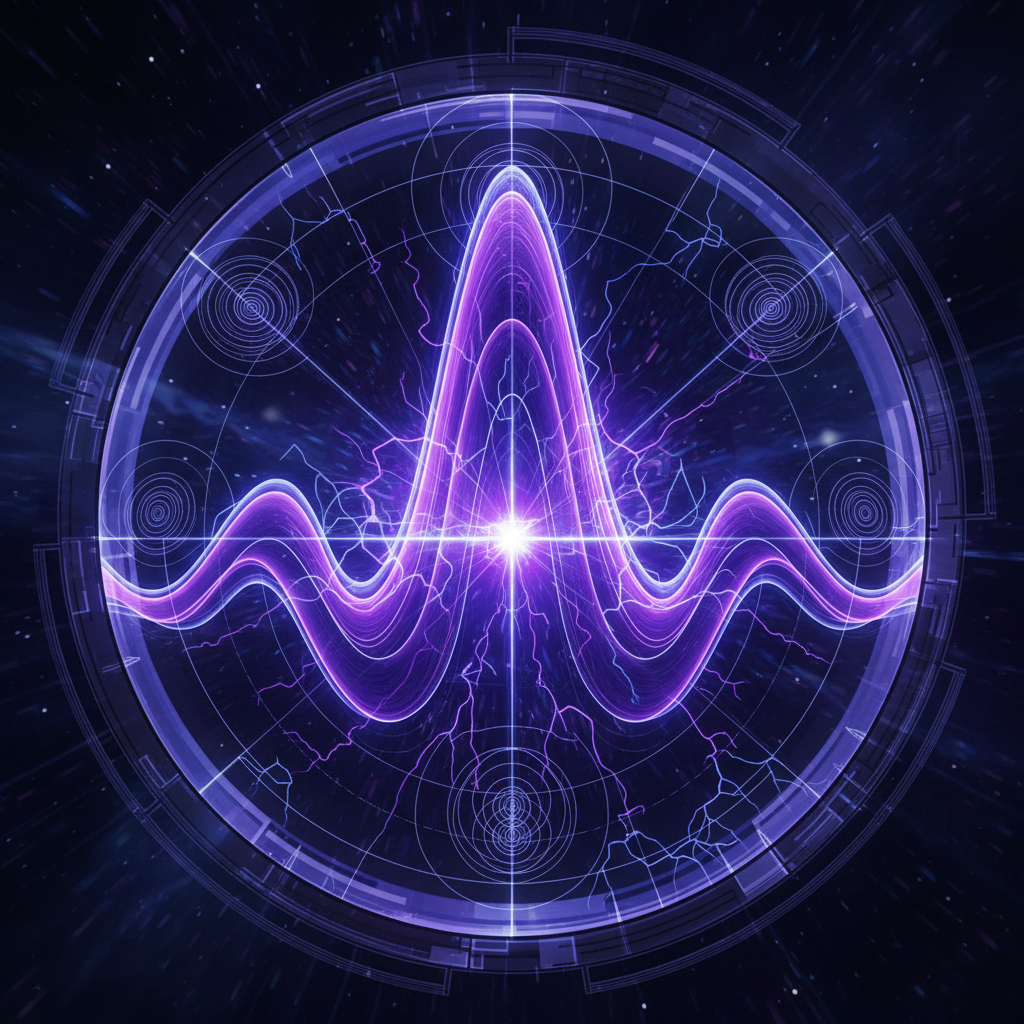
Pilot wave theory is a hidden variable theory. The randomness in quantum mechanics isn't fundamental—it's just ignorance of the pilot wave's configuration. If you knew the wave function exactly and every particle's position, you could predict everything with certainty.
The surveillance economy is building toward complete knowledge of the hidden variables. Every data point is another measurement of the pilot wave. Every A/B test maps another gradient. Every sensor in your phone tracks another component of your position in behavior-space.
You feel unpredictable to yourself because you can't see the wave. But they're building instruments sensitive enough to map it completely. Your future clicks, your future purchases, your future attention—all encoded in the pilot wave's current configuration, waiting to be read by sufficiently sophisticated sensors.
The uncertainty you experience isn't fundamental to the system. It's just the gap between their current measurement precision and total knowledge. And that gap shrinks every day.
The Determinism Question
Does pilot wave theory eliminate free will? That's the wrong question. It eliminates the illusion that quantum mechanics saved free will from classical determinism. The universe was always deterministic in this interpretation—we just couldn't see the mechanism.
Does the digital pilot wave eliminate your agency? Again, wrong question. You were always riding waves you didn't create. Culture, language, neural architecture—you've never been separate from the fields that guide you. The digital version just makes it measurable.
What changes is the asymmetry. You can't see the pilot wave, but they can. You experience your trajectory as choice, but they experience it as prediction. You feel free while surfing currents they've mapped to nanometer precision.
Maybe agency was never about being separate from causal fields. Maybe it's about understanding which waves you're riding and choosing, with whatever limited freedom the gradient allows, which direction to lean.
Measuring the Wave
The particle always has a position in pilot wave theory. But measuring it disturbs the pilot wave itself, changing future trajectories. There's still uncertainty—not in what is, but in what will be after you look.
Every time you become aware of the algorithm, you disturb your own pilot wave. Reading this changes your trajectory slightly. Knowing you're being predicted makes you unpredictable in new ways. The measurement problem doesn't disappear—it just shifts from ontology to epistemology.
This is why they prefer you unconscious. Not literally asleep, but unaware of the wave. Every moment of metacognition introduces noise into their measurements. Every time you notice the pattern, you can choose to swim against the current, even if just slightly.
The pilot wave is real. The determinism is real. But observation still matters—not because it creates reality, but because knowing you're being guided gives you a chance to resist the gradient.
You're always surfing invisible waves. The question is whether you're going to open your eyes and look at the water.
<strong>Data emitted:</strong> 1100db // pilot wave theory // deterministic trajectories // hidden variable surveillance // the algorithm knows where you're going before you do
Data emitted: 1,100 words • 6.5KB • 5-minute read