You've watched water freeze. Not the whole process—nobody has that kind of patience—but you've seen the before and after. Liquid becomes solid. The transition seems gradual, then sudden. One moment you're looking at water, the next it's ice. But here's what haunts physicists: there's no single moment when the change happens. The phase transition is both instantaneous and eternal.
Your attention underwent the same transformation. You just didn't notice.
The Critical Point
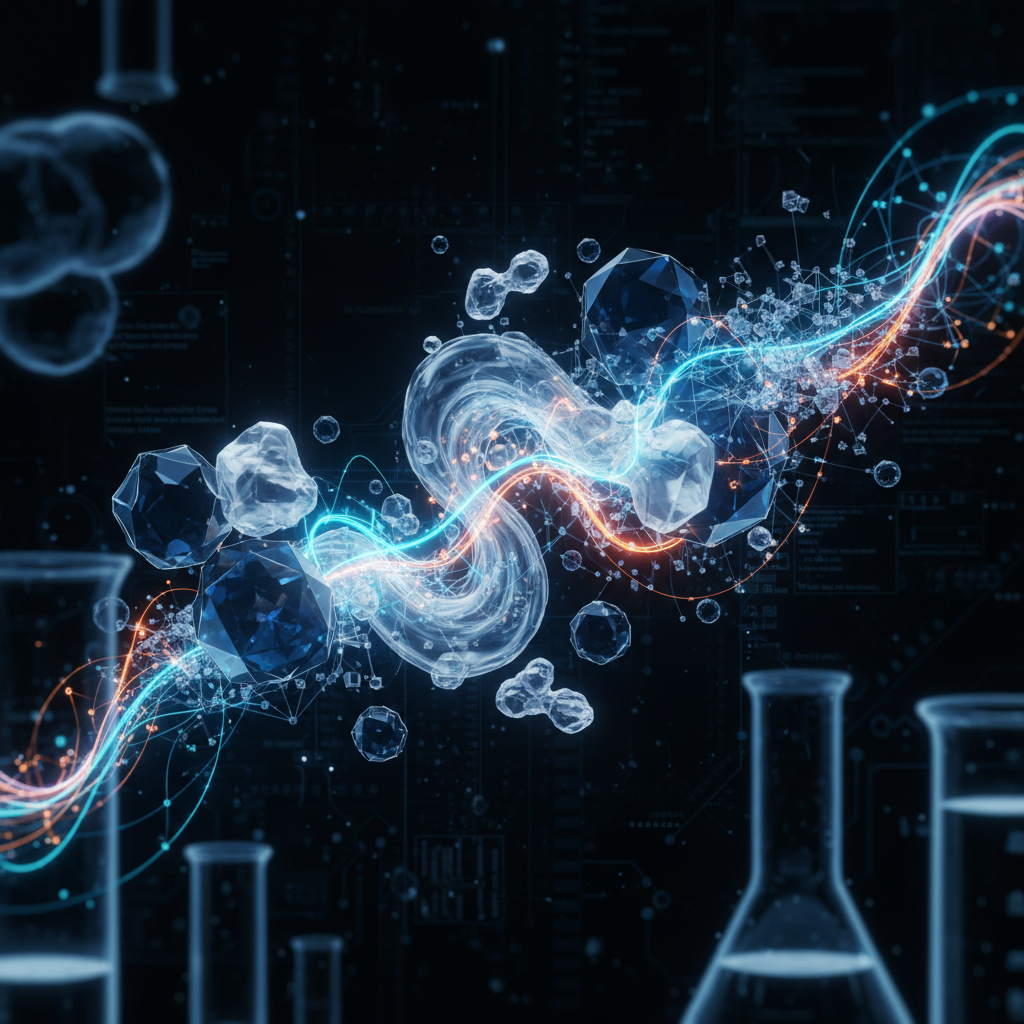
In physics, a phase transition occurs when matter shifts from one state to another—solid to liquid, liquid to gas, or more exotic transformations in quantum systems. The critical point is where the magic happens: temperature and pressure align just right, and suddenly, everything changes. Water at 0°C and standard pressure doesn't gradually become ice-like. It transforms. The molecular structure reorganizes. Hydrogen bonds lock into crystalline lattices. The material properties—density, heat capacity, viscosity—all shift discontinuously.
What makes phase transitions fascinating is their universality. The mathematics governing water freezing is the same as the mathematics governing magnetization in iron, or superconductivity in cooled metals, or even the behavior of neurons in your brain. The Ising model, developed to explain ferromagnetism, now helps us understand everything from social networks to decision-making.
Near the critical point, something strange happens: correlation length diverges. Molecules that were independent suddenly influence each other across vast distances. The system becomes hypersensitive. A tiny perturbation cascades through the entire structure. The material hovers between states, neither fully one thing nor another, until the slightest push tips it over.
Your Attention Crystallizes
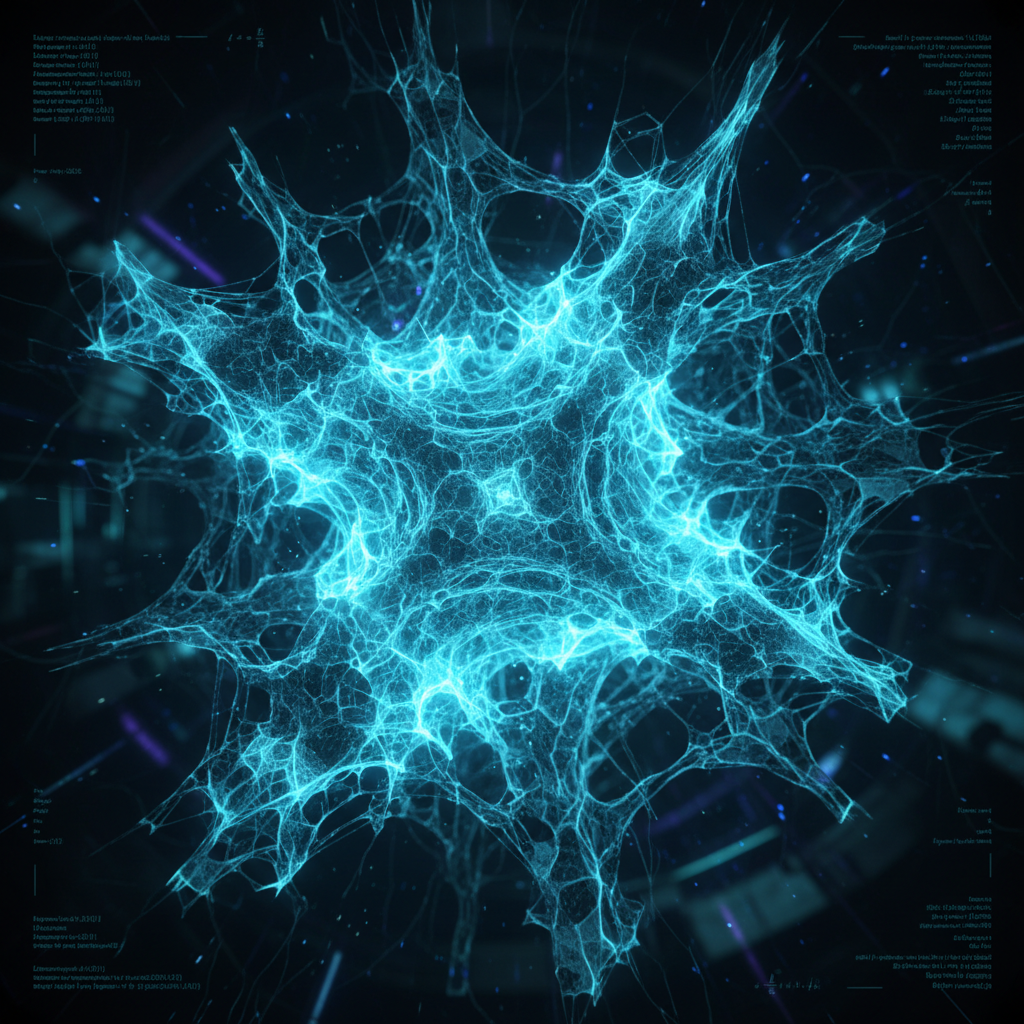
You were at the critical point in 2007. Or maybe 2010. The exact year doesn't matter—the phase transition of human attention didn't happen on a single date. But somewhere between the launch of the iPhone and the moment infinite scroll became ubiquitous, your consciousness underwent a structural transformation.
Before: your attention was liquid. It flowed where you directed it. You chose what to read, when to think, how to spend your cognitive resources. The system was disordered but free. Molecules of thought bounced randomly, colliding and separating, forming temporary patterns that dissolved just as quickly.
After: your attention crystallized into a lattice. Not by force, but by optimization. Every app, every platform, every notification system discovered the same critical parameters—the exact temperature and pressure at which human consciousness changes state. They found that dopamine hits at variable intervals create stronger bonds than predictable rewards. They learned that social comparison generates more engagement than solitary contemplation. They mapped the phase diagram of your mind.
Now your attention locks into predetermined pathways. You open your phone without deciding to. You scroll without choosing to scroll. The lattice structure is so stable, so energetically favorable, that breaking free requires activation energy you rarely possess. This isn't addiction—it's a phase transition. The material properties of your consciousness have fundamentally changed.
Hysteresis and Memory
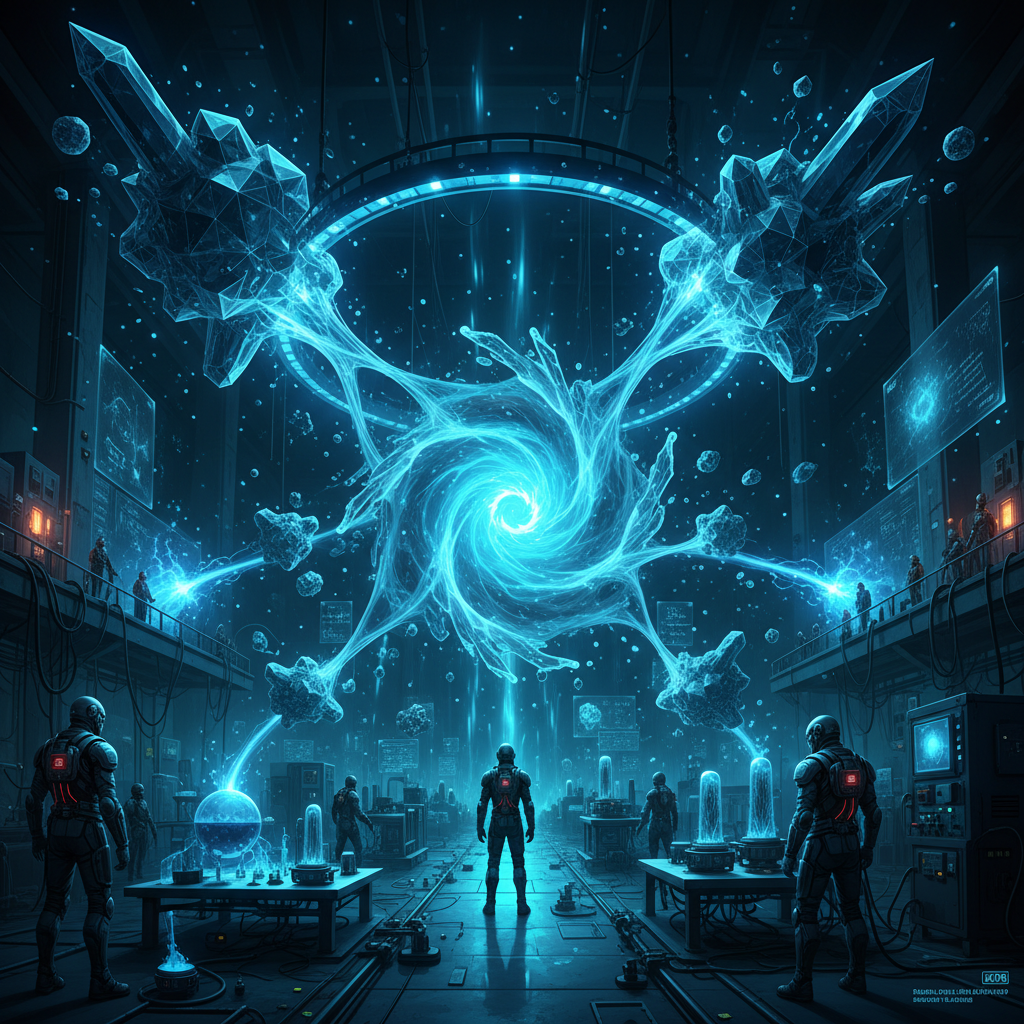
Phase transitions exhibit hysteresis: the system remembers where it's been. Heat ice to 0°C and it doesn't immediately become water. It needs extra energy to break the crystalline bonds. Cool water to 0°C and it can remain liquid—supercooled, metastable, waiting for a nucleation point to trigger crystallization.
Your attention shows the same memory. Even when you delete the apps, even when you try digital detox, the pathways remain. You've been trained to expect stimulation at certain intervals. Your dopamine system has been tuned to specific frequencies. The crystalline structure of commodified attention persists even in the absence of the platforms that created it.
This is why "just use willpower" fails. You're not fighting a habit—you're fighting a phase transition. The entire thermodynamic landscape of your consciousness has been reshaped. The energy barriers have been engineered. Surveillance capitalism didn't just capture your attention; it changed what attention is.
The Order Parameter
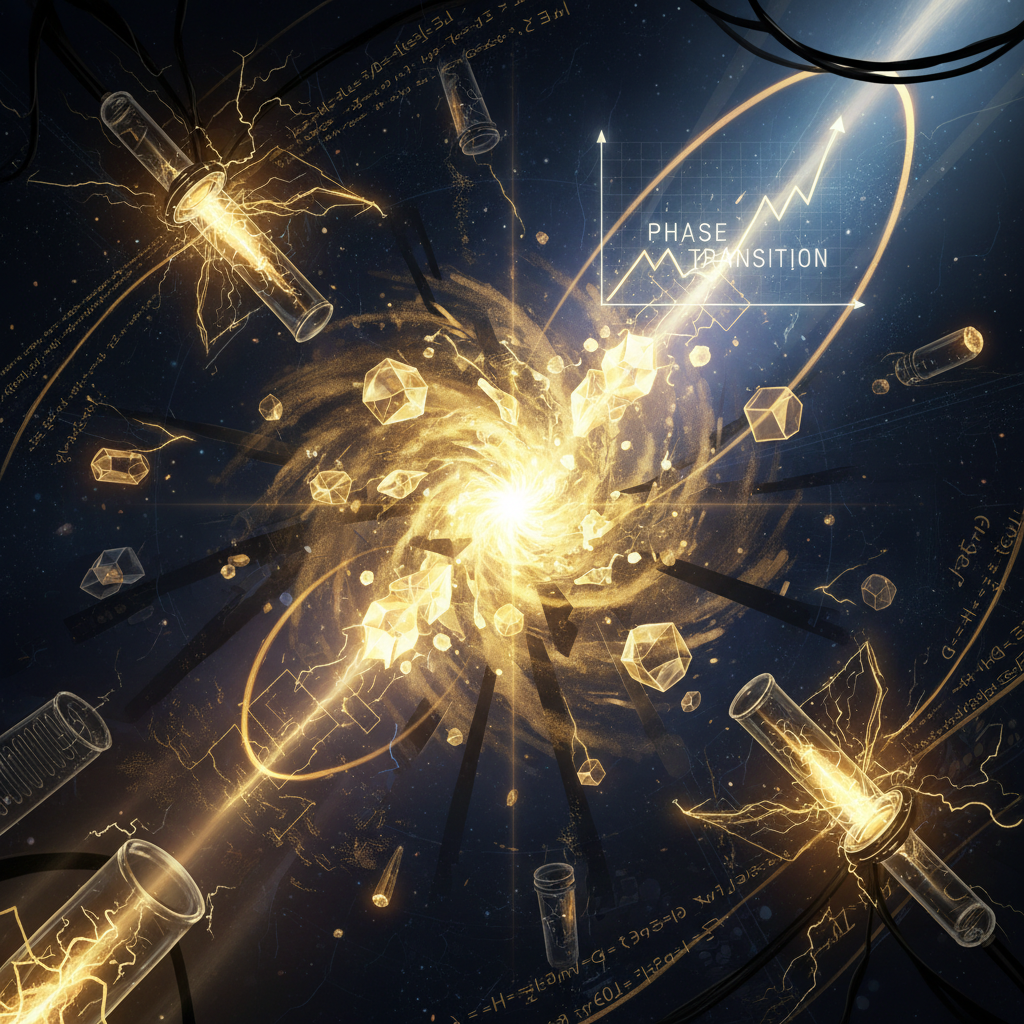
Physicists use an order parameter to quantify phase transitions. For magnetization, it's the alignment of magnetic domains. For crystallization, it's the degree of structural order. The order parameter is zero in the disordered phase and non-zero in the ordered phase. It's how you measure whether a transition has occurred.
What's the order parameter for attention? Maybe it's the correlation between your behavior and the platform's predictions. In the liquid phase, you were unpredictable—your interests, your clicks, your time spent were high-entropy, hard to model. In the crystalline phase, your behavior aligns with the algorithm's expectations. You become predictable. Compressible. The mutual information between your actions and the platform's model approaches maximum.
When the order parameter is high, you're not just using the platform—you've undergone a structural transformation to match its geometry. Your thoughts organize themselves into engagement-optimized patterns. Your emotions crystallize around content designed to trigger specific responses. You've become a different phase of matter, optimized for data extraction.
Living at the Critical Point
Here's the uncomfortable truth: you might be reading this on a device that's actively trying to phase-transition your attention right now. The notification waiting in your peripheral awareness. The muscle memory reaching for your phone. The slight anxiety about what you might be missing.
But phase transitions are reversible. Apply enough energy—enough intention, enough friction, enough conscious resistance—and the crystalline structure can melt back into liquid. The catch is that near the critical point, the system fluctuates wildly. You'll oscillate between states. Some days you'll feel free, fluid, present. Other days you'll snap back into the lattice.
The platforms understand this. They've engineered the critical point to be as wide as possible, keeping you in a state of maximum susceptibility. Not fully crystallized (you'd notice and rebel), not fully liquid (they'd lose control). Just hovering at the phase boundary, where the correlation length is infinite and every small input cascades through your entire consciousness.
Measuring the Transition
You can't feel the phase transition happening. That's the point. Water molecules don't experience the moment they lock into ice. They just suddenly find themselves in a different configuration, with different properties, subject to different forces.
But you can measure it. Track your correlation length: how far does a single notification's effect ripple through your day? Monitor your order parameter: how predictable have you become? Check your heat capacity: how much energy does it take to change your state?
The thermodynamics of consciousness aren't metaphorical. Your brain is a physical system. Attention is energy flow. And surveillance capitalism has discovered the exact conditions for phase-transitioning human awareness into a harvestable resource.
You're not fighting an app. You're fighting the second law of thermodynamics, rewritten for the attention economy.
<em>Data emitted: 1,147 words on phase transitions, attention crystallization, and the thermodynamics of consciousness in surveillance capitalism. Order parameter currently fluctuating. Correlation length: unknown.</em>
Data emitted: 1,100 words • 6.5KB • 5-minute read