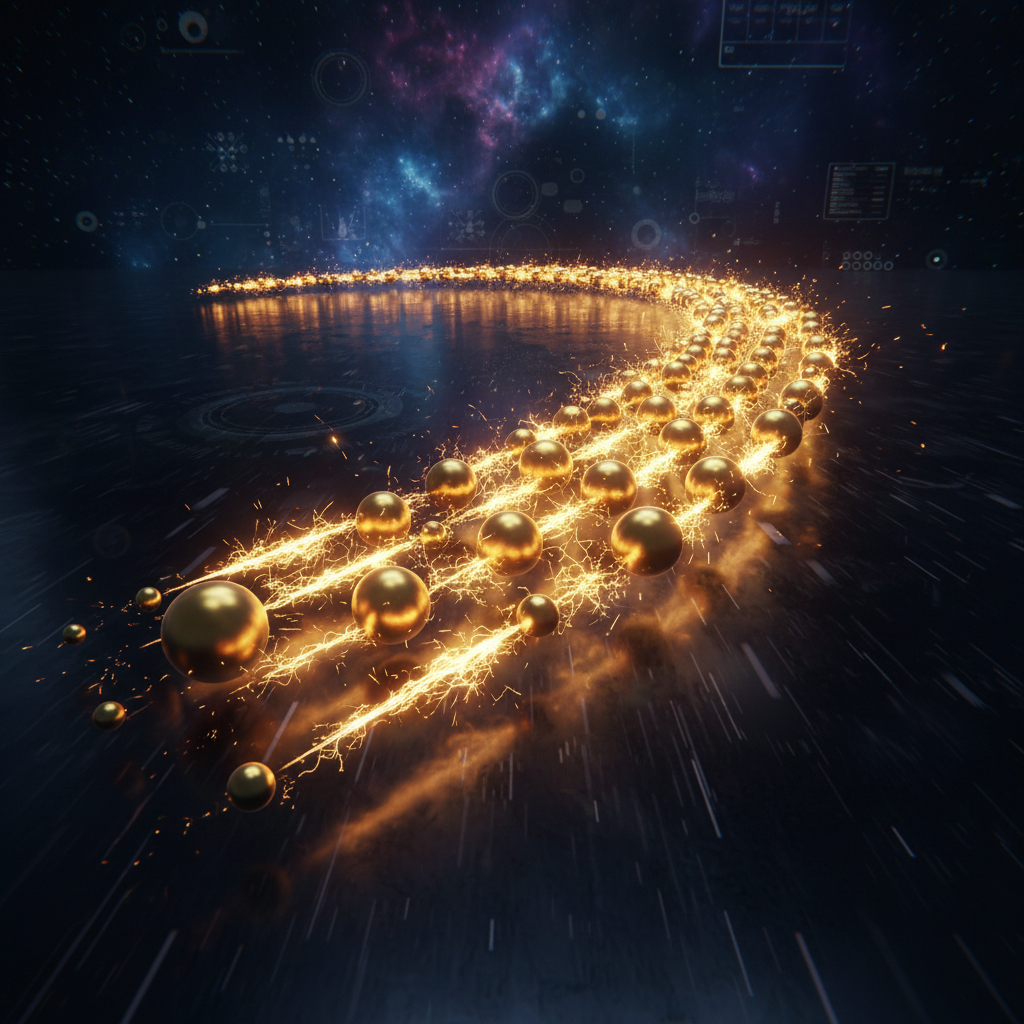
You throw a ball. Before it leaves your hand, its path is already written. The parabola it traces through space isn't a suggestion—it's a certainty, carved by gravity and velocity into the fabric of reality. You can't negotiate with physics. The ball doesn't choose.
Neither do you.
Every time you open an app, click a link, or pause on a video, you're the ball. Your trajectory was calculated before you moved. The platform already knows where you'll land.
The Mathematics of Certainty
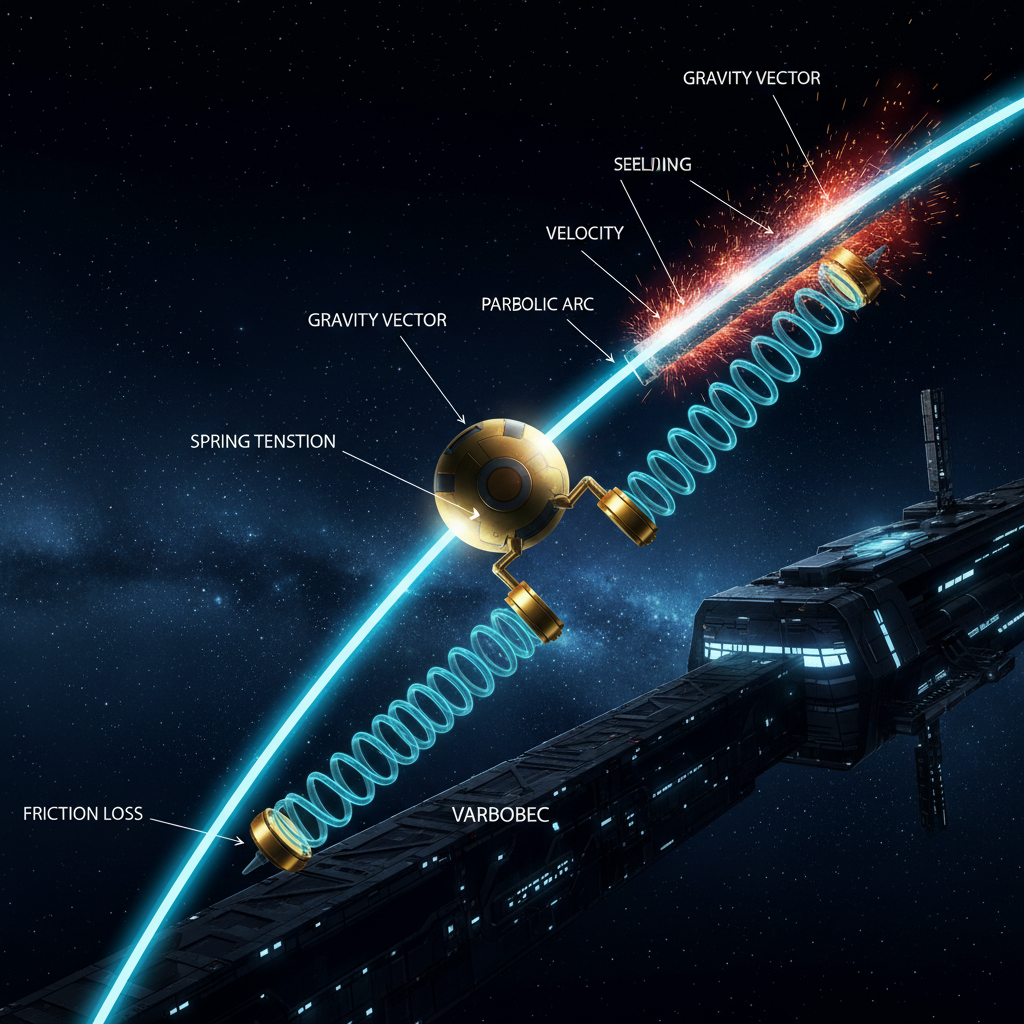
A parabolic trajectory is embarrassingly simple. You need only two things: initial velocity and angle of launch. Everything else—the peak height, the distance traveled, the time in flight—flows inevitably from those starting conditions. The equation is clean: y = x tan(θ) - (g x²)/(2v² cos²(θ)). Plug in your variables. The universe does the rest.
This is deterministic physics at its most elegant. No chaos, no quantum uncertainty. Just pure, predictable motion. Artillery officers used these equations centuries ago to know exactly where their shells would land. They didn't need to fire a thousand test rounds. They did the math once.
The algorithm does the same thing with you. It doesn't need to guess. It's watched a million users with your initial conditions—your demographics, your browsing history, your engagement patterns. It knows the angle. It knows the velocity. It's already calculated where you'll land.
Velocity Vectors in Digital Space

In physics, velocity has magnitude and direction. How fast you're moving and where you're pointed. The recommendation engine measures both. Your click-through rate is magnitude. Your preference patterns are direction. Together, they define your trajectory through content space.
The platform launches you with precision. That thumbnail wasn't random. That headline wasn't accidental. They're calibrated to give you exactly the right initial velocity—enough engagement to start you moving, but not so much that you bounce off in unpredictable directions. They want a clean parabola.
You think you're exploring. You think you're choosing your path through the infinite content landscape. But you're in ballistic flight. The only force acting on you is the gravity well of the algorithm, pulling you inexorably toward the content that maximizes engagement. Toward the landing zone they've prepared.
The Apex of Attention
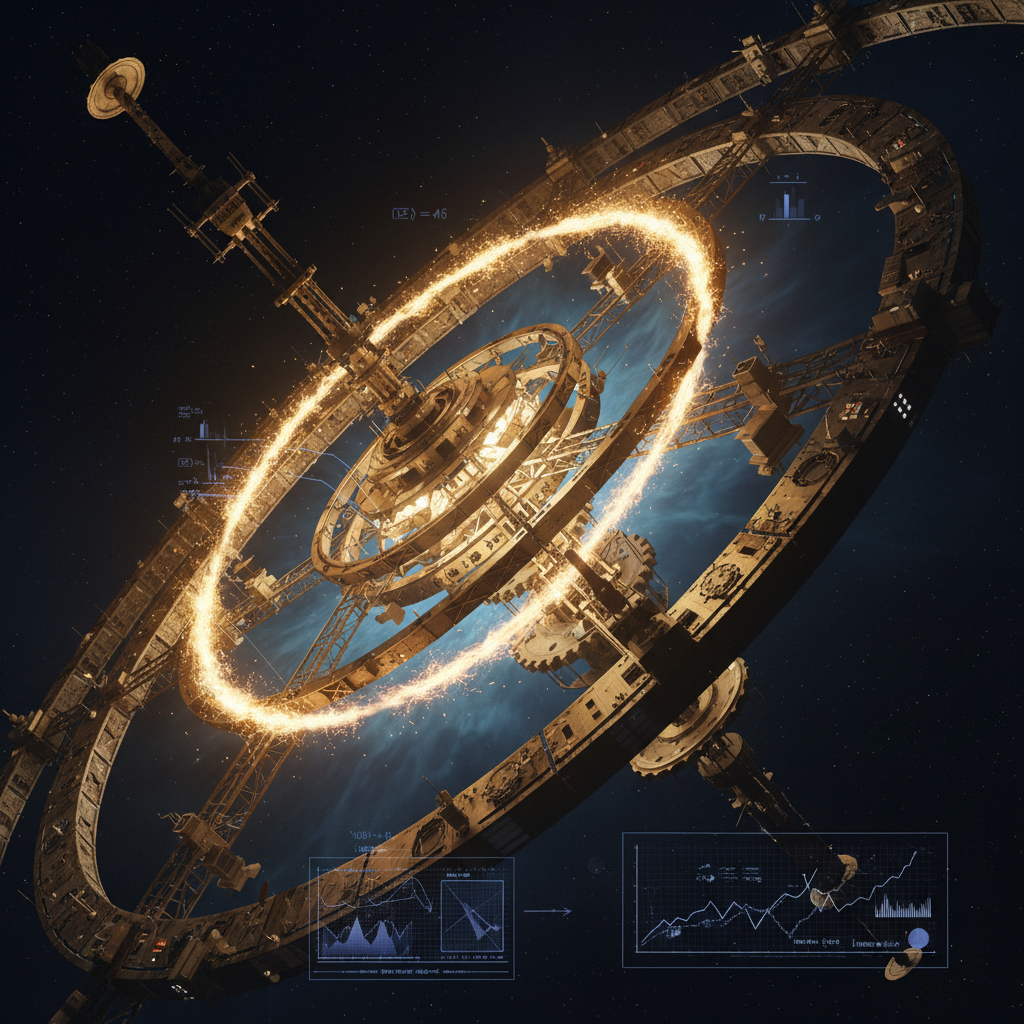
Every parabola has a peak—the moment when upward motion stops and the fall begins. In physics, this is where vertical velocity reaches zero. The projectile hangs suspended for an instant, neither rising nor falling, before gravity reasserts its claim.
Your attention has the same apex. That moment of peak engagement, when you're fully absorbed, when time disappears, when you've forgotten you're even using an app. The platform lives for this moment. This is where you're most valuable, most vulnerable, most predictable.
But the apex is also where the descent begins. The algorithm knows you can't stay at peak engagement forever. Your attention will fall. So it's already preparing the next launch, the next trajectory. Before you've even landed, it's calculating the velocity and angle for your next throw. The parabolas chain together, each landing point becoming the launch point for the next. You're not scrolling through content. You're bouncing through a carefully designed series of ballistic arcs.
Air Resistance is Friction
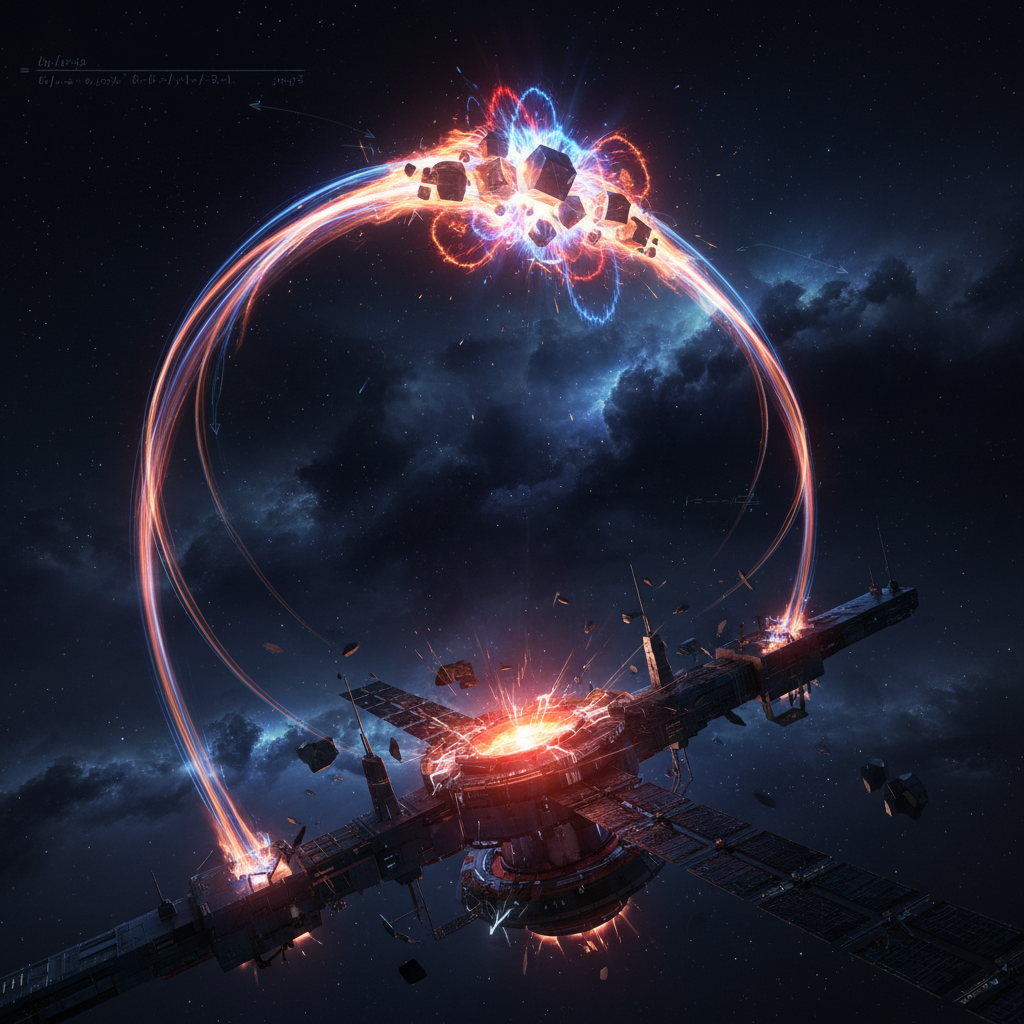
Real projectiles don't follow perfect parabolas. Air resistance interferes. Friction bleeds energy. The actual path is messier than the idealized equation predicts. This is why ballistics tables need corrections for altitude, humidity, wind.
Your trajectory has friction too. Your critical thinking. Your awareness. Your intention to do something else. These are the forces that interfere with the algorithm's perfect parabola. They're why you sometimes close the app, why you resist the next recommendation, why you don't always land where predicted.
The platform treats these as engineering problems to solve. A/B testing is wind tunnel testing. User research is atmospheric modeling. Every interface refinement is an attempt to reduce your friction, to make your trajectory cleaner, more predictable. To make you more like an ideal projectile in a vacuum, where nothing interferes with the mathematics of your path.
The Illusion of Flight

Here's what bothers you about the parabola: it feels like freedom. The ball soaring through air looks liberated. It's moving, traveling, covering distance. From the ball's perspective—if it had one—it might feel like it's flying, choosing its path through three-dimensional space.
But it's not flying. It's falling with style. Every point on its arc was determined at launch. The sensation of motion, of possibility, of traversing space—all of it is just the execution of an equation that was solved before movement began.
You scroll. You swipe. You click. It feels like agency, like exploration, like you're navigating a space of your own volition. But you're in ballistic flight through attention space. Your path was calculated. Your landing zone was prepared. The only question is whether you'll notice before impact.
Breaking the Arc
A parabola can't change course mid-flight. Not without external force. The ball can't suddenly decide to curve left or gain altitude. It's committed to its trajectory from the moment of launch.
But you're not a ball. You're not actually a projectile, no matter how much the mathematics of engagement treats you like one. You have something the equation doesn't account for: the ability to apply force to yourself. To recognize you're in flight and choose to land differently. To close the app mid-scroll. To search for something the algorithm didn't suggest. To introduce friction deliberately.
The parabolic trajectory is only inevitable if you accept the initial conditions without question. If you let the platform set your velocity and angle. The moment you notice you're being launched, you can change the equation. Not by denying physics, but by refusing to be a passive projectile.
The algorithm will calculate your next trajectory. It always does. But it can only predict ballistic motion. It struggles with objects that thrust mid-flight, that apply their own force, that refuse to follow the clean mathematics of predetermined paths.
You're not the ball. You're the hand that can decide not to throw.
<em>Data emitted: 1,147 words on predetermined paths and the illusion of digital flight. Your trajectory through this text was probably suggested by something you clicked three screens ago. The algorithm knows if you finished reading.</em>
Data emitted: 1,100 words • 6.5KB • 5-minute read