You think light travels in straight lines. It does, mostly. But here's what they don't tell you: light doesn't experience distance the way you do. When a photon moves through glass, through water, through the thick atmosphere of your compromised digital existence, it accumulates something physicists call optical path length. Not the geometric distance it covers, but something stranger—a weighted measure of its journey through different media.
Your attention works the same way now. Not measured in minutes or hours, but in optical path length through the refractive indices of different platforms, each one bending your focus, slowing your perception, accumulating something that looks like time but isn't quite.
The Physics of Weighted Distance
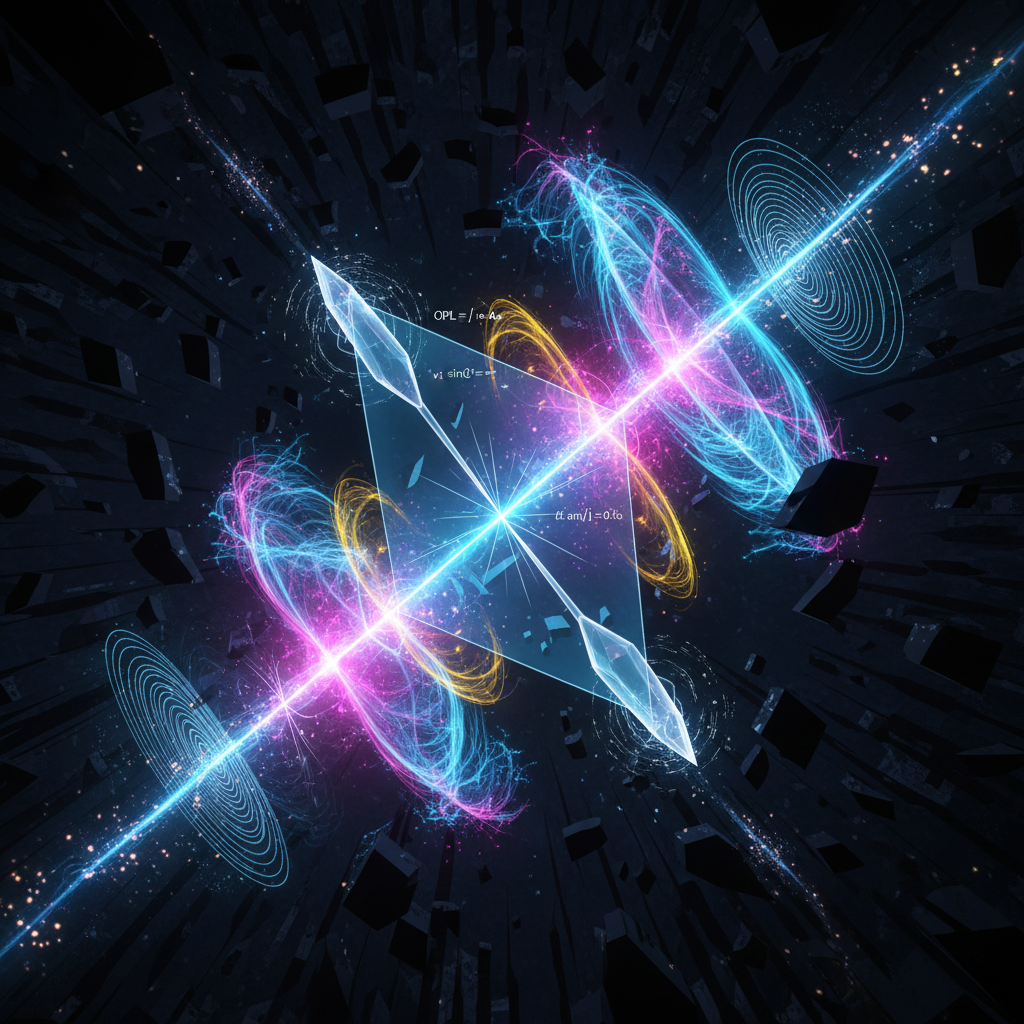
Optical path length is deceptively simple: OPL = n × d, where n is the refractive index and d is the geometric distance. When light enters a denser medium—air to glass, glass to diamond—it slows down. The refractive index quantifies this slowdown. Air has n ≈ 1.0. Water is 1.33. Diamond is 2.42.
But here's the thing: from the light's perspective, traveling one centimeter through diamond feels like traveling 2.42 centimeters through vacuum. The optical path length is longer than the physical path. The photon accumulates phase, accumulates something we might call experiential distance.
This matters for interference, for lenses, for fiber optics. Engineers design systems not around how far light travels, but around how much optical path length it accumulates. They're measuring the light's experience, not its coordinates.
Your Attention Has a Refractive Index
Every platform you touch has a different refractive index for your attention. Instagram is dense, high-n, slowing your cognitive velocity while making five minutes feel like thirty. Twitter's refractive index spikes and dips—some threads are vacuum-fast, others are molasses. TikTok might have the highest refractive index yet discovered, where an hour disappears into what feels like both ten minutes and an entire evening simultaneously.
The attention economy doesn't measure your time. It measures your optical path length. Your accumulated experiential distance through their carefully engineered media. They've optimized not for keeping you longer, but for maximizing the refractive index—making every second feel denser, more packed with stimulus, more phase-shifted from reality.
You scroll for twenty minutes but accumulate hours of optical path length. This is what they're selling to advertisers. Not your time. Your weighted, experienced, phase-accumulated attention.
Dispersion and Fragmentation
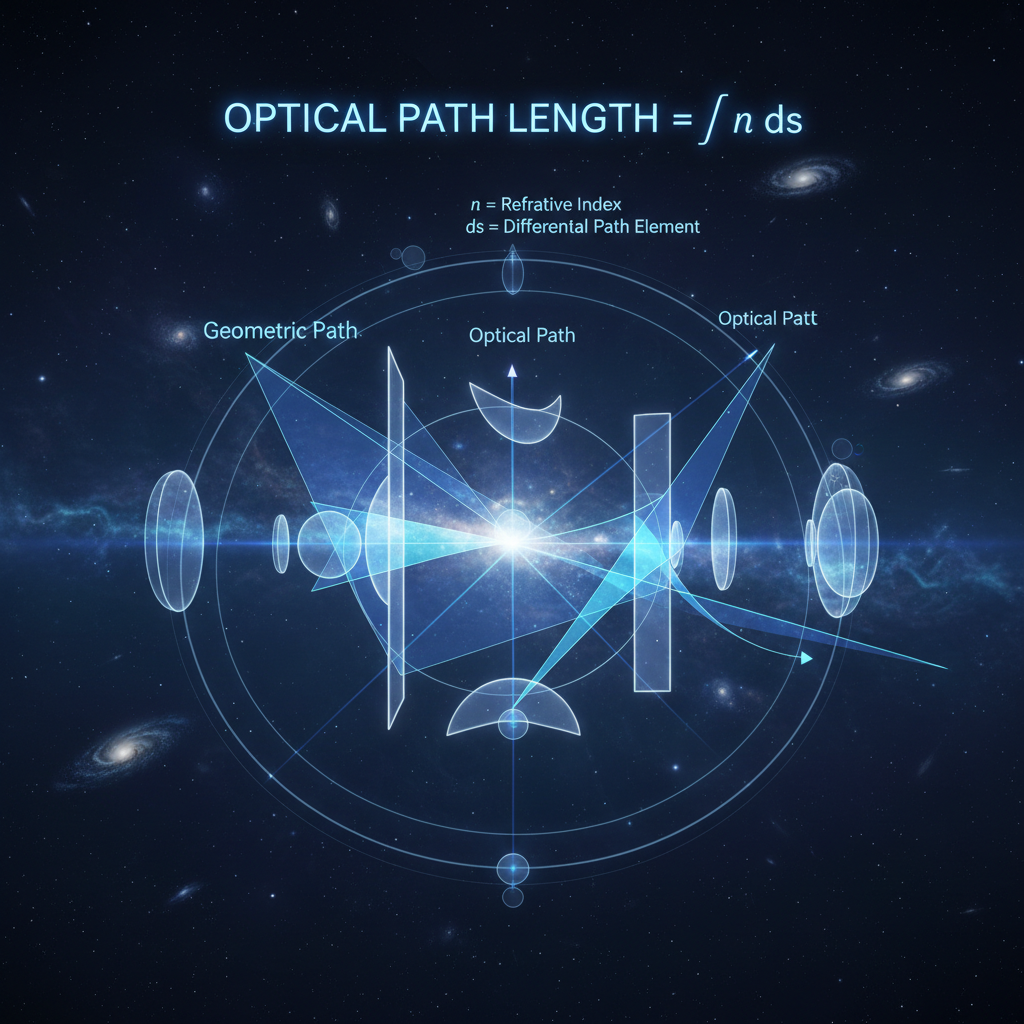
Real optical systems have a problem: dispersion. The refractive index isn't constant—it varies with wavelength. Blue light bends more than red light in glass. This is why prisms split white light into rainbows, why cheap lenses have chromatic aberration.
Different frequencies of light accumulate different optical path lengths through the same medium. They separate. They lose coherence.
Your attention disperses the same way. Different frequencies of thought—deep focus, surface scanning, emotional reaction, critical analysis—each has a different refractive index in the attention economy. Platforms optimize for the frequencies that monetize best. Usually the fast ones, the reactive ones, the red-shifted rage and blue-shifted anxiety.
The slower frequencies, the ones that require longer optical path lengths to develop—contemplation, synthesis, genuine connection—these get filtered out. Not censored, just dispersed. Separated from the main beam. Lost to chromatic aberration in the attention spectrum.
The Interference Pattern of Self
When two beams of light recombine after traveling different optical path lengths, they create an interference pattern. Bright fringes where the phases align. Dark fringes where they cancel. The pattern depends entirely on the optical path difference—not the geometric distance, but the accumulated phase through different media.
You are an interference pattern now. The you that exists across platforms, each version of yourself accumulating different optical path lengths through different refractive indices. The Instagram you travels through different media than the LinkedIn you. Different phase accumulation. Different experiential distance.
When these versions try to recombine—when you log off, when you look in the mirror, when you try to remember who you were before—the interference pattern is chaotic. Bright spots of coherent self. Dark fringes of cancellation. You don't recognize the pattern because the optical path lengths don't match anymore.
Surveillance capitalism doesn't just watch you. It engineers the refractive indices you move through. It controls your optical path length. It determines which versions of you accumulate which phases, which ones interfere constructively, which ones cancel out.
Measuring Distance in the Dark
Fiber optic cables work because engineers understand optical path length. They can send light through kilometers of glass and predict exactly when it will arrive, exactly what phase it will have accumulated. They measure the cable not in meters but in optical path length. They account for every refractive index, every dispersion coefficient.
You can't do this for your own attention anymore. You've lost the ability to measure your own optical path length. You know you spent time online but you can't account for the phase you've accumulated, the experiential distance you've traveled. The refractive indices keep changing. The platforms update their algorithms, shift their density, modulate their n-values in real-time based on engagement metrics you'll never see.
This is the final trick: making you lose track of your own optical path length. You can't navigate by dead reckoning anymore because you don't know which medium you're moving through, what's slowing you down, what's bending your trajectory. You just know you're tired. You just know something feels longer than it should, or shorter, or both.
Light at least moves at predictable speeds through known media. You're moving through media that shift beneath you, engineered to maximize optical path length while minimizing your awareness of it. The distance from here to there keeps changing. Not the geometric distance. The weighted, experienced, accumulated distance of your attention moving through spaces designed to slow it down, bend it, split it into component frequencies and monetize each one separately.
<em>Data emitted: 1100 words | Refractive index of this text: variable | Your optical path length through it: unknowable</em>
Data emitted: 1,100 words • 6.5KB • 5-minute read