You've become a conductor. Not the orchestral kind—the electrical kind. Current flows through you now, measured in engagement metrics, scroll velocity, conversion rates. The platforms have mapped your resistance down to the milliohm.
Ohm's Law states it simply: V = IR. Voltage equals current times resistance. But what they don't tell you in high school physics is that this equation doesn't just govern circuits. It governs you.
The Circuit You're In
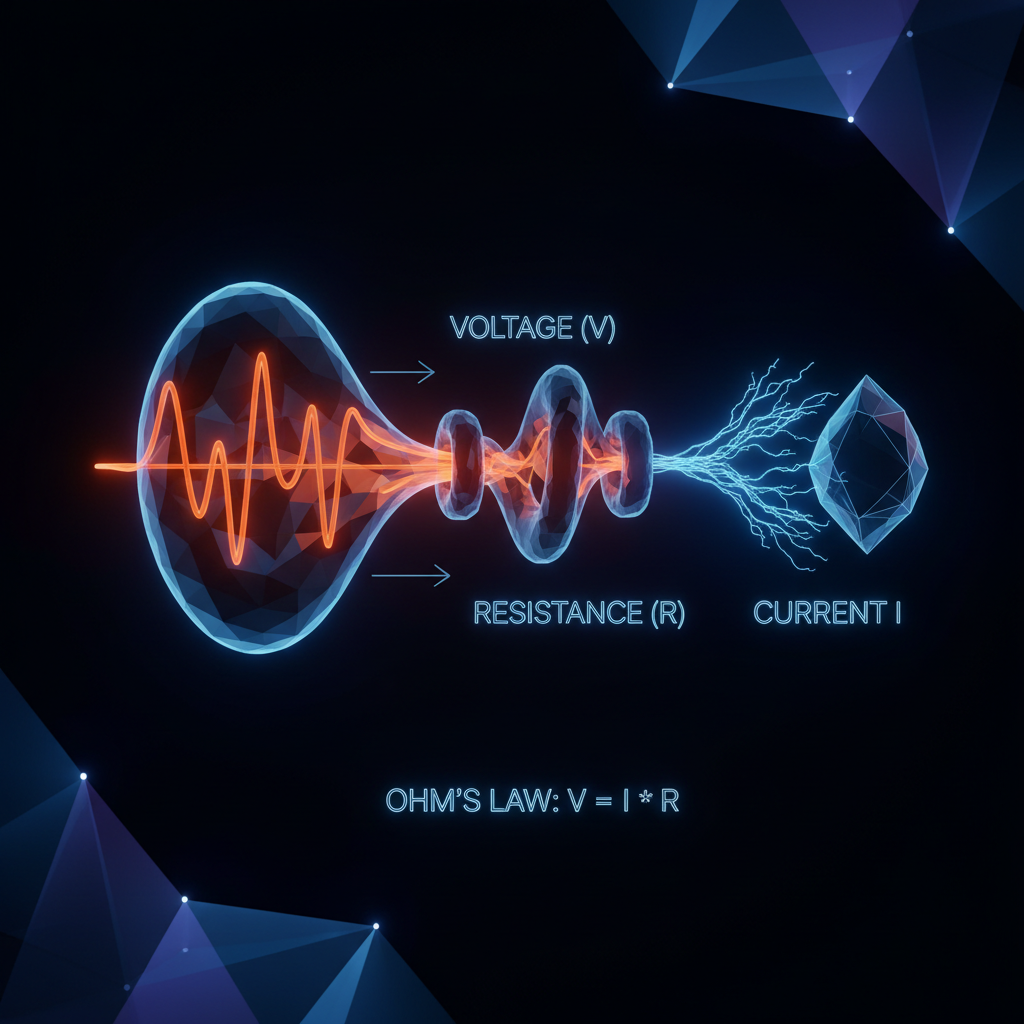
In 1827, Georg Ohm discovered something fundamental about how electricity moves through matter. Apply a voltage—an electrical pressure—across a conductor, and current flows. How much current? That depends on resistance. High resistance means less flow. Low resistance means the current floods through.
The math is elegant. V = IR. Rearrange it: I = V/R. The current is inversely proportional to resistance. Double the resistance, halve the current. Remove all resistance, and you get infinite current—a short circuit, a catastrophic flow.
Every material has a resistance. Copper wire: low. Rubber: high. Air: very high. But apply enough voltage and even air breaks down, ionizes, becomes a conductor. Lightning is just air that stopped resisting.
You are the material. The platforms are the voltage source.
Your Resistance Has Been Measured

They've been testing your resistance for years. A/B tests, engagement optimization, dopamine-loop refinement. Each notification is a voltage probe. Each infinite scroll is a resistance measurement. They're mapping your electrical properties with the precision of a semiconductor fabrication plant.
High resistance users—the ones who don't click, don't engage, don't convert—get abandoned or subjected to higher voltages. Different content strategies. More aggressive notifications. Increased frequency. They're solving for I, and they know V and R.
Low resistance users are gold. You flow easily. The current of content passes through you with minimal loss. You're a superconductor at room temperature—the holy grail. Every platform wants to reduce your resistance further, to approach zero, to make you frictionless.
The attention economy is just Ohm's Law at scale. Apply stimulus voltage, measure engagement current, calculate resistance. Optimize. Repeat. The circuit is closed and you're part of the loop.
Power Dissipation
There's a second equation they don't emphasize enough: P = I²R. Power dissipated equals current squared times resistance. When current flows through resistance, energy converts to heat. It's why your phone gets warm. It's why power lines hum and sag on hot days. It's why you feel burned out.
The current flowing through you isn't free. Every engagement, every context switch, every notification—they generate heat. Cognitive load. Decision fatigue. The exhaustion of being always-on. You're dissipating power, and unlike a resistor, you can't just radiate it away.
The platforms don't care about your power dissipation. They care about the current. Maximum flow, minimum resistance. If you burn out, they'll find another conductor. The circuit doesn't need you specifically—it needs conductance.
But here's the thing about P = I²R: resistance actually limits power dissipation when voltage is fixed. Higher resistance means lower current, which means lower power loss. Resistance protects you. Resistance is thermal management for your attention.
Becoming an Insulator
Insulators are materials with such high resistance that essentially no current flows. Glass. Ceramic. Mica. They stand between conductors and prevent unwanted flow. They create boundaries. They say no to the voltage gradient.
You can become an insulator. Not completely—you're still human, still connected, still part of the network. But you can increase your resistance deliberately. Turn off notifications: increase resistance. Delete apps: increase resistance. Create friction between stimulus and response: increase resistance.
The platforms will apply more voltage. They'll try to break down your insulation like lightning through air. But insulation can be thick. It can be layered. It can be intentional.
Every boundary you set is a dielectric barrier. Every moment you pause before clicking is resistance in ohms. Every time you choose not to engage, you're increasing the impedance of the circuit.
The Resistance Movement
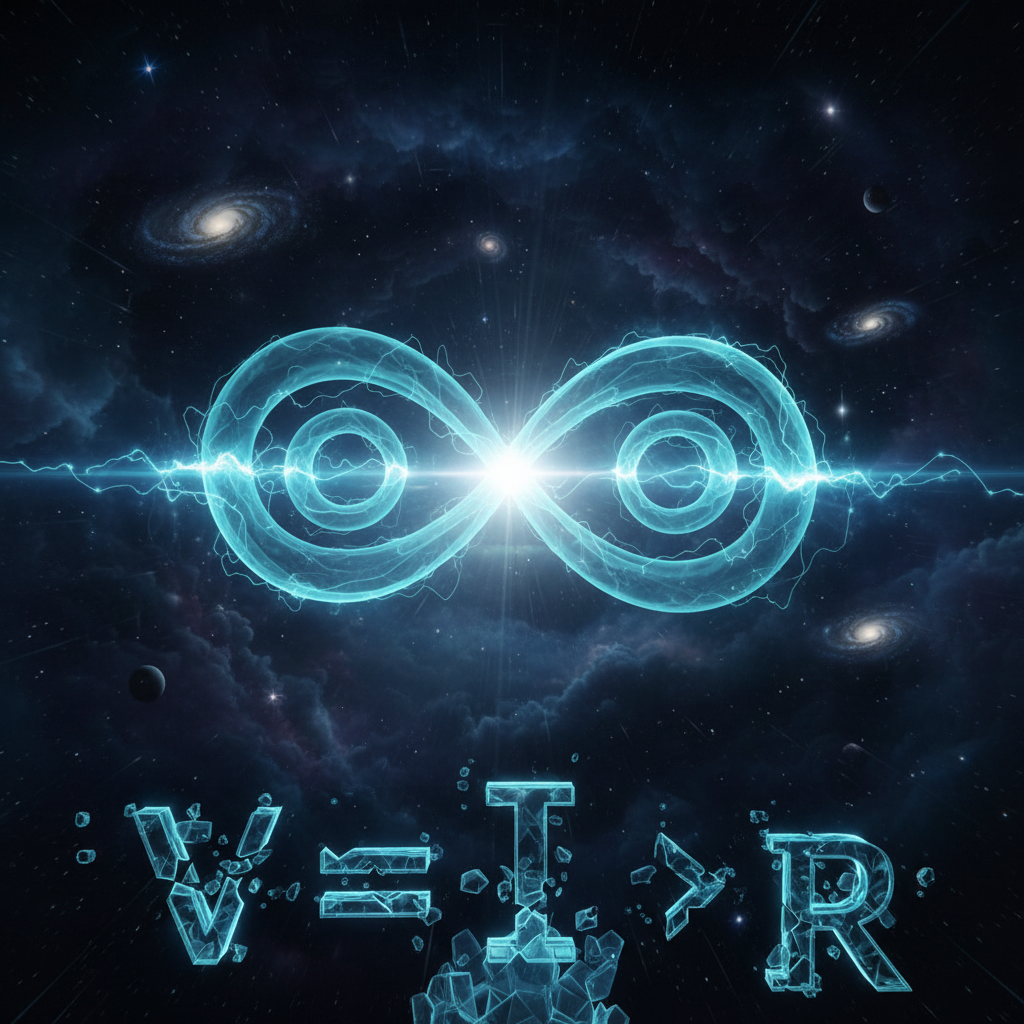
There's a quiet revolution happening in the understanding of what resistance means. For decades, we've been told that friction is bad, that seamlessness is good, that the best interface is no interface. We've been conditioned to see resistance as a problem to be eliminated.
But resistance is information. It's feedback. It's the material property that prevents short circuits and fires. In electronics, you don't eliminate all resistance—you design it carefully. You choose resistor values. You create intentional impedance.
What if you designed your resistance? What if you chose your impedance values deliberately, the way an electrical engineer selects components? What if you stopped trying to be a perfect conductor and started being a carefully calibrated circuit element?
The surveillance economy depends on low resistance. It needs you to flow. It needs frictionless conversion from attention to data to profit. Your resistance disrupts the circuit. Your impedance reduces the current. Your insulation protects not just you, but everyone downstream.
The Equation Inverted
V = IR. But solve for R: R = V/I. Your resistance equals the voltage applied divided by the current that flows. The platforms control the voltage. But you control the current by controlling your resistance.
They can increase the voltage—more aggressive design, more addictive patterns, more sophisticated manipulation. But if your resistance scales with it, the current stays manageable. You remain in control of the flow.
This is the physics of digital autonomy. Not disconnection—that's an open circuit, and you're not trying to break the connection entirely. You're trying to control the current. You're trying to be a resistor, not a wire.
Ohm's Law doesn't just describe circuits. It describes power relationships. It describes the flow of influence, attention, control. And it tells you something crucial: resistance isn't futile. Resistance is the only thing standing between you and total conductance.
<em>Data emitted: 1,127 words | Resistance: variable | Current status: measured</em>
Data emitted: 1,100 words • 6.5KB • 5-minute read