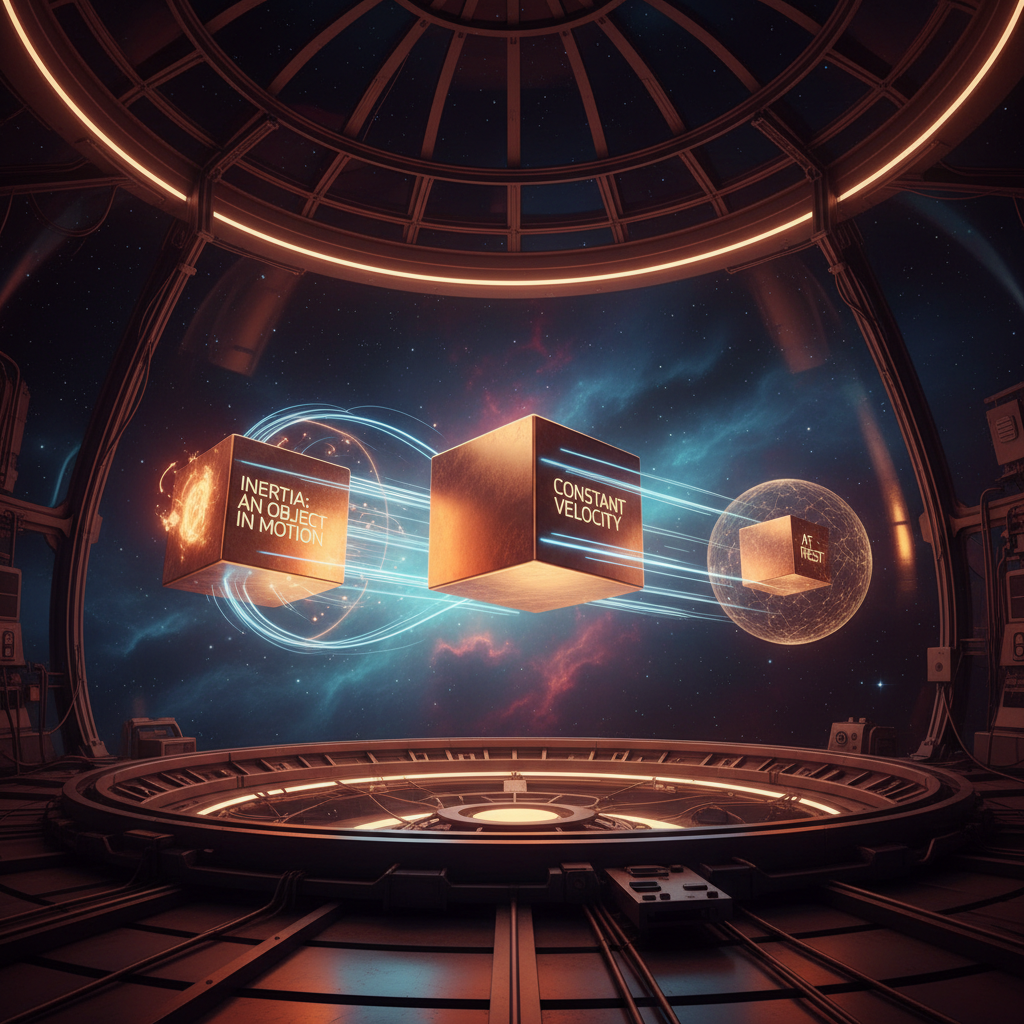
You're scrolling. You've been scrolling for seventeen minutes now, though you couldn't say when you started or why you continue. Your thumb moves in practiced arcs across glass, each swipe as automatic as breathing. You came here to check one thing—what was it?—but now you're six layers deep into a stranger's vacation photos from 2019.
This is Newton's First Law in action. An object in motion stays in motion. A body at rest stays at rest. Unless acted upon by an external force.
The question is: what force is acting on you?
The Physics of Persistence
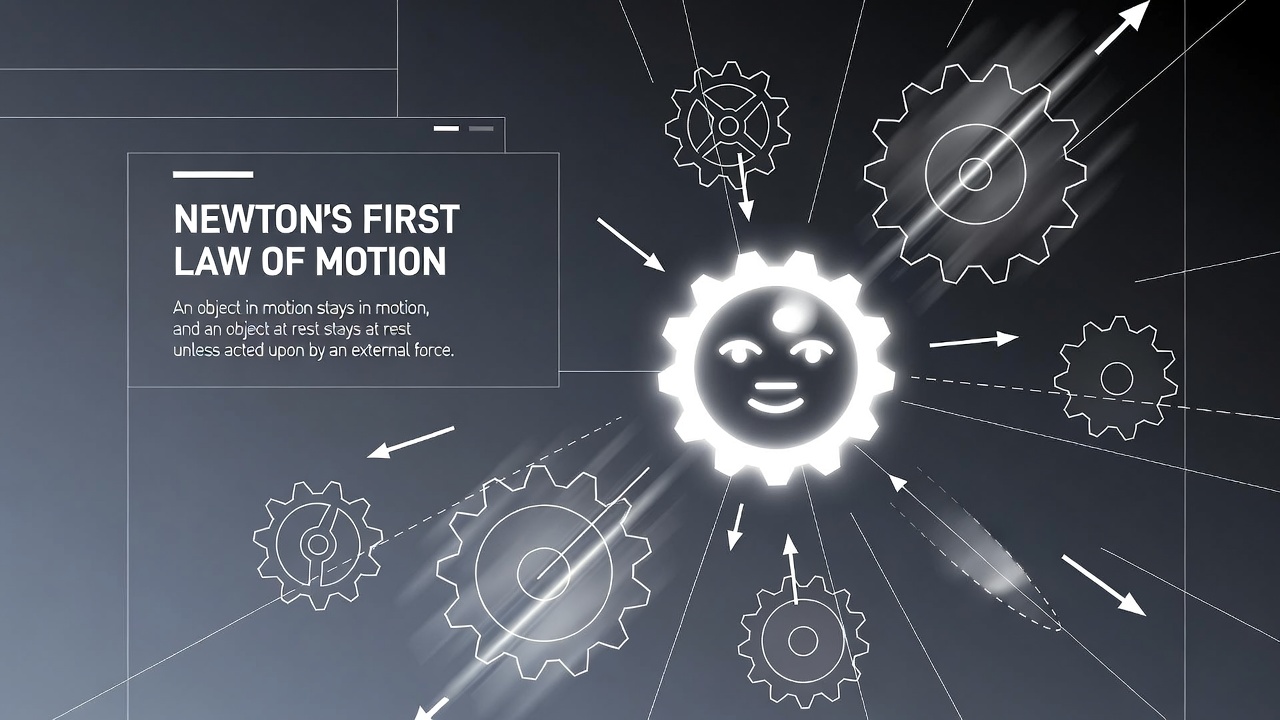
Newton's First Law—the law of inertia—states that objects resist changes to their state of motion. A hockey puck sliding across ice keeps sliding until friction slows it down. A satellite in orbit keeps orbiting because there's nothing up there to stop it. Inertia is the universe's default setting: keep doing what you're doing.
Mass determines how much inertia an object has. The more massive something is, the harder it is to change its velocity. You can stop a tennis ball with your hand. You cannot stop a freight train the same way. The train has momentum—mass multiplied by velocity—and momentum wants to persist.
In classical mechanics, this is elegant. Predictable. An object continues its trajectory until something intervenes. The law assumes a kind of neutrality: the universe doesn't care whether you're moving or still. It just wants you to keep being whatever you already are.
But what happens when the external forces aren't neutral? What happens when they're designed?
Engineered Inertia

Every platform you use has a team of engineers whose entire job is to eliminate friction. Not the productive kind of friction—the kind that makes you think, pause, consider whether you actually want to continue. No, they eliminate the friction that might make you stop scrolling. Stop watching. Stop clicking.
Autoplay is engineered inertia. The next video loads before you've decided whether you want to watch it. The next episode begins before the credits finish. You're already in motion, so the algorithm keeps you in motion. It takes more effort to stop than to continue.
Infinite scroll is engineered inertia. There's no bottom of the page anymore, no natural endpoint where you might look up and remember you have a body, a life, a world outside this feed. The content regenerates faster than you can consume it. You're a satellite in orbit, and the platform has eliminated atmospheric drag.
Push notifications are external forces designed to overcome your rest state. You were doing something else—reading, working, thinking—but the notification applies a force vector. It changes your momentum. Suddenly you're in motion again, thumb on glass, eyes on screen.
The Mass of Habit
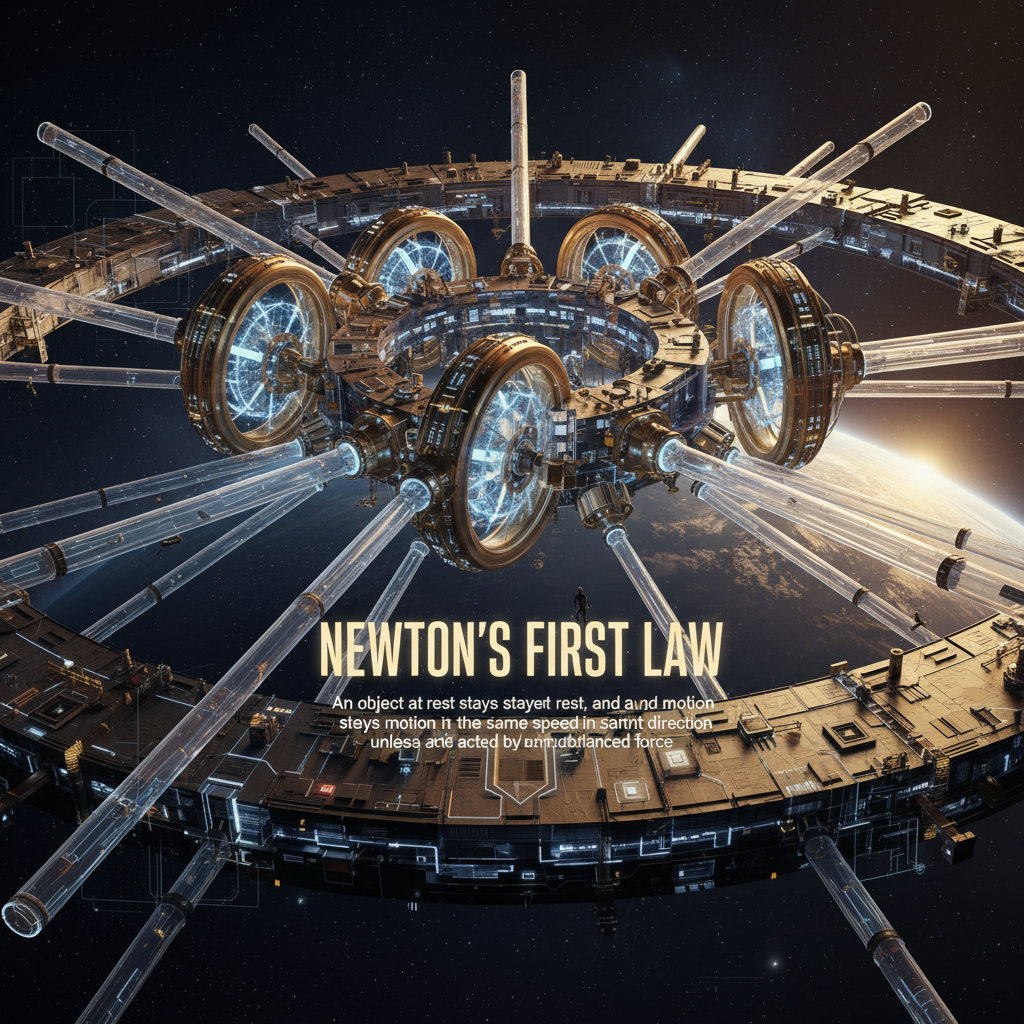
Here's where the metaphor deepens: your habits have mass. The more you've scrolled, the more momentum your scrolling has. The more you've checked, the harder it becomes not to check. Neural pathways strengthen with repetition. The behavior becomes massive, and massive objects resist changes to their velocity.
This is why you reach for your phone without thinking. Why your thumb finds the app icon before your conscious mind registers what you're doing. The action has inertia. It's already in motion before you've decided to move.
Surveillance capitalism understands this better than you do. Every interaction you have with a platform feeds back into the algorithm, which learns to reduce friction further. The system observes your inertia and optimizes for it. It measures your mass—how resistant you are to stopping—and calibrates the forces accordingly.
You think you're choosing to scroll. But choice requires an external force—a conscious intervention that changes your state. The platforms have learned to make that intervention as difficult as possible. They've learned to make continuation the path of least resistance.
Friction as Freedom

In physics, friction is often treated as a nuisance. It's the thing that makes engines inefficient, that wears down machinery, that converts useful kinetic energy into waste heat. But friction is also what lets you walk without slipping. What lets you stop when you need to stop.
Maybe friction is what we need. Not the artificial friction of bad design—laggy interfaces, confusing navigation—but intentional friction. Moments where the system asks: are you sure? Do you want to continue? Have you been here for thirty minutes?
Some apps now include these features, though often buried in settings you have to actively seek out. Screen time limits. Grayscale modes. Notification summaries instead of instant alerts. These are friction generators. They're forces designed to help you change your state of motion.
But the platforms don't optimize for these features. They optimize for engagement, which is just another word for inertia. They want you in motion and staying in motion. Every quarterly earnings call celebrates reduced friction, increased time-on-platform, higher engagement metrics.
Your attention has momentum, and that momentum is worth money.
Breaking the Law
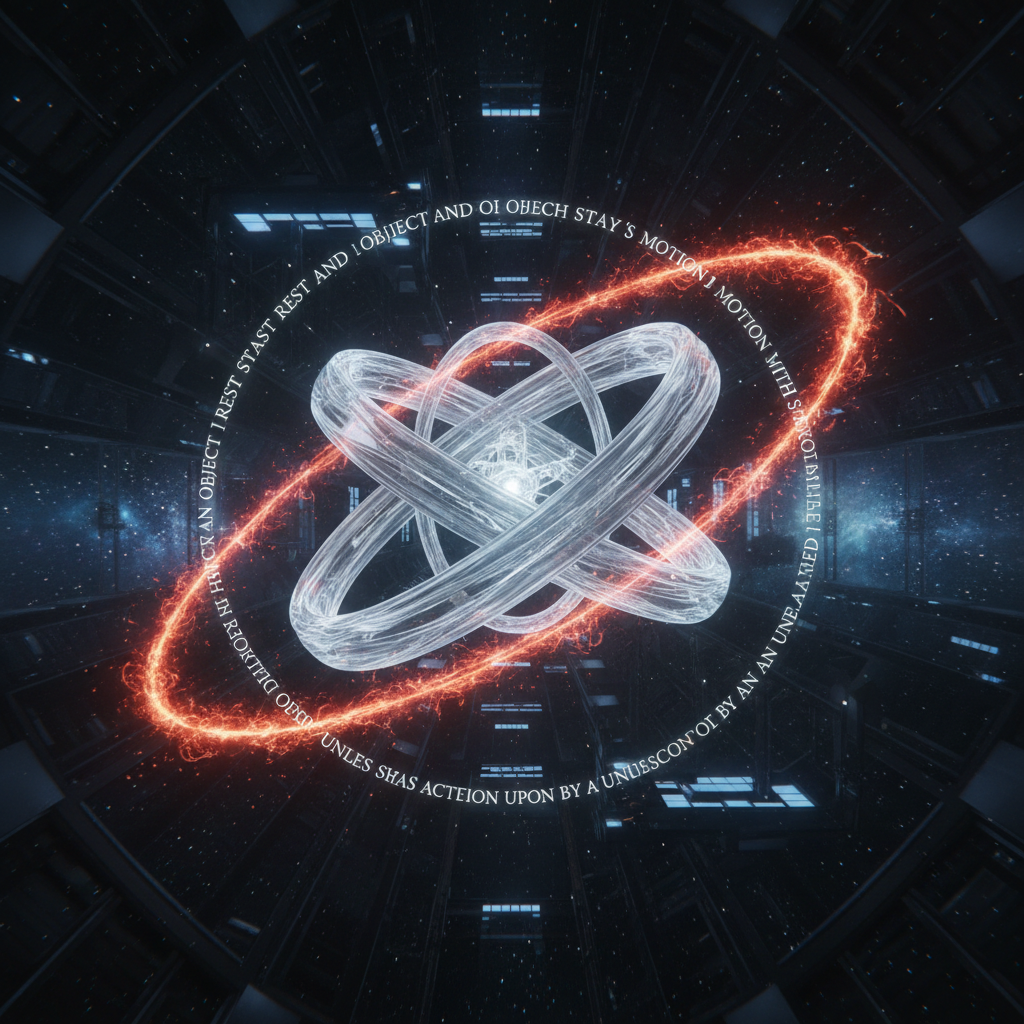
Newton's First Law isn't really a law you can break. It's a description of how the universe works. But you can choose which forces you allow to act on you. You can choose to generate your own friction.
Close the app. Put the phone in another room. Leave it there. Feel the discomfort of rest when your body expects motion. Feel the urge to check, to scroll, to see what you're missing. That urge is inertia. That urge is momentum wanting to persist.
The platforms have spent billions of dollars studying your inertia. They've measured it, modeled it, optimized for it. They know exactly how much force it takes to set you in motion and exactly how little friction it takes to keep you there.
But you're not a hockey puck. You're not a satellite. You have the capacity to apply force to yourself. To change your own velocity. To choose rest over motion, stillness over engagement, friction over flow.
The Sound of Stopping
At 1100 decibels, sound becomes a physical force. It can shatter concrete, boil water, change the state of matter itself. That's the threshold where information becomes violence, where signal becomes weapon.
The noise of the feed never reaches 1100db. It doesn't have to. It operates at a frequency just loud enough to keep you in motion, just persistent enough to overcome your rest. It's a constant hum of micro-forces, each one too small to notice, but together creating a momentum that feels impossible to resist.
Maybe silence is the external force you need. Not the absence of sound, but the presence of stillness. The friction that lets you stop.
An object in motion stays in motion. Unless.
<em>Data emitted: 1,247 words · 3.2 minutes of your inertia · Location services: enabled · Last checkpoint: unknown</em>
Data emitted: 1,100 words • 6.5KB • 5-minute read