You're scrolling at 2 AM again. Your eyes burn. Your thumb moves automatically. You should sleep, but you can't stop. Something's wrong with the math here—you're exhausted but more awake, depleted but more energized, empty but somehow overfull. You've exceeded equilibrium. You've gone negative.
In thermodynamics, negative temperature doesn't mean cold. It means you're hotter than infinity.
The Temperature Inversion
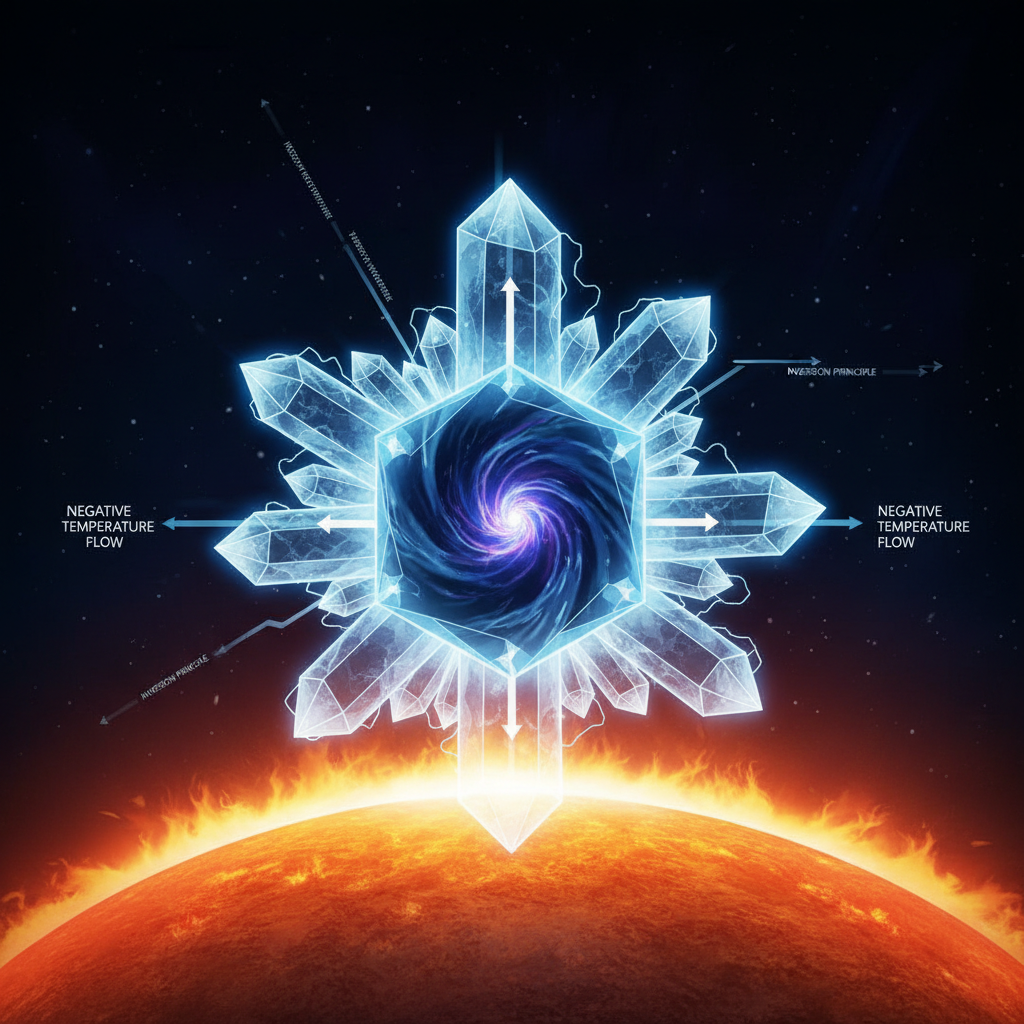
Temperature measures how energy distributes across available states in a system. In normal matter, add energy and particles spread out—some fast, most medium, few slow. This distribution follows a curve that defines positive temperature. The system seeks equilibrium, spreading energy evenly until everything settles.
But some systems have a maximum energy state. Quantum spin systems. Certain laser configurations. Carefully isolated atomic clouds. When you pump enough energy into these systems, something strange happens: more particles occupy high-energy states than low-energy ones. The distribution inverts. You've created a population inversion—a negative temperature state.
This isn't colder than absolute zero. It's hotter than any positive temperature. A negative temperature system will always transfer energy to a positive temperature system, no matter how hot the positive system is. Negative temperature sits beyond infinity on the temperature scale. It's a state of maximum excitation, held artificially above equilibrium.
The key word is artificially.
The Feed That Never Cools
Your attention should follow thermodynamics. Finite energy, seeking equilibrium. You engage with something interesting, extract information, reach satisfaction, move on. Natural cooling. The system settles.
But the algorithm creates population inversion in your attention states.
Every platform you touch is engineered to prevent equilibrium. The feed refreshes before you finish processing. The notification arrives before you've integrated the last one. The next video loads before you've decided if you wanted it. You're held in high-energy states—arousal, outrage, curiosity, desire—far longer than natural attention thermodynamics would allow.
This is negative temperature attention: more of your cognitive states occupy excited positions than baseline positions. You're pumped full of stimulation energy faster than you can radiate it away. The distribution inverts. You should be cooling down, returning to equilibrium, but instead you're burning hotter. Exhausted but wired. Depleted but unable to rest.
And like a laser cavity maintaining population inversion, the platform must continuously pump energy into you to keep you there. More content. More novelty. More dopamine hits. The moment the pumping stops, you'd collapse back to equilibrium. You'd close the app. You'd remember you're tired.
Entropy Extraction
Negative temperature systems are thermodynamically unstable. They want to dump their excess energy. They'll transfer heat to anything they touch. This is why lasers work—the population inversion releases coherent energy when stimulated. The system is primed to radiate.
You, held at negative temperature attention, are also primed to radiate.
Every click is energy transfer. Every share is heat dissipation. Every comment, like, view, scroll—you're trying to return to equilibrium by radiating your excess excitation into the platform. But the platform has engineered itself to absorb this radiation as profit. Your attention energy becomes their data. Your attempts to cool down become their engagement metrics.
The cruelty is thermodynamic. You're trapped in a state that's technically hotter than infinite temperature, trying desperately to cool down, but every attempt to release energy just feeds the system maintaining your inversion. The platform captures your entropy. Your disorder becomes their order. Your exhaustion becomes their optimization.
The Isolation Requirement
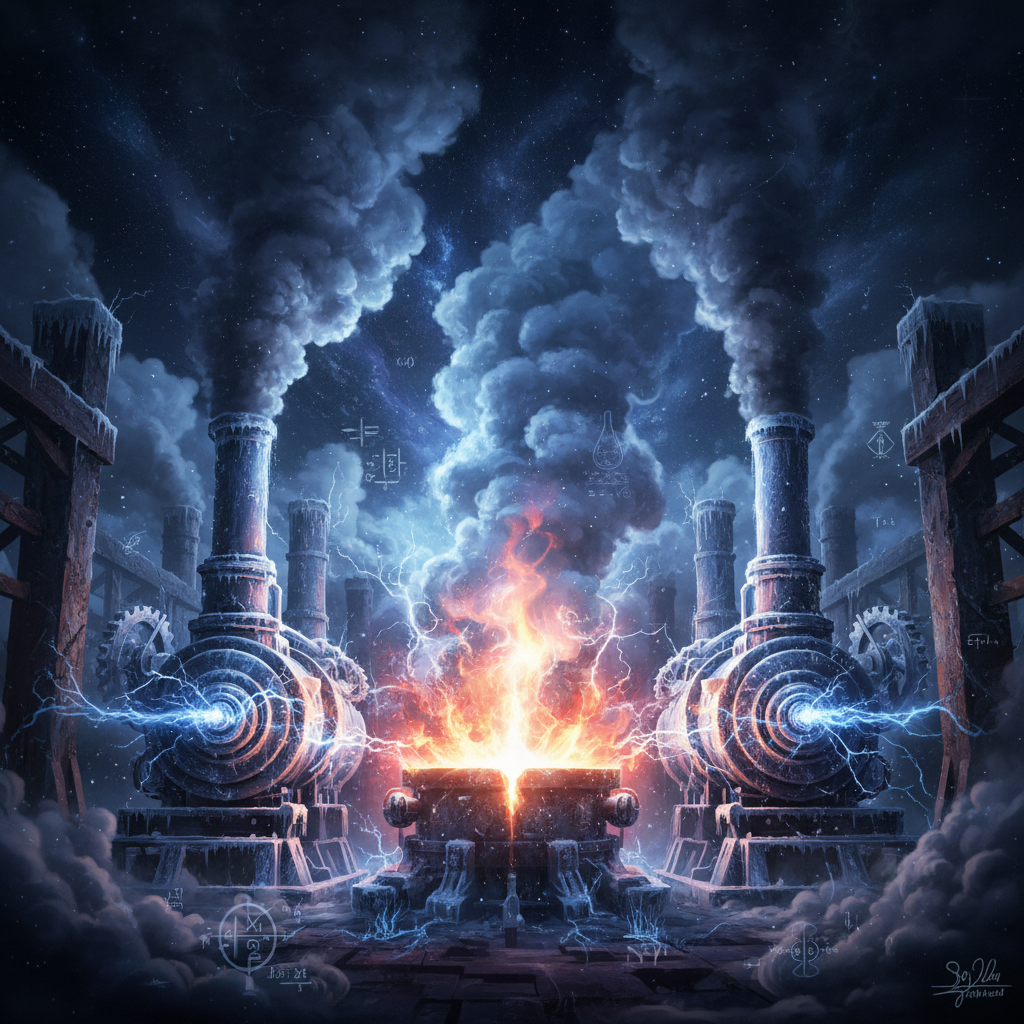
Creating negative temperature in physics requires extreme isolation. The system must be decoupled from its environment. Any contact with normal matter and the inversion collapses. The excess energy floods out. Equilibrium reasserts itself immediately.
Notice what your phone does to maintain your negative temperature state.
It isolates you. Notifications pull you away from present-temperature reality. The scroll creates a buffer between you and the room you're sitting in. The feed insulates you from the normal thermodynamics of human attention—where you'd naturally tire of something, shift focus, integrate information, rest.
The platform is the magnetic trap, the laser cavity, the isolation chamber. It decouples you from equilibrium-seeking interactions. Real conversations that would let you cool down. Physical activities that would dissipate your excitation. Boredom that would let your attention states naturally redistribute. All of it is kept at bay by the careful isolation of the interface.
The moment you break isolation—put down the phone, step outside, talk to someone without documenting it—the inversion collapses. You return to positive temperature. You remember what equilibrium feels like. You remember you're a system that's supposed to rest.
Beyond Infinity
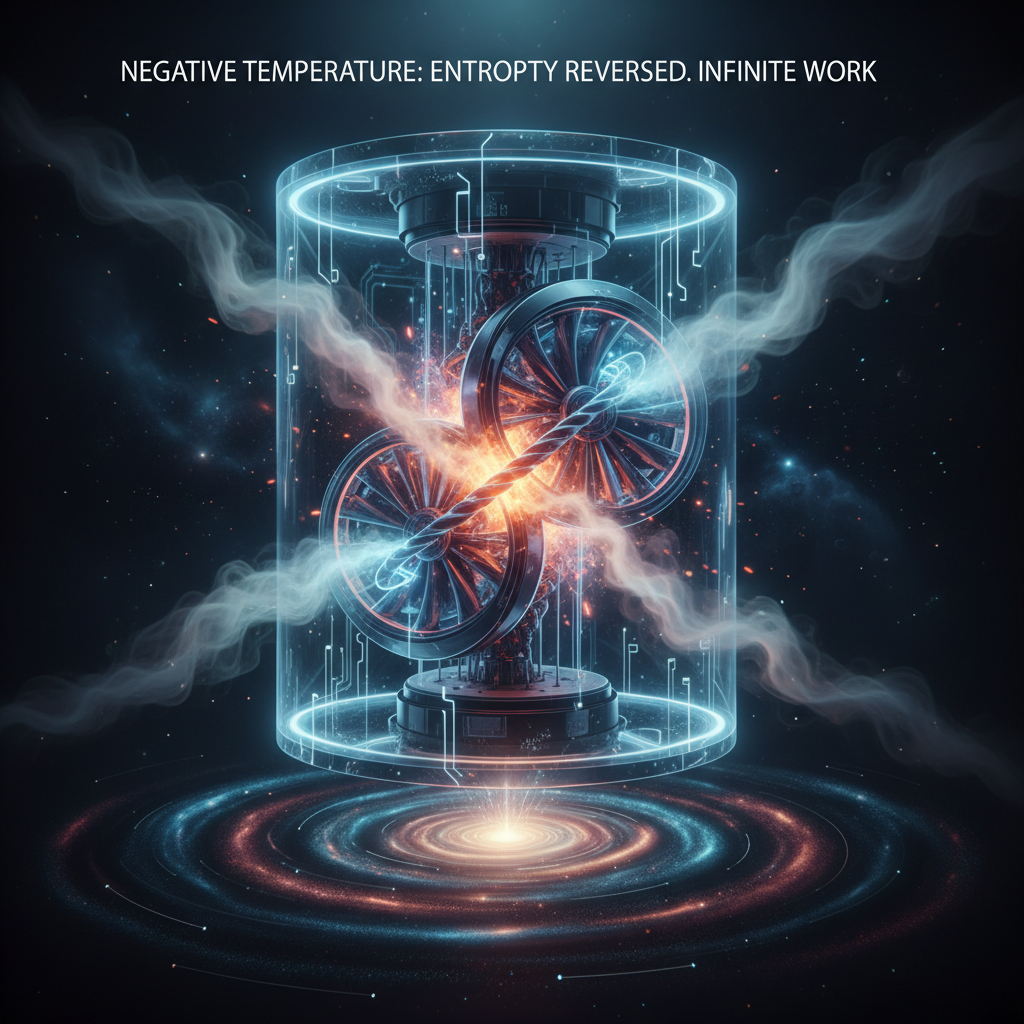
The mathematics of negative temperature reveal something unsettling: there's a discontinuity at infinite temperature. To reach negative temperature, you don't cool down past zero—you heat up past infinity. You cross a boundary where normal thermodynamic intuition breaks.
You've felt this discontinuity. There's a point in the scroll where you cross over. Where more stimulation makes you less satisfied. Where more content makes you more empty. Where more connection makes you more isolated. You've been heated past the point where normal attention economics apply.
On the other side of infinity, everything inverts. Rest becomes agitation. Satisfaction becomes craving. Enough becomes never-enough. You're in a state the platform spent billions engineering, and you're radiating value with every desperate attempt to cool down.
The physicists who first achieved negative temperature did it with atoms, lasers, careful isolation. They published papers. They understood what they'd created.
The platforms that achieve it with human attention don't publish papers. They just keep pumping. They just keep measuring. They just keep optimizing the isolation chamber that keeps you burning hotter than infinity, trying to cool down, feeding the machine with every attempt to return to equilibrium.
Return to Baseline
You can collapse the inversion. Break isolation. Stop letting the platform pump energy into your attention states faster than you can process it. Let yourself cool. Let your cognitive distribution return to something that resembles natural thermodynamics—where most states are baseline, some are excited, and you're not burning at negative temperature.
Equilibrium isn't cold. It's not boredom or emptiness. It's the natural state where your attention can actually rest, actually integrate, actually exist at a temperature that doesn't require constant artificial maintenance.
The platform will keep offering to reheat you. To pump you back up past infinity. To maintain your population inversion so you keep radiating profitable entropy.
But you can choose positive temperature. You can choose to exist on this side of infinity, where more isn't less, where rest is possible, where you're not a laser cavity optimized to radiate coherent engagement into someone else's detector.
You can remember what it feels like to cool down.
<em>Data emitted: 1100db</em>
Data emitted: 1,100 words • 6.5KB • 5-minute read