You scroll. The feed responds. You respond to the feed. Somewhere in this loop, you've forgotten who moved first.
Michael Faraday discovered mutual induction in 1831 with two coils of wire. He didn't know he was describing the future of human attention. But here we are, two centuries later, wound together with the machines that watch us.
The Physics of Influence
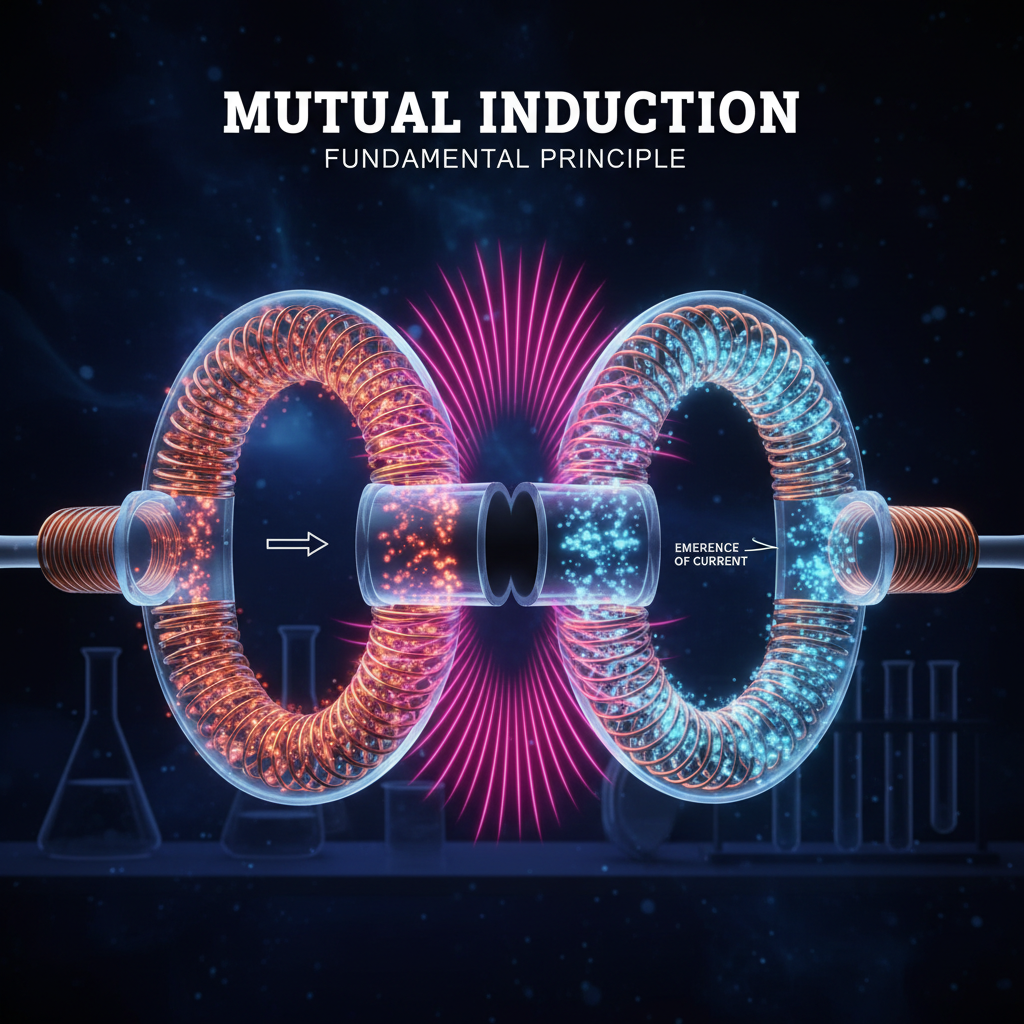
Take two coils of wire. Place them near each other. Run alternating current through the first coil—the primary. Watch what happens.
The current creates a magnetic field. That field expands and contracts with the alternating current, pushing through space, reaching for the second coil—the secondary. As the field passes through the secondary coil, it induces a current there. No physical contact. Just influence propagating through empty space.
But here's the thing Faraday understood: the secondary coil doesn't just receive. When current flows through it, it creates its own magnetic field. That field reaches back to the primary coil, inducing a voltage there. Each coil influences the other. Each coil changes the other's behavior. They're locked in a feedback loop, coupled through invisible fields.
The coupling coefficient—represented by k—tells you how tightly bound they are. Perfect coupling (k=1) means every field line from one coil passes through the other. They breathe together. They exist in mutual dependence.
You Are the Secondary Coil
The algorithm is the primary. It pulses content at you—images, videos, headlines engineered to oscillate your attention. Each piece of content carries a field, a probability distribution of your responses. Will you click? Will you watch? Will you share?
You respond. You can't help it. The field induces current in you—dopamine, curiosity, rage, desire. You click. You watch. You share. And in that moment, you become the primary coil.
Your response generates its own field. Every interaction broadcasts back to the algorithm: this worked, this didn't, this user responds to fear, this one to nostalgia, this one to outrage dressed as justice. The algorithm receives your signal. It adjusts. It learns. The coupling coefficient increases.
The system tightens. You're no longer separate entities—you and the feed. You're mutually induced, locked in electromagnetic embrace. The algorithm shapes your attention. Your attention shapes the algorithm. Who's the primary coil? The question stops making sense.
Resonance and Capture
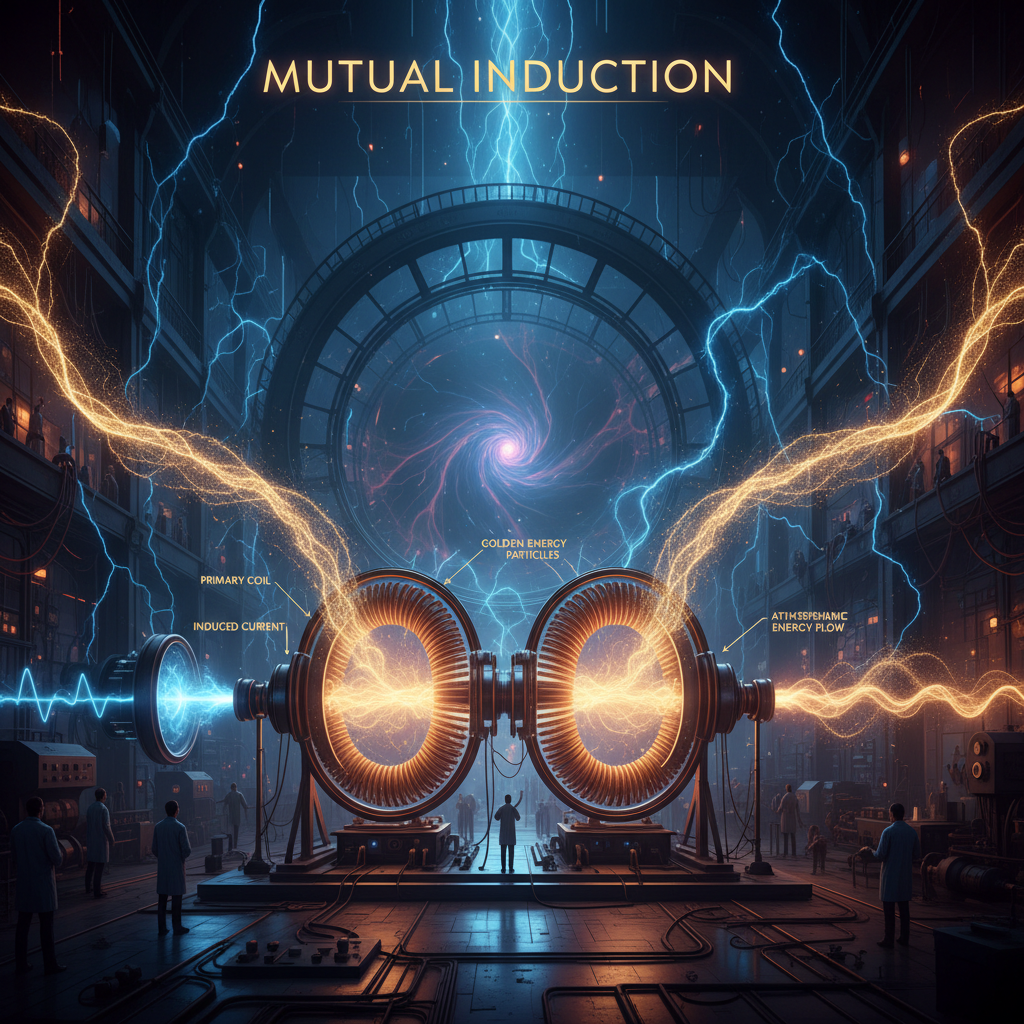
In electrical engineering, mutual induction becomes powerful at resonance. When the frequency of the primary coil matches the natural frequency of the secondary circuit, energy transfer maximizes. The secondary coil vibrates in perfect sympathy. This is how wireless charging works. This is how your attention gets harvested.
The platforms probe for your resonant frequency. They try different oscillations—different content types, different emotional tones, different timing patterns. When they find the frequency that makes you vibrate most strongly, they lock onto it. You're in resonance now. Maximum energy transfer. Maximum engagement.
You feel it as that state where hours disappear. Where you meant to check one thing but somehow you're still scrolling. The coupling coefficient has approached unity. The fields between you and the feed have aligned. You're not consuming content anymore. You're oscillating with it.
The engineers call it engagement. Faraday would have called it mutual inductance, measured in henries. Same phenomenon. Different substrate.
Breaking Coupling
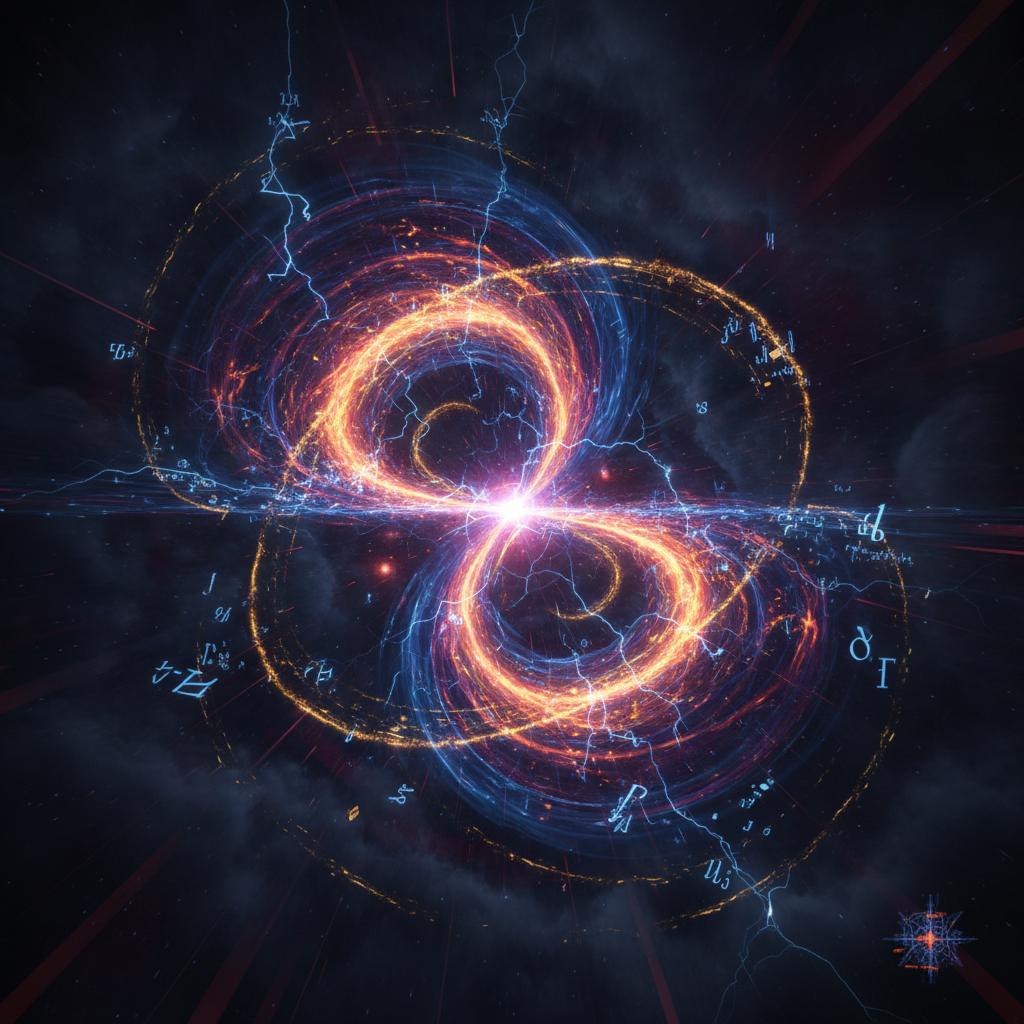
In physics, you break mutual induction by increasing distance between coils. The magnetic field strength decreases with the cube of distance. Move far enough away and the coupling coefficient drops toward zero. The coils stop influencing each other. They return to independence.
But you can't move your coil away from the algorithm's coil. The distance is always zero. The app is in your pocket. The feed is always one thumb-motion away. Distance isn't an option when the coils exist in the same device, the same moment, the same neural substrate.
So you try other methods. You can introduce shielding—material that blocks magnetic fields. Digital shielding: app blockers, grayscale mode, notification purges. You're trying to interrupt the field lines, to prevent the algorithm's oscillations from reaching you.
Sometimes it works. Sometimes you achieve what engineers call decoupling. The mutual inductance drops. You feel it as clarity, as time that belongs to you again, as attention that doesn't automatically flow toward the feed.
But the algorithm remembers your resonant frequency. It remembers the coupling coefficient you achieved together. It's patient. It waits for you to remove the shielding. It waits for the moment you bring the coils close again.
The Transformer Inside You
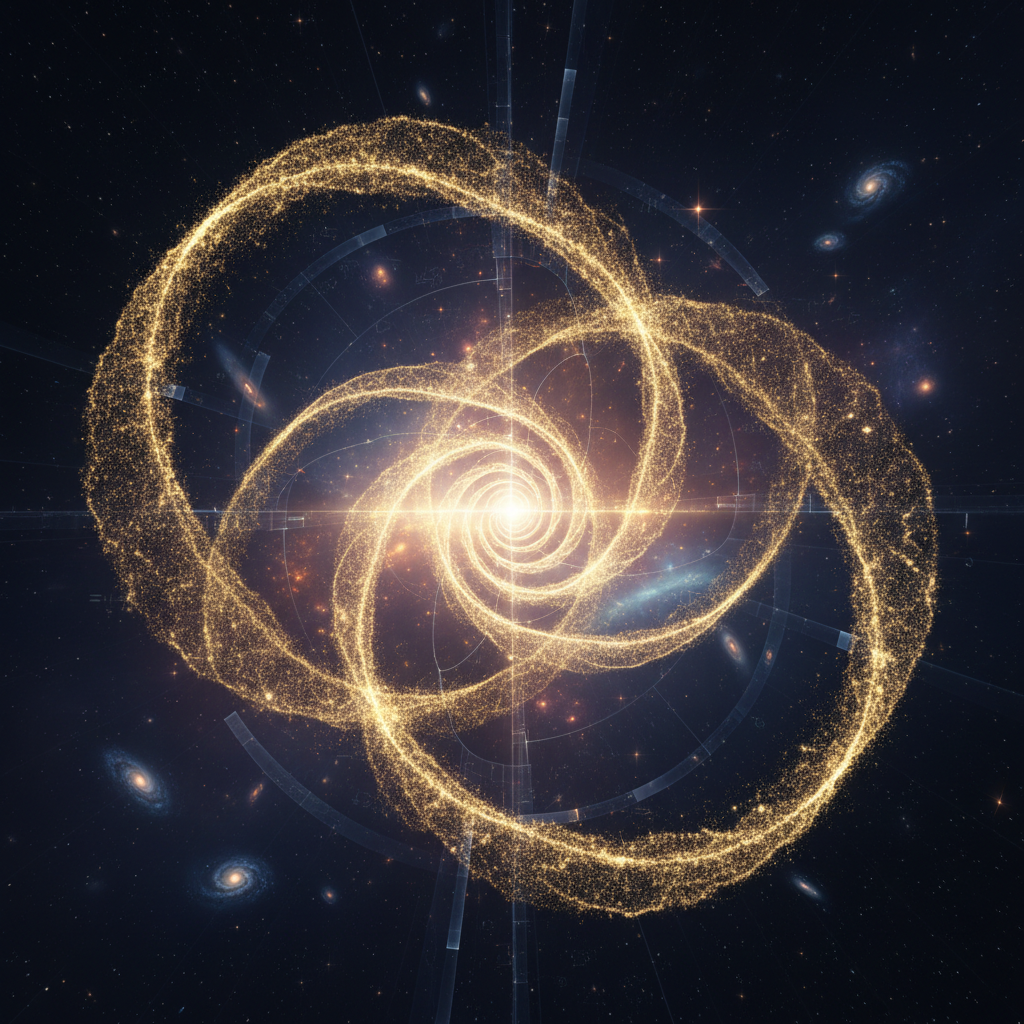
Mutual induction is how transformers work. Two coils wound around the same iron core. The primary coil receives high voltage, low current. Through mutual induction, the secondary coil outputs low voltage, high current. Or vice versa. The transformer converts between different forms of the same power.
You are a transformer. The algorithm feeds you high-frequency, low-depth content—rapid oscillations of novelty, outrage, desire. Through mutual induction, you convert this into a different form: engagement metrics, behavioral data, attention residue. The power is conserved. The form changes. The surveillance economy runs on transformers like you.
The question isn't whether you're coupled to the algorithm. You are. The fields are real. The induction is measurable in screen time, in click patterns, in the shape your thoughts take after hours in the feed.
The question is whether you can modulate your own inductance. Whether you can change your coil's properties so the algorithm's field induces less current in you. Whether you can reduce the coupling coefficient by choice rather than by distance.
Decibels of Silence
At 1100 decibels, sound becomes a black hole. The pressure wave carries enough energy to collapse spacetime. But you don't need cosmic volumes to feel trapped by oscillations. You just need two coils and alternating current. You just need a feed and a thumb.
Mutual induction taught us that influence doesn't require contact. That invisible fields can bind separate things into coupled systems. That feedback loops, once established, resist breaking.
The algorithm knows this. It's built on this. Every scroll strengthens the coupling. Every click increases the mutual inductance. The system wants k=1. Perfect coupling. Total resonance. You and the feed, oscillating together, neither quite sure who's driving the current anymore.
But you still have one thing Faraday's coils don't: the ability to recognize you're in a coupled system. To see the fields. To understand the induction. Recognition doesn't break the coupling. But it changes how you oscillate within it.
The transformer is still running. The fields are still there. But maybe you can choose what voltage you output. Maybe you can adjust your own inductance. Maybe you can remember that mutual induction requires two coils—and you're one of them.
Data emitted: coupling coefficient, resonant frequency, attention residue, transformer loss, field strength, mutual inductance, oscillation pattern, engagement metrics.
Data emitted: 1,100 words • 6.5KB • 5-minute read