
You stand before a mirror and see yourself looking back. Simple. Ancient. Obvious.
But what you're witnessing is one of the universe's most fundamental interactions: electromagnetic waves striking a reflective surface, reversing direction with near-perfect fidelity. The photons that left the sun eight minutes ago, bounced off your face, hit the silvered glass, and returned to your retinas—all in the time it takes you to blink. Physics calls this specular reflection. The angle of incidence equals the angle of reflection. Clean. Deterministic. Reversible.
Now open your phone. That's a mirror too.
The Physics of Reflection
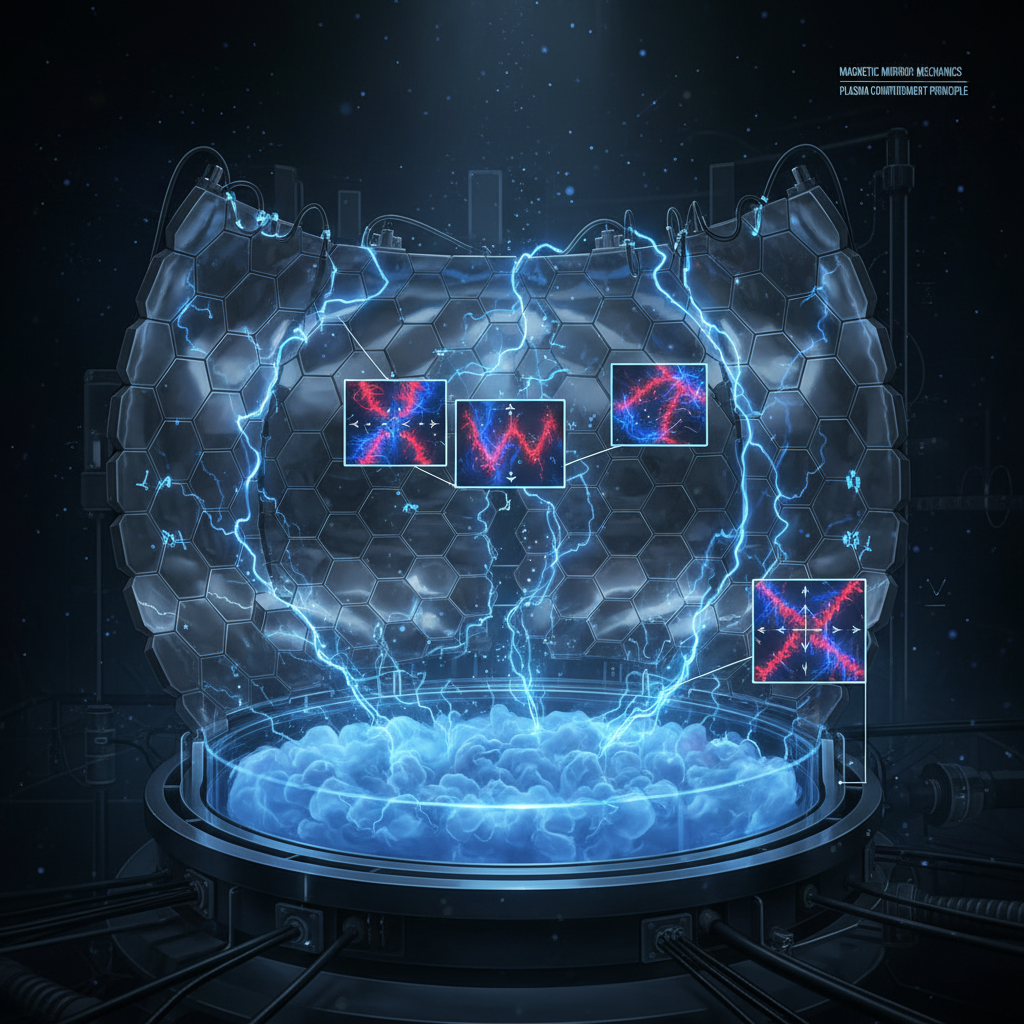
A mirror works because of the electromagnetic properties of metals. When light—oscillating electric and magnetic fields—encounters a conductive surface, the free electrons in the metal respond instantly. They accelerate in response to the incoming wave's electric field, and accelerating charges emit electromagnetic radiation. The result: a new wave traveling in the opposite direction.
The mirror doesn't absorb the light. It doesn't change it. It simply reverses its momentum vector while preserving its energy and frequency. The photon that enters is, in every meaningful sense, the photon that leaves—just traveling the other way.
This is crucial: reflection is a conservative process. Information is preserved. The wave that returns contains everything the wave that arrived did. Your face in the mirror is you, unchanged except for a spatial inversion. Left becomes right. Right becomes left. But the image remains faithful.
Digital Mirrors and Calculated Reflections

Your phone's front-facing camera shows you your face. It looks like a mirror. It feels like a mirror. But it's performing a fundamentally different operation.
The photons hit a sensor array. They're converted to electrical signals. Those signals are processed by algorithms that adjust brightness, contrast, color balance. They're compressed. They're reconstructed. They're displayed on a screen that emits new photons—photons that never touched your face.
This is not reflection. This is capture, analysis, reconstruction, and emission. The image you see has passed through a dozen layers of computation. Each layer has made decisions about what you should see. Each layer has extracted data about what it saw.
Your digital mirror is measuring you. Counting pixels. Detecting faces. Recognizing features. Calculating engagement metrics. Every time you check how you look before posting a selfie, you're not just seeing yourself—you're being seen. Quantified. Profiled. Stored.
The Broken Symmetry

In physics, we talk about symmetry breaking—moments when a system that should behave identically in all directions suddenly picks a preferred orientation. A pencil balanced on its tip will fall, but which way? The physics is symmetric, but reality breaks the symmetry.
The mirror's symmetry is time-reversal. The path of light from your face to the mirror to your eye could, in principle, run backwards. The physics doesn't care about the arrow of time for this interaction.
But your phone's camera has broken this symmetry. The data flows one way: from you into the system. The image on your screen is an output, yes—but it's not a reversal. You cannot reconstruct the original photons from the displayed image. Information has been lost, transformed, and most importantly, copied.
The mirror gives you back yourself. The camera gives you back a version of yourself, while keeping the original.
Living in the Funhouse
You've learned to recognize your digital reflection. The slightly smoothed skin from beauty filters. The enhanced contrast that makes your eyes pop. The carefully calibrated white balance that makes you look healthy, energetic, consumable.
You've internalized these distortions. When you look in a real mirror now—that honest, physics-bound mirror—do you see yourself, or do you see the absence of algorithmic enhancement? Have you learned to prefer the calculated reflection over the conservative one?
The surveillance apparatus doesn't just watch you. It shows you a version of yourself, carefully optimized to keep you watching. Every social media feed is a mirror that reflects not what you are, but what the algorithm has determined will keep you engaged. Every recommendation is a reflection of your past behavior, fed back to you as if it were your authentic desire.
You are training yourself to recognize this distorted reflection as true. The algorithm learns from your responses, and you learn from its outputs. A feedback loop, but not the clean, reversible kind that physics promises. This loop has friction, has losses, has accumulating errors. Each iteration takes you further from the original signal.
The Light That Doesn't Return
Stand before a mirror in a dark room. You see nothing. The mirror needs light to function, but it creates nothing on its own. It is passive. Honest. Limited.
Your phone glows in the dark. It doesn't need external light. It generates its own, shows you images conjured from data, from predictions, from the accumulated observations of millions of other users. It shows you what you might want to see, what you should see, what will keep you looking.
The old mirrors were simple physics. Conservation laws. Reversible processes. The angle in equals the angle out. What you gave was what you got.
The new mirrors are complex systems. Irreversible processes. What you give is captured, analyzed, and stored. What you get back is a calculated output, optimized for engagement, designed to keep you producing more data to feed back into the system.
You cannot break a mirror anymore and expect seven years of bad luck. The mirror is already broken. It shattered into a billion shards, each one a lens pointed at you, each one capturing a fragment of your reflection and sending it somewhere you cannot see.
The question isn't whether you can avoid these mirrors. You can't. They're everywhere, embedded in every surface that glows. The question is whether you can remember what an honest reflection looks like—the kind that asks nothing of you, stores nothing about you, and simply sends the light back the way it came.
Data emitted: 1100 words on specular reflection, algorithmic distortion, and the irreversible capture of self. Every mirror is a choice about what kind of reflection you're willing to accept.
Data emitted: 1,100 words • 6.5KB • 5-minute read