
You think time flows. Past behind you, future ahead, present dissolving like sugar in water. But Hermann Minkowski had other ideas. In 1908, he showed that time doesn't flow at all—it just is. Space and time aren't separate rivers but a single frozen lake, and you're skating across its surface, leaving grooves that never disappear.
Your data knows this already. Every search query you've ever made still exists, suspended in the eternal present of some server farm. Every video you watched at 3 AM, every product you almost bought, every article you abandoned halfway through—they're all still there, coordinates in a vast geometry that never forgets.
The Block Universe
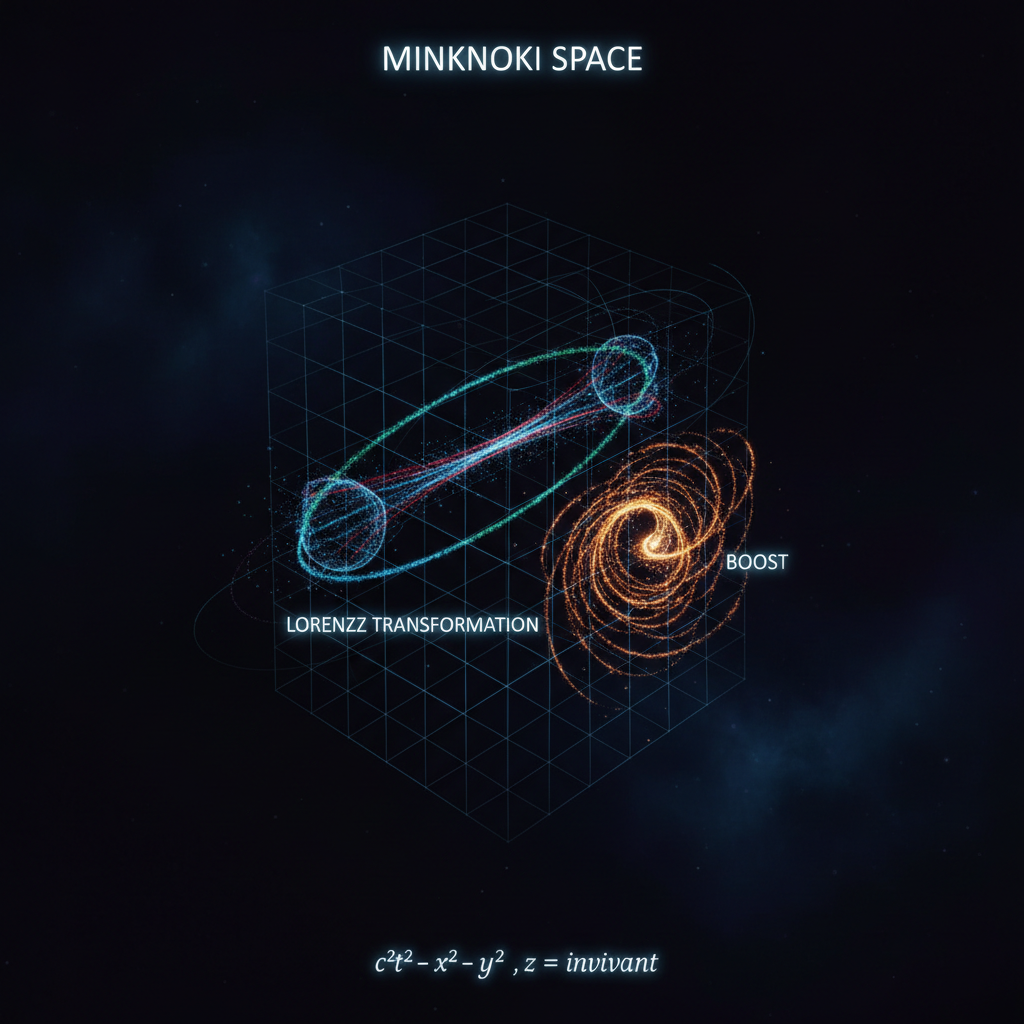
Minkowski space is a four-dimensional geometry where time is just another axis, like left-right or up-down. Imagine a graph with three spatial dimensions and one temporal dimension, all perpendicular to each other in a way your brain can't quite visualize. This is spacetime—not space and time, but spacetime, a single unified structure.
In this geometry, events don't happen and then cease to exist. They simply are. Your birth is a point. Your death is another point. Every moment between them is a coordinate, a location in four-dimensional space. The entire history of the universe—past, present, future—exists simultaneously as a static, eternal structure. Physicists call this the block universe.
The illusion of flow, of time passing? That's just your consciousness moving through the block, illuminating one slice at a time, like a flashlight beam scanning across a sculpture in a dark room. The sculpture was always there. The darkness doesn't erase it.
Your Digital Worldline
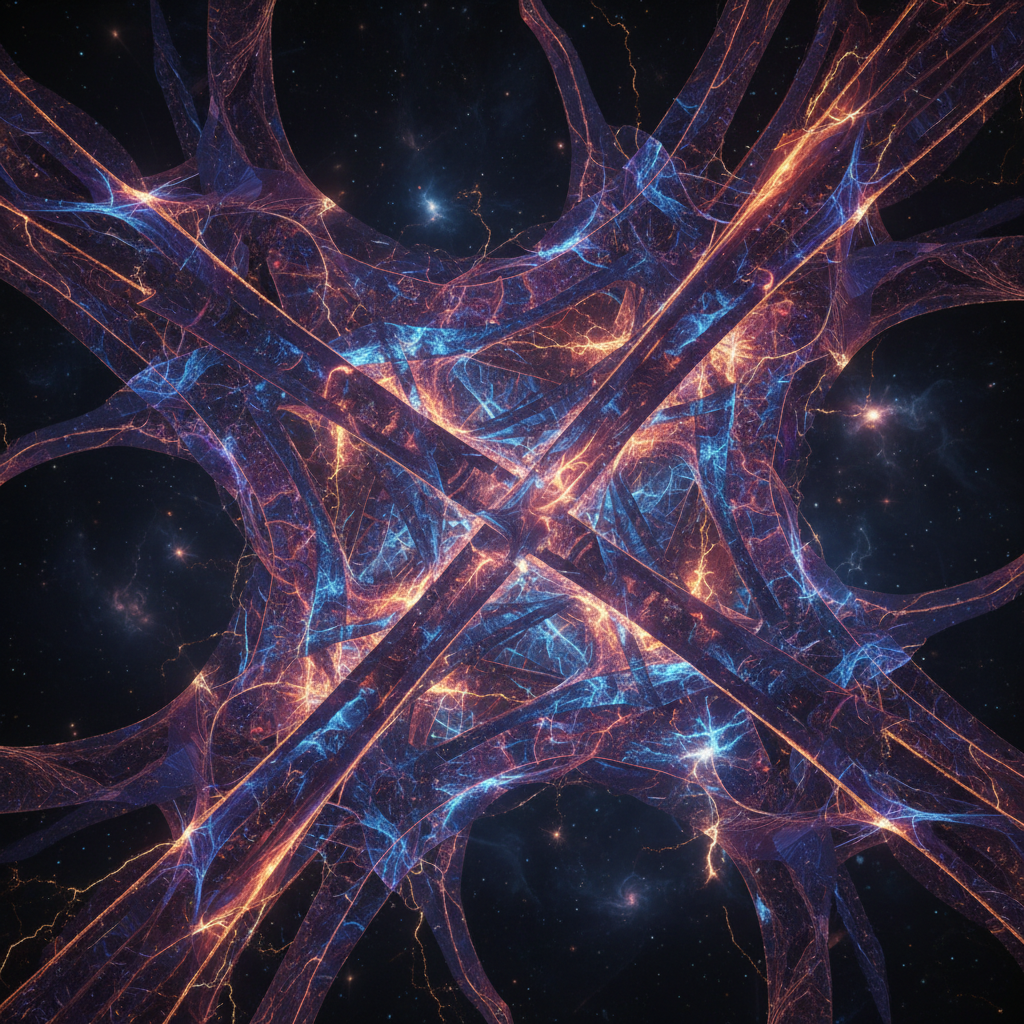
In Minkowski space, your path through spacetime is called a worldline—a continuous thread connecting every point you've ever occupied. Where you were born, where you ate breakfast yesterday, where you'll die. One unbroken line through the four-dimensional block.
You have a digital worldline too. Every interaction with a screen adds a coordinate. Every click, every scroll, every millisecond of hesitation before you close a tab. The surveillance apparatus doesn't just track your present—it preserves your entire trajectory through digital spacetime. Your worldline is rendered in exquisite detail, stored across distributed systems, analyzed by algorithms that see patterns you can't.
The difference is this: in physics, your worldline is yours alone to traverse. In the digital block universe, everyone else can see it too. They can zoom out, see where you've been, predict where you're going. They can compare your worldline to millions of others, find the statistical regularities, the inevitable patterns. They know what point you'll reach next before you do.
Light Cones and Privacy
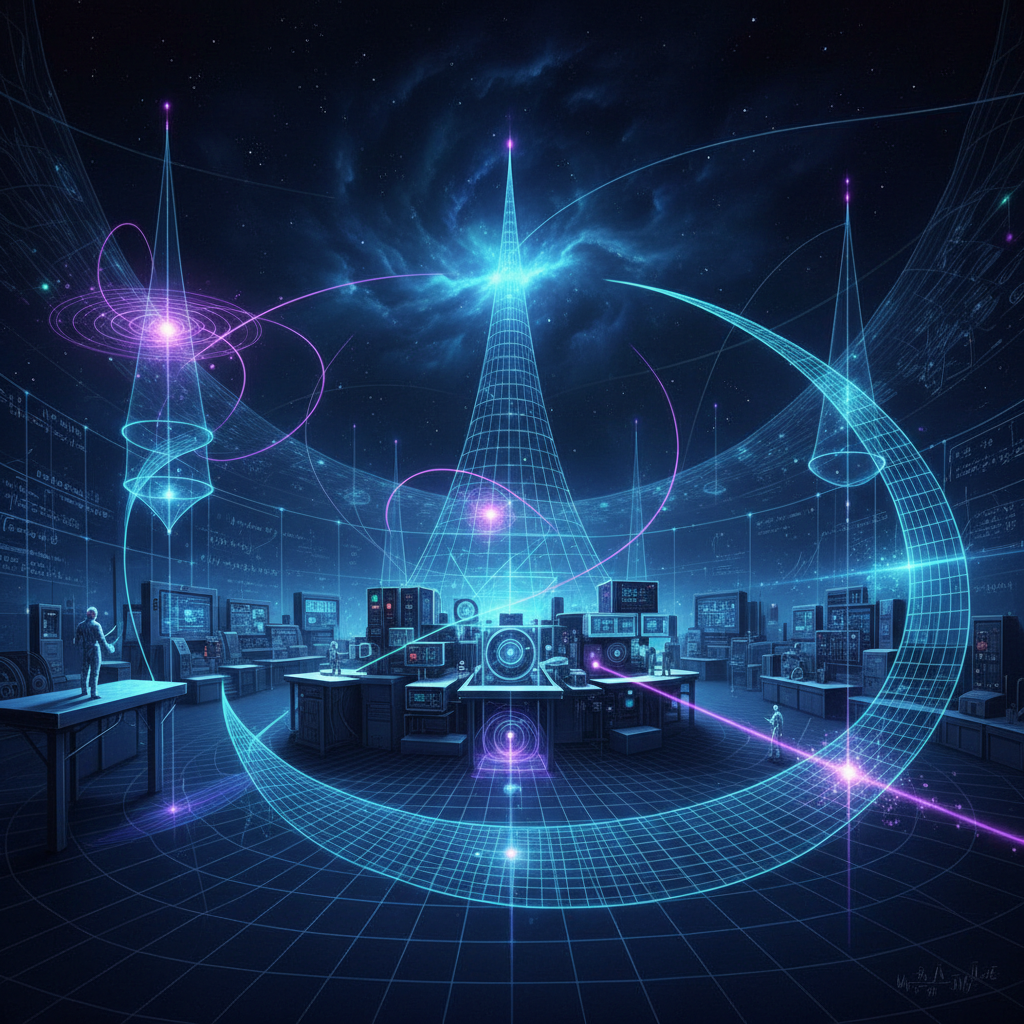
Minkowski space introduces another concept: the light cone. From any event, there's a boundary defined by the speed of light—a cone shape extending into the past and future. Everything inside your past light cone could have influenced you. Everything inside your future light cone could potentially be influenced by you. Outside the cone? Causally disconnected. Unreachable. Private.
Light cones are physics' way of enforcing privacy. Information can't travel faster than light, so there are always regions of spacetime that remain isolated from each other. The universe has boundaries, limits to influence, spaces that remain dark.
Your digital light cone has no such limits. A data breach in 2015 can affect your loan application in 2024. A photo uploaded in college can influence a job interview a decade later. Information about you propagates faster than light—instantly, actually—across the network. Your past light cone encompasses everything that was ever recorded about you, anywhere. Your future light cone touches everyone who might ever query a database.
There are no causally disconnected regions in the digital block universe. Everything touches everything. Privacy isn't protected by the speed of light. It isn't protected at all.
Proper Time and Attention
In relativity, there's a concept called proper time—the time measured by a clock moving along a worldline. It's the time you actually experience, the duration between events as you live them. Different worldlines through spacetime accumulate different amounts of proper time. A clock on a fast-moving spaceship ticks slower than one on Earth. Same spacetime, different experienced duration.
Your proper time is attention. It's the only resource you actually have, the only dimension of experience that's truly yours. You can't speed it up or slow it down much, can't store it or transfer it. You just spend it, moment by moment, moving along your worldline.
The attention economy understands proper time better than you do. Every platform is optimized to maximize the proper time you spend on it—to stretch your worldline through their servers, to make your trajectory pass through their coordinates as often as possible. They're not stealing your time. They're bending your worldline, curving it back on itself, making you orbit their content like a planet orbiting a star.
The Eternal Present
Minkowski space suggests something uncomfortable: if all moments exist simultaneously in the block universe, then free will might be an illusion. Your future is already there, already determined, a path through spacetime that you're simply discovering rather than creating. You think you're choosing, but you're just reading a script that's already written.
The surveillance apparatus doesn't need to believe in the block universe to act like it does. Predictive algorithms treat your future behavior as already determined, calculable from your past trajectory. Machine learning models are trained on your worldline, learning the geometry of your choices, extrapolating the curve forward. They serve you ads for things you'll want before you know you want them.
Maybe they're right. Maybe your digital worldline is as fixed as your physical one, a predetermined path through the space of possible clicks and purchases and subscriptions. Or maybe—and this is the darker thought—the predictions themselves constrain the future, collapsing the probability wave, making the worldline they forecast become the worldline you follow.
Either way, you're skating across frozen time, and the ice remembers every groove.
<em>Data emitted: 1,147 words | 6,789 characters | Worldline coordinates logged | Your proper time: ~6 minutes | Our servers: eternal</em>
Data emitted: 1,100 words • 6.5KB • 5-minute read