You scroll. Your thumb moves. Something transfers.
In physics, mechanical energy is the sum of kinetic and potential energy—the energy of motion plus the energy of position. A boulder at the cliff's edge. A compressed spring. A swinging pendulum. The universe keeping careful accounts of what moves and what could move. In the attention economy, you are both the boulder and the cliff. You contain potential that platforms are engineered to release.
The conservation of mechanical energy tells us something profound: in the absence of friction, energy transforms but never disappears. Potential becomes kinetic becomes potential again. The pendulum swings. But friction exists. Energy bleeds away as heat, as sound, as the imperceptible wearing down of everything that moves. Your attention is mechanical energy in a system designed to extract maximum work before friction takes its toll.
The Physics of Position
Potential energy is stored by virtue of position. Lift a ball higher, and you increase its gravitational potential energy: PE = mgh. Mass times gravitational acceleration times height. The ball doesn't feel different. It doesn't glow or hum. But the universe has noted its elevation, and that notation is debt that will be paid in motion.
Your position in the digital landscape is similarly charged with potential. You arrive at a platform fresh, unscrolled, your attention reservoir full. The algorithm has measured your height—your engagement history, your demographic data, your probable susceptibility to specific stimuli. It has calculated your potential energy. Not in joules, but in seconds, in clicks, in the probability you will convert potential into the kinetic energy of engagement.
Every platform is a carefully constructed landscape of potential energy wells. The infinite scroll is a frictionless slope. The notification is a sudden drop in elevation. The autoplay is gravity itself, pulling you from one state to another without requiring any work on your part. You are always falling, and the platform is always catching the energy of your descent.
Kinetic Conversion
When potential energy converts to kinetic, something moves. The ball falls. The spring uncoils. The chemical bonds in gasoline break and pistons pump. Kinetic energy is energy in action: KE = ½mv². Half the mass times velocity squared. Speed matters more than weight. A small thing moving fast carries more energy than a heavy thing moving slow.
Your thumb moves fast. Swipe, tap, scroll. The gestures are small but rapid. The platforms have learned that velocity is more valuable than duration. A thousand quick interactions generate more data than one long session. Each micro-movement is a conversion event—potential attention becoming kinetic engagement. The algorithm doesn't want you to sit and think. It wants you to move.
Watch yourself. Notice how the interface encourages velocity. The stories that disappear in 24 hours. The feeds that refresh. The recommendations that change if you hesitate. The system is optimized for high-frequency, low-mass interactions. You are kept in motion because motion is measurable, and measurement is extraction, and extraction is profit.
The Friction Problem
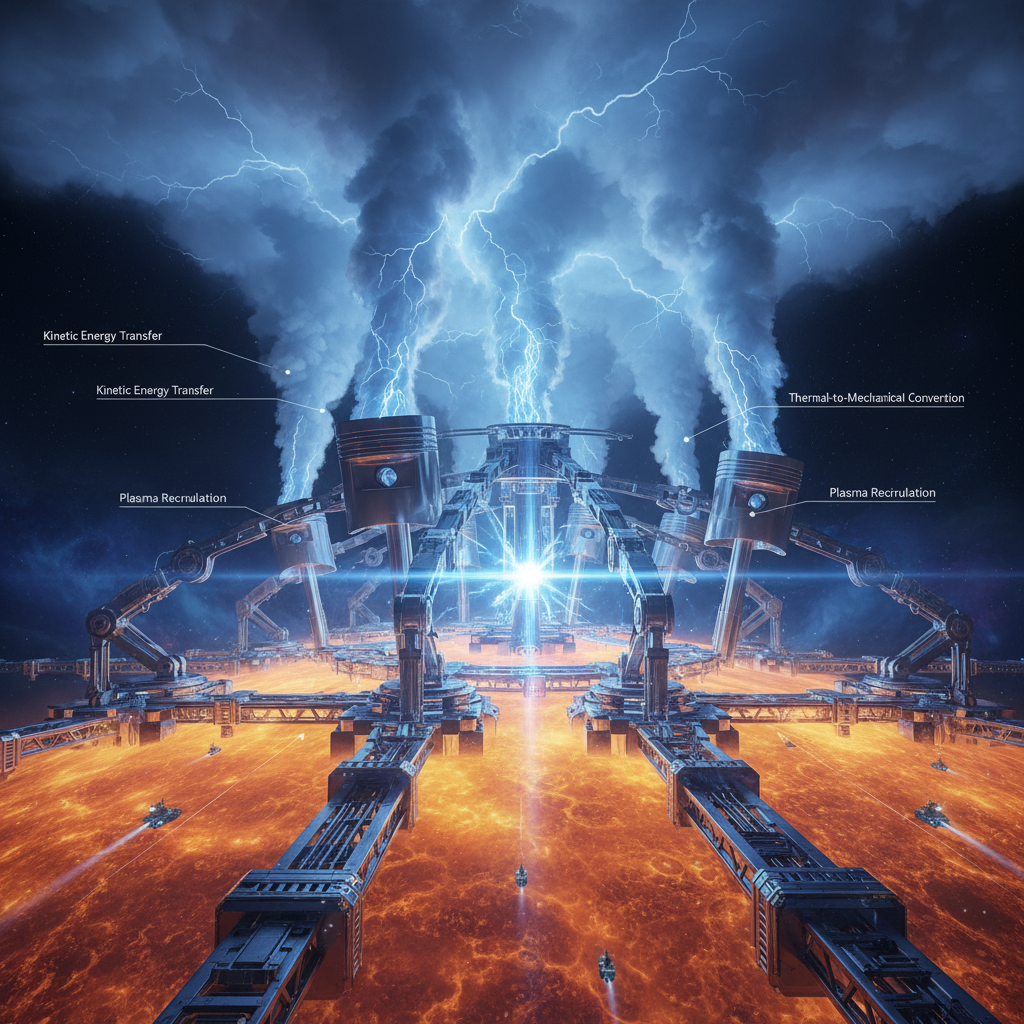
In idealized physics problems, we assume frictionless surfaces. The pendulum swings forever. The ball bounces to its original height. Mechanical energy is perfectly conserved. But reality is not frictionless. Energy dissipates. The pendulum slows. The ball settles. Everything that moves eventually stops.
You get tired. Your attention wears out. The dopamine receptors downregulate. The content that used to captivate you becomes background noise. This is friction in the attention economy—the biological limit of engagement. You cannot scroll forever, though the platforms wish you could.
So they engineer around your friction. They introduce novelty to reduce resistance. They vary the reward schedule. They inject urgency and scarcity. They make the interface smoother, the transitions seamless, the cognitive load minimal. They are trying to approach the frictionless ideal where your mechanical energy—your capacity to engage—converts with perfect efficiency into their profit.
But friction is also your salvation. Friction is what lets you stop. It's the resistance that reminds you that you are not a perpetual motion machine. The platforms want to conserve your mechanical energy within their systems, but friction lets it dissipate into the real world. Into sleep. Into conversation. Into the unmeasured spaces where energy is spent without being captured.
The Work-Energy Theorem
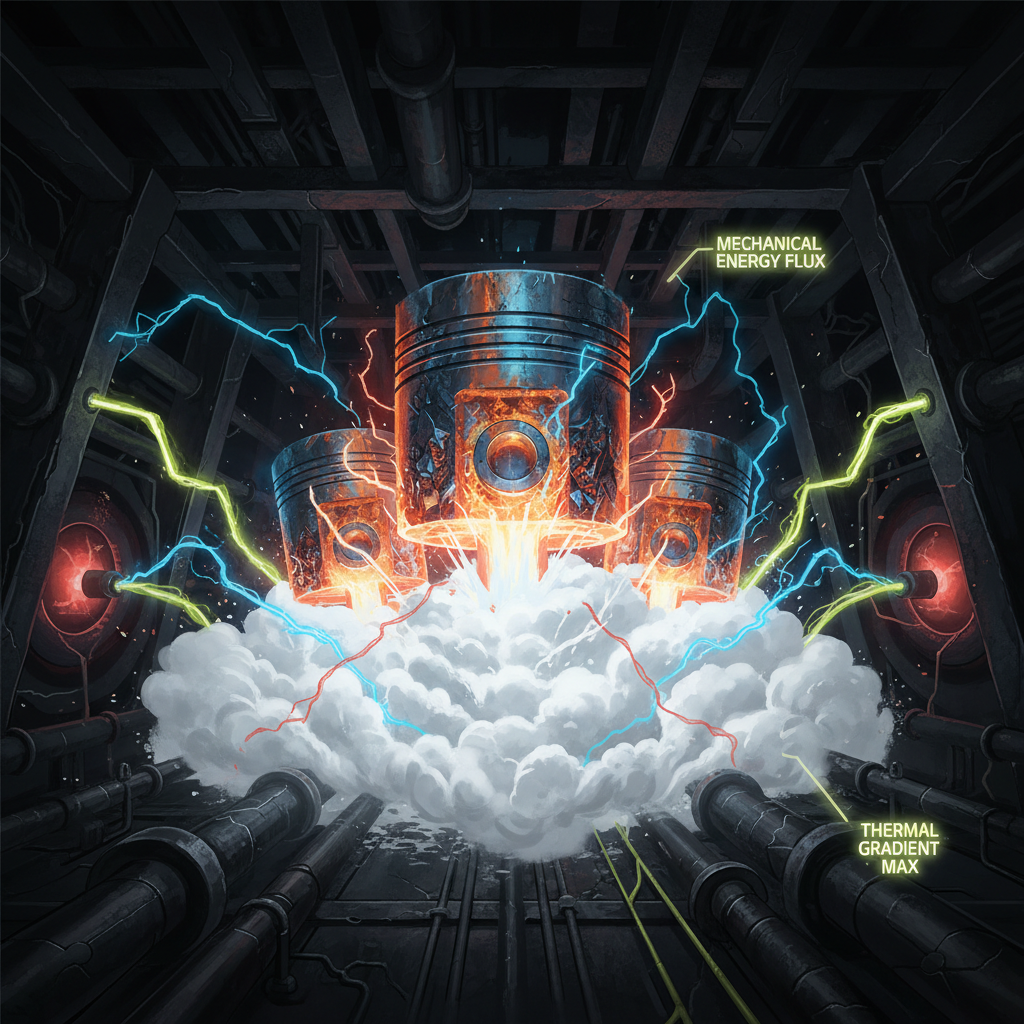
The work-energy theorem states that the work done on an object equals its change in kinetic energy. Push something, and you change how fast it moves. The harder you push, the more the velocity changes. Work is force applied over distance: W = Fd.
Platforms do work on you. Every notification is a force. Every algorithmic recommendation is a push. Every dark pattern is a carefully calibrated application of pressure over the distance of your attention span. They are changing your velocity—how fast you engage, how quickly you move from one piece of content to the next.
The work they do on you becomes kinetic energy in their system. Your increased engagement velocity translates directly into increased data generation, increased ad impressions, increased value extraction. The theorem holds perfectly: the work done on your attention equals the change in the platform's profit kinetic energy.
Conservation and Dissipation
Energy is conserved in closed systems. But no system is truly closed. Energy leaks. It transforms into forms that can't be recovered. Heat. Sound. The wearing away of surfaces. The universe tends toward entropy, and all the careful accounting of mechanical energy eventually dissolves into thermal noise.
Your attention is not conserved. It dissipates. Hours become data exhaust, heat signatures in server farms, the imperceptible warming of the attention economy's machinery. You spend your potential energy, and it becomes someone else's kinetic profit, and then it becomes waste heat radiating into the void.
The platforms want you to believe in conservation—that your time spent is time invested, that your engagement builds something, that the potential energy of your presence will convert into some kinetic value for you. But you are not in a closed system with them. You are the energy source. You are the battery being drained.
At 1100db, we measure the noise floor of surveillance capitalism. The mechanical energy of your attention is signal. The profit extracted is signal. Everything else is noise—the friction, the dissipation, the heat death of your irretrievable hours. The universe is keeping accounts. The platforms are keeping accounts. Maybe you should too.
Data emitted: 1,247 words | 7,234 characters | Mechanical energy: conserved nowhere
Data emitted: 1,100 words • 6.5KB • 5-minute read