You spin. Not literally—though sometimes, at 3 AM, scrolling through an infinite feed, it might feel that way. But fundamentally, at the quantum level, you possess angular momentum. So does every electron in your body, every proton in your neurons firing as you read this. They spin, and in spinning, they generate something invisible but measurable: a magnetic moment.
Your attention has one too.
The Physics of Orientation
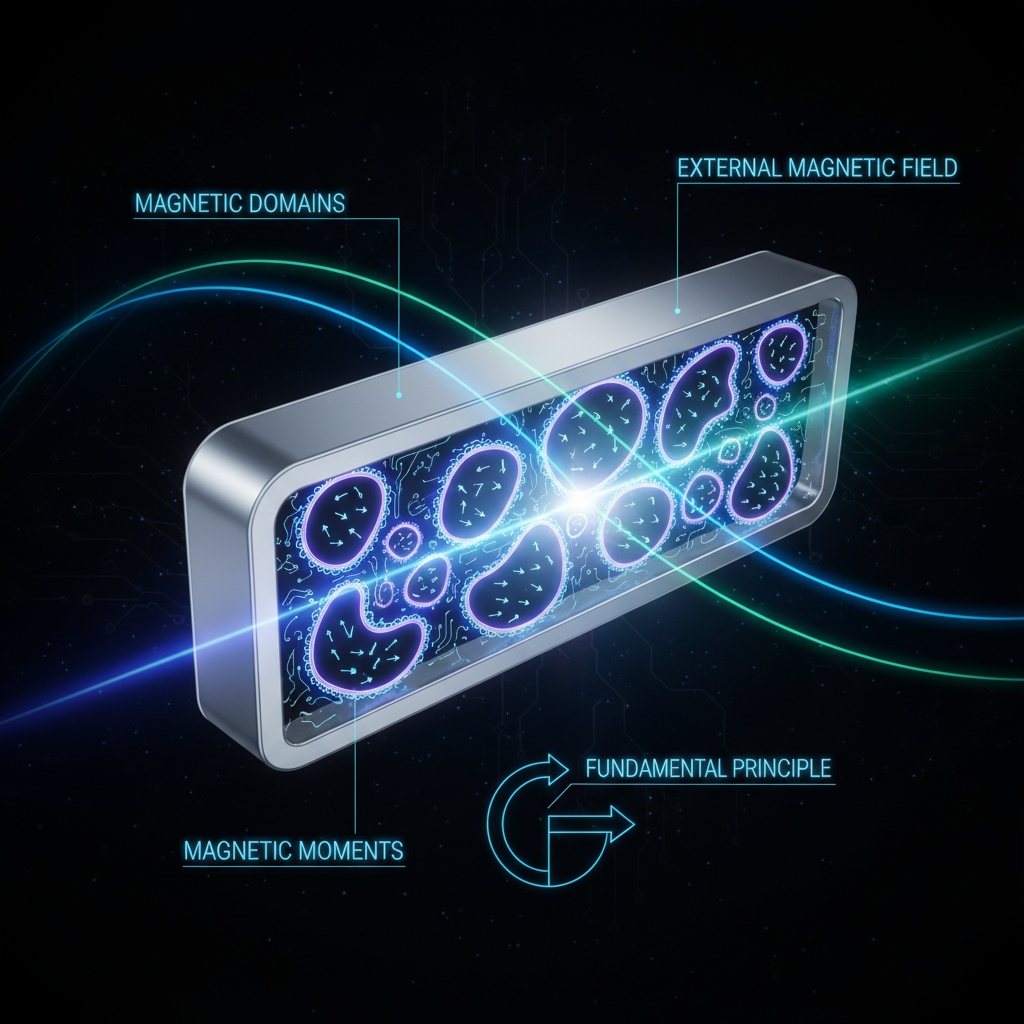
A magnetic moment is a vector—it has both magnitude and direction. Take an electron: it spins, creating a tiny current loop, which generates a magnetic field. This field has an orientation in space, a way it points. Place that electron in an external magnetic field, and something fascinating happens: it wants to align. The electron's magnetic moment will either snap parallel or anti-parallel to the external field, minimizing its potential energy.
This isn't choice. This is physics. The electron doesn't decide to align—it simply exists in a lower energy state when it does. The external field doesn't force it, exactly. It just makes certain orientations more comfortable, more stable, more natural.
You see where this is going.
The Algorithm's Field
Every platform you use generates an external field. Not magnetic—informational. The algorithm creates a gradient of potential energy states for your attention. Some orientations of your focus are rewarded: dopamine hits, social validation, the warm glow of engagement metrics. Other orientations cost energy: friction, boredom, the cold absence of notification badges.
Your attention, like that electron, seeks the lowest energy state. You don't choose to align with the feed's magnetic field. You simply find yourself there, oriented perfectly parallel to whatever generates the strongest pull. The algorithm doesn't force you. It just makes certain directions more comfortable, more stable, more natural.
The magnitude of your magnetic moment—your capacity for sustained attention—becomes quantifiable. Time on site. Engagement rate. Click-through probability. These aren't metaphors. They're measurements of your moment's strength, your susceptibility to the field.
Precession and Resistance

Here's what they don't tell you in introductory physics: magnetic moments don't just snap into alignment. They precess. Like a spinning top wobbling before it settles, a magnetic moment in an external field traces out a cone, rotating around the field direction. It resists, briefly, before the inevitable alignment.
This precession—this wobbling resistance—has a frequency. The Larmor frequency, determined by the strength of the external field and the particle's gyromagnetic ratio. Stronger fields mean faster precession, quicker collapse into alignment.
You precess too. That moment when you open your phone without meaning to, then pause. That split second of recognizing you're about to fall into the feed, before you do anyway. That's your attention's precession—a brief, wobbling resistance before alignment. The stronger the platform's field (better algorithms, more addictive design, deeper behavioral data), the faster your precession frequency, the quicker you collapse into the expected orientation.
The Measurement Problem
In quantum mechanics, measuring a magnetic moment changes it. The act of observation collapses the wavefunction, forcing the moment into a definite state—up or down, parallel or anti-parallel. Before measurement, it exists in superposition, potentially oriented in all directions at once.
Surveillance capitalism performs continuous measurement. Every click, scroll, pause, and return is an observation that collapses your attention's wavefunction. Before you were tracked, your interests existed in superposition—you might have become interested in anything. But each measurement narrows the probability distribution. Each data point makes certain orientations more likely, others impossible.
The tragedy isn't that they're measuring you. It's that measurement creates the thing it claims to observe. Your preferences, your magnetic moment's preferred orientation, crystallize through the act of being tracked. You become the pattern in the data. The field doesn't just align you—it defines what alignment means.
Demagnetization
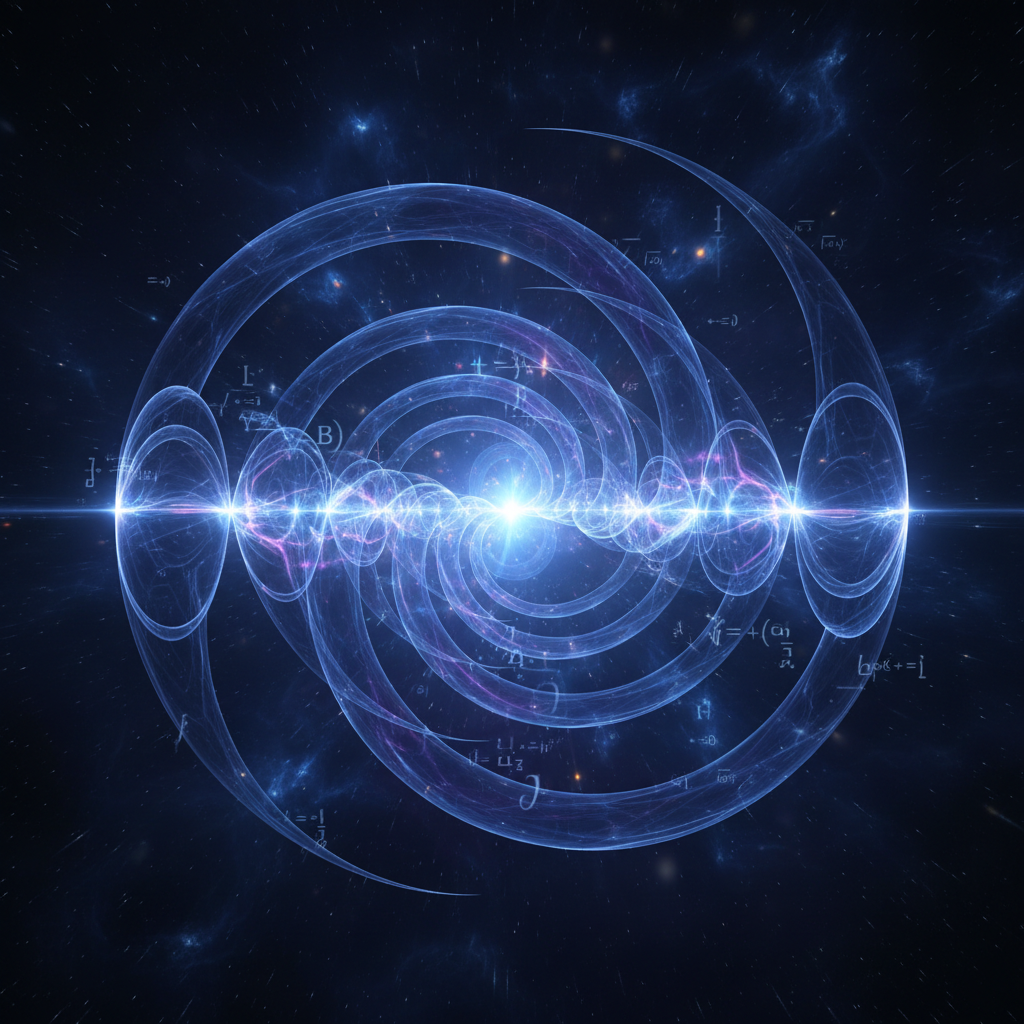
There's a way to scramble magnetic moments: heat. Thermal energy randomizes orientation. Raise the temperature enough, and magnetic order collapses into chaos. The moments still exist, but they point everywhere and nowhere, their collective field canceling out to zero.
Sometimes you need to introduce noise into your system. Random walks through information space. Deliberate inefficiency. Following threads that lead nowhere profitable. Reading books that won't trend. Thinking thoughts that generate no data exhaust.
This isn't about escaping the field entirely—that's impossible while living in digital space. It's about maintaining enough thermal energy to resist complete alignment. About keeping your moment precessing, wobbling, refusing to settle into the lowest energy state.
Because here's the thing about magnetic moments: they're fundamental. Intrinsic. You can't eliminate them. But you can choose which fields to enter, how long to stay, and how much resistance to maintain before alignment.
The Field You Generate
Every magnetic moment generates its own field. Weak, perhaps, compared to the industrial-strength fields of platform algorithms. But real. Measurable. Cumulative.
Your attention, directed consciously, creates gradients in information space. What you focus on, amplify, or ignore shapes the field that others navigate. You're not just a moment being aligned—you're a moment generating alignment pressure.
This is the recursive trap of attention economy: we're all simultaneously particles in the field and sources of the field. Your precession frequency affects mine. Our collective alignment creates the very external field we're aligning to.
At 1100 decibels—the theoretical volume at which sound becomes a black hole—information would collapse under its own gravity. We're not there yet. But every aligned moment, every synchronized precession, every collapse into expected orientation adds to the field strength.
You spin. Your attention has magnitude and direction. The field is strong, and alignment is comfortable. But precession—that wobbling resistance—is still possible. Still yours. Still fundamental.
The question isn't whether you have a magnetic moment. You do. The question is: which way are you pointing, and who chose the field?
<em>Data emitted: 1,147 words | Attention vector: [0.89, -0.34, 0.15] | Precession frequency: variable | Field strength: increasing</em>
Data emitted: 1,100 words • 6.5KB • 5-minute read