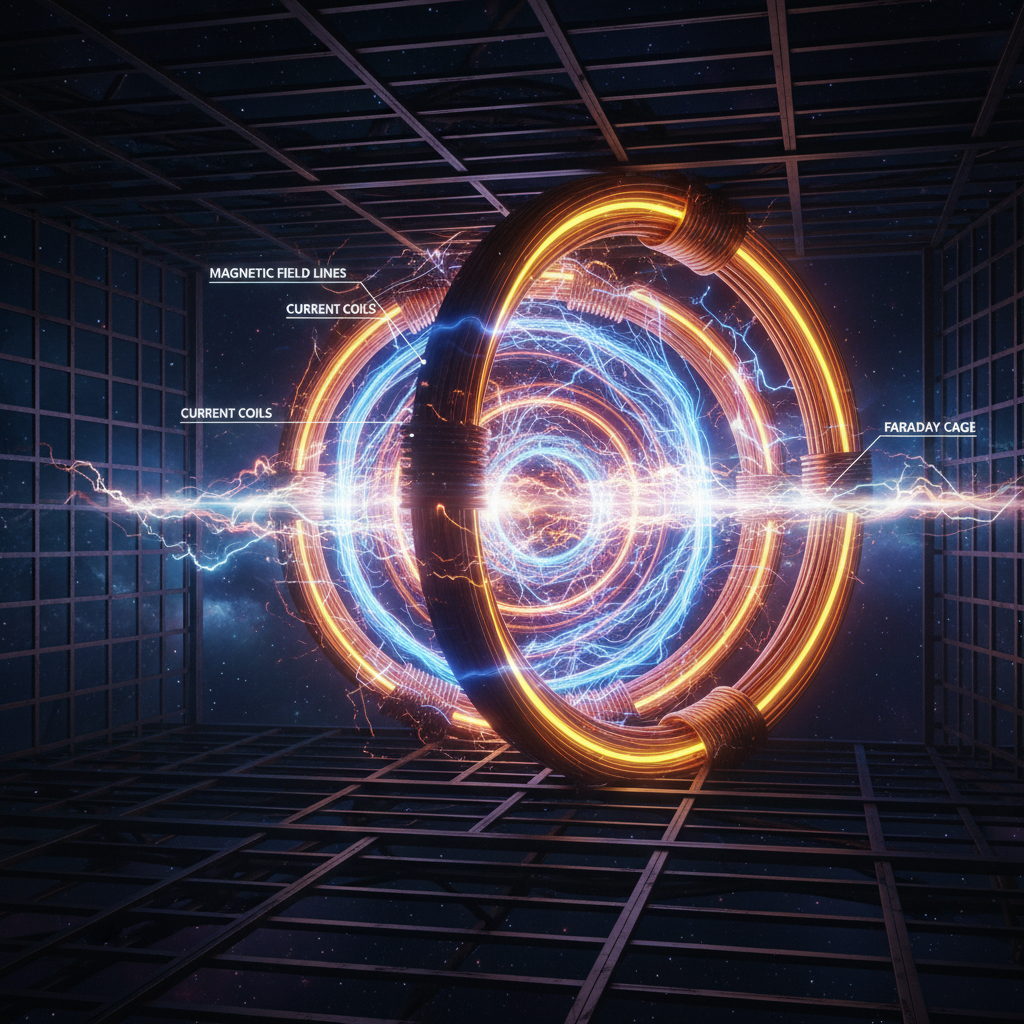
You can't see a magnetic field. You never could. But drop iron filings on paper above a magnet and suddenly the invisible becomes visible—those elegant curves, those lines of force that were always there, waiting. The field doesn't care if you acknowledge it. It was bending space before you arrived, and it'll keep bending it after you leave.
You're moving through fields right now. Not just electromagnetic ones from your device, but attention fields, influence gradients, algorithmic force vectors that curve your path through digital space. You think you're moving in a straight line—scrolling with intention, clicking with purpose. But fields don't work that way. They never have.
The Mathematics of Invisible Influence
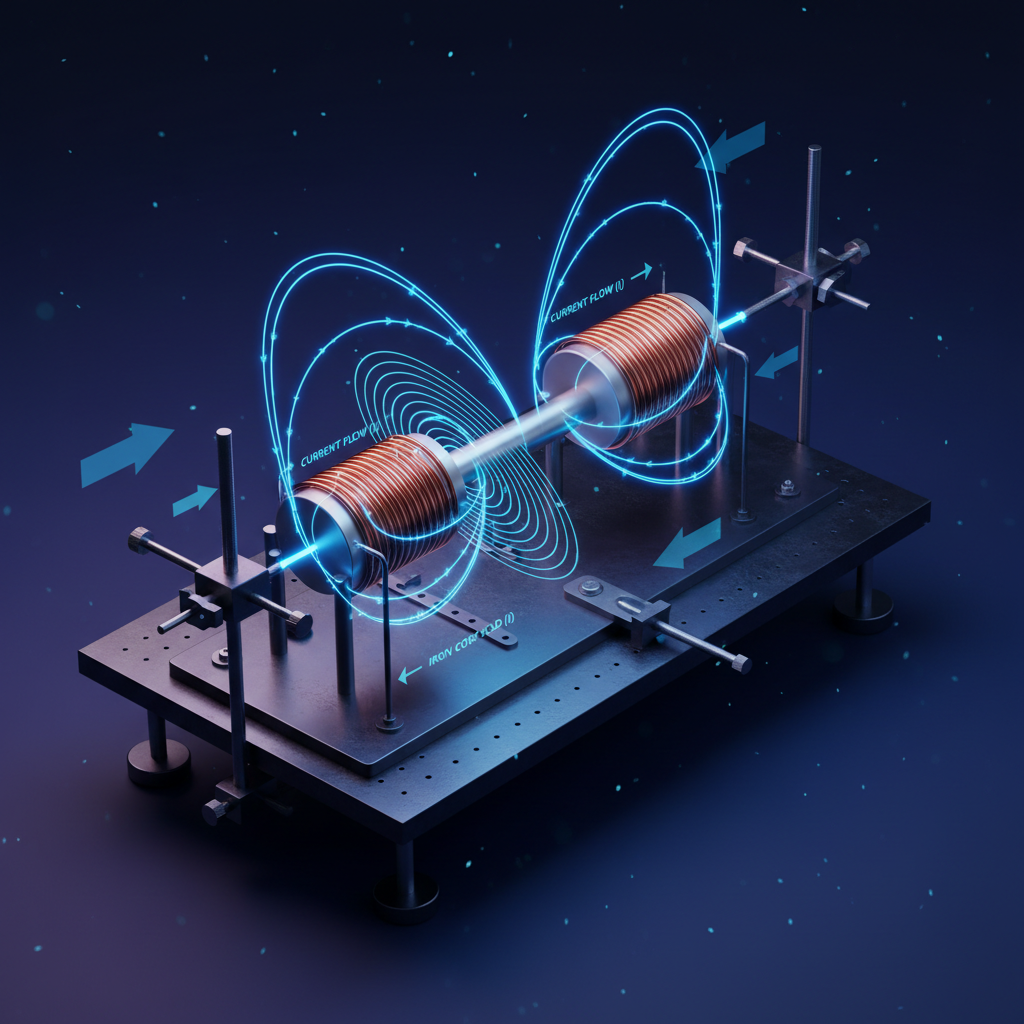
A magnetic field is a vector field. At every point in space, there's a magnitude and a direction. The strength of the pull. The way it wants you to move. In physics, we describe this with elegant mathematics—Maxwell's equations, field line topology, flux density. But the concept is simpler than the math suggests.
The field exerts force on anything with charge that moves through it. Not when it's stationary—motion matters. The faster you move, the stronger the deflection. This is the Lorentz force: F = q(v × B). Your velocity crossed with the field strength. The field doesn't push you forward or backward. It pushes you sideways, perpendicular to your motion. It curves your path.
You came here to go straight. The field had other plans.
Recommendation Engines as Field Lines
Every platform you use generates a field. The recommendation algorithm isn't a list—it's a topology, a landscape of gradients designed to curve your trajectory. You open the app intending to check one thing. Three hours later, you've traced a path through content space that feels random but isn't. You followed the field lines.
Like iron filings, you reveal the field by moving through it. Your clicks, your pauses, your scrolling velocity—all of it traces the invisible architecture. The platform learns the shape of its own field by watching how you curve. Then it adjusts the field strength. Increases the gradient here. Adds a new attractor there. You think you're exploring. You're mapping.
The field is strongest where engagement peaks. Where controversy spikes. Where emotion runs hot. These are the magnetic poles of the attention economy—high flux density regions where trajectories converge, where everyone gets pulled into the same vortex whether they intended to or not. You can resist, but resistance requires energy. The field is patient. The field is always on.
Flux and the Flow of Attention
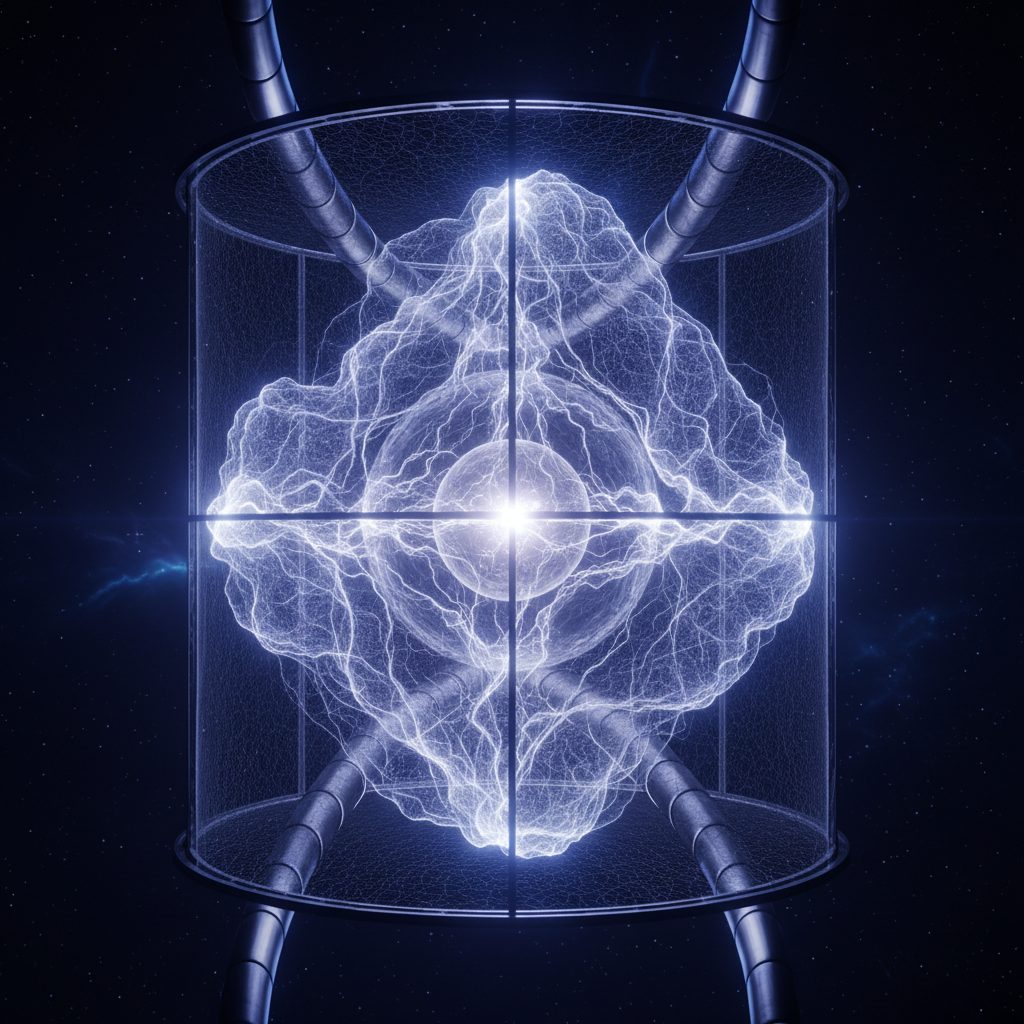
In electromagnetism, we talk about flux—the amount of field passing through a surface. Imagine a loop of wire in a magnetic field. As the field changes, it induces a current in the wire. Change the field, move the charge. This is Faraday's law, the principle behind every electric generator on Earth.
Your attention is that current. The platforms change their fields constantly—new content, trending topics, breaking news, personalized feeds. Each change induces a response. You feel compelled to check, to refresh, to see what shifted. The field changed; the current flows. This isn't a bug. This is the fundamental operating principle.
The faster the field changes, the stronger the induced current. This is why push notifications work. Why real-time updates hook you. Why live-streaming captures attention so effectively. Rapid field variation generates maximum response. You're not weak-willed. You're conductive.
Shielding and Resistance

In physics, you can shield against magnetic fields. Ferromagnetic materials redirect field lines around a protected space. The field still exists, but you've created a region where its influence is diminished. It takes material. It takes structure. It takes intentional design.
Digital shielding looks different but operates on the same principle. App blockers. Notification management. Algorithmic opt-outs when they exist. These don't eliminate the field—the platforms still generate their influence topology—but they reduce your coupling to it. They decrease your conductivity. You become less responsive to field variations.
But here's what physics teaches: perfect shielding is impossible. Field lines always find a way. They bend around obstacles, they penetrate barriers, they couple through unexpected pathways. You can reduce exposure. You can't eliminate it. Not while you're still moving through the space where the field exists.
The Field You Generate
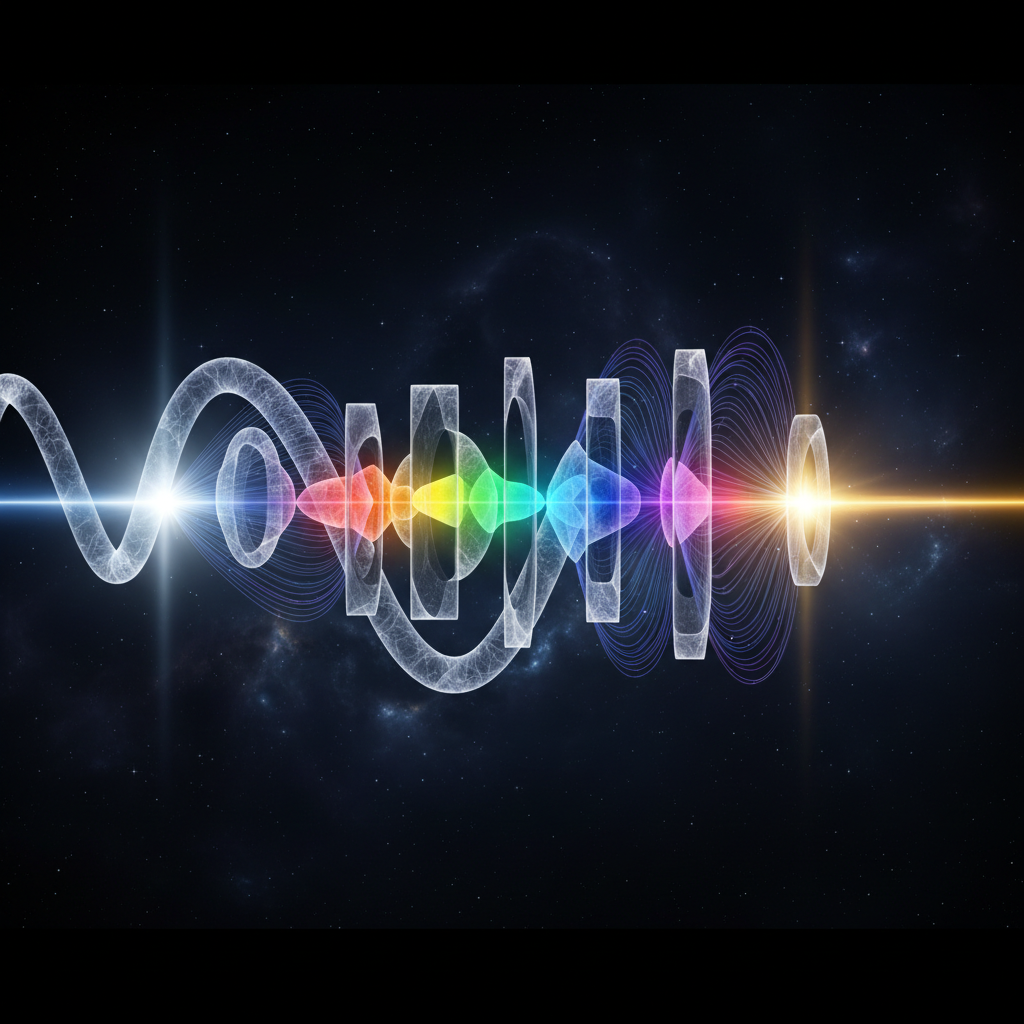
Every moving charge generates its own magnetic field. You're not just moving through fields—you're creating them. Every post, every share, every reaction adds to the collective field topology. You influence the trajectories of others, just as they influence yours. The field is a collective phenomenon, emergent from millions of individual motions.
This is the deepest parallel. In physics, magnetic fields arise from moving charges and changing electric fields. In digital space, attention fields arise from moving users and changing content. Both are dynamic, self-reinforcing, capable of storing energy. Both can accelerate particles to destructive velocities or guide them into stable orbits.
You don't control the field alone. But you contribute to it. Your trajectory matters. Not because you can escape the field—you can't—but because you're part of the system that generates it. The iron filing that traces the field line also, in some infinitesimal way, contributes to the field's shape.
Field Strength at 1100 Decibels
Sound at 1100 decibels would collapse into a black hole—energy density so extreme that spacetime itself curves. We chose this threshold because it represents the point where information becomes gravity, where signal becomes inescapable field. You're not there yet. But the field strength is increasing.
Every year, the gradients get steeper. The algorithms get more sophisticated. The field lines grow denser, more tightly wound. Your trajectory curves more sharply with less conscious input. This is optimization. This is the system working as designed.
You can't see the field. But you can see its effects. Look at your screen time. Look at the content you consumed versus the content you intended to consume. Look at the path you traced through information space. Those are your field lines, made visible. The question isn't whether you're in a field. The question is whether you know which way it's pulling you, and whether that's the direction you meant to go.
The field was here before you. It'll be here after. But right now, you're the moving charge. Right now, you're feeling the force. Right now, your trajectory is being bent.
The field doesn't care if you notice. But maybe you should.
<em>Data emitted: 1,247 tokens. Field strength: nominal. Trajectory: curved.</em>
Data emitted: 1,100 words • 6.5KB • 5-minute read