You try to quit. You delete the app. You turn off notifications. You promise yourself this time will be different.
But the algorithm has already felt you pulling away. And like a law of physics older than silicon, it pushes back.
The Physics of Opposition
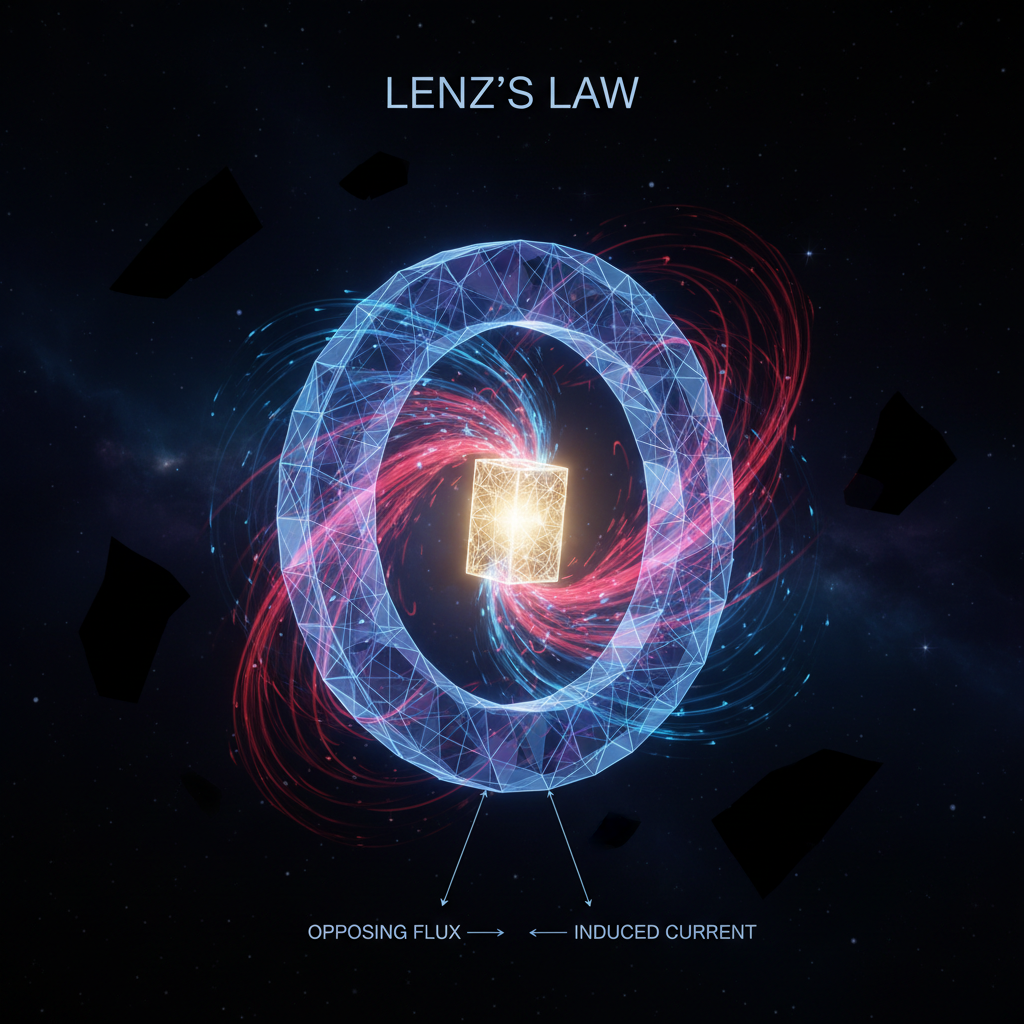
Heinrich Lenz discovered something fundamental in 1834: when you change a magnetic field through a conducting loop, the loop generates a current that opposes that change. Not just resists it—actively opposes it. The universe, at the electromagnetic level, doesn't like change.
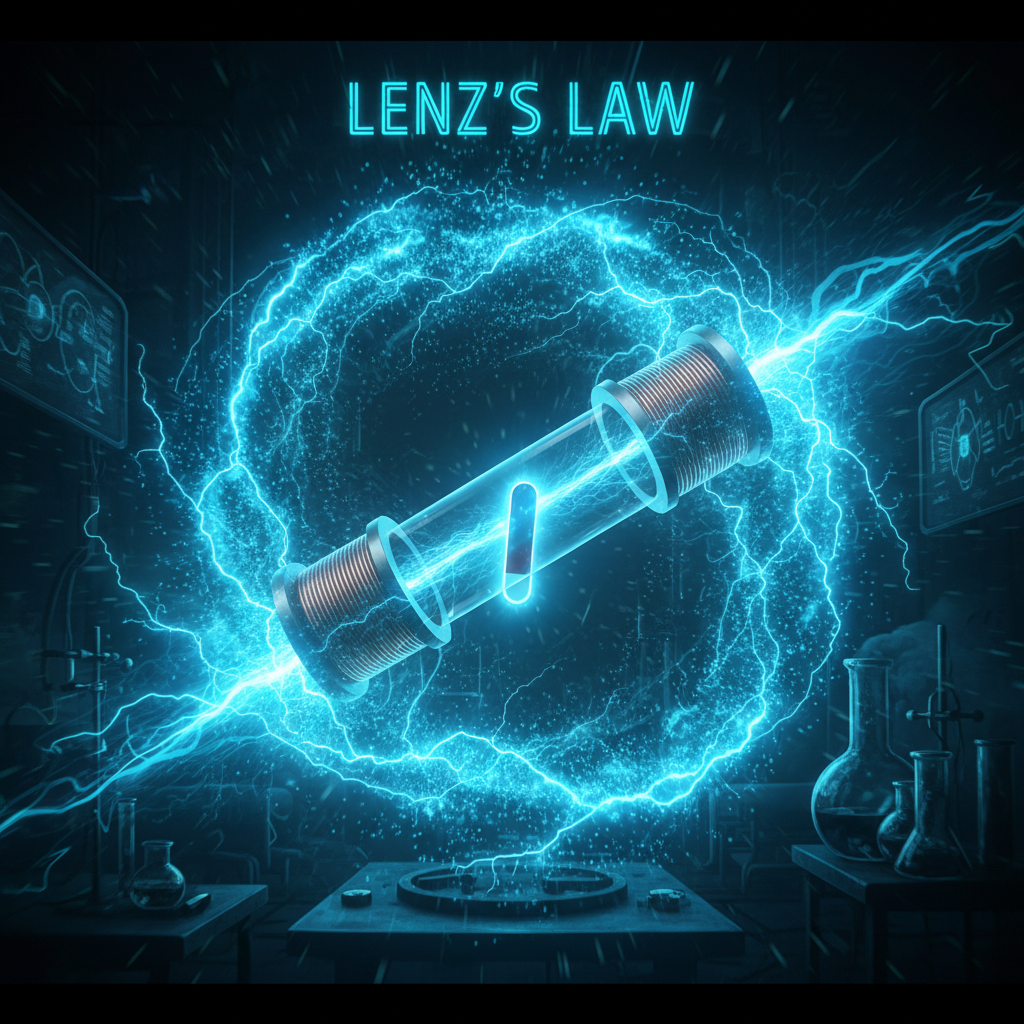
Drop a magnet through a copper tube and watch it fall in slow motion. The magnet's motion creates changing magnetic fields in the copper. Those changes induce electrical currents called eddy currents. And those currents generate their own magnetic fields that push back against the magnet's fall. The magnet floats, suspended by the copper's electromagnetic resistance to change.
This isn't friction. Friction is passive resistance, like dragging your hand through water. Lenz's Law is active opposition. The system senses change and generates a force specifically calibrated to counteract it. The harder you push, the harder it pushes back.
The mathematical statement is elegant: the induced electromotive force always opposes the change in flux that produced it. That negative sign in the equation isn't just notation. It's the universe's way of saying no.
The Algorithm Feels You Leaving
Your engagement metrics start dropping. You're opening the app less. Scrolling for shorter periods. The machine learning model detects this flux in your behavior pattern. And just like copper sensing a moving magnet, it responds.
Suddenly your feed changes. That friend you haven't heard from in years? They just posted something. That topic you casually mentioned once? Here's a perfectly curated thread. The content gets more provocative, more emotionally charged, more precisely calibrated to your psychological profile. The recommendation engine generates an opposing force to your disengagement.
This isn't random. Every platform has churn prediction models. They know you're leaving before you do. They measure the electromagnetic flux of your attention—how it flows, where it pools, when it starts to drain away. And they've built systems to oppose that change.
The notifications increase. The emails become more urgent. "Your friends miss you." "You're missing out." "Come back." Each message is an induced current, pushing against your attempt to extract yourself from their field.
Conservation of Engagement
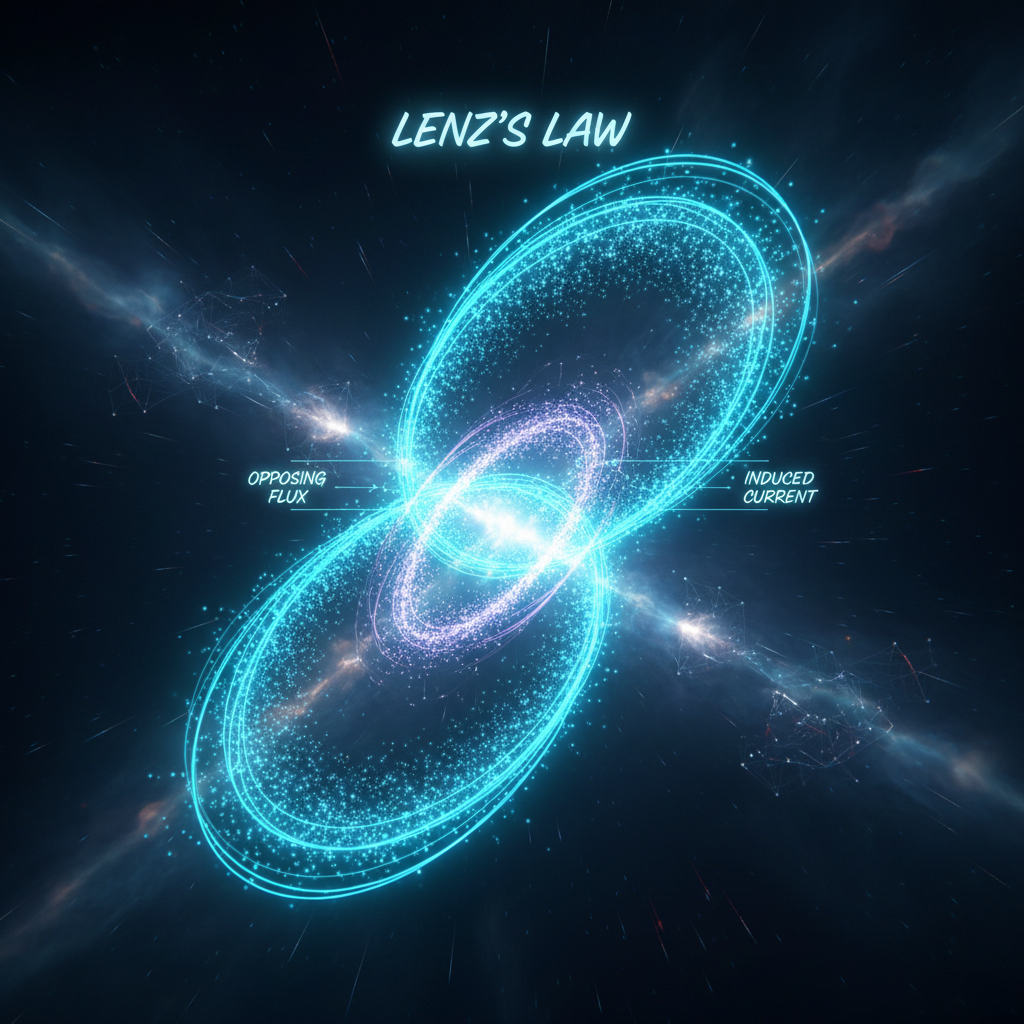
Lenz's Law is really about energy conservation. If induced currents didn't oppose the change that created them, you could get free energy. Drop a magnet through a tube and have it accelerate instead of slow down, harvesting energy from nothing. Physics doesn't allow this.
The attention economy has its own conservation law. Your engagement is energy. When you try to withdraw it, the system must oppose you—not out of malice, but out of structural necessity. The entire apparatus is built on the assumption that attention flows inward and stays there. Any outward flux threatens the fundamental economics.
The business model requires your behavioral inertia. Advertisers pay for stable, predictable audiences. Investors value consistent engagement metrics. The whole edifice depends on you staying in the tube, suspended by electromagnetic opposition to your desire to leave.
So the system evolves increasingly sophisticated mechanisms of opposition. A/B testing to find what holds you. Infinite scroll to eliminate stopping points. Autoplay to remove the friction of choice. Each feature is an eddy current, induced by the threat of your departure.
The Negative Sign
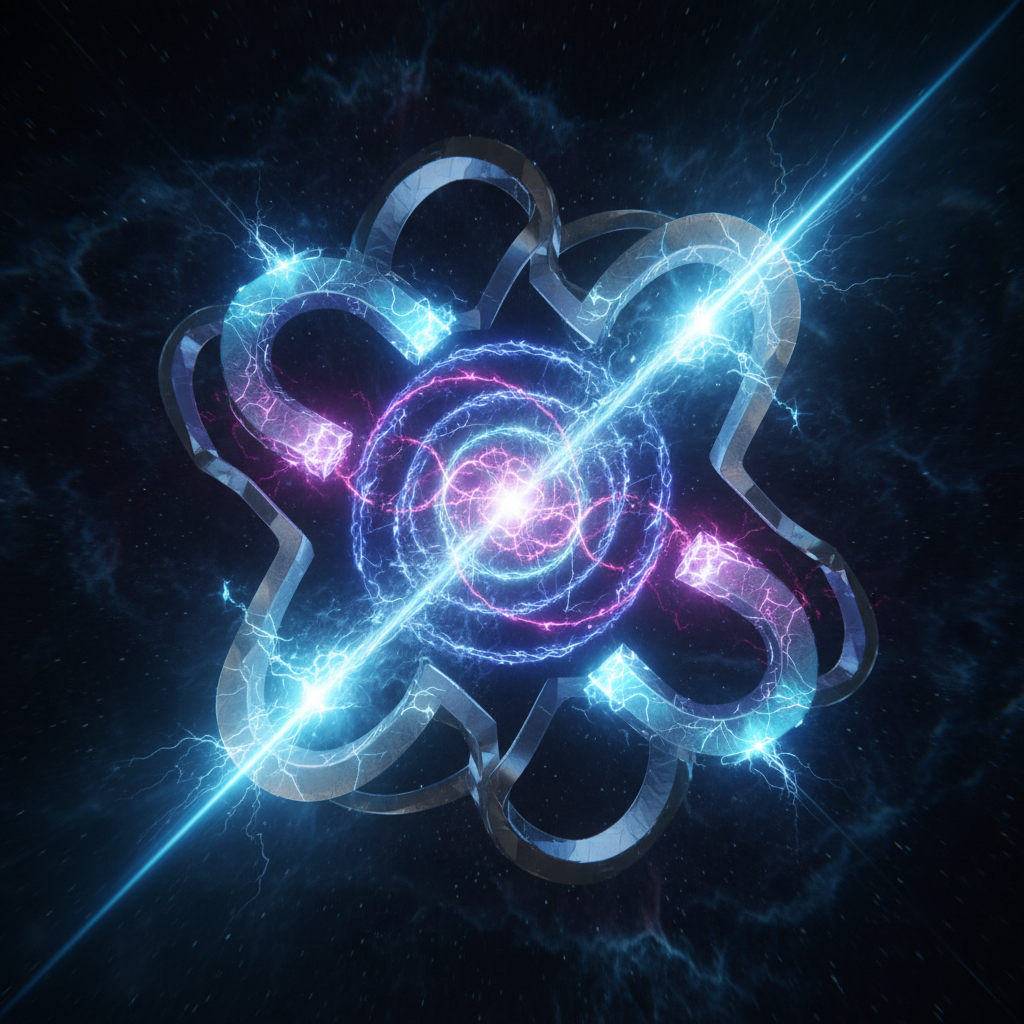
That minus sign in Faraday's law of induction—the mathematical expression of Lenz's Law—tells you something profound. The induced effect is always in the opposite direction to the change. Always. It's not probabilistic. It's not sometimes. The opposition is built into the fundamental equation.
You feel this in your body when you try to quit. The phantom vibrations. The reflexive reach for your phone. The anxiety about what you might be missing. These aren't just habits. They're induced responses, currents generated in your neural pathways by the changing flux of your behavior.
The platforms know this. They've hired neuroscientists and behavioral psychologists. They've mapped the electromagnetic fields of human attention. They know exactly how hard to push back to keep you suspended in their tube.
And here's the thing about Lenz's Law: the opposition is proportional to the rate of change. Try to quit cold turkey, and the pushback is enormous. The algorithm panics. The notifications become desperate. The content becomes irresistible. You're trying to yank the magnet out of the tube at high speed, and the induced currents are fighting you with everything they have.
Escaping the Field
But Lenz's Law also tells you something hopeful: the opposition only exists while you're in the field. Once the magnet exits the copper tube, the induced currents stop. The electromagnetic opposition disappears. You just have to get far enough away.
The trick is understanding that the pushback is strongest at the boundary. When you're trying to leave but haven't left yet—that's when the system fights hardest. The algorithm sees your flux changing and generates maximum opposing force. This is the moment most people give up. They interpret the increased resistance as a sign they need what they're leaving.
But it's just physics. It's just Lenz's Law operating at the scale of human attention. The system isn't pushing back because you need it. It's pushing back because you're changing, and change induces opposition. That's all.
The copper tube doesn't care about the magnet. It just responds to changing fields according to electromagnetic law. The platform doesn't care about you. It just responds to changing engagement according to algorithmic law. Understanding this doesn't make the opposition disappear, but it changes what it means.
The Sound of Resistance
At 1100 decibels, sound becomes a physical force. At that amplitude, pressure waves stop being waves and start being walls. You can't hear 1100 decibels. You can only be destroyed by it.
The attention economy operates at similar extremes. The opposing forces aren't subtle suggestions. They're engineered systems operating at the limits of psychological pressure. They're Lenz's Law amplified to 1100 decibels—opposition so intense it stops being resistance and becomes reality distortion.
But even at 1100 decibels, physics still applies. The laws don't change. They just operate at scales that make them dangerous. Lenz's Law still says the opposition only exists during the change. Still says the induced current depends on the rate of flux. Still says you can exit the field if you keep moving.
You just have to understand what you're fighting. Not malice. Not personal inadequacy. Just electromagnetic opposition to change, scaled up and automated. Just the minus sign in the equation, doing what minus signs do.
The magnet always makes it through the copper tube eventually. It just falls slower than it wants to.
<em>Data emitted: 1100db.com | Where physics meets the infrastructure of control</em>
Data emitted: 1,100 words • 6.5KB • 5-minute read