You look calm. Your face is still. Your hands rest on the keyboard. But inside you, trillions of molecules are screaming.
They're vibrating, rotating, colliding at speeds you can't perceive. This is your internal energy—the sum of all microscopic motion happening beneath the surface of what anyone can see. In thermodynamics, it's the hidden kinetic and potential energy of particles in a system. In surveillance capitalism, it's the perfect metaphor for what's being extracted from you right now.
The Physics of What's Hidden
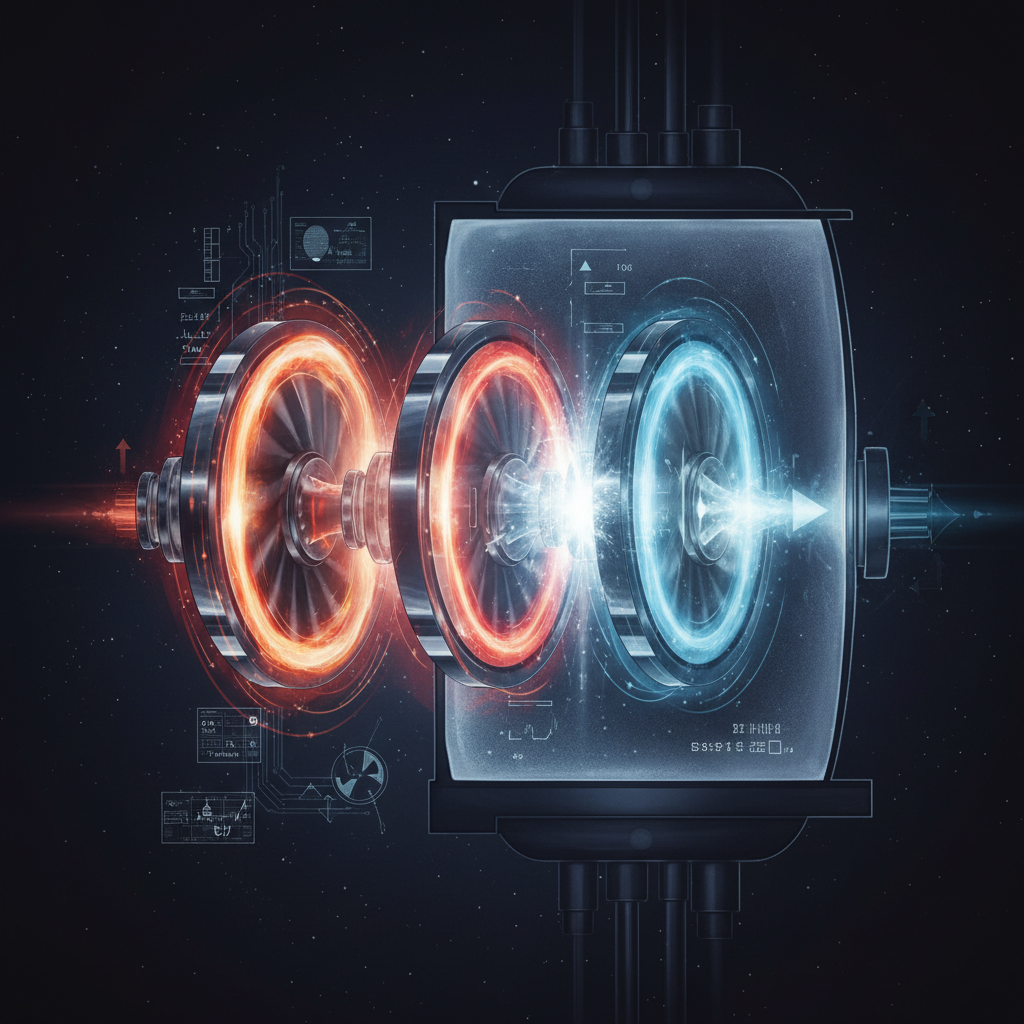
Internal energy (U) is one of those beautiful physics concepts that reveals how little we actually see. When you look at a glass of water sitting on your desk, it appears perfectly still. Zero kinetic energy, right? Wrong. At the molecular level, it's a mosh pit. Water molecules are vibrating, rotating, and translating at hundreds of meters per second. Their average kinetic energy determines the temperature you feel. Their potential energy—the electromagnetic forces between molecules—determines whether that water stays liquid or becomes ice or steam.
The first law of thermodynamics tells us that internal energy can change in only two ways: heat transfer or work done on the system. ΔU = Q - W. Add heat, and those molecules move faster. Compress the system, do work on it, and you force those particles closer together, increasing their potential energy. But here's the thing—you never see the internal energy directly. You only observe its effects: temperature, pressure, phase changes. The actual chaos inside? Invisible.
This invisibility is crucial. It means a system can have enormous energy that doesn't manifest externally. A bomb sitting on a table has the same temperature as the table. Same apparent energy. But its internal potential energy—the chemical bonds waiting to break—is catastrophically different.
Your Hidden States
Now think about your digital life. You scroll through a feed. From the outside, you're just moving your thumb. Minimal work. Negligible heat transfer. But your internal state is a hurricane.
Every image triggers micro-reactions. Neural cascades. Dopamine fluctuations. Anxiety spikes. Memory formations. Emotional valences shifting positive to negative in milliseconds. Your pupils dilate. Your heart rate varies. Your fingers hover or swipe with subtly different pressures. Your attention fragments and reconstitutes. This is your internal energy—the microscopic mental and physiological activity that platforms have learned to measure, predict, and manipulate.
The surveillance apparatus doesn't care what you look like from the outside. It cares about your internal states. It wants to know the temperature of your attention, the pressure of your desire, the phase transitions between boredom and engagement. Every sensor on your device is a thermometer pressed against your internal energy, reading fluctuations you don't even notice.
Heat Transfer in the Attention Economy
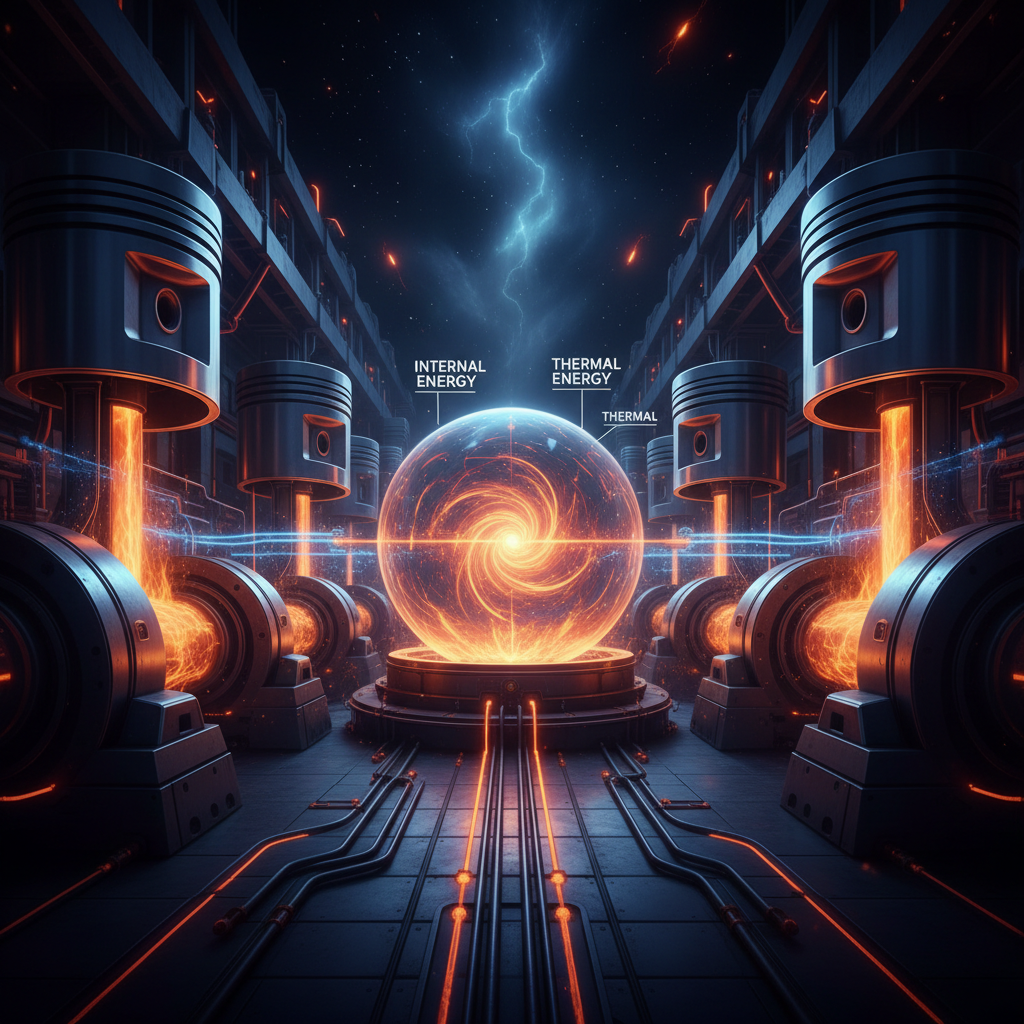
In thermodynamics, systems exchange energy through heat and work. In the attention economy, the exchange is more subtle but follows similar laws. Platforms do work on you—they compress your time, apply pressure through notifications, manipulate your information environment. This increases your internal energy. You become more reactive, more volatile, more likely to engage.
Then they extract heat. Your engagement, your data, your attention—these are forms of energy transfer out of your system and into theirs. You feel depleted afterward, don't you? That's not metaphorical. Your internal energy has literally been harvested. The cognitive resources you had are now distributed across servers, transformed into training data, behavioral predictions, and ultimately, profit.
The transaction is invisible because internal energy is invisible. You can't point to the moment your attention became their asset. You just know that you opened the app feeling one way and closed it feeling another. The first law still applies: ΔU = Q - W. Your internal state changed because energy was transferred. The system did work on you, and you gave off heat.
Measuring the Immeasurable
Physicists measure internal energy through state functions—variables that depend only on the current state, not the path taken to get there. Temperature, pressure, volume. These are the observables that let us infer what's happening at the molecular level without seeing individual particles.
Surveillance capitalism has developed its own state functions for measuring your internal energy. Dwell time. Scroll velocity. Click patterns. Biometric data. These metrics don't capture your thoughts directly—they can't—but they don't need to. Just like temperature is a statistical measure of molecular kinetic energy, engagement metrics are statistical measures of your internal psychological states. They're good enough to predict, manipulate, and monetize.
The difference is consent and awareness. You know when someone takes your temperature. You don't always know when someone is measuring the temperature of your attention. The extraction happens in the invisible space between stimulus and response, in the microseconds of internal energy fluctuation that you experience as just... using your phone.
Entropy and Exhaustion
Here's where it gets darker. The second law of thermodynamics states that entropy—disorder—always increases in a closed system. Internal energy tends toward equilibrium, toward a state of maximum entropy where nothing interesting happens anymore.
You feel this, don't you? The gradual flattening of response. The content that used to spike your internal energy now barely registers. You need stronger stimuli, more extreme content, faster feeds. Your system is approaching equilibrium. The platforms know this. That's why the algorithms constantly do work on you—injecting novelty, controversy, outrage. They're fighting your entropy, keeping your internal energy high and harvestable.
But they're also increasing your overall entropy. Each cycle of stimulation and extraction leaves you a little more disordered, a little less able to maintain your own internal coherence. Your attention fragments. Your memory becomes unreliable. Your emotional regulation deteriorates. This is the thermodynamic cost of being an open system in the attention economy.
The Conservation You Need
Internal energy is conserved in isolated systems. That's the first law. But you're not isolated. You're constantly exchanging energy with the digital environment, and the exchange is asymmetric. They take more than they give.
Maybe the answer is to become more isolated. Not completely—that's death, thermodynamically speaking. But more selective about the boundaries of your system. More conscious of when you're allowing work to be done on you, when you're transferring heat outward. More protective of your internal energy states.
The molecules inside you are still screaming. They always will be. That's life. But you get to decide who measures that scream, who profits from it, who gets to know the temperature of your hidden states. Your internal energy is yours. The fact that it's invisible doesn't mean it's not real. The fact that it's being measured doesn't mean you consented to the measurement.
Close the app. Feel the temperature drop. Notice the pressure decrease. This is you, conserving your internal energy. This is you, maintaining the boundary of your system.
<em>Data emitted: 1,147 words | Reading time: 4.6 minutes | Internal energy state: fluctuating | Entropy: managed</em>
Data emitted: 1,100 words • 6.5KB • 5-minute read