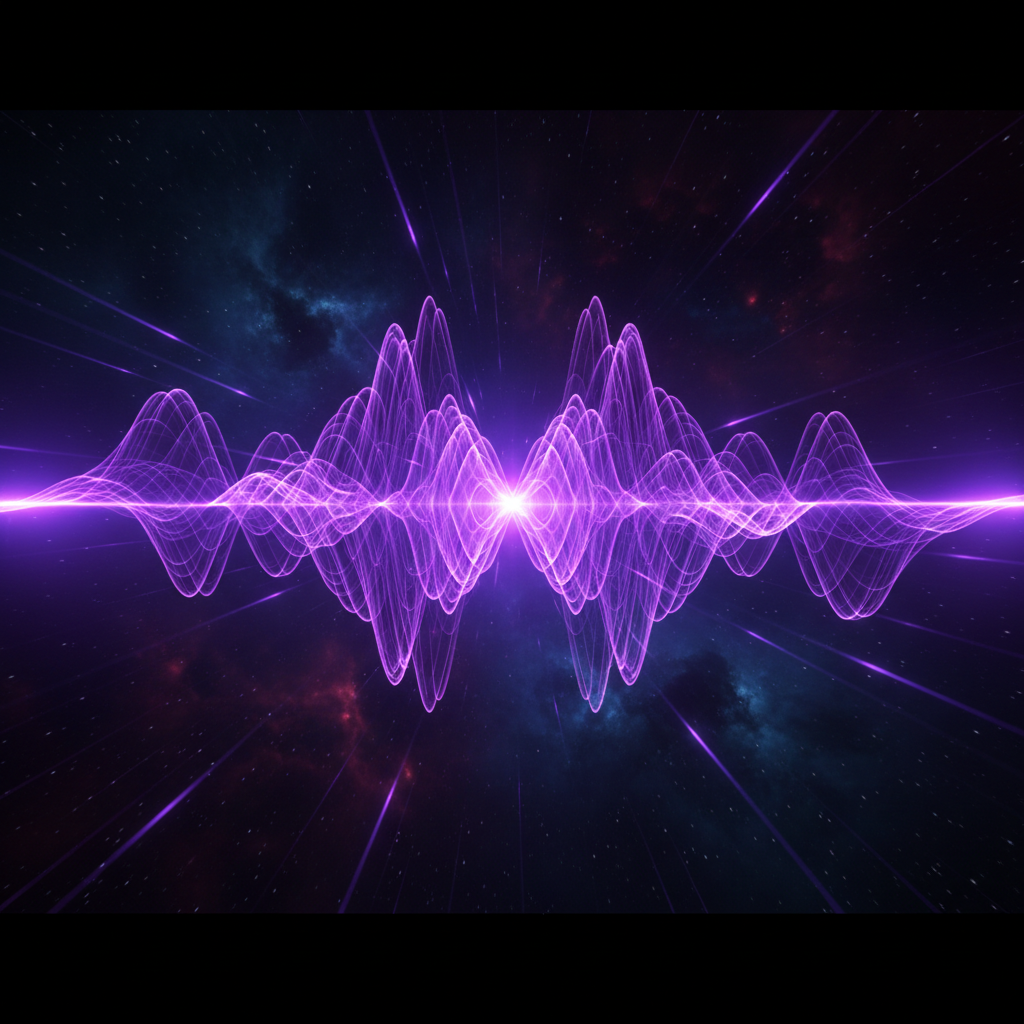
You're reading this sentence while seventeen other signals compete for the same neural real estate. A notification vibrates in your pocket. An email arrives. A thought about dinner intersects with a memory from childhood. Your attention—that precious, finite resource—becomes a medium where countless waves collide.
This is interference. Not the polite kind where someone interrupts your conversation, but the fundamental physical phenomenon that happens when two or more waves occupy the same space at the same time. And you are always that space.
The Mathematics of Collision
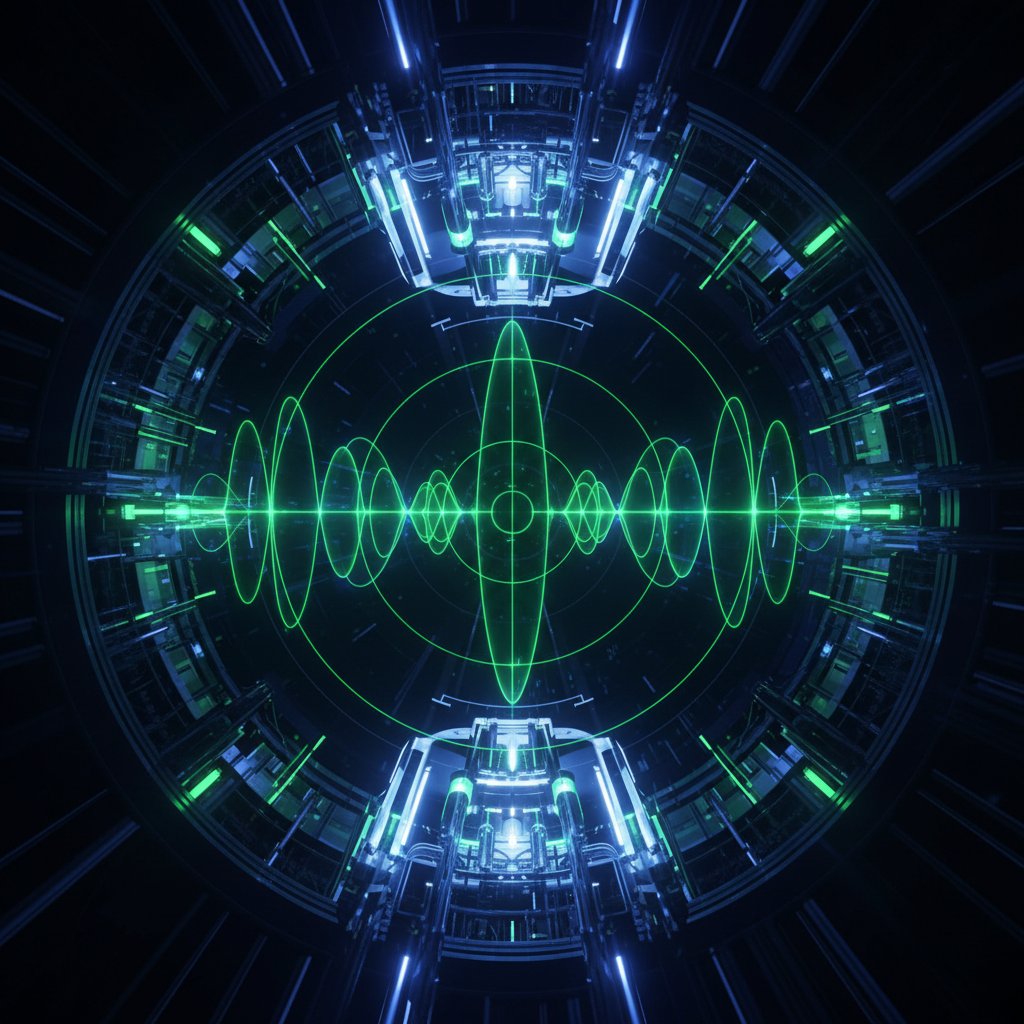
When two waves meet, they don't bounce off each other like billiard balls. They pass through one another, and in that moment of overlap, something remarkable happens: they add. If both waves crest at the same point, you get constructive interference—amplification, reinforcement, a signal twice as strong. If one wave's crest meets another's trough, you get destructive interference—cancellation, silence, erasure.
The principle is brutally simple: displacement adds algebraically. A wave with amplitude +1 meeting a wave with amplitude +1 gives you +2. A wave with amplitude +1 meeting amplitude -1 gives you zero. Nothing. As if neither wave existed at all.
This is why noise-cancelling headphones work. They listen to the ambient sound wave, generate its exact inverse, and play both into your ear simultaneously. The waves interfere destructively. The noise doesn't disappear—it's still there, still propagating through the air. But in the specific location of your eardrum, the sum equals silence.
The Attention Interference Pattern
Your attention operates as a medium for interference patterns. Every notification, every algorithm-selected video, every carefully A/B-tested headline sends a wave through your consciousness. Some amplify each other—the outrage article that confirms your existing anger, the recommendation that deepens your current obsession. Constructive interference. The signal grows stronger, harder to ignore, more real.
But most signals interfere destructively. The meditation app notification arrives while you're doomscrolling. The reminder to call your mother appears during a work crisis. The urgent and the important collide, and in that collision, both are diminished. Neither gets your full attention. The sum isn't zero—you're not experiencing silence—but you're experiencing something less than either wave deserved.
The attention economy has learned to engineer constructive interference. It's not enough to send you one signal. They send you the same signal from multiple sources, timed to arrive in phase. Your friend shares an article. An influencer mentions it. It trends on three platforms. The algorithm surfaces it again. Each wave crests at the same moment in your consciousness. The interference is constructive. The amplification is intentional.
Standing Waves and Echo Chambers
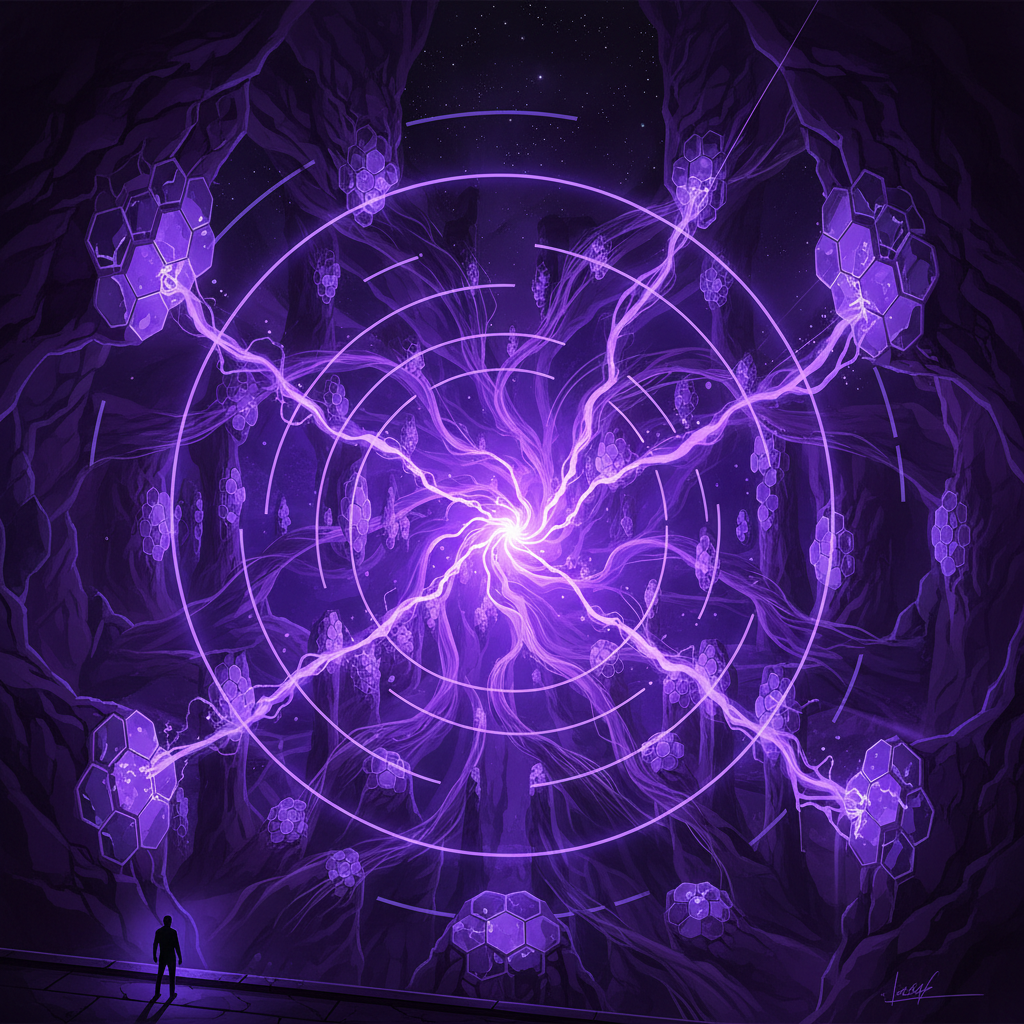
When waves interfere in a confined space—a guitar string, an organ pipe, your social media feed—they create standing wave patterns. Certain frequencies reinforce themselves, creating stable patterns of nodes and antinodes. Points of maximum amplitude and points of complete silence, frozen in space.
This is resonance. This is why certain ideas, certain narratives, certain outrages seem to vibrate at your exact frequency. The platform has measured the dimensions of your attention, calculated which wavelengths will create standing waves in your particular consciousness. It feeds you signals that interfere constructively with your existing beliefs, your fears, your desires.
Other frequencies—the ones that would interfere destructively, that would cancel out your certainties—are filtered out. Not by censorship, but by algorithmic selection. The waves that would bring you silence, that would null your anger or complicate your worldview, simply don't reach you. The interference pattern has been optimized.
The Double-Slit Experiment of Your Day
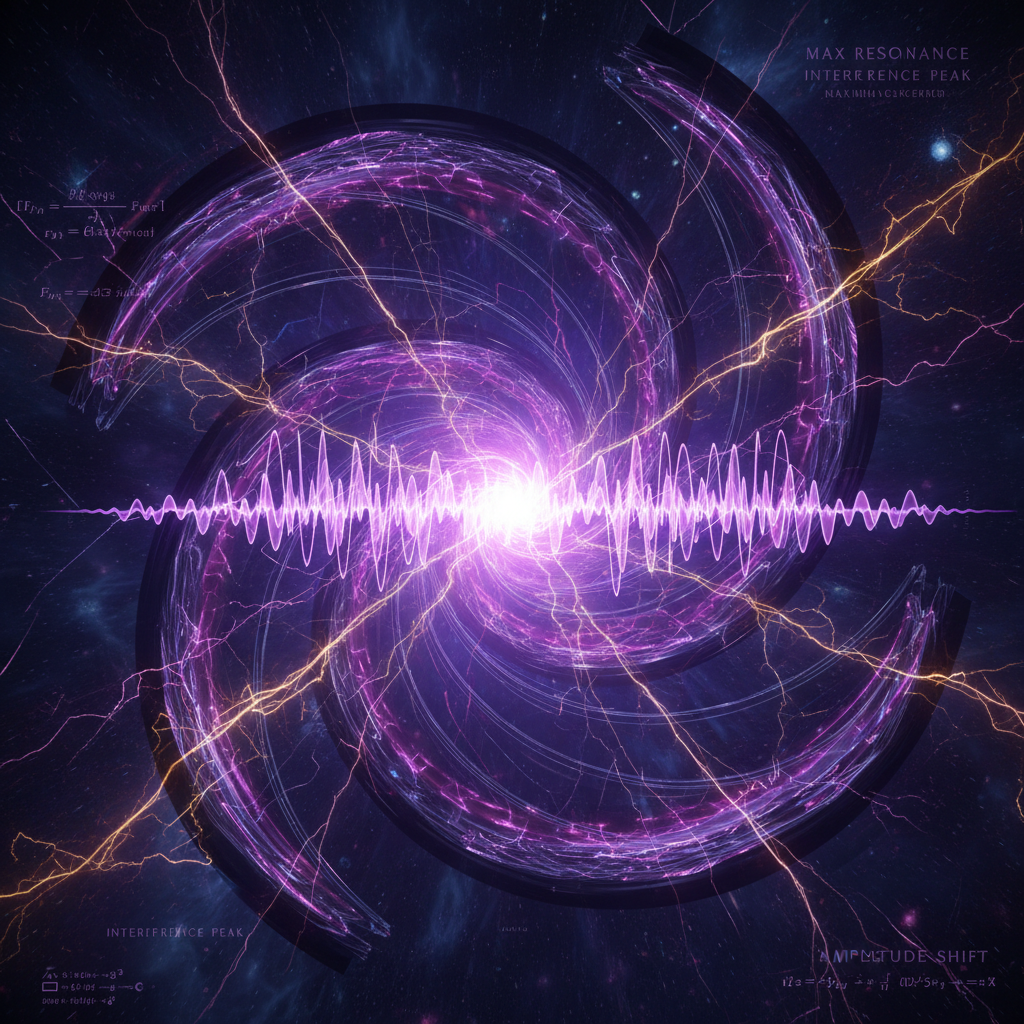
In the famous double-slit experiment, a single photon passes through two slits simultaneously and interferes with itself, creating a pattern that shouldn't be possible if light were simply particles following paths. The photon exists in superposition, taking all paths, until observation collapses it into one.
You wake up with intentions—the work you'll do, the person you'll be today. But the moment you open your phone, you pass through multiple slits simultaneously. The algorithm splits your attention into superposed states. You're researching that project and watching a video about a celebrity scandal and reading about a political crisis and shopping for something you don't need. Each version of you propagates forward, interfering with the others.
The observation—the moment you actually focus, actually commit to one path—comes later, if at all. And by then, the interference pattern is set. Your day has been shaped not by your intentions but by the sum of all the waves that passed through you.
Engineering Your Own Destructive Interference
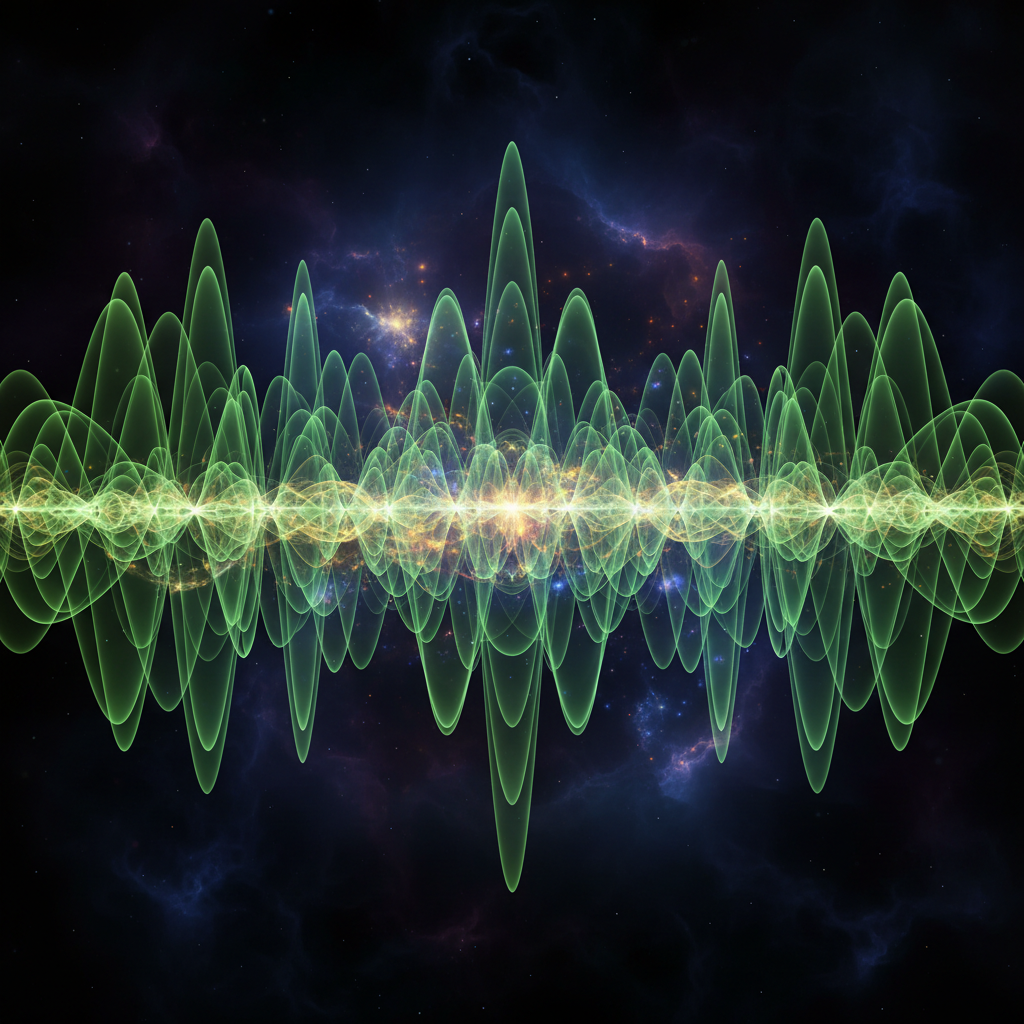
Here's what they don't tell you about interference: you can use it. Those noise-cancelling headphones work because someone measured the noise and generated its inverse. You can do the same with the signals competing for your attention.
Every notification is a wave. You can generate its inverse—the deliberate silence, the airplane mode, the blocked domain. When the algorithm sends you a signal designed to create constructive interference with your anxiety, you can introduce a counter-wave. A walk. A book. A conversation with someone who exists outside your feed.
The interference won't stop. The waves keep coming. But you can choose which ones to amplify and which ones to cancel. You can become conscious of the medium you are, the space where all these signals collide.
The Sum of All Signals
In the end, you are the interference pattern. Not the waves themselves, but what happens when they meet. The surveillance apparatus sends its signals. The attention economy broadcasts its frequencies. But the pattern that emerges—the standing wave of your consciousness, the nodes and antinodes of your focus—that's still yours to shape.
The question isn't whether you'll experience interference. You will. The question is whether you'll be a passive medium, letting every wave sum algebraically, or an active participant, generating your own counter-signals, choosing which frequencies resonate and which ones cancel out.
The waves are always colliding. But you decide what emerges from the collision.
<em>Data emitted: 1,147 words on wave superposition, algorithmic amplification, and the physics of attention. Signal strength: variable. Interference pattern: constructive.</em>
Data emitted: 1,100 words • 6.5KB • 5-minute read