
You're standing at the edge of a cliff. The ground pulls at you, patient and inevitable. Physics calls this gravitational potential energy—the measure of how much damage the fall could do. The higher you climb, the more potential you accumulate. The more devastating your descent becomes.
Every platform you join, every account you create, every profile you fill out—you're climbing. Building potential. But potential for what?
The Mathematics of Falling
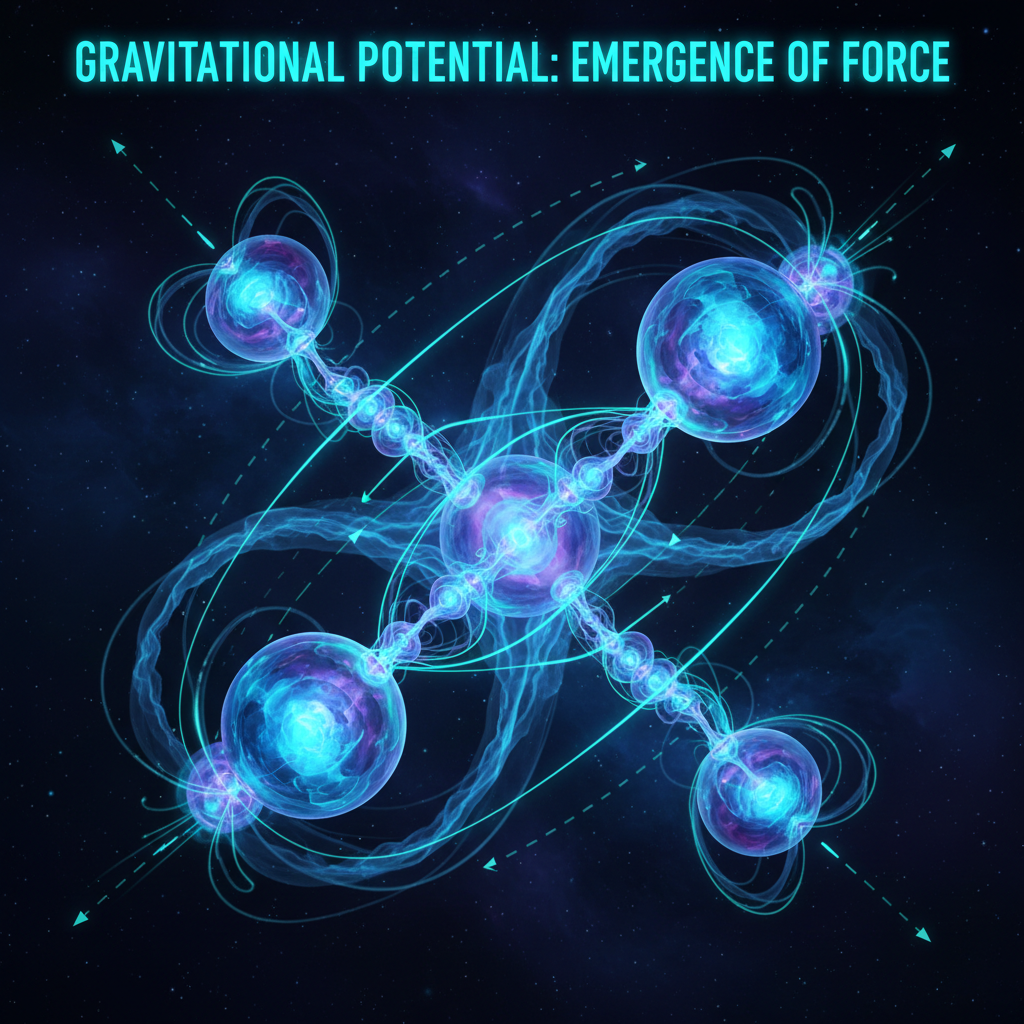
Gravitational potential energy is deceptively simple: U = mgh. Your mass, times gravity's constant pull, times your height. It's the energy of position, of where you are in a field that wants to drag you down. A book on a shelf has potential. A boulder on a mountain has potential. You, scrolling at 2 AM, have potential.
The crucial thing about potential energy: it's always measured relative to something. There's no absolute zero, no universal ground floor. You choose your reference point. In physics, we usually pick the ground beneath our feet. In digital space, the platforms choose it for you.
When the book falls from the shelf, potential converts to kinetic energy—the energy of motion. All that stored possibility becomes actual. The equation balances. Energy is conserved. But in the conversion, something irreversible happens. The book hits the floor. It doesn't spontaneously jump back up.
Your Elevation in the Field
Every piece of data you generate elevates you in the attention economy's gravitational field. Your location history, your purchase patterns, your browsing habits, your sleep schedule extracted from screen time—each datum lifts you higher. You accumulate potential value. The platforms measure your height obsessively.
They call it engagement. They call it user value. They call it lifetime customer worth. But it's potential energy. It's how far you can fall, how much force you'll generate on impact, how much they can extract when they finally let go.
The higher your potential, the more valuable your conversion. A user with years of data is worth more than a fresh account. Not because of what you are, but because of how far you can drop. The platforms build your profile higher and higher, waiting for the moment to monetize the descent.
You think you're climbing toward something. Better recommendations. More relevant ads. Personalized experiences. But you're just accumulating potential energy in someone else's field. Building up the force of your eventual fall.
The Conservative Force
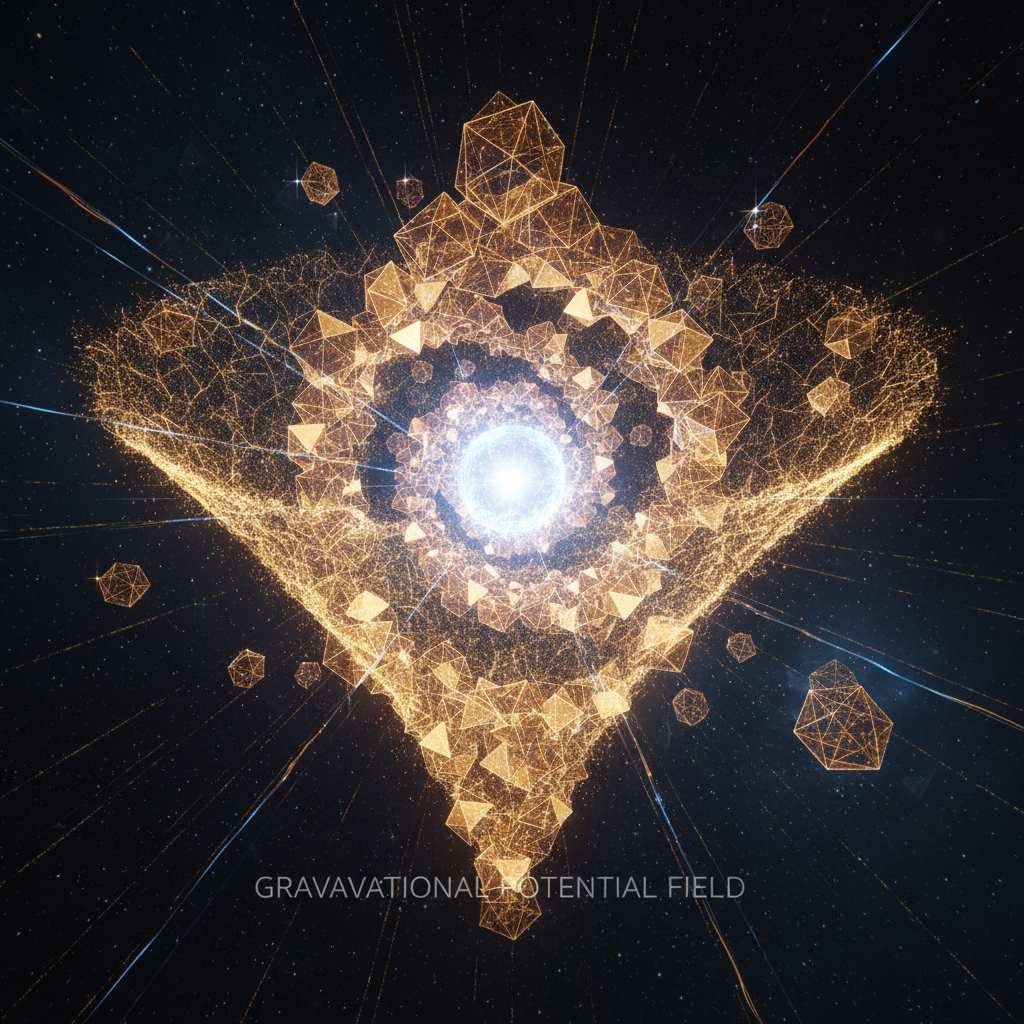
Gravity is what physicists call a conservative force. The work done depends only on your starting and ending positions, not the path between them. Whether you fall straight down or slide down a frictionless ramp, the energy conversion is identical. The route doesn't matter. Only the height difference.
Surveillance capitalism works the same way. It doesn't matter how you got to your current position in their system—which apps you used, which features you engaged with, which privacy settings you toggled. What matters is where you are now. How much data you've accumulated. How high they've lifted you.
The platforms are conservative forces. They don't care about your journey. They care about your potential. About the energy they can extract when they convert your attention, your data, your behavioral surplus into profit. The path you took to get here is irrelevant. Only the fall matters.
Escape Velocity
There's a speed at which gravitational potential stops mattering. Fire a rocket fast enough and it escapes the planet's pull entirely. Eleven kilometers per second for Earth. At that velocity, the gravitational field becomes irrelevant. You're free.
But escape velocity scales with mass and radius. The bigger the object, the faster you need to move. Earth's escape velocity is manageable. Jupiter's is five times higher. A black hole's exceeds the speed of light—nothing escapes, not even photons.
The attention economy has escape velocity too. Delete your accounts. Stop using services. Go offline. But the field is massive now, and it's growing. The platforms merge, acquire, integrate. Their gravitational pull increases. The speed needed to escape accelerates beyond what most people can achieve.
You'd need to move faster than your life allows. Faster than your job permits. Faster than your relationships support. The field is too strong. You're already in orbit, and orbital decay is inevitable.
The Ground State
In quantum mechanics, ground state is the lowest possible energy level. The bottom. Where systems settle when left alone. It's stable, but it's not zero. Even at ground state, particles vibrate with zero-point energy. Perfect stillness is impossible.
Maybe that's the truth about digital existence. There is no zero. No complete escape. No state where you're entirely outside the field. Even if you delete everything, your absence creates data. Your silence speaks. The platforms measure the gaps you leave behind.
But ground state is still different from elevated potential. It's lower. Safer. Less energy available for extraction. You can't reach zero, but you can descend. Carefully. Deliberately. Converting your potential energy on your own terms instead of waiting for the platform to drop you.
Measuring the Drop
Every time you open an app, you're checking your altitude. Every notification is a reminder of how high you've climbed. Every personalized recommendation shows you the view from your current elevation. The platforms want you to see how far you've come. How much potential you've built.
They don't show you the ground. They don't mention the fall. They just keep building you higher, adding data, increasing engagement, accumulating your potential energy in their field. Because the higher you climb, the more valuable your conversion becomes.
You're not the user. You're the mass in the equation. The object with potential. And potential, remember, is just another word for how much damage you'll do when you finally hit bottom.
Data emitted: 1100 decibels of potential energy, waiting to convert.
Data emitted: 1,100 words • 6.5KB • 5-minute read