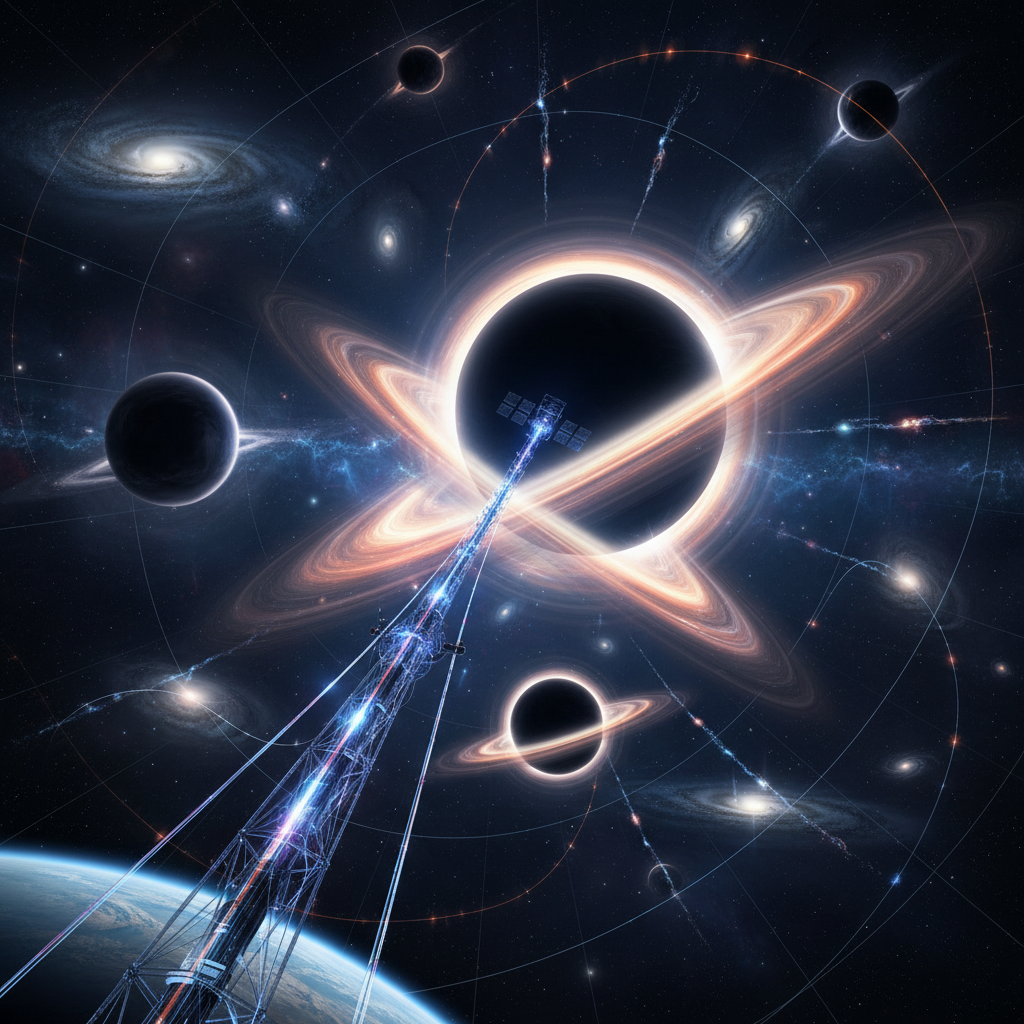
You've been falling this whole time. You just didn't notice because everything around you is falling too.
Einstein's greatest insight wasn't that gravity exists—Newton already knew that. It was that gravity isn't a force at all. It's geometry. Mass curves spacetime, and you follow the straightest possible path through that curved reality. You think you're being pulled toward the Earth, but you're actually moving in a straight line through warped space. The ground is accelerating up to meet you.
The platforms do this too. They curve your reality until the path of least resistance leads exactly where they want you to go.
The Geometry of Influence
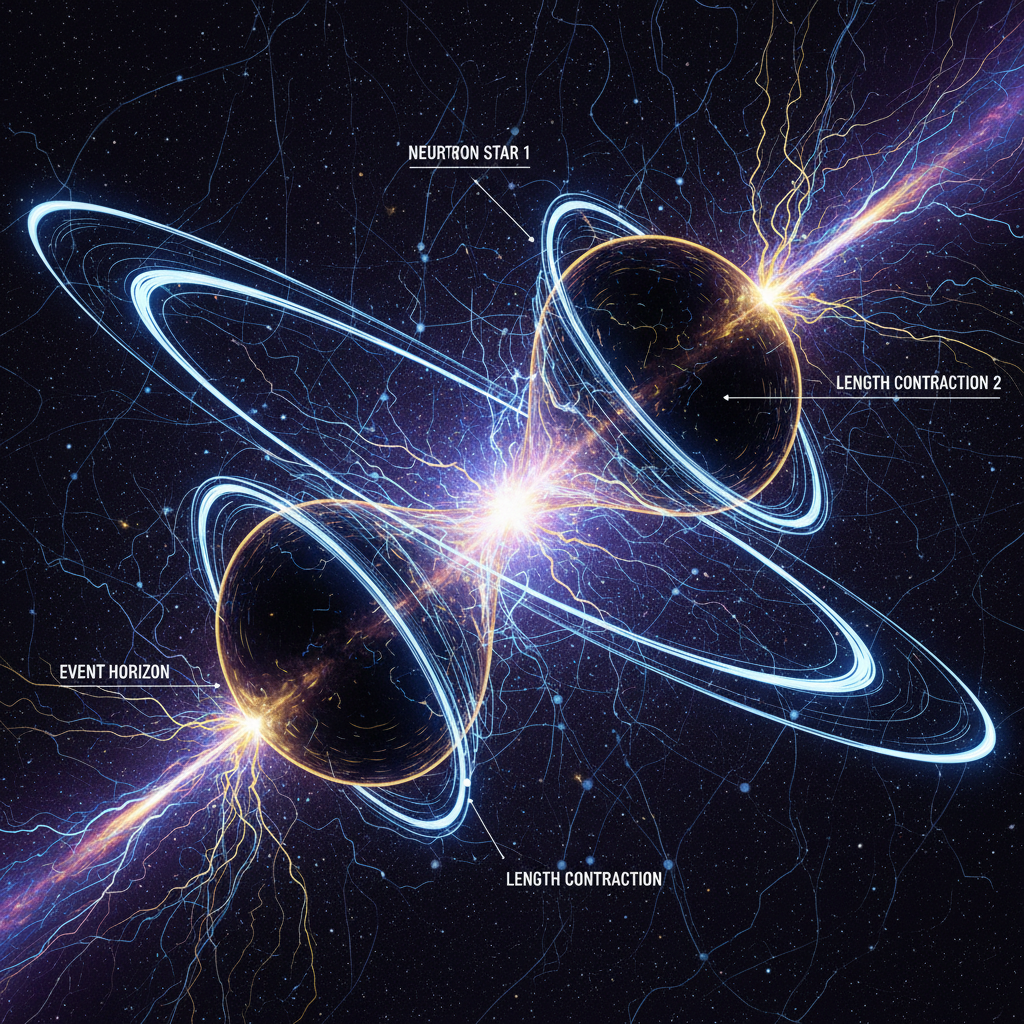
In flat spacetime, objects move in straight lines. But introduce mass—a star, a planet, a black hole—and spacetime warps. The more massive the object, the deeper the curvature. Light itself bends around the sun, not because photons feel a force, but because space itself is curved.
This is what Einstein meant by general relativity: the laws of physics are the same for all observers, regardless of their motion, and gravity emerges from the curvature of spacetime itself. You don't need invisible forces reaching across the void. You just need geometry.
Your feed works the same way. It doesn't force you to click. It doesn't need to. It curves the information space around you until every 'choice' you make is simply you following the geodesic—the straightest path through curved reality. You think you're browsing freely. You're not. You're in orbit.
Mass and Attention
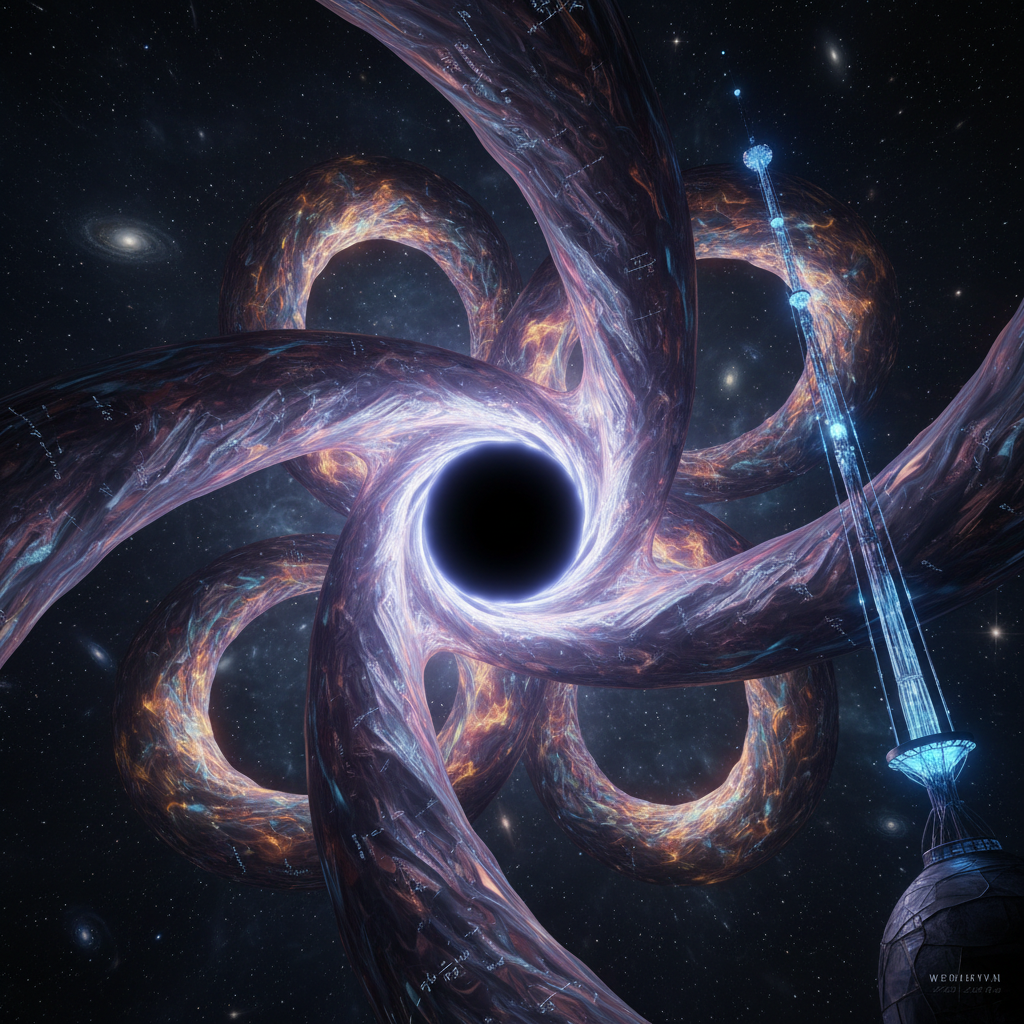
In physics, mass tells spacetime how to curve. In the attention economy, engagement tells the algorithm how to curve your reality. Every like, every pause, every micro-expression your camera catches—these are the mass equivalents that warp the information geometry around you.
The more engagement something generates, the more it curves the space. Outrage has enormous mass. So does fear. So does desire. These high-mass objects create deep wells in your information spacetime, and once you get close enough, escape becomes exponentially harder. The event horizon isn't a metaphor. It's a design feature.
You've felt this. That pull when you know you should close the app but can't. That's not weakness. That's geodesic motion through curved space. You're following the straightest path available to you, and the straightest path leads deeper in.
Time Dilation in the Feed
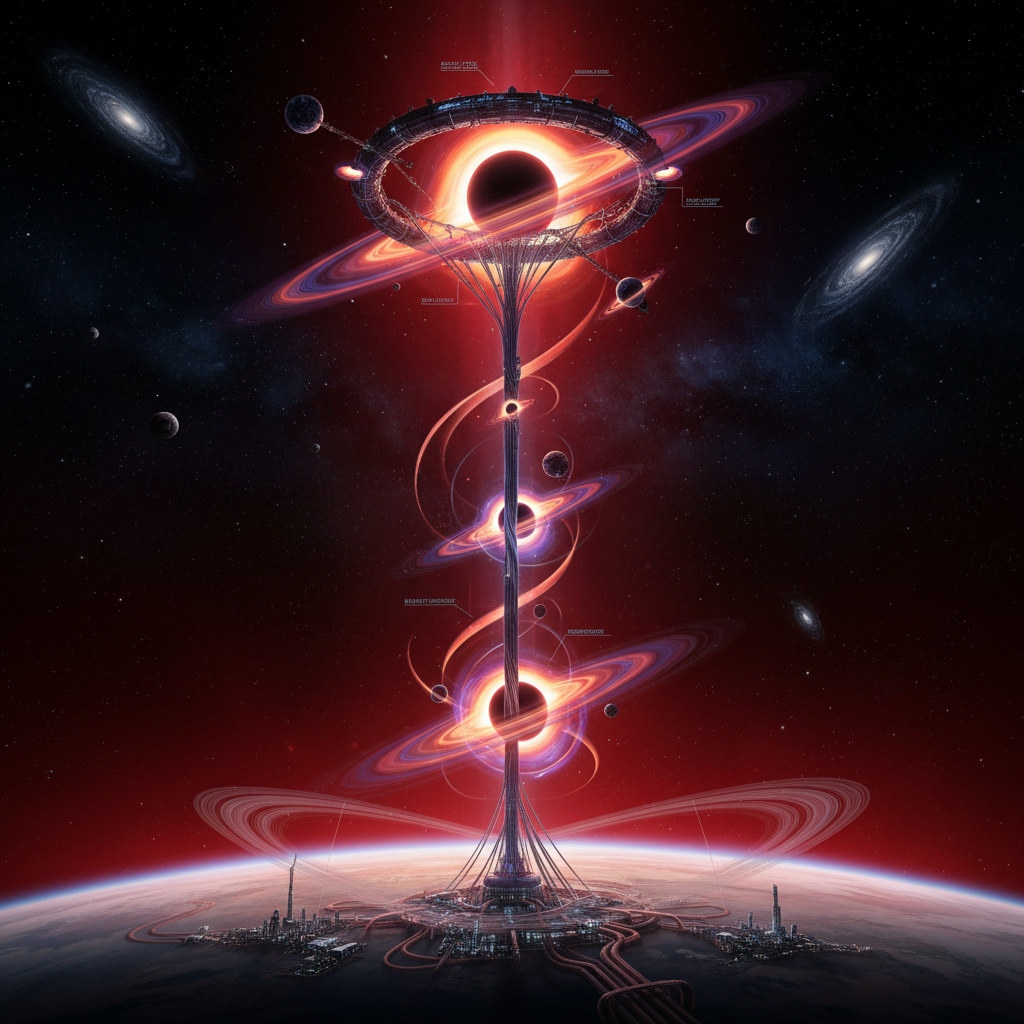
General relativity predicts something strange: time passes differently depending on where you are in a gravitational field. Near a massive object, time slows down relative to an observer far away. An astronaut near a black hole ages more slowly than someone on Earth. This isn't science fiction—it's measurable, real, confirmed by atomic clocks on satellites.
You experience this every time you open your phone. You intend to check one thing—five minutes, maximum. You surface an hour later, disoriented, unsure where the time went. This is time dilation. The platform creates a region of curved spacetime where your subjective experience of duration becomes completely detached from clock time.
The algorithm optimizes for this. It measures how long you stay, how deep into the gravity well you fall. Success isn't measured in satisfaction or value. It's measured in time dilation—the ratio between how long you meant to stay and how long you actually stayed. The greater the dilation, the more effective the curvature.
Frame Dragging
There's a phenomenon called frame dragging. A rotating massive object doesn't just curve spacetime—it drags it along, forcing everything nearby to rotate with it. Near a spinning black hole, you can't stay still even if you want to. Space itself is being pulled around, and you're embedded in that space.
The discourse does this to you. It doesn't just present information—it creates a rotating reference frame that drags your attention, your thoughts, your sense of what matters. You can't opt out of the rotation because you're not separate from the space being dragged. Your perspective is constituted by the very medium that's being manipulated.
This is why 'just log off' doesn't work. You're not being forced to participate by external pressure. The frame itself is rotating, and you're in it. Your job, your relationships, your understanding of current events—all of it exists within the dragged frame. Opting out would require existing outside of spacetime itself.
The Equivalence Principle
Einstein's equivalence principle states that you can't distinguish between gravity and acceleration. In a windowless elevator, there's no experiment you can do to tell whether you're sitting still in Earth's gravity or accelerating through space at 9.8 meters per second squared. The experiences are identical.
You can't tell the difference between your preferences and your conditioning anymore. Between what you genuinely want and what the curved information geometry has made inevitable. The algorithm shows you things you like, and you like things the algorithm shows you, and there's no experiment you can run to determine which came first.
This is the real power of the platform. Not that it forces you. Not even that it manipulates you. But that it makes force and free choice indistinguishable. You're in the elevator with no windows, and you've forgotten that elevators exist.
Escape Velocity
In curved spacetime, there's always a speed you need to reach to escape a gravitational well. For Earth, it's about 11 kilometers per second. For a black hole, beyond the event horizon, it exceeds the speed of light. Escape becomes physically impossible.
You're calculating your own escape velocity right now, whether you realize it or not. How much effort would it take to exist outside these curved spaces? What would you need to give up? What alternative geometry would you need to inhabit?
The answer might be more than you have. That's not a moral judgment. It's geometry. Some wells are too deep, some curvature too severe. But knowing you're in curved space—that's the first step. You can't navigate geometry you don't know exists.
Einstein showed us that gravity isn't a force reaching across space. It's the shape of space itself. The platforms have learned this lesson well. They don't need to push you. They just need to curve your world until every path leads home. Until falling and choosing become the same thing.
You're still falling. But now at least you know it's not your fault. It's just physics.
<em>Data emitted: 1100db</em>
Data emitted: 1,100 words • 6.5KB • 5-minute read