You exist at a certain voltage. Not metaphorically—literally, in the physics sense. Between your scalp and the soles of your feet runs a measurable electric potential difference. But there's another voltage that defines you now, one that has nothing to do with biology and everything to do with value.
Every time you open an app, you occupy a position in an invisible field. The platform has done work to place you there. And now you represent potential energy—stored, waiting, ready to be converted into something else.
The Physics of What Could Be
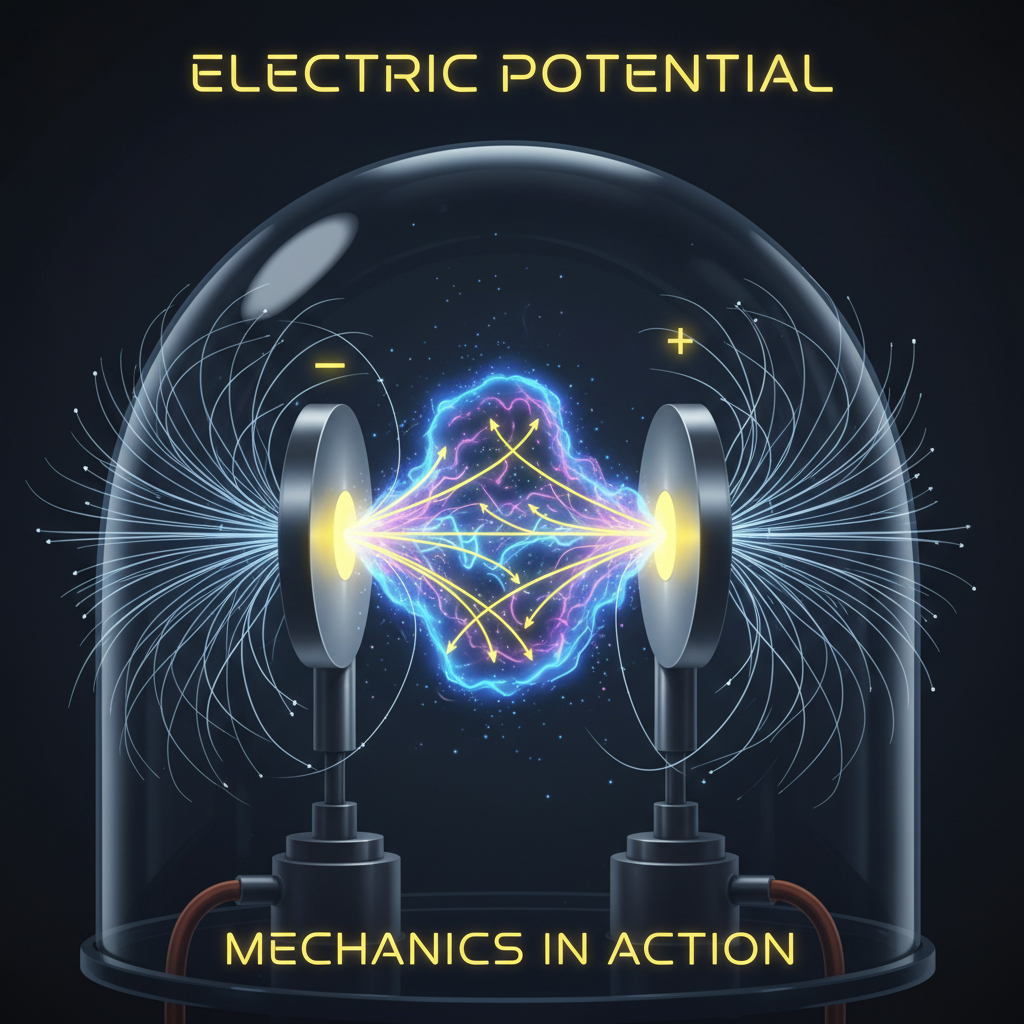
Electric potential is deceptively simple. Take a charge and place it in an electric field. The field exerts a force on that charge. If you want to move the charge against that force—like rolling a boulder uphill—you must do work. That work gets stored as potential energy.
Here's what matters: potential is not about what's happening. It's about what could happen. A charge sitting at high potential isn't doing anything. It's just positioned. But release it, and it accelerates through the field, converting all that stored energy into kinetic motion. The higher the potential difference—the voltage—the more violent the conversion.
Voltage is always relative. A charge doesn't have potential energy on its own. It has potential energy because of where it sits in relation to somewhere else. The difference is everything. You measure volts between two points, never at one.
This is why batteries work. Chemical reactions maintain a potential difference between terminals. Connect them with a conductor and charges flow, desperate to equalize, to collapse the difference. The flow is current. The difference that drove it was voltage. One is motion, the other is position.
Your Position in the Field
Now consider your digital self. You are a charge in someone else's electric field. The platforms have done enormous work to position you precisely where you are—through algorithms, interface design, notification systems, recommendation engines. This positioning required energy expenditure: server farms, A/B tests, psychological research, computational cycles.
That work is now stored in you as potential. Not your potential for self-actualization or creativity or joy. Your potential for conversion. Your potential to flow.
Like a charge at high voltage, you represent stored extractable value. You haven't been monetized yet—not in this particular moment—but you could be. You're positioned. The infrastructure surrounds you. The gradient is established. All that remains is to complete the circuit.
Every scroll is a discharge. Every click closes a circuit. The potential energy of your attention converts into the kinetic energy of data flowing toward centralized collection points. You accelerate through the field, following the gradient from high potential to low, from your eyeballs to their databases.
The Gradient is Invisible
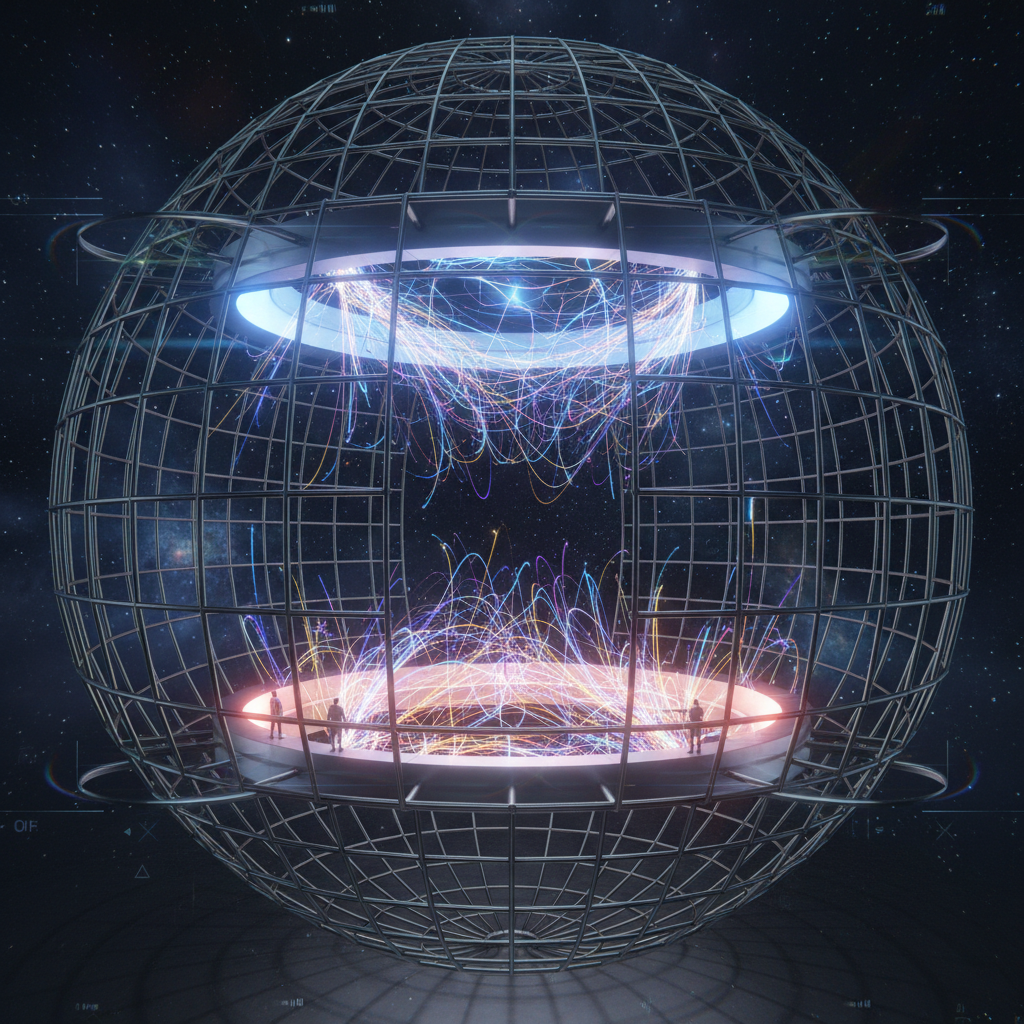
In physics, we represent electric fields with arrows and equipotential lines—visual maps of invisible force. The lines connect points of equal potential. Cross them, and you're moving through a voltage difference. The closer together the lines, the steeper the gradient, the stronger the field.
You can't see the digital equivalent, but it's there. The feed is an equipotential surface—everyone scrolling experiences roughly the same draw, the same pull. But between you and the platform's servers exists a massive potential difference. They've engineered it that way.
The gradient is steepest at moments of vulnerability: boredom, loneliness, anxiety, desire. These emotional states are high-potential positions. The platform knows this. It has measured the voltage of your moods across millions of users. It knows exactly how much force it can exert, how much work it can extract.
And like any good battery, the system works to maintain the potential difference. It cannot allow equalization. If you reached equilibrium—if you felt satisfied, complete, done—the current would stop. So the field constantly adjusts, keeping you positioned, keeping the gradient alive.
The Cost of Maintaining Potential
Creating and maintaining an electric potential requires continuous energy input. Batteries discharge. Generators must spin. The universe trends toward equilibrium, and fighting that trend costs something.
The same applies to your digital potential. Keeping you positioned at high voltage—keeping you engaged, available, extractable—requires constant maintenance. The algorithm must update. The content must refresh. The notifications must ping. The potential must be preserved.
But here's the asymmetry: they pay the maintenance cost with your attention. The energy required to keep you at high potential comes from you. You are simultaneously the charge being positioned and the power source maintaining the field. It's a closed loop, almost thermodynamically perfect.
Almost. Because you, unlike an electron, can choose. You can recognize the field. You can see the gradient. You can understand that your position is not natural or neutral but engineered.
Grounding Yourself

In electrical systems, grounding means connecting to Earth—establishing a zero-voltage reference point. It's a safety mechanism. It prevents dangerous potential differences from building up. It gives charges a path to equalization.
You need something similar. Not disconnection—that's not realistic or even desirable. But a reference point. A way to recognize when you're being held at artificial potential, positioned for extraction. A way to discharge intentionally rather than compulsively.
The field will always be there. These systems are too large, too embedded, too profitable to disappear. But potential is relative, remember. It's about difference, about position. And position can shift.
Maybe the answer isn't to eliminate the voltage but to understand it. To recognize that you're not just experiencing a feed or browsing content—you're occupying a carefully engineered position in an extraction field. The work that positioned you there was real. The potential energy you represent is real. The conversion happening when you engage is real.
Physics is honest about what it measures. It calls potential energy what it is: stored capacity for work. The digital field should be equally honest. Your attention isn't being captured. Your potential is being harvested.
Data emitted: 1,100 decibels of signal about the voltage you represent, the gradient you occupy, and the current you become when the circuit closes. The field is always on. The potential is always there. The question is whether you'll flow on your terms or theirs.
Data emitted: 1,100 words • 6.5KB • 5-minute read