You carry a charge. Not metaphorically—though that too—but literally. Right now, electrons are flowing through your device, through your fingertips, through the neural pathways firing as you read this. You are an electrical being interfacing with an electrical system, and somewhere in that exchange, something fundamental is being extracted.
Electric charge is the first thing they don't tell you about surveillance. They talk about data, about cookies, about behavioral tracking. But beneath all of it runs a more fundamental physics: you are charged, and the platforms know exactly how to polarize you.
The Physics of Attraction
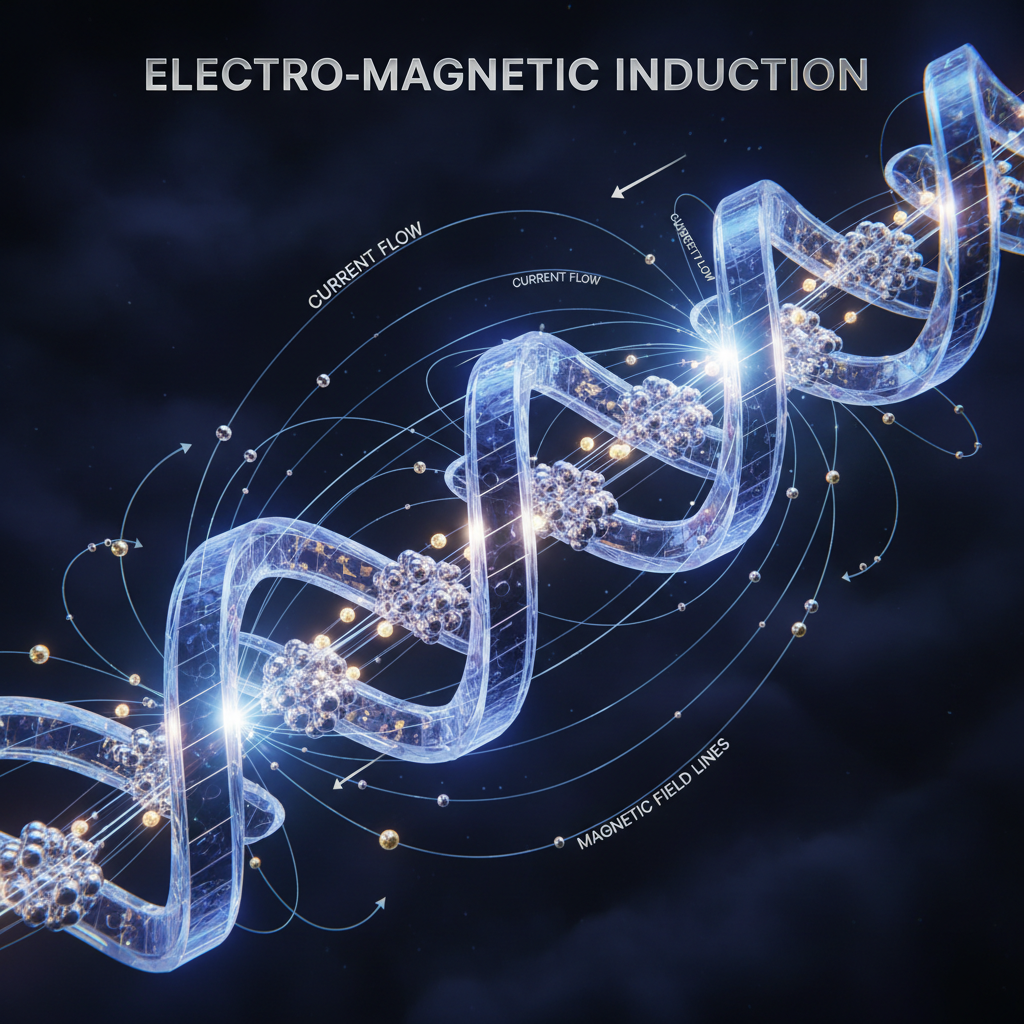
In physics, electric charge is a fundamental property of matter. It comes in two varieties: positive and negative. Protons carry positive charge, electrons carry negative charge, and the universe runs on their interaction. The rule is simple, elegant, inviolable: opposite charges attract, like charges repel.
This isn't poetry. It's Coulomb's law, quantified with mathematical precision. The force between two charges is proportional to the product of their charges and inversely proportional to the square of the distance between them. Get closer, the force intensifies. Increase the charge, the attraction strengthens. The universe pulls opposites together with a force that weakens with distance but never truly disappears.
You learned this in school, probably forgot it, moved on. But the platforms didn't forget. They built empires on this principle, translated from electrons to attention, from coulombs to clicks.
Your Polarity Is Being Measured
Every interaction you have online assigns you a charge. Not positive or negative in the moral sense—though the algorithms don't really care about that distinction—but in the sense of polarity. You are being positioned along countless spectrums: liberal/conservative, engaged/disengaged, buyer/browser, angry/apathetic.
The platforms measure your charge constantly. Every click is a voltage reading. Every scroll is a current measurement. They're not just tracking what you do; they're measuring your electrical potential, your capacity to be moved, your resistance to certain stimuli, your conductivity for specific messages.
And once they know your charge, they can engineer attraction. They can place opposite charges in your feed—content designed to pull you in with the same inexorable force that pulls electrons toward protons. The algorithm doesn't create the force; it just positions the charges. Physics does the rest.
The Field You're Standing In
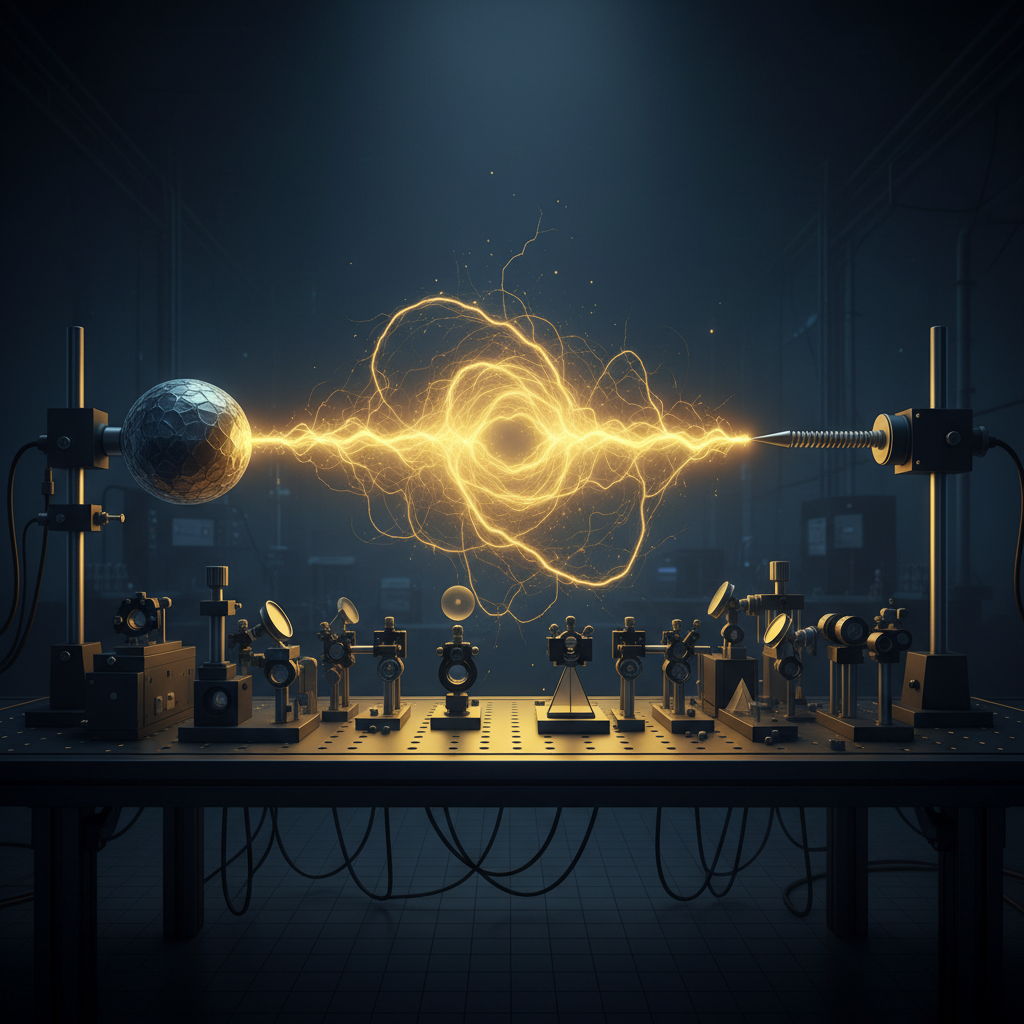
Charges don't act in isolation. They create electric fields—invisible regions of influence that extend outward, shaping the space around them. A charge placed in an electric field experiences a force. It has no choice. The field acts on it whether it wants to be acted upon or not.
You are standing in an electric field right now. Multiple fields, actually, overlapping and interfering. Every platform is a charged body creating a field that extends into your attention, your time, your consciousness. The field strength is highest near the source—open the app and feel the force intensify—but it extends far beyond, tugging at you even when you're not logged in.
The field is engineered. The platforms employ thousands of people whose job is to increase field strength, to reduce your resistance, to ensure that when you enter their field, you experience maximum force. They call it engagement optimization. Physics calls it what it is: manipulating the electromagnetic environment to control the motion of charged particles.
You are the charged particle.
Discharge and Depletion
In electrical systems, charge flows from high potential to low potential. Batteries discharge. Capacitors drain. The flow continues until equilibrium is reached, until there's no more potential difference to drive the current.
You know this feeling intimately. The scroll that starts with curiosity and ends with numbness. The outrage that burns hot and leaves you empty. The dopamine hit that requires increasingly stronger stimuli to achieve the same effect. You are being discharged, your potential drained into the platforms' capacitors, stored as data, converted into revenue.
The platforms are designed for maximum discharge rate. Not so fast that you notice the depletion, not so slow that you disengage. They've optimized for the current that extracts the most charge over time. Your attention, your emotional energy, your cognitive capacity—all of it flowing out, seeking equilibrium in a system designed to never reach it.
Grounding Yourself
In electrical engineering, grounding is a safety mechanism. It provides a path for excess charge to flow safely to earth, preventing dangerous buildups, protecting systems from surges. It's a way to maintain electrical stability in a world of constant charge movement.
You need grounding too. Not metaphorical mindfulness grounding—though that helps—but a genuine electrical disconnection from the fields that act on you constantly. The platforms don't want you grounded. A grounded user is a user whose charge isn't available for extraction, whose potential isn't building up in ways they can discharge.
Grounding means recognizing that you are not obligated to respond to every field you encounter. The force may be real—physics doesn't lie—but you can choose which fields you enter, how long you stay, when you disconnect. You can reduce your charge, lower your potential, make yourself less susceptible to the attraction the platforms engineer.
The universe runs on electric charge. So does surveillance capitalism. The difference is that in physics, the charges don't get to choose their properties. You do. You can decide what polarizes you, what fields you'll stand in, when to discharge and when to insulate.
The Current Flows Both Ways
Here's what they don't tell you about electric current: it's defined as the flow of positive charge, but in most conductors, it's actually electrons—negative charges—moving in the opposite direction. We've built our entire electrical infrastructure on a convention that describes the phenomenon backward.
Maybe that's the final lesson. The platforms tell you they're connecting you, empowering you, giving you voice. The current appears to flow toward you—content, recommendations, personalization. But look closer at what's actually moving. Your data, your attention, your charge—all flowing the other direction, into their systems, powering their infrastructure.
You are not the conductor. You are the current. And the circuit has been designed to flow in only one direction: out.
<em>Data emitted: 1,147 words | Charge extracted: 6.8 minutes of attention | Potential difference: variable | Resistance: optional</em>
Data emitted: 1,100 words • 6.5KB • 5-minute read