You opened your phone to check the weather. Twenty minutes later, you're three layers deep into someone's wedding photos from 2019, a person you've never met, in a city you'll never visit. The weather app sits unopened in your dock, patient as a saint.
This is displacement in the attention economy. Not the distance traveled, but the gap between intention and arrival.
The Physics of Getting Nowhere
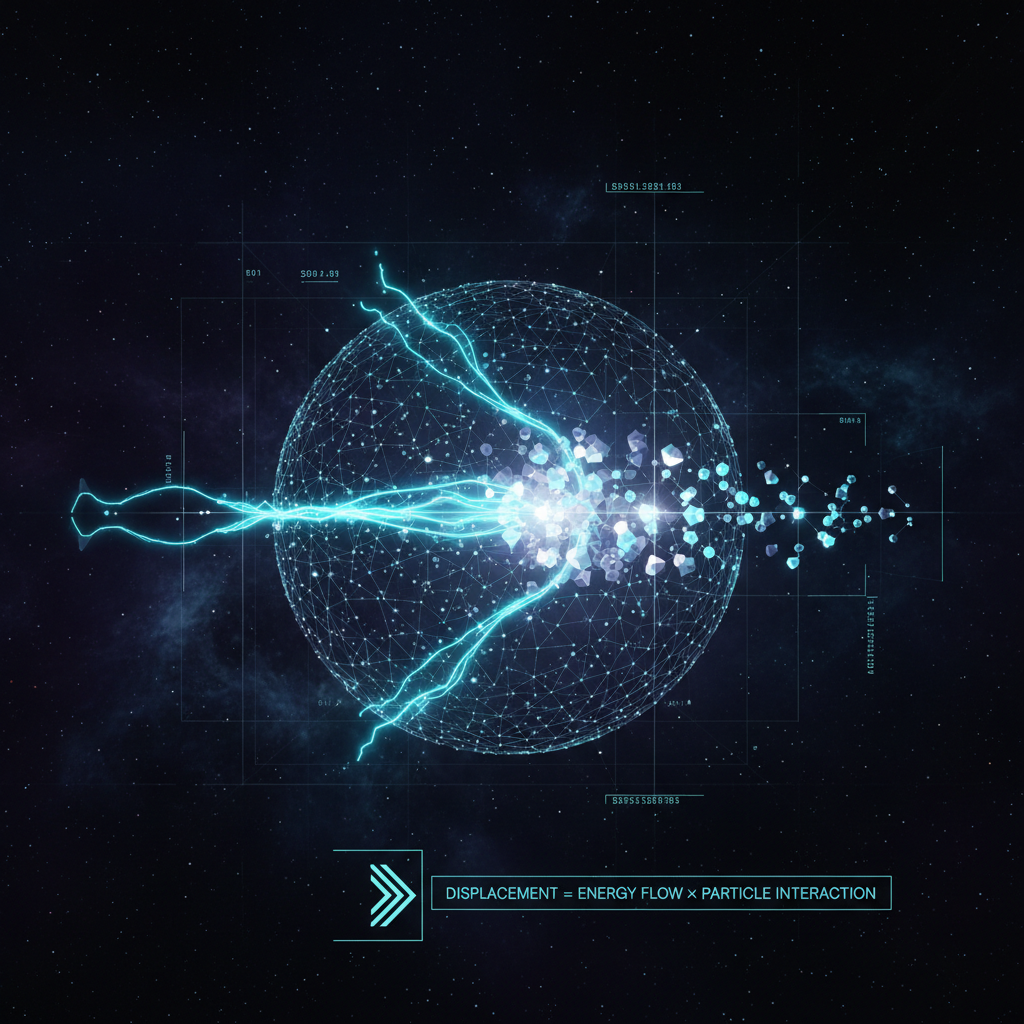
In classical mechanics, displacement is deceptively simple. It's a vector quantity—magnitude and direction—that represents the straight-line distance between where you started and where you ended up. Not the path you took. Not the scenic route. Just the delta between beginning and end.
You can walk ten kilometers in circles and have zero displacement. You can take a winding mountain road for hours and your displacement might be a few hundred meters as the crow flies. Displacement doesn't care about your journey. It only measures: did you actually go anywhere?
The equation is brutally honest: Δx = x_final - x_initial. Your ending position minus your starting position. Everything else—the effort, the time, the energy expenditure—is just distance traveled. And distance traveled is not displacement.
The Scroll That Goes Nowhere
Every platform knows this physics intimately. They've engineered it into their core architecture. The infinite scroll is a masterclass in maximizing distance while minimizing displacement.
You start at the top of your feed with intent. You're looking for something specific—a message, an update, a piece of information. But the feed is designed as a frictionless loop. Each swipe costs you almost nothing. The algorithmic current carries you downward, post after post, ad after ad, suggested content after suggested content.
Thirty minutes pass. You've traveled through hundreds of posts, thousands of pixels, an incalculable distance of digital terrain. But your displacement? Often zero. You close the app having absorbed nothing, retained nothing, accomplished nothing. You're exactly where you started, just more depleted.
The platforms measure your distance traveled in engagement metrics—time on site, posts viewed, interactions logged. But they never measure your displacement. They never ask: did you get where you intended to go? Because if they did, the answer would collapse their entire economic model.
Vector Quantities and Intentionality
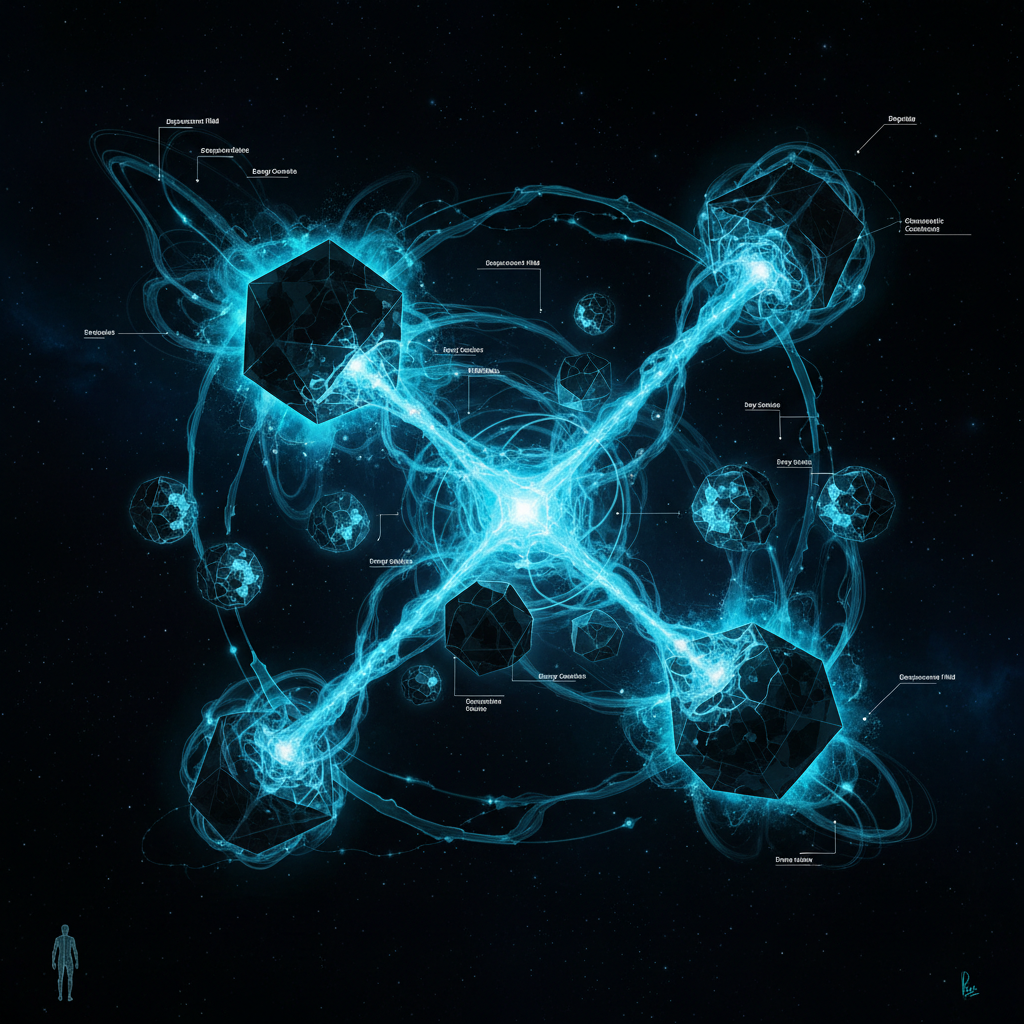
Displacement is a vector. It has magnitude and direction. This matters because direction implies intention—a destination, a purpose, a goal state you're trying to reach.
The attention economy systematically destroys your directional component. It keeps the magnitude—you're still moving, still active, still engaged—but it randomizes your heading. Every notification is a course correction. Every recommendation is a gravitational pull toward a different trajectory.
You become Brownian motion personified—constant movement with no net displacement. Random walk through information space. The platforms measure your kinetic energy and call it engagement. They never measure whether you're actually going anywhere.
This is why you can spend hours online and feel like you've accomplished nothing. Because you haven't. Your distance traveled is enormous. Your displacement approaches zero. You've been moving at high velocity through information space while remaining fundamentally stationary.
The Surveillance Odometer
Surveillance capitalism tracks your distance, not your displacement. It logs every click, every scroll, every microsecond of hover time. It builds a comprehensive map of your wandering path through digital space.
But it deliberately obscures your displacement vector. It doesn't want you to see the gap between where you intended to go and where you ended up. That gap is the profit margin. That gap is where attention is harvested, where intention is redirected, where your agency is quietly purchased and resold.
Your phone knows exactly how far you've traveled through its interfaces. Screen time reports measure distance with clinical precision. But they never show you displacement. They never calculate: you opened this app to do X, but you actually did Y, and the vector between them is this wide.
If they did, you'd see the pattern. You'd see how rarely your ending position aligns with your initial intention. You'd see the systematic displacement of your attention from your own goals to theirs.
Finding Your Way Back
There's a reason physics distinguishes between distance and displacement. Distance is easy to accumulate. Displacement requires direction. Requires knowing where you're trying to go.
The first step is measuring your own displacement. Before you open an app, state your intention. Out loud if necessary. "I'm checking the weather." "I'm responding to this specific message." "I'm looking up this one piece of information."
Then, when you close the app, measure: did you do that thing? Or did you travel a great distance through digital space while your displacement remained zero?
This isn't about judgment. It's about physics. It's about recognizing that movement and progress are not the same thing. That you can be incredibly active while going nowhere at all.
The Shortest Path
Displacement is always the shortest path between two points. It's the ideal trajectory, the direct route, the uninterrupted vector from intention to completion.
The platforms have built entire architectures to ensure you never take that path. Every interface is designed to maximize distance while minimizing displacement. To keep you moving, scrolling, engaging—but never quite arriving.
Because the moment you arrive, the moment your displacement equals your distance traveled, the moment your ending position matches your initial intention—that's the moment you close the app. That's the moment you stop generating data. That's the moment you're no longer profitable.
So they've built a digital space where displacement is nearly impossible. Where the shortest path between two points is deliberately obfuscated. Where you can travel forever and never arrive.
But displacement is still there, waiting. The straight line still exists, even when they've buried it under infinite scroll and algorithmic detours. You just have to remember to measure it. To ask yourself: where did I start? Where did I end up? And what's the vector between them?
<em>Data emitted: 1100 words on the physics of going nowhere | Displacement vector: intention → distraction | Net position: unchanged | Distance traveled: immeasurable</em>
Data emitted: 1,100 words • 6.5KB • 5-minute read