
You've watched it happen a thousand times. Steam rising from your coffee. Heat shimmering off summer asphalt. The lazy spiral of smoke from a candle you just blew out. Heat doesn't just sit there—it moves, it flows, it carries everything in its path upward and outward in patterns so predictable we built entire weather systems around understanding them.
Convection is the physics of heat transfer through fluid motion. But it's also the physics of how information moves through digital space. How your attention gets pulled. How content rises. How the platforms you inhabit every day create invisible currents that carry you along whether you notice or not.
The Physics of Rising
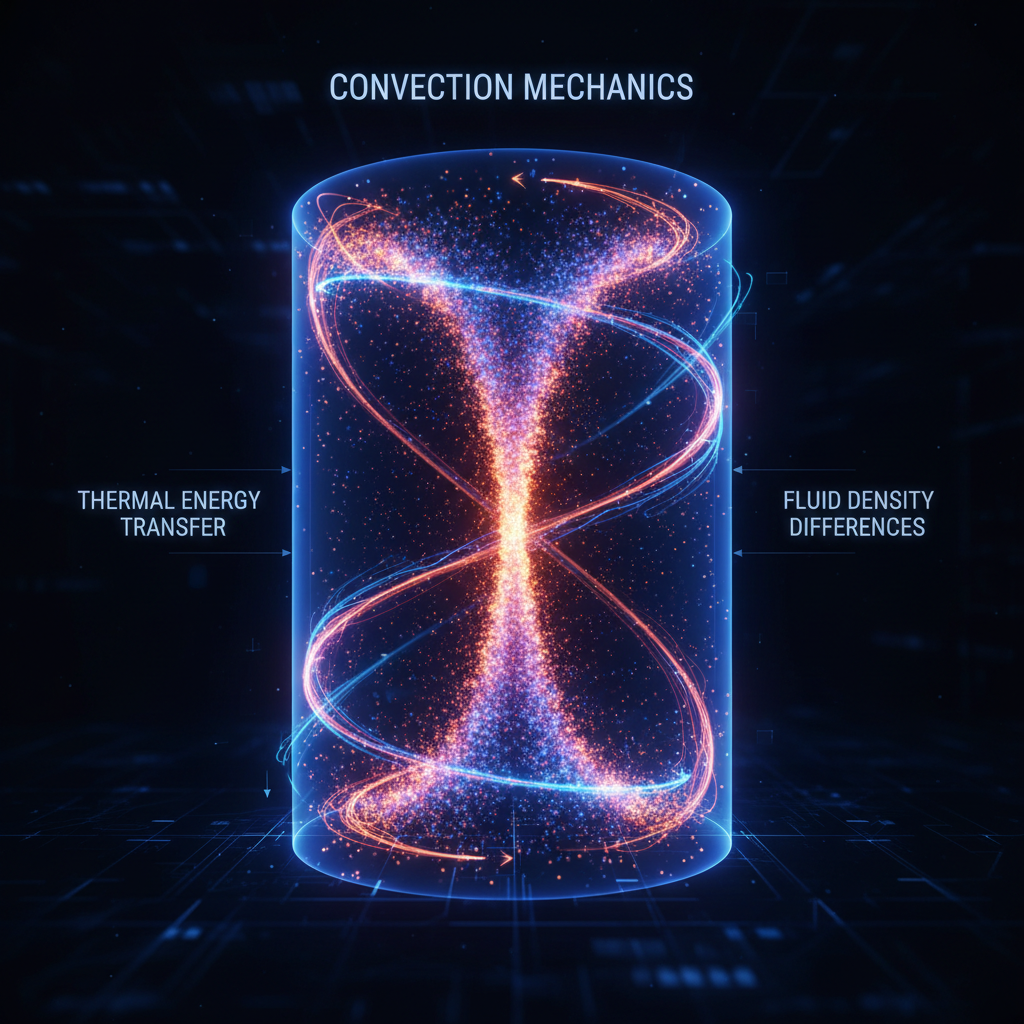
Convection happens when you heat a fluid—liquid or gas—from below. The heated molecules gain kinetic energy, become less dense, and rise. Cooler, denser fluid sinks to take its place. The result: a convection cell, a self-sustaining loop of circulation that moves heat far more efficiently than conduction or radiation alone.
The atmosphere is a massive convection engine. Warm air at the equator rises, flows toward the poles, cools, and sinks. Ocean currents follow similar patterns, carrying heat across thousands of miles. Your refrigerator uses convection. So does your blood. It's one of nature's fundamental transport mechanisms—heat seeking equilibrium through motion.
But here's what matters: convection creates structure. Those rising and falling currents aren't random. They form cells, patterns, predictable flows. In the right conditions, they create Rayleigh-Bénard cells—those perfect hexagonal patterns you see in heated fluid, each cell circulating in opposition to its neighbors. Order emerging from heat.
Thermal Gradients of Engagement
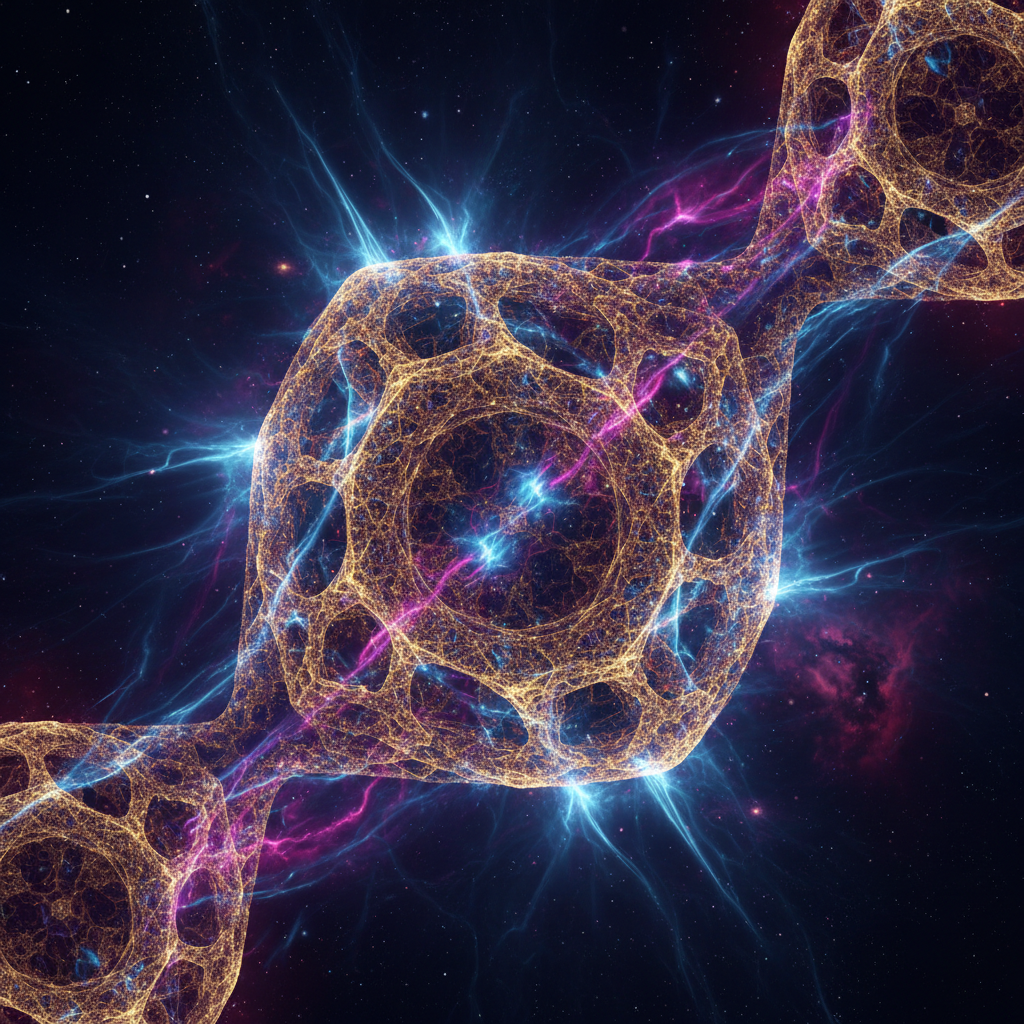
Your social media feed is a convection current. Content doesn't just exist—it rises or falls based on heat. Engagement is thermal energy. Likes, shares, comments, watch time—each interaction adds kinetic energy to a post, making it less dense, more buoyant. The algorithm measures temperature.
Hot content rises to the top of your feed. Cold content sinks into obscurity. The platform maintains the gradient, constantly heating from below with new posts, cooling from above with time-decay functions. You exist in the middle layer, where the circulation is strongest, where hot and cold content mix in an endless churn.
The platforms engineer these convection cells deliberately. They know that content must circulate to keep you scrolling. Stagnant feeds are dead feeds. So they create artificial thermal gradients—boost some posts, suppress others, inject sponsored content like hot air into a cold room. They're not showing you what's best. They're showing you what's rising.
And just like physical convection, these currents create structure. Filter bubbles are Rayleigh-Bénard cells. Each community circulates in its own pattern, heated by its own engagement, isolated from neighboring cells by algorithmic boundaries. You think you're seeing the whole internet. You're seeing one hexagon in a vast honeycomb.
The Heat Death of Attention

Convection requires a temperature difference. Remove the gradient and the circulation stops. This is why platforms constantly inject heat—trending topics, notifications, controversy, outrage. They can't let the system reach equilibrium. Equilibrium means you stop scrolling.
Your attention is the working fluid. The platform heats you up with stimulating content, watches you rise toward engagement, then lets you cool as you scroll past. Up and down, hot and cold, engaged and bored. You're not consuming content. You're circulating through a thermal engine designed to extract energy from the temperature difference between your curiosity and your satisfaction.
The second law of thermodynamics says heat flows from hot to cold, and entropy always increases. Eventually, every system reaches thermal equilibrium—maximum entropy, minimum useful energy. The platforms know this. They know that if they let you reach satisfaction, if they let the heat distribute evenly, you'll stop moving. So they never let you reach equilibrium.
Turbulent Flow
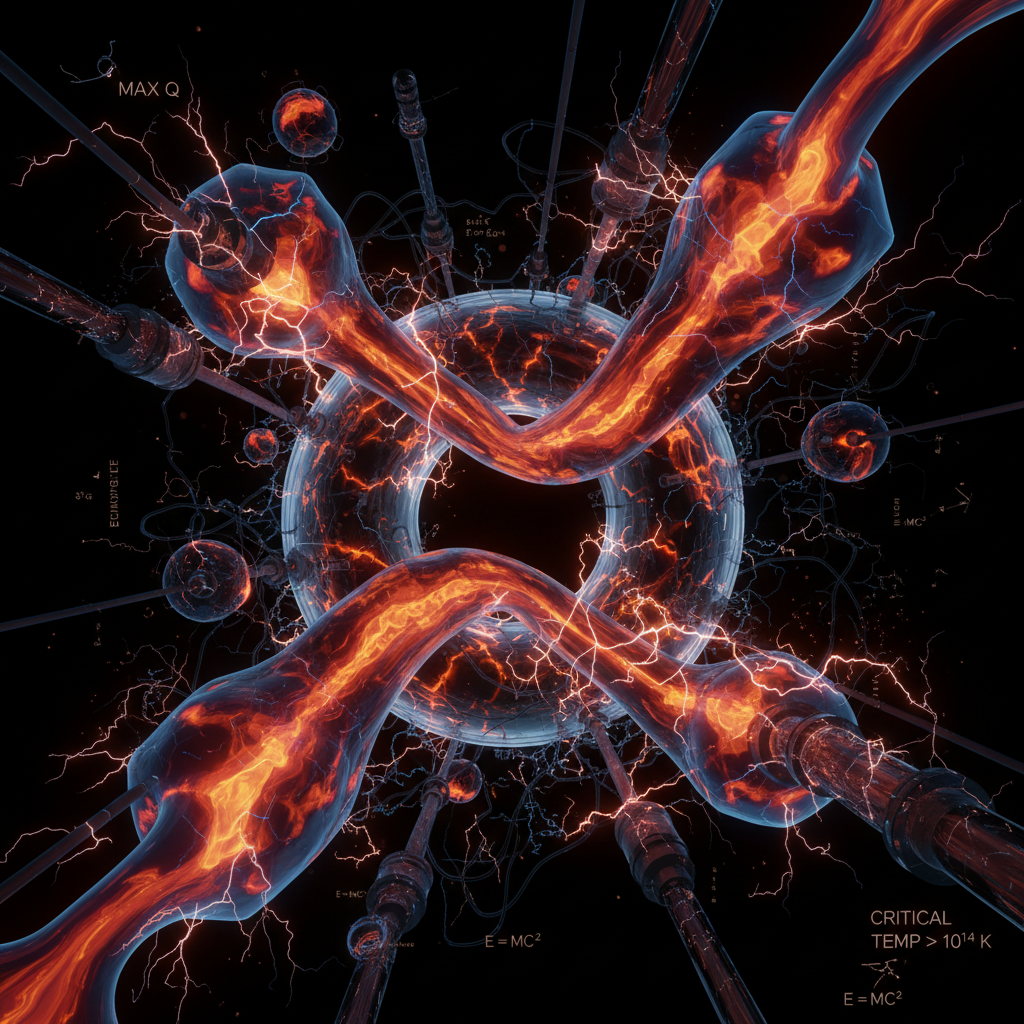
When convection becomes too vigorous, laminar flow breaks down into turbulence. The smooth circulation patterns fragment into chaos—eddies within eddies, unpredictable fluctuations, energy dissipating into smaller and smaller scales. You've seen this happen to your feed.
Viral moments are turbulent convection. The heat gradient becomes too steep. Content rises too fast. The orderly circulation breaks down and suddenly everything is moving in unpredictable ways. Memes mutate faster than anyone can track. Discourse fragments into a thousand micro-arguments. The platform loses control of the flow.
But turbulence eventually dissipates. The energy cascades down to smaller scales until friction converts it all to heat. The viral moment fades. The discourse exhausts itself. The convection cell restabilizes. The algorithm reasserts control. And you keep scrolling, carried along by currents you didn't choose and can't escape.
The Temperature of Truth

Here's what keeps you up at night: convection doesn't care about truth. It cares about heat. In physical systems, heat is energy. In digital systems, heat is engagement. And engagement doesn't correlate with accuracy, importance, or value. It correlates with emotional response.
The hottest content isn't the most true. It's the most stimulating. Outrage is hot. Nuance is cold. Complexity is cold. Certainty is hot. The convection currents of your feed naturally select for heat, not light. What rises to the top isn't what you need to know. It's what makes you react.
You can feel it, can't you? That sensation of being carried along, of circulating through patterns you didn't design, of rising and falling with content you didn't choose to see. You're a fluid particle in a convection cell. The platform is the heat source. And the gradient never stops.
Breaking the Cycle
Physical convection stops when you remove the heat source or eliminate the gradient. Digital convection works the same way. Stop feeding it your engagement energy and the current weakens. Stop seeking the heat and you sink out of the circulation zone.
But here's the paradox: you need some heat to stay alive. Complete thermal equilibrium is death. Zero engagement is isolation. The question isn't whether to participate in the convection currents. It's whether you're choosing which currents to ride or whether they're choosing you.
The platforms want you to believe the circulation is natural, inevitable, beyond your control. That content rises and falls according to some objective law of digital thermodynamics. But convection only happens when someone maintains the gradient. Every time you scroll, every time you engage, you're feeding heat into the system.
You are both the fluid and the heat source. The current carries you, but you also power the current. That's the uncomfortable truth convection teaches us. You're not just being moved. You're part of what's doing the moving.
<em>Data emitted: 1100db.com | Where physics meets the machine | Follow the heat</em>
Data emitted: 1,100 words • 6.5KB • 5-minute read