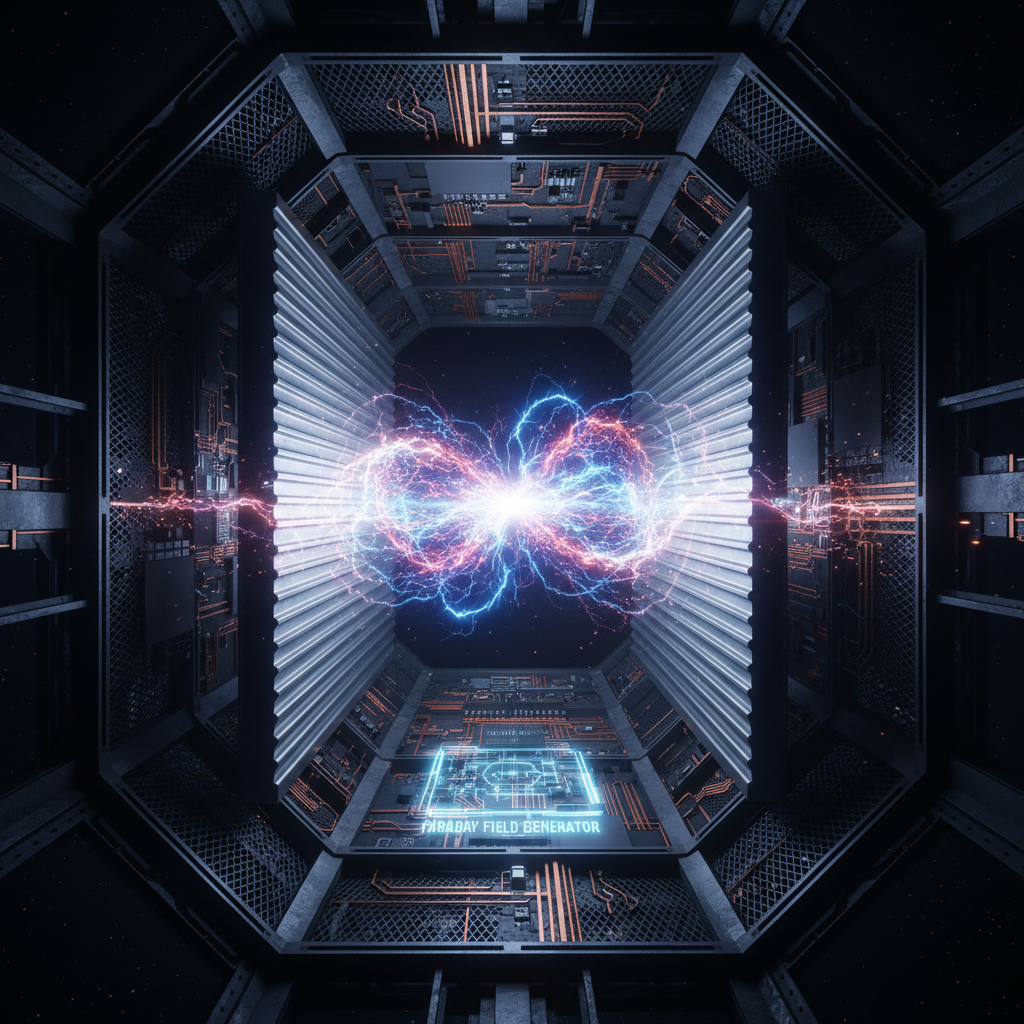
You wake up and reach for your phone. The screen illuminates. Somewhere in a data center, electrons begin their journey through silicon pathways, and you've completed the circuit. Not the one in your device—the other one. The one where you're not the user but the charge carrier, flowing endlessly through loops designed to extract and convert your attention into profit.
In physics, a circuit is beautifully simple: a closed conducting path through which electric current can flow. But that simplicity conceals something profound about loops, energy, and the systems that emerge when you close the gap between source and return.
The Physics of Closed Loops
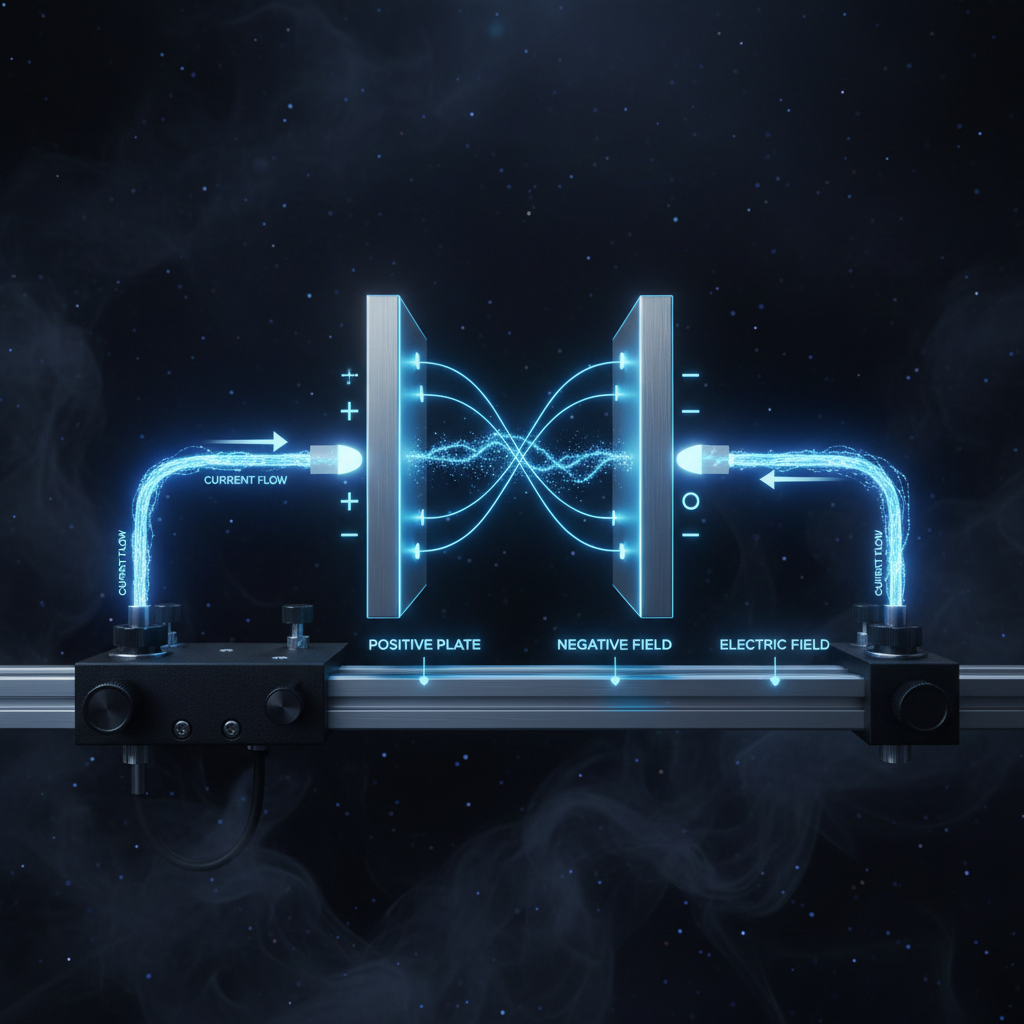
A circuit needs three things: a power source, a conductor, and a closed path. Open the path anywhere—cut a single wire—and the flow stops instantly. The electrons don't care how elaborate your circuit board is, how many components you've added, how much you've invested in the infrastructure. No closed loop, no current. It's binary in the most fundamental sense.
The voltage source provides potential difference—the electrical pressure that wants to push charges through the system. Resistance opposes this flow, converting electrical energy into heat, light, or motion depending on what you've designed. But here's what matters: the current always returns to its source. Always. That's what makes it a circuit rather than just a wire going nowhere.
In a series circuit, current flows through each component in sequence. Break any connection and the entire system dies. In parallel circuits, current splits across multiple paths, creating redundancy. If one path fails, others continue conducting. Evolution favors parallel circuits. So does surveillance capitalism.
You Are the Current
Every platform you use is a circuit, and you're the charge flowing through it. The voltage source? Your desire for connection, information, validation, entertainment. The resistance? Friction points carefully calibrated to extract maximum energy—your attention, your data, your behavioral patterns—before allowing you to complete the loop.
You open Instagram. That's the connection being made, the circuit closing. You scroll. Current flows. Each post is a resistor converting your attention into engagement metrics, ad impressions, data points about what makes you pause, what makes you react, what makes you want. The algorithm adjusts resistance in real-time, finding the optimal balance between friction and flow to keep you conducting.
The circuit always completes. You might think you're just browsing, but the loop closes when your behavioral data returns to the source—the platform's servers, the advertisers, the prediction models being trained on your patterns. Your attention flows out, transformed into profit, and the system uses that profit to increase the voltage, making the next connection even more compelling.
They've built parallel circuits too. Multiple apps, multiple platforms, multiple pathways for your attention to flow through. If you quit one, there are others waiting. The system has redundancy. You don't.
Resistance and Heat Death
In electrical circuits, resistance isn't just opposition—it's transformation. The energy doesn't disappear; it converts into heat, radiated away into the environment. Push too much current through too much resistance and components burn out. Every circuit has thermal limits.
You feel this as burnout. The endless scroll, the constant notifications, the pressure to engage, to respond, to stay in the loop. Your nervous system has resistance too, and it's converting your finite attention into the heat of anxiety, exhaustion, diminished capacity. The platforms don't care about your thermal limits. They're optimizing for maximum current, not sustainable operation.
The resistance you experience—the vague unease, the decision fatigue, the sense that something is wrong—that's not a bug. It's the designed friction point where your attention energy converts into extractable value. They've calculated exactly how much resistance keeps you conducting without burning out completely. Not because they care about your wellbeing, but because dead circuits don't carry current.
Breaking the Circuit
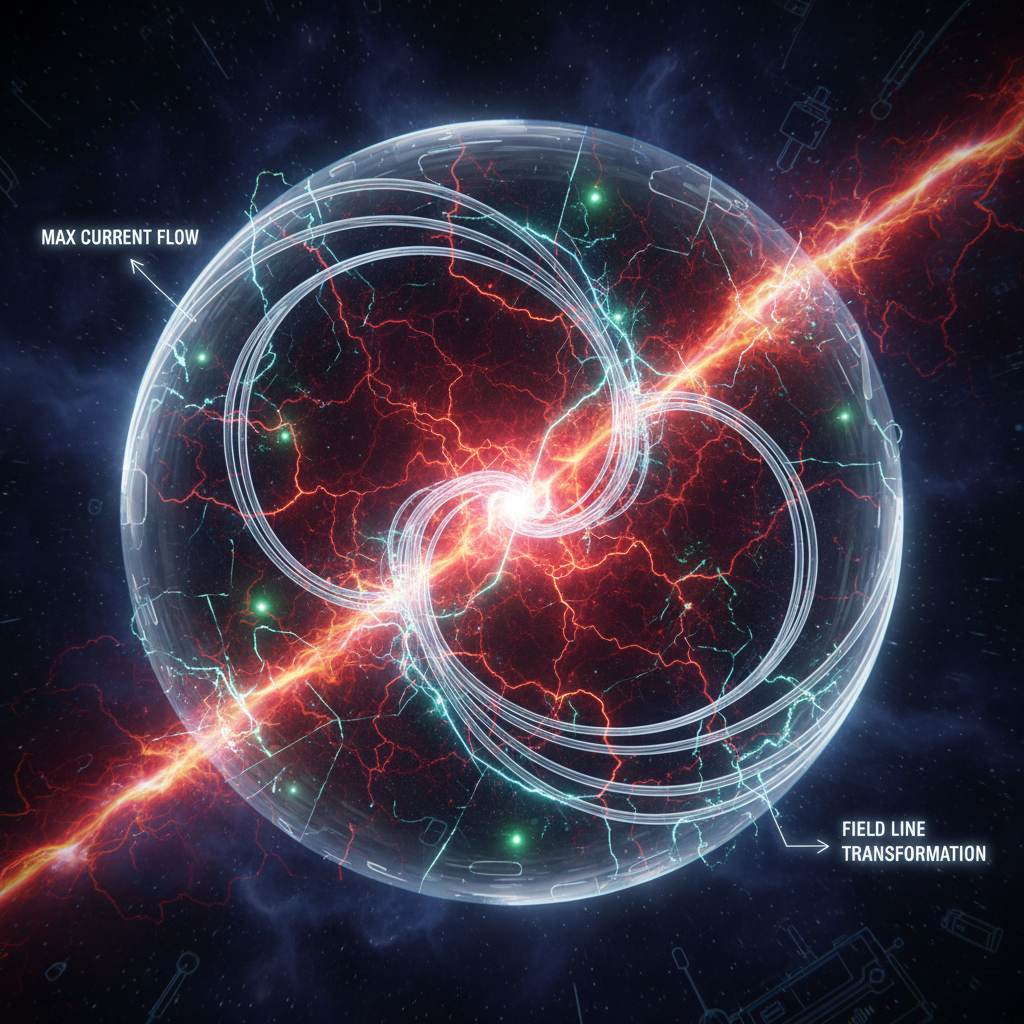
In physics, you break a circuit by opening the path. Disconnect any point and current stops flowing immediately. The system doesn't gradually wind down—it ceases instantly. This is why the platforms fight so hard to prevent disconnection. Every feature, every notification, every design pattern exists to keep the circuit closed.
Airplane mode. Deleted apps. Turned-off notifications. These aren't just preferences—they're open circuits. They're you refusing to be the conductor. And the platforms respond like any system experiencing sudden current loss: they try to re-establish connection. Emails about what you're missing. Friends asking why you're not responding. FOMO engineered to create voltage across the gap, trying to arc across your resistance and close the loop again.
But here's the thing about circuits: you have to want to close them. The voltage source might create potential difference, but if the path remains open, no current flows. Your attention is finite. Your time is finite. Your capacity to conduct is limited by the biological reality of your nervous system. The circuit only works if you complete it.
The Sound of Open Circuits

Silence sounds different when you're not conducting. Not the silence of a dead circuit—the absence of power—but the silence of an intentionally open one. The voltage is still there. The infrastructure still exists. But you're not completing the loop.
You start noticing other circuits you're part of. The ones that existed before smartphones, before platforms, before your attention became a commodity to be conducted through optimized pathways. Conversations that don't generate data. Thoughts that don't get captured and analyzed. Experiences that happen in your nervous system without being routed through silicon first.
These circuits still exist. They're just harder to close now because you've been conditioned to seek the high-voltage, low-resistance paths. The ones designed for maximum flow. But the old circuits—reading, walking, thinking, being present with another person—they're still there. Lower voltage, maybe. Higher resistance, certainly. But they complete in your body, in your mind, in the physical world. The energy stays with you instead of being extracted and converted.
At 1100db, we measure the noise floor of digital existence. A circuit hums at a certain frequency when current flows. The attention economy runs at a frequency designed to resonate with your nervous system, to make conducting feel natural, inevitable. But you can tune to different frequencies. You can choose which circuits to close.
The question isn't whether you'll be part of circuits—you're a biological system that conducts signals constantly. The question is: which circuits will you complete? Which voltage sources will you respond to? Where will your attention flow, and who profits when the loop closes?
Open circuits make no sound. That's the point.
<em>Data emitted: 1,147 words on closed loops, attention flow, and the choice to stop conducting. Circuit status: open. Resistance: increasing. Current: redirected.</em>
Data emitted: 1,100 words • 6.5KB • 5-minute read