You open the app. Again. For the third time in ten minutes. Your thumb knows the gesture before your brain registers the decision. Swipe, scroll, refresh. You're moving but going nowhere, tracing the same digital orbit you traced yesterday and will trace tomorrow.
This isn't aimless wandering. This is physics.
The String That Holds You
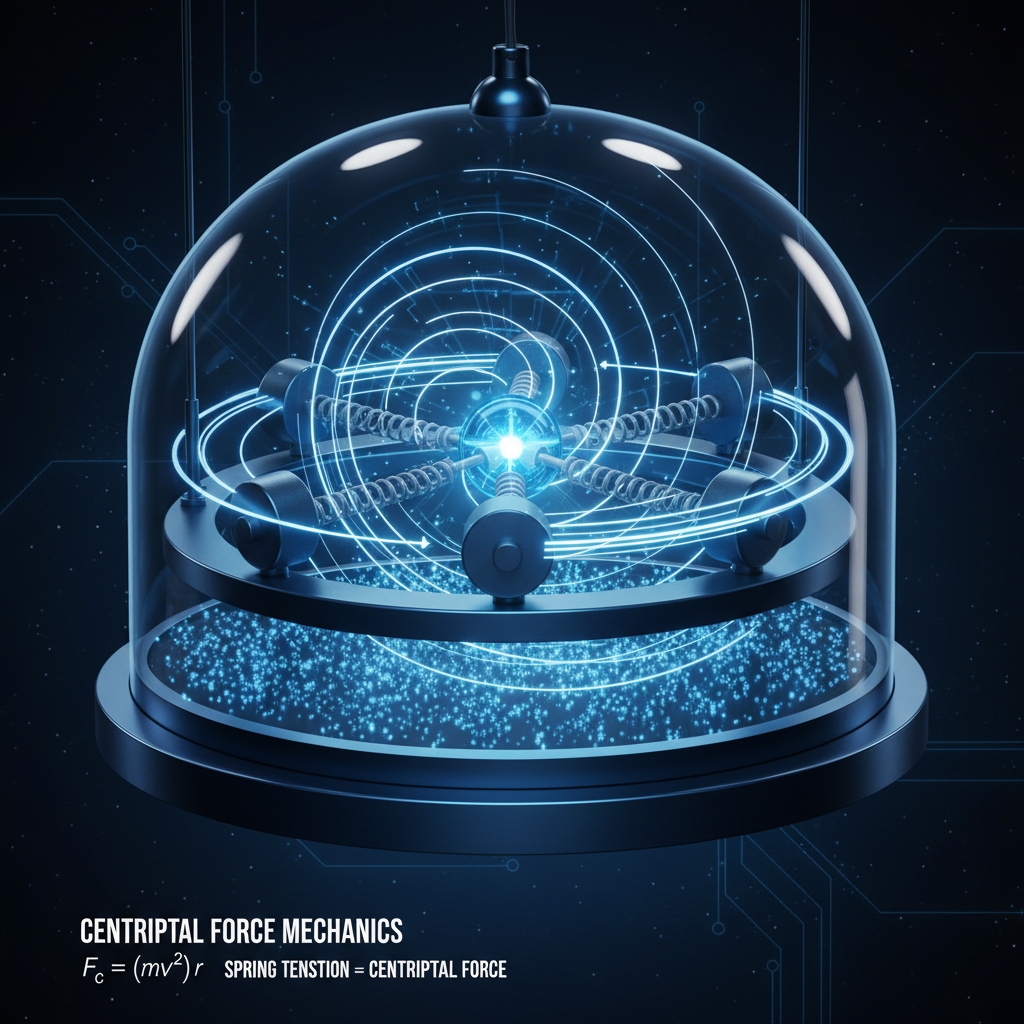
Tie a rock to a string. Spin it around your head. The rock wants to fly away in a straight line—Newton's first law, inertia, the universe's default setting. But it can't. The string pulls it inward, constantly redirecting its trajectory, forcing it into circular motion.
That inward pull is centripetal force. From Latin: centrum (center) and petere (to seek). Center-seeking. The force that keeps objects moving in curves rather than lines.
The rock doesn't want to orbit. Every instant, it's trying to escape, to continue in whatever direction it's currently heading. But the string won't let it. The force isn't constant—it's perpendicular to motion at every point, always pulling toward the center, always redirecting without slowing down.
F = mv²/r. Mass times velocity squared, divided by radius. The faster you spin something, the harder you have to pull to keep it from flying away. The tighter the circle, the more force required.
You feel this in your car on sharp turns. Your body wants to continue straight while the car turns beneath you. The door presses against you—that's centripetal force, keeping you in circular motion with the vehicle. Without it, you'd slide right out.
Your Digital Orbit
Now consider your phone. The platforms you return to, the loops you trace through the same six apps. Instagram to Twitter to TikTok to Messages to Email to Instagram again. A perfect circle. You're the rock on the string.
What's the string? Notifications. Variable reward schedules. The dopamine architecture of infinite scroll. FOMO. The algorithmic feed that's always slightly different but fundamentally the same. These aren't features—they're centripetal forces, engineered to keep you in orbit.
Your attention wants to fly away. It wants to read that book, take that walk, stare at the ceiling and think. Linear motion. But the platform pulls you back, perpendicular to your intention at every moment. Not hard enough to feel like restriction—just enough to curve your path back toward the center.
The tighter the loop, the stronger the force required. That's why platforms optimize for shorter sessions, more frequent returns. They've tightened your radius. Twenty minutes becomes ten becomes five becomes checking every time you're in a line, every time there's a pause in conversation, every time you're alone with your thoughts.
And velocity matters. The faster you move through content, the harder they pull to keep you captured. Swipe speed, scroll velocity, the frictionless interface—it's all calculated. F = mv²/r. Your mass (attention) times your velocity (engagement speed) squared, divided by how tight they can make your orbit.
The Illusion of Centrifugal
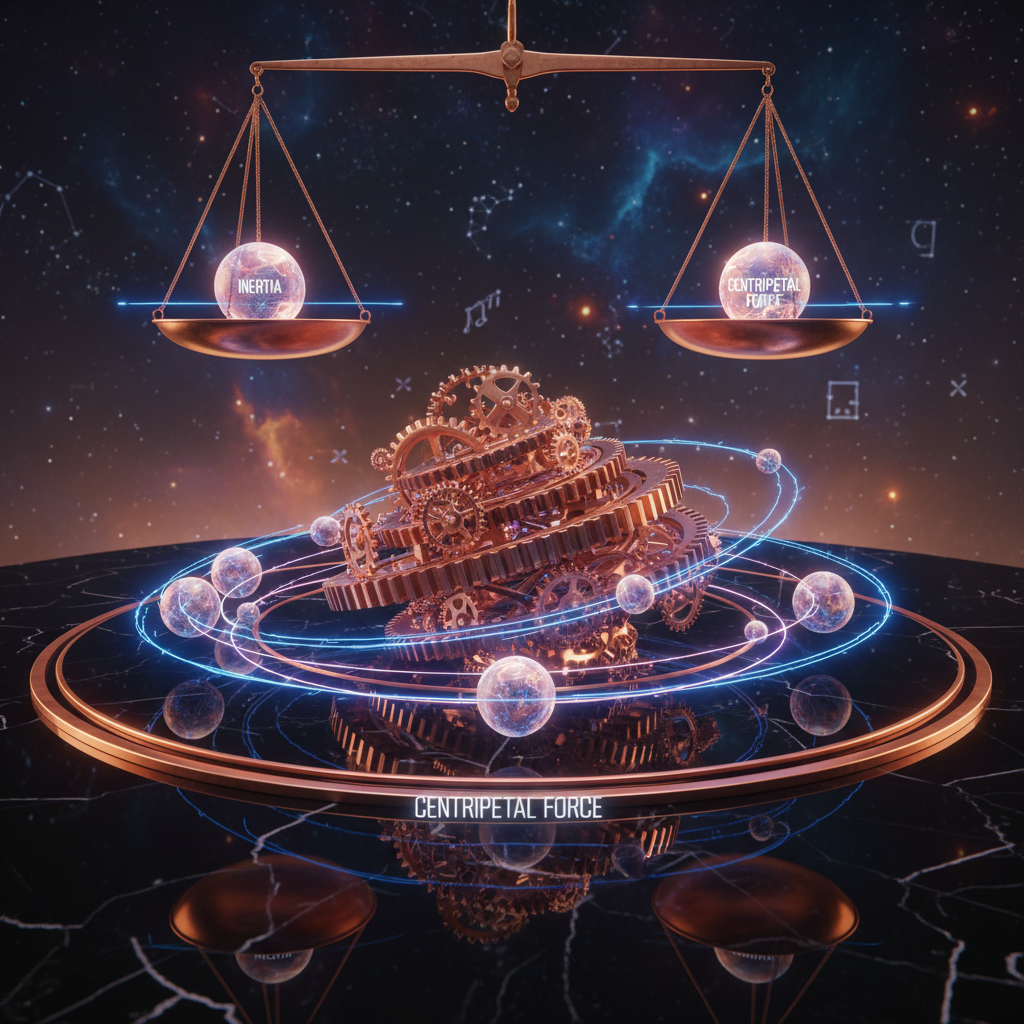
Here's what's strange: there's no such thing as centrifugal force. Not really. It's a fiction, a phantom, something you feel but doesn't exist.
When you're in the spinning car, you feel pushed outward. But nothing is pushing you. You're just experiencing your own inertia—your body's desire to continue in a straight line while the car forces you into a curve. Centrifugal force is what we call this sensation from inside the rotating reference frame.
Step outside the system and it disappears. Only centripetal force is real—the inward pull. The outward push is just how it feels to be trapped in circular motion.
You feel this online too. The sensation that you're being pushed away from real life, flung outward into digital space. But that's not what's happening. You're being pulled inward, toward the center of the platform. The feeling of being pushed away from everything else is just the sensation of being held in orbit.
The platform isn't pushing you away from dinner with friends. It's pulling you toward itself so consistently, so constantly, that everything else feels like it's receding. The centrifugal force you feel—that sense of being flung away from presence, from attention, from stillness—is the phantom sensation of being trapped in their loop.
Breaking Orbit
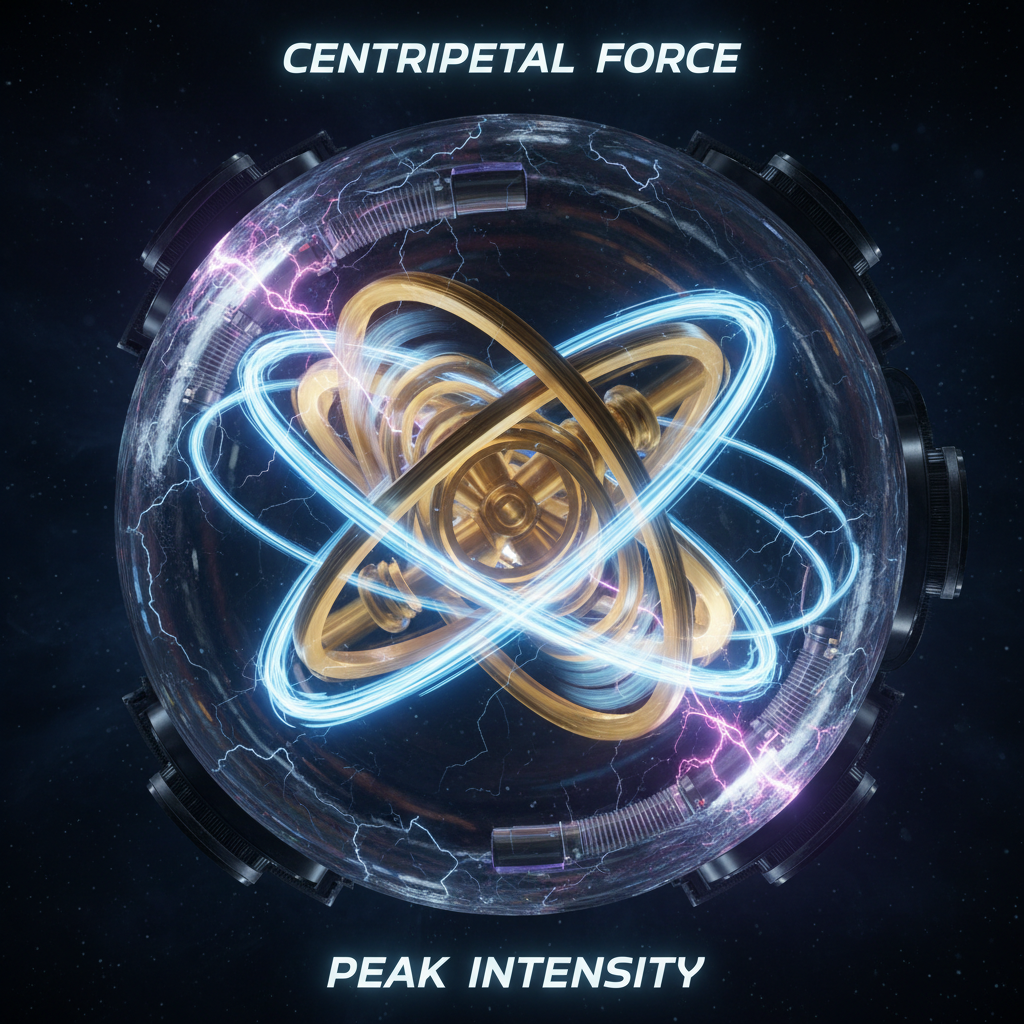
Cut the string and the rock flies away in a straight line. Instantly. It doesn't spiral outward—it just continues in whatever direction it was heading at the moment of release. Tangent to the circle. Linear at last.
This is harder than it sounds. The string is invisible. It's made of habit and design and the accumulated weight of a billion small optimizations, all pointing toward the center. Delete the app and you'll reinstall it. Turn off notifications and you'll check anyway. The string reforms.
Because you've been in orbit so long, you've forgotten what linear motion feels like. Straight lines feel wrong. Unmoored. The absence of centripetal force feels like falling, even though it's actually freedom.
To break orbit requires more than willpower. It requires understanding the forces acting on you. Recognizing that the inward pull isn't your desire—it's the platform's architecture. That your velocity isn't natural—it's engineered. That the tight radius of your loop is a choice someone else made about how to extract maximum value from your attention.
When you finally cut the string, you don't spiral. You just go. Wherever you were already heading. The direction you were pointed before they curved your path back toward them.
The Center Cannot Hold
Every orbit requires energy. The platform must constantly apply force to keep you circling. This is why they're always optimizing, always testing, always finding new ways to tighten your radius or increase your velocity. The moment they stop pulling, you drift away.
They know this. It's why the algorithms never rest, why the feed is always changing, why there's always a new feature designed to pull you back. They're fighting your inertia, your natural tendency toward straight lines, toward attention that goes somewhere instead of circling endlessly.
You feel it too, don't you? That exhaustion. Not from using the platforms but from being held in orbit around them. The constant perpendicular force, pulling you away from where you were heading, redirecting you back to the center. It's tiring to be spun.
The rock on the string experiences tension. So do you. Every time you open the app when you meant to do something else. Every time you finish scrolling and can't remember what you saw. Every time you realize an hour passed in what felt like five minutes. That's the force acting on you, holding you in place while giving you the sensation of movement.
Centripetal force keeps planets in orbit around stars. It keeps electrons around nuclei. It's fundamental to how the universe organizes itself. But you're not a planet. You're not an electron. You're supposed to be able to choose your trajectory.
The string is in your hand. It always has been.
<em>Data emitted: 1,147 words on circular motion, attention capture, and the forces that keep you scrolling. F = mv²/r, where F is the platform's pull, m is your attention mass, v is your engagement velocity, and r is how tight they've made your loop. The smaller the r, the harder they pull. The faster you move, the stronger the force required to keep you from escaping. You're not trapped. You're held. There's a difference, but only if you notice.</em>
Data emitted: 1,100 words • 6.5KB • 5-minute read