You've been away from your phone for three hours. When you finally unlock it, the notifications cascade down the screen like a dam breaking. Twenty-seven messages. Fourteen likes. Six comments. Three emails marked urgent. The dopamine hits harder because you waited. The platform knew you would come back. They always do.
This is the capacitor at work.
The Physics of Stored Potential
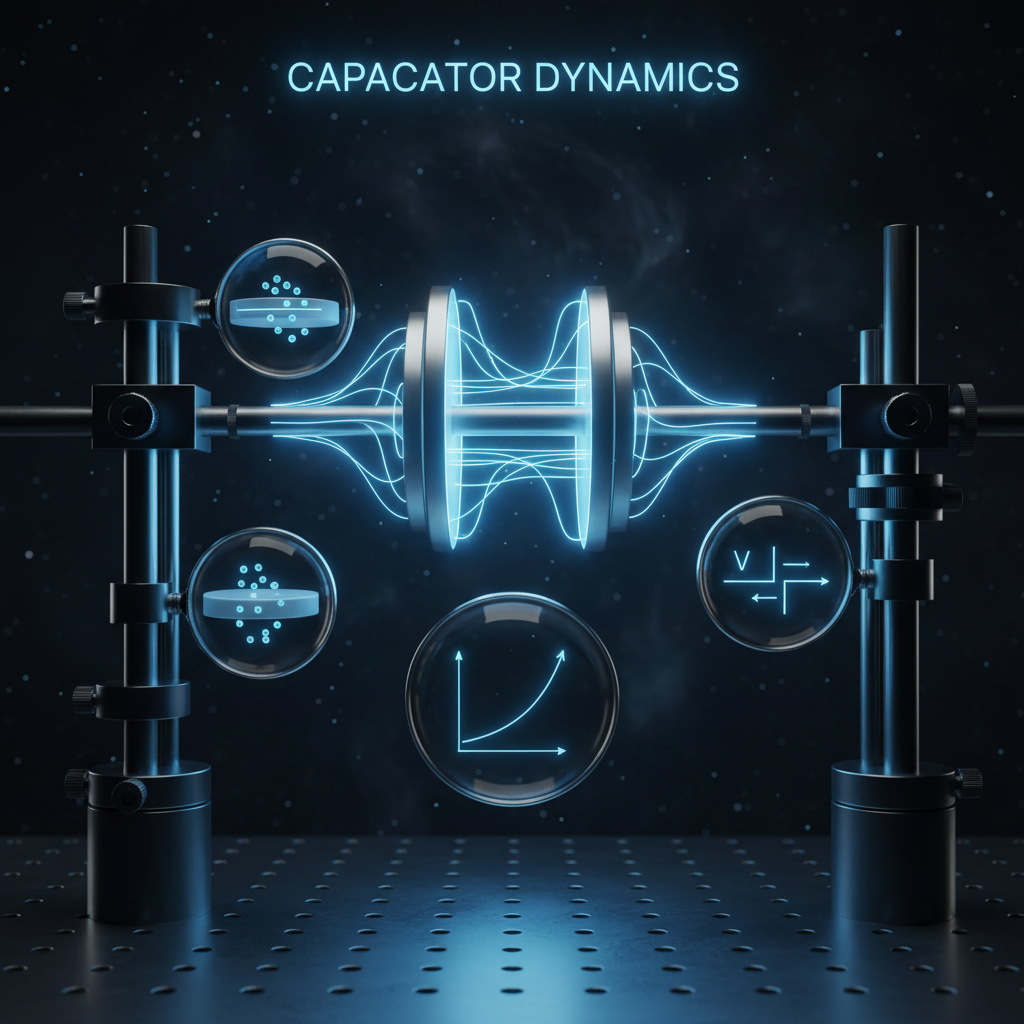
A capacitor is deceptively simple: two conductive plates separated by an insulator. Apply voltage, and electrons accumulate on one plate while the other develops a deficit. The insulator—the dielectric—prevents them from flowing directly between plates. Instead, an electric field builds in the gap, storing energy in the space itself.
The capacitance, measured in farads, tells you how much charge the device can hold at a given voltage. But here's what matters: the energy stored in a capacitor is proportional to the square of the voltage. Double the potential difference, quadruple the stored energy. The longer you charge it, the more violently it wants to discharge.
Capacitors don't generate power. They hold it. They wait. And when you complete the circuit, they release everything at once.
Your Attention as Dielectric
Every social platform is a capacitor, and you are the dielectric medium between two charged plates. On one side: the content creators, influencers, friends, brands, all generating signals. On the other: your eventual return, your inevitable engagement, your compulsive need to check.
The platform keeps the plates separated. You can't be on Instagram every second of every day—not yet, anyway. So they optimize for the space between. They build up charge while you're away. Notifications accumulate. Algorithmic timelines reorder themselves. Your friends post, comment, share. The field strength increases.
When you finally open the app, the discharge is immediate and total. Everything flows through you at once. The red notification badges, the endless scroll, the carefully curated feed designed to keep you there just a little longer. The energy stored during your absence converts directly into engagement, into attention, into the only currency these platforms actually value.
They've learned the optimal charge time. Too short, and there's no buildup, no tension, no satisfying release. Too long, and you might forget to come back at all. But get it right—three hours, six hours, overnight—and you'll return with the urgency of a circuit completing itself.
Leakage Current and the Impossibility of Rest
Real capacitors leak. No dielectric is perfect. Even when disconnected from a circuit, the stored charge gradually dissipates. Electrons tunnel through the insulator. The field weakens. Energy bleeds away as heat.
Your attention leaks too. You try to disconnect, to take a break, to be present in the physical world. But the platforms have engineered their leakage current carefully. Push notifications pierce the dielectric. Email digests. Text messages from friends asking if you saw the thing they posted. The buzz of your phone in your pocket, phantom or real, you can't tell anymore.
They can't let the capacitor fully discharge. If you truly disconnected, if the field collapsed entirely, you might not come back. So they maintain a baseline current, a trickle of engagement that keeps the potential difference alive. Just enough to remind you that charge is building. Just enough to make you wonder what you're missing.
Time Constant and the Rhythm of Addiction
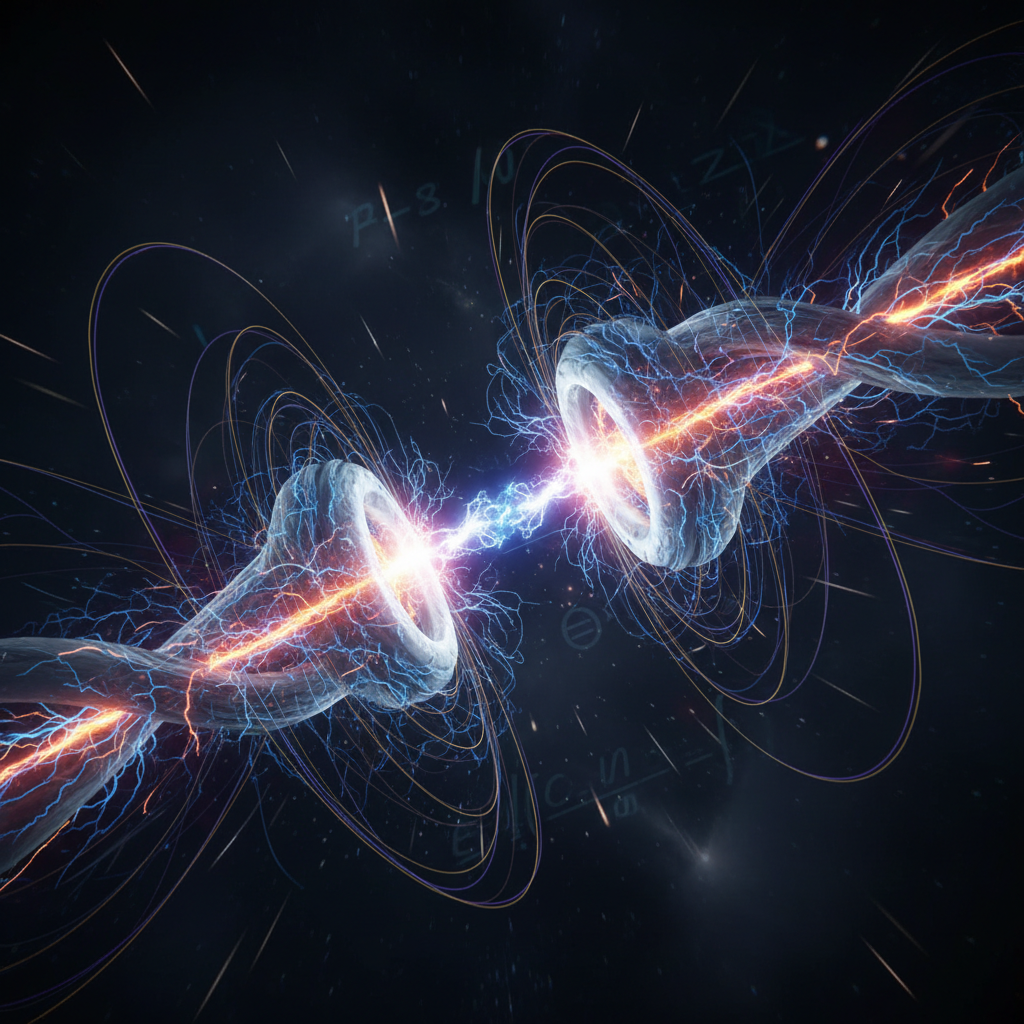
The RC time constant—resistance times capacitance—determines how quickly a capacitor charges and discharges. It's the heartbeat of the circuit, the rhythm that governs energy flow. Change the resistance or capacitance, and you change the tempo.
Surveillance capitalism has spent two decades optimizing your time constant. They've measured how long you can resist checking. They've quantified the half-life of your willpower. They know that if they can get you to open the app once, the discharge will carry you through fifteen minutes of scrolling. They know that fifteen minutes of scrolling will generate enough data to refine the next charge cycle.
Your resistance drops over time. Each notification weakens it. Each autoplay video, each infinite scroll, each frictionless share button. The capacitance increases too—more content, more connections, more reasons to check. The time constant shrinks. Charge and discharge happen faster. The rhythm accelerates until it's not a rhythm at all, just a constant hum of partial attention.
The Energy You Never Get Back

Here's what they don't tell you about capacitors: the energy you get out is never quite what you put in. Some dissipates as heat in the resistance. Some radiates away as electromagnetic fields. The discharge is always less than the charge, and the difference is lost forever.
Your attention works the same way. You give them your time, your focus, your cognitive bandwidth. They store it, compress it, monetize it. And when they give something back—content, connection, the illusion of community—it's always less than what you invested. The difference isn't lost, though. It's captured. Quantified. Sold.
You are both the dielectric and the energy source. You separate the plates and generate the charge. You are the medium and the message, the circuit and the current. And every time you complete the loop, every time you unlock your phone and feel that cascade of notifications, you're discharging potential that was yours to begin with.
Breaking the Circuit
A capacitor without a complete circuit is just two pieces of metal and an insulator. No charge builds. No field forms. No energy stores. The potential remains zero.
You could break the circuit. Delete the apps. Silence the notifications. Let the charge dissipate completely. But they've made the circuit so easy to complete, so frictionless, so inevitable. Your fingerprint. Your face. Your habits trained over years of optimization.
The capacitor doesn't judge. It stores and releases, charges and discharges, following the laws of electromagnetism with perfect indifference. The platforms are the same. They don't care about your wellbeing, your time, your humanity. They care about capacitance. About how much attention they can store in the space between your sessions. About how violently you'll discharge when you return.
Every refresh is a discharge. Every notification is a charge cycle. And the field strength keeps building.
Data emitted: 1100 dB
Data emitted: 1,100 words • 6.5KB • 5-minute read