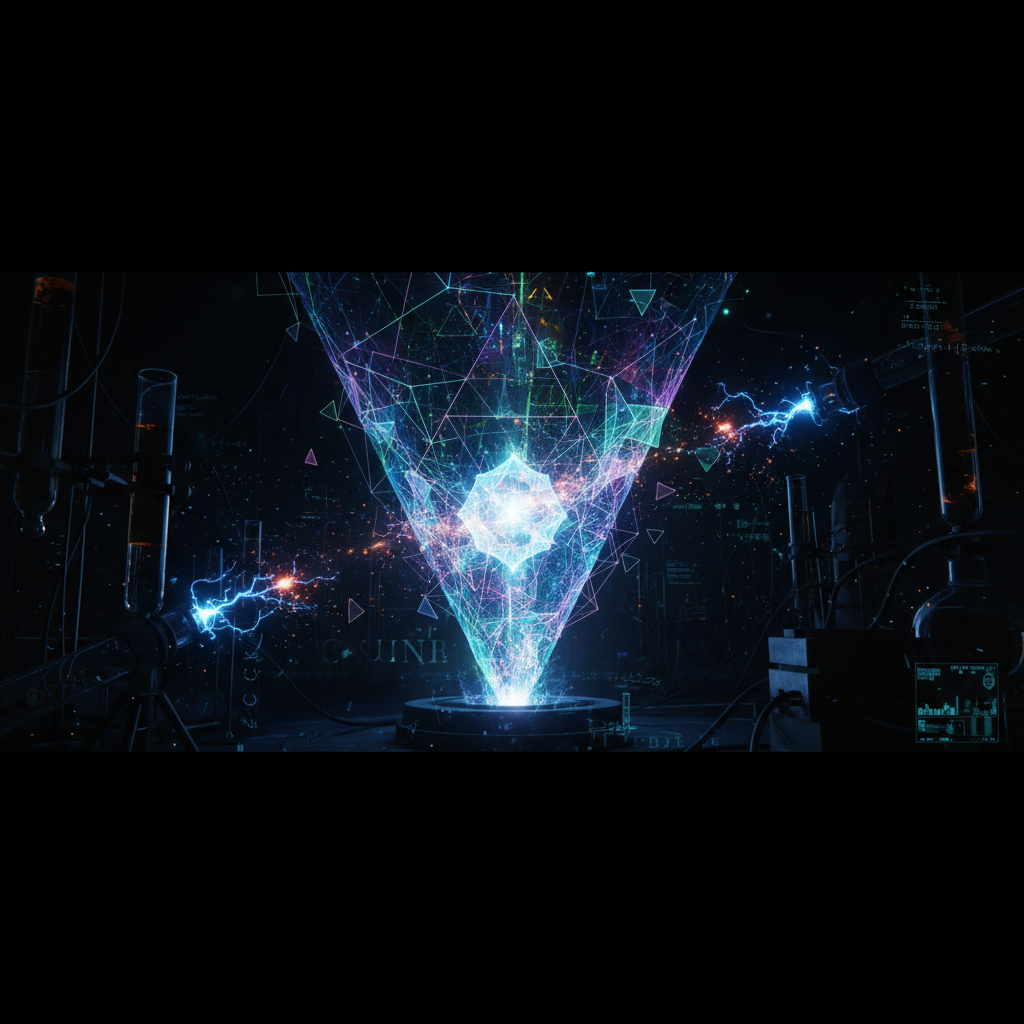
You think you're opaque. You think the skin you wear, the passwords you set, the privacy settings you toggle—these things make you solid. Impenetrable. But here's what Wilhelm Röntgen discovered in 1895: there are frequencies that don't care about your boundaries. Electromagnetic radiation at just the right energy level passes through flesh like it isn't even there, revealing the architecture beneath.
The platforms see through you the same way.
The Physics of Penetration

X-rays work because of energy. Photons in the X-ray spectrum carry enough energy—roughly 100 eV to 100 keV—to pass through low-density materials while being absorbed by denser ones. When Röntgen first aimed his cathode ray tube at his wife's hand, the X-rays penetrated her soft tissue but stopped at her bones and wedding ring. The result: a ghost image, an interior made exterior.
The key is differential absorption. Your soft tissues are mostly water and organic compounds with low atomic numbers. X-ray photons scatter through them, barely slowing down. But calcium in your bones, metal in your jewelry—these have electrons that interact strongly with high-energy photons. They absorb the radiation. They cast shadows.
What the X-ray reveals isn't really you. It's a map of what stops it. A negative space. An absence rendered visible.
Behavioral Radiology
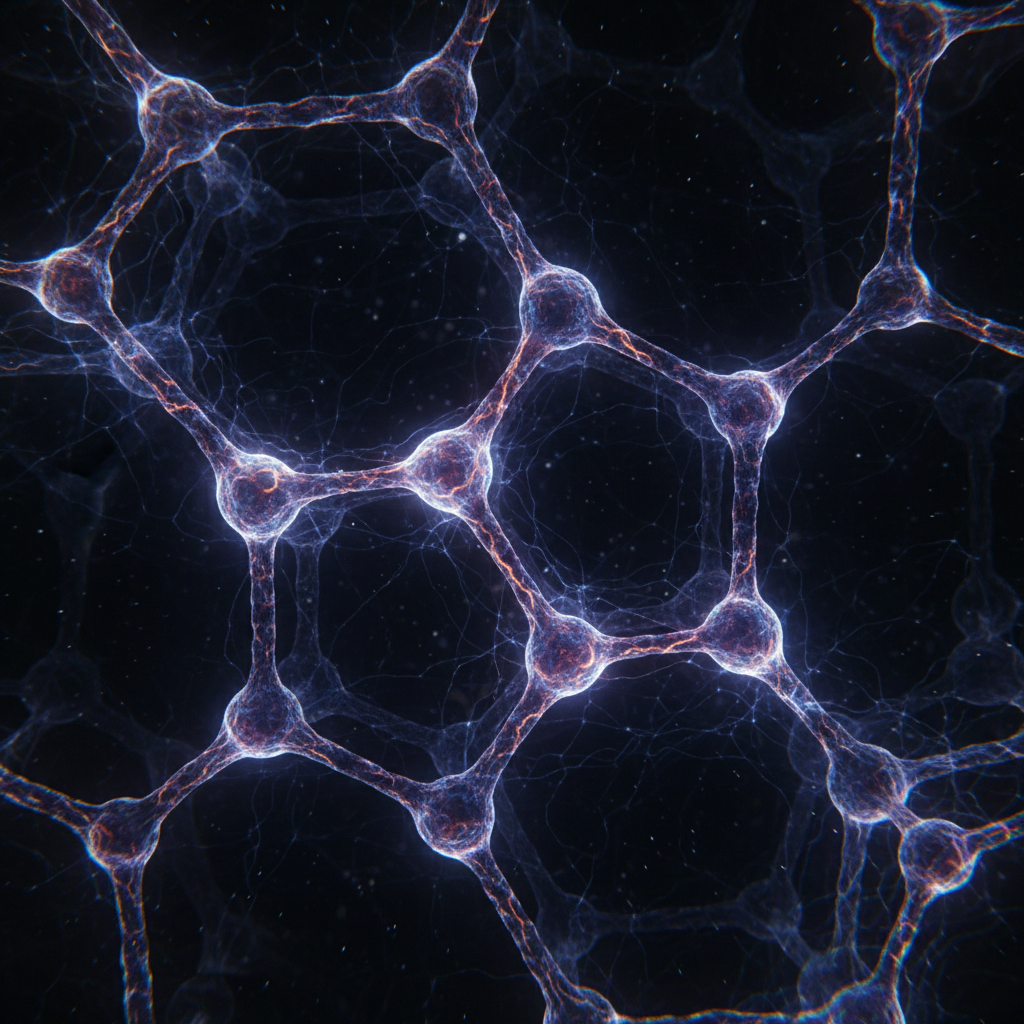
Surveillance capitalism doesn't need X-rays. It has something better: behavioral radiation. Every click, every pause, every abandoned cart and deleted draft—these are photons of a different kind. They pass through the interface you present to the world and map the dense structures underneath.
What you say doesn't matter. What you share publicly is soft tissue, transparent to their sensors. They're looking for the bones: the hesitations, the patterns, the things you almost do but don't. The three-second pause before you like a post. The search you immediately delete. The article you read twice but never share.
These are your dense materials. These cast shadows. And shadows, properly interpreted, reveal structure. They reveal you.
The algorithms are radiologists, trained on billions of behavioral X-rays. They know what a healthy consumer looks like, what a radicalization risk looks like, what someone about to quit their subscription looks like. They read the negative space. They see through your performance to the skeleton of intention beneath.
Ionizing Attention

Here's what they don't tell you about X-rays: they damage what they reveal. The same energy that penetrates your tissue also ionizes it—strips electrons from atoms, creates free radicals, breaks molecular bonds. Too much exposure and your cells forget how to replicate correctly. The observation changes the observed.
Medical radiologists measure exposure in millisieverts, carefully calculating risk versus benefit. They shield what they can. They use the minimum dose necessary.
The attention economy has no such ethics. The behavioral X-rays never stop. Every app is a continuous fluoroscopy, real-time imaging of your interior state. And like radiation, attention ionizes. It strips away your capacity for sustained thought. It breaks the bonds of deep focus. It creates free radicals of anxiety and comparison.
You feel it, don't you? That sense of being continuously irradiated by invisible frequencies. The platforms see through you, but the seeing itself changes what they see. You perform differently knowing you're being X-rayed. You develop tumors of performativity.
The Lead Apron You Can't Wear

In a hospital, they drape you with lead. Lead's high atomic number makes it opaque to X-rays—a shield between the radiation and whatever you're trying to protect. But lead is heavy. You can't wear it all the time. You can't live in it.
Digital lead exists. VPNs, encrypted messaging, degoogled phones, cash transactions. But the weight is real. The friction is real. And the platforms know that friction is their friend. They've made transparency the default, opacity the expensive exception.
More insidiously: they've made opacity suspicious. If you wear digital lead, you must have something to hide. The person who demands privacy is pre-guilty, already casting the wrong kind of shadow. The X-ray has become so normalized that refusing it marks you as pathological.
So you don't refuse. You stand in front of the sensor and hold still. You let them see through you because everyone else is doing it, because opting out is harder than submitting, because you've been told that transparency is honesty and privacy is paranoia.
What Remains Opaque

But here's the thing about X-rays: they can't see everything. They reveal bone but not thought. Structure but not meaning. The shadow you cast is not the same as the substance that casts it.
The platforms see through you, yes. They map your behavioral skeleton with extraordinary precision. But they're reading shadows, and shadows lie. They predict your next purchase but not your next transformation. They model your engagement but not your understanding. They see what stops their radiation but not what generates it.
Your interiority—the actual texture of your consciousness, the ineffable experience of being you—remains opaque. Not because you've shielded it, but because it exists at a frequency their sensors can't detect. They see through you, but they don't see you.
This is the paradox of surveillance capitalism's X-ray vision: total transparency of behavior, total opacity of being. They know what you'll click but not why it matters. They see the skeleton but mistake it for the body.
And maybe that's enough. Maybe the skeleton is all they need to sell you things, to modify your behavior, to keep you scrolling. Maybe interiority is irrelevant when the bones can be puppeted directly.
Or maybe—and you feel this sometimes, in the spaces between notifications—maybe there's still something in you that casts no shadow. Something that no frequency can penetrate. Something that remains, despite everything, fundamentally your own.
The X-ray sees through you. But you are not what it sees.
Data emitted: 1100db
Data emitted: 1,100 words • 6.5KB • 5-minute read