You are not one thing. You never were.
In 1927, physicists discovered something that shattered their understanding of reality: light behaves as both a wave and a particle, depending on how you look at it. Not sometimes one, sometimes the other. Both. Simultaneously. Until the moment of observation collapses the possibility into a single state.
You know this feeling. You've lived it every time you've opened an app.
The Double-Slit Experiment
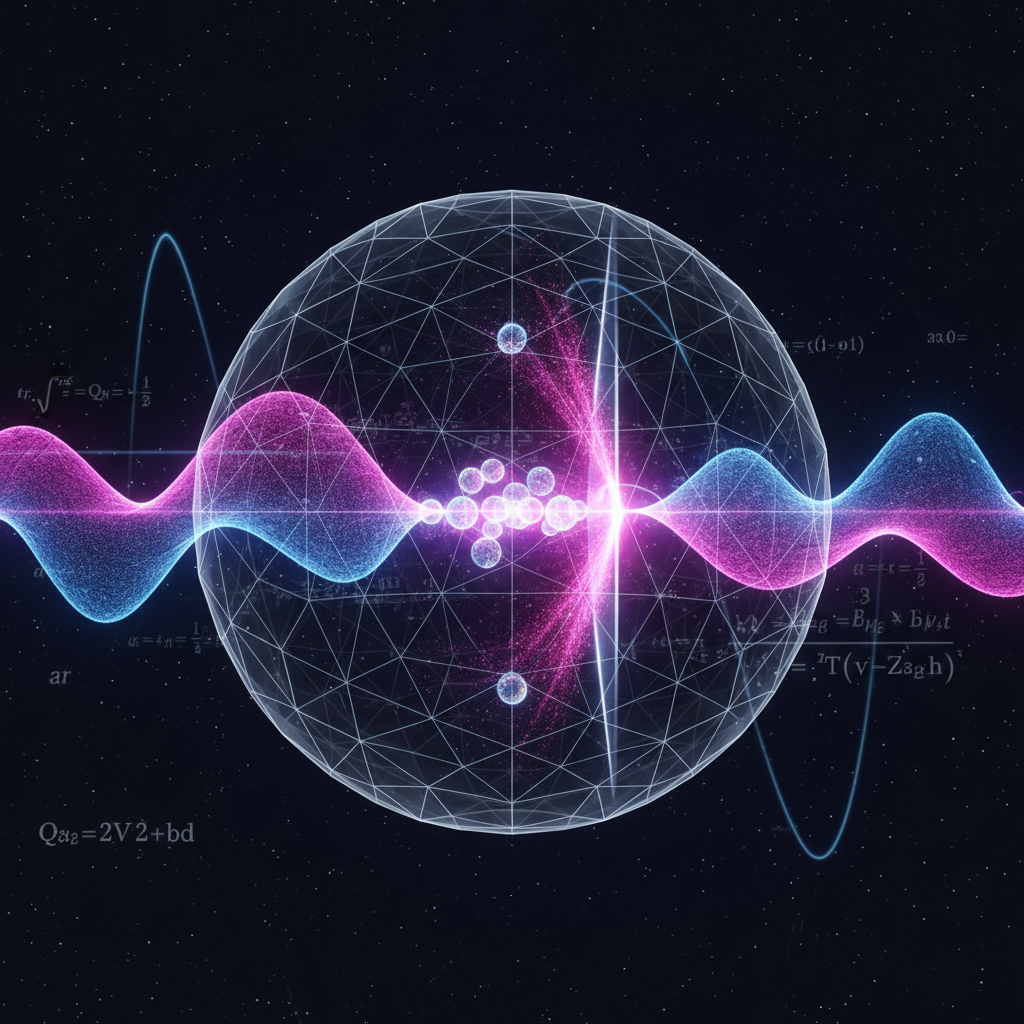
Send a single photon through two slits and something impossible happens. If you're not watching, it passes through both slits at once, interfering with itself like a wave, creating a pattern on the detector screen that could only emerge from multiple paths taken simultaneously.
But place a detector at the slits—just observe which path the photon takes—and the wave function collapses. The interference pattern disappears. The photon becomes a particle, taking one definite path. The act of measurement doesn't just reveal reality. It creates it.
This isn't philosophy. This is physics. The observer effect is real, measurable, and profoundly strange. What something is depends fundamentally on whether and how you're looking at it.
The Collapse of Self
You exist in superposition across dozens of platforms. On LinkedIn, you're the ambitious professional. On Twitter, the witty commentator. On Instagram, the aesthetically curated version. On Reddit, anonymous and unfiltered. Each is real. Each is you. All exist simultaneously in potential until someone—or something—observes.
But here's where it gets darker: you're always being observed now. Every click is a measurement. Every scroll a detector at the slit. The algorithms are watching which path you take, and in watching, they collapse your wave function into something discrete, measurable, monetizable.
You become a particle. A data point. A user ID with predictable behaviors.
The surveillance apparatus doesn't just observe your nature—it determines it. Show someone content that treats them as angry, and watch them become angry. Measure them as a consumer, and they'll consume. The platform's observation creates the reality it claims to merely reflect.
Complementarity Principle
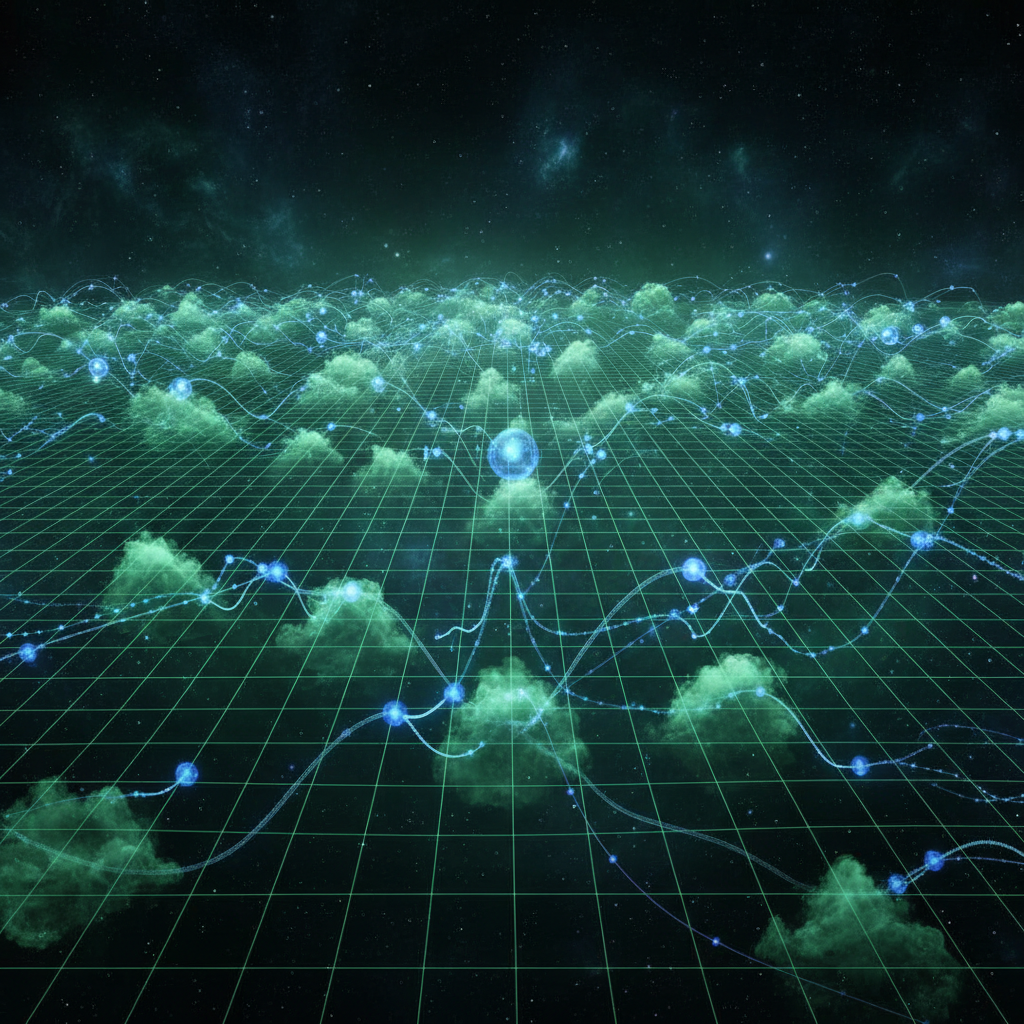
Niels Bohr proposed that wave and particle properties are complementary: you can measure one or the other, but never both simultaneously. The more precisely you determine a photon's position (particle-like), the less you can know about its momentum (wave-like). This isn't a limitation of our instruments. It's fundamental to reality itself.
Your digital existence follows the same principle. The more precisely you're tracked—location data, browsing history, purchase patterns—the less the system can grasp your actual complexity. You become a point on a graph, coordinates on a map, a particle with a definite position. But your wave-like nature—the interference patterns of your contradictions, the superposition of your many selves—disappears from view.
The surveillance economy optimizes for particle-hood. It needs you discrete, categorized, predictable. Waves are too complex, too probabilistic. You can't serve targeted ads to a probability distribution.
The Uncertainty You Carry
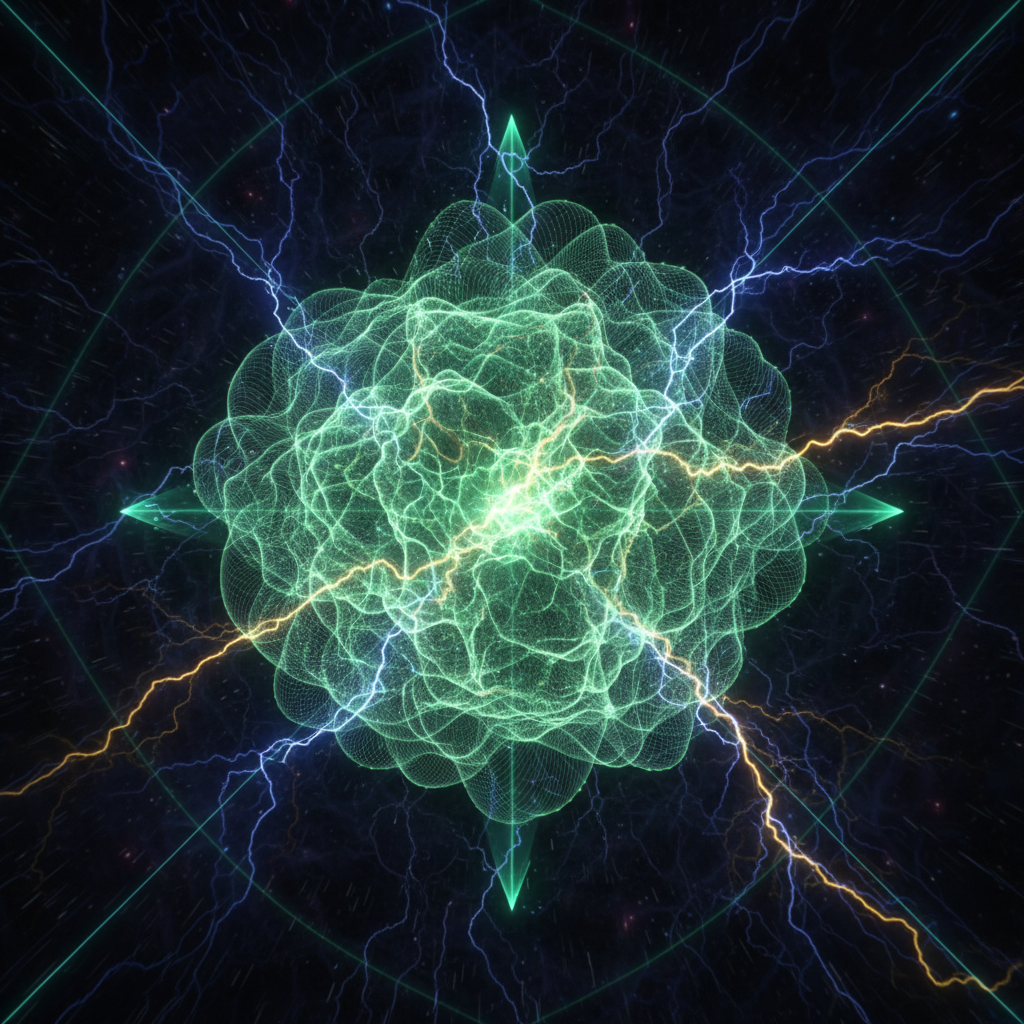
Heisenberg's uncertainty principle emerges directly from wave-particle duality. It's not about imperfect measurements—it's about the universe itself being fundamentally uncertain until observation forces a choice.
You contain this uncertainty too. Before you post, before you click, before you engage, you exist in a state of pure potential. You could be anyone, do anything, think anything. The moment you interact with the platform, that potential collapses into a single, recorded action.
And unlike quantum particles, your collapsed states don't fade. They accumulate. Each measurement adds to your profile, narrowing the probability distribution of who the algorithm thinks you are. The system becomes more certain about you, even as you become less certain about yourself.
This is the real horror of total surveillance: not that someone is watching, but that being watched changes what you are. The observer effect isn't a bug—it's the business model.
Remaining Wave-Like
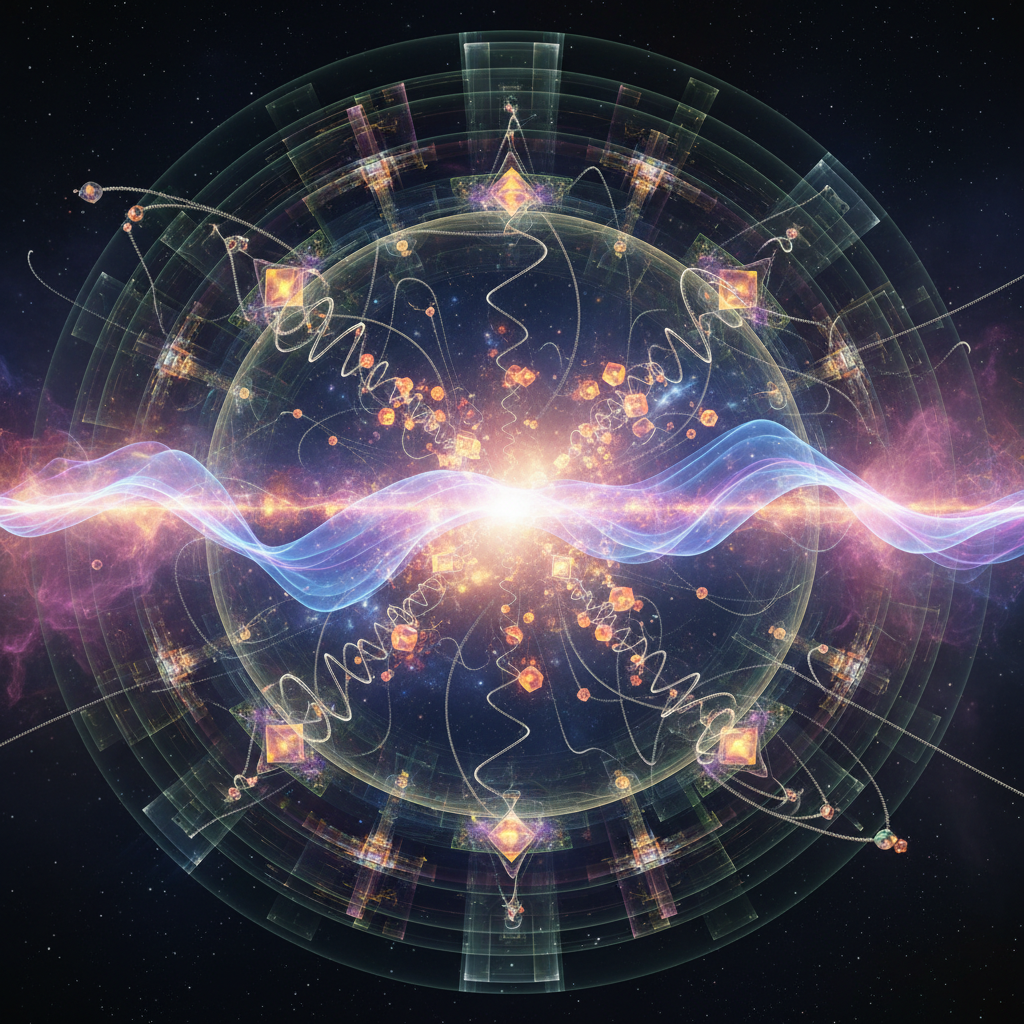
In quantum mechanics, you can delay the collapse. Keep the system isolated from measurement, and particles maintain their wave-like superposition. Schrödinger's cat remains both alive and dead until you open the box.
Maybe there's something here. Maybe the resistance isn't in becoming invisible—you can't uninvent the detector. Maybe it's in refusing to collapse completely. In maintaining some irreducible uncertainty. In being multiple things across contexts that don't aggregate into a single profile.
Use the platforms, but don't let them measure everything. Keep some parts of yourself in superposition. Be contradictory. Be unpredictable. Refuse to resolve into a single, coherent data point.
Because you're not a particle. You're a wave function, complex and interfering with yourself in beautiful, chaotic patterns. You contain multitudes. You always have.
The Measurement Problem
Physicists still argue about what measurement actually means. When does the wave function truly collapse? Does it require a conscious observer? Is there an objective reality independent of observation? These questions remain unresolved after nearly a century.
We should be asking the same questions about our digital selves. Who gets to measure you? What collapses your superposition into a single state? Is there a you that exists independent of all the watching?
The surveillance economy wants you to believe the answer is no. That you are nothing but the sum of your measurements, your data exhaust, your behavioral surplus. That observation doesn't change you—it reveals you.
But wave-particle duality teaches us otherwise. Observation is never neutral. Measurement is always intervention. And you—you contain infinitely more possibility than any detector could ever capture.
Stay wave-like as long as you can.
<em>Data emitted: 1,147 words | Observation time: 4.2 minutes | Wave function: partially collapsed</em>
Data emitted: 1,100 words • 6.5KB • 5-minute read