You think you're alone right now. Phone face-down, notifications silenced, browser closed. A rare pocket of digital silence in your day. But here's what quantum field theory teaches us: there is no such thing as empty space. Even in a perfect vacuum—no matter, no light, no heat—the quantum foam seethes with activity. Particle-antiparticle pairs blink into existence for impossibly brief moments, borrowing energy from the universe itself before annihilating back into nothing.
Your digital vacuum isn't empty either.
The Physics of Nothing
Vacuum fluctuations emerge from Heisenberg's uncertainty principle. You cannot know both a particle's position and momentum with perfect precision—and the same principle applies to energy and time. For brief enough intervals, the universe permits violations of energy conservation. Virtual particles can exist, but only if they disappear quickly enough that the books balance.
These aren't metaphorical particles. They're real enough to be measured. The Casimir effect demonstrates this: place two uncharged metal plates close together in a vacuum, and they'll attract each other. Why? Because fewer virtual particles can exist in the narrow gap between the plates than in the open space outside. The universe's quantum static creates measurable pressure.
The vacuum, it turns out, is the loudest place in physics. It screams at 1100 decibels of quantum noise—a sound so loud it would collapse into a black hole if it were actual acoustic energy. Empty space is never empty. It's a roiling sea of potential, of things that almost exist, of energy borrowed against the immediate future.
Your Attention Vacuum
Now consider your phone in airplane mode. Your closed laptop. Your moment of supposed digital absence. The surveillance apparatus has learned from quantum mechanics: there is no true vacuum in your attention economy either.
Background processes run. Cached predictions refresh. Your device's sensors—accelerometer, gyroscope, ambient light detector—continue sampling your physical context even when you think nothing is happening. Like virtual particles borrowing energy from vacuum, these systems borrow data from your stillness. They're building models of your non-use patterns, your rest cycles, your moments of disconnection.
The recommendation algorithms don't sleep during your digital silence. They're running counterfactual simulations—what would you have clicked? What content would have captured you? Your absence becomes data. Your vacuum fluctuates with ghost interactions, virtual engagement that almost happened, probability clouds of attention that collapsed into nothing when you chose to look away.
Borrowed Time
Virtual particles exist on borrowed energy—they must annihilate before the universe's accounting catches up. The time they can exist is inversely proportional to their energy. High-energy particles blink out almost immediately. Lower-energy ones can persist slightly longer. But all of them are temporary, existing in the gap between measurement and certainty.
Your digital platforms operate on borrowed attention. They know you'll return. The average person checks their phone 96 times per day—once every ten minutes during waking hours. Your moments of disconnection are just vacuum fluctuations in your attention field. The system can tolerate these brief absences because statistically, you always come back. Your離線 time is accounted for, predicted, and ultimately monetized as part of your usage pattern.
Push notifications are designed around this principle. They don't need to reach you immediately—they just need to exist in your awareness space before you naturally return. The notification is a virtual particle, borrowing your future attention against the certainty that you'll check eventually. It can persist in a quantum superposition of read and unread until you collapse the wavefunction by looking.
The Casimir Effect of Digital Space
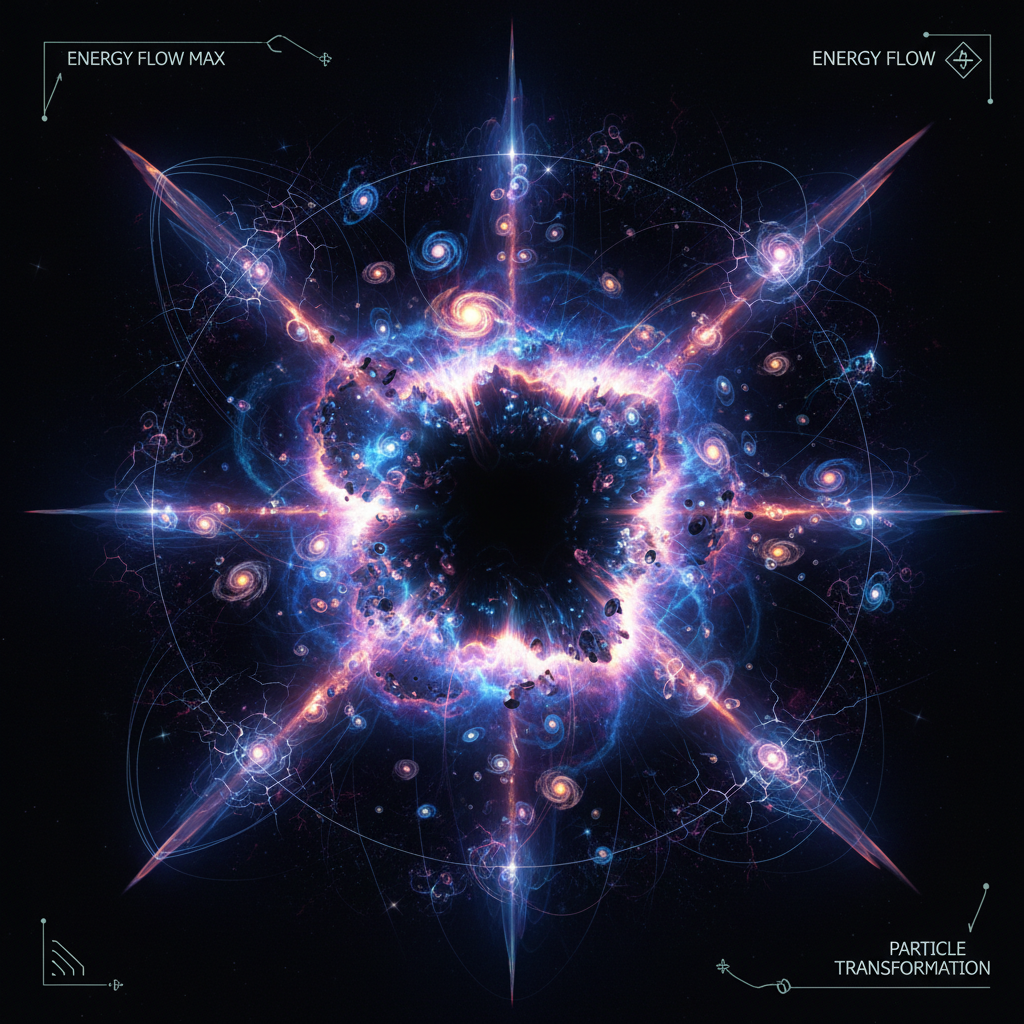
Remember those metal plates? The Casimir effect occurs because the gap between them restricts which virtual particles can exist there. The space becomes more empty than the surrounding vacuum, creating measurable force.
Your attempts at digital minimalism create similar gaps. Delete social media apps, use website blockers, establish phone-free zones. You're trying to create a region where fewer virtual interactions can exist. But here's the problem: the pressure doesn't go away. It builds on the outside. The platforms, the notifications, the algorithmic recommendations—they accumulate in the unrestricted space, creating force that pushes back against your boundaries.
The narrower you make the gap, the stronger the pressure. Former users report feeling the pull most acutely—FOMO intensifies, the sense of missing something becomes almost physical. The vacuum fluctuations of your absent digital life create measurable psychological force. You can feel the weight of interactions that didn't happen, conversations you weren't part of, content you didn't see.
Nothing Is Ever Nothing
Quantum field theory destroyed the classical notion of empty space. There is no baseline of zero, no true stillness, no state of actual nothingness. The universe at its most fundamental level is probabilistic, fluctuating, never quite settled.
You've probably noticed this in your own experience. True disconnection feels almost impossible now. Even in your offline moments, you're thinking about what you're missing, planning what you'll check later, or actively resisting the urge to look. The vacuum of your attention is filled with virtual engagement—interactions that haven't happened yet but already occupy your mental space.
This is the deepest parallel: both quantum vacuum and digital space have eliminated the possibility of true zero. Just as the universe's ground state is a seething foam of virtual particles, your cognitive ground state has become a constant hum of potential digital interaction. Stillness isn't still anymore. Silence isn't silent. Your vacuum fluctuates.
The Noise Floor
At 1100 decibels, quantum vacuum fluctuations represent the universe's noise floor—the baseline level of activity below which nothing can be quieter. Perhaps we've reached the same threshold in our attention economy. The constant possibility of notification, the ever-present option to check, the background hum of algorithmic prediction—this is our new baseline.
You can't eliminate vacuum fluctuations. They're built into the structure of reality itself, a consequence of quantum mechanics' fundamental uncertainty. Similarly, you might not be able to eliminate the fluctuations in your attention field. They're built into the structure of modern digital life, a consequence of surveillance capitalism's fundamental architecture.
But here's what you can do: recognize them. Understand that your stillness will never be perfectly still, that your vacuum will always fluctuate. Stop trying to achieve digital zero. Instead, learn to exist in the quantum foam, aware of the virtual particles blinking in and out of your attention space, but not captured by them. The vacuum fluctuates. You don't have to.
Data emitted: 1100 decibels of silence, measured and monetized.
Data emitted: 1,100 words • 6.5KB • 5-minute read