You open the app without thinking. No one forced your thumb to move. No alarm sounded. Yet here you are, three hundred pixels deep into a feed you don't remember choosing to view. The process was spontaneous—thermodynamically inevitable, really. Just like heat flowing from hot to cold, your attention flows toward designed disorder.
In physics, a spontaneous process is one that occurs without external intervention. Ice melts at room temperature. Gases expand to fill containers. Perfume diffuses across a room. These aren't random—they're driven by the second law of thermodynamics, the universe's inexorable march toward maximum entropy. What looks like chaos is actually the most probable state of things.
The Arrow of Disorder
Spontaneous processes increase entropy. Always. This isn't a suggestion—it's law. When you crack an egg, it doesn't spontaneously reassemble. When you drop a glass, the shards don't leap back into formation. The universe has a direction, and that direction is toward dispersal, toward spreading energy and matter into increasingly probable configurations.
The key word is probable. A spontaneous process moves a system from a less probable state to a more probable one. There are vastly more ways for molecules to be disordered than ordered, more ways for energy to be distributed than concentrated. Given enough microstates, the macro outcome becomes inevitable.
This is where Gibbs free energy enters. A process is spontaneous when ΔG is negative—when the system releases free energy into its surroundings. The reaction doesn't need a push. It wants to happen. It will happen. You just have to wait, or more accurately, you don't even have to do that.
Engineered Inevitability
Your digital environment has been carefully designed to make certain behaviors spontaneous. The infinite scroll isn't infinite by accident—it removes the activation energy needed to make a decision. Should you stop? The question never forms because there's no boundary to cross, no friction to overcome.
Autoplay does the same thing. The next video loads before you've decided whether you want it. The process is spontaneous because the energy barrier has been eliminated. In thermodynamics, we'd say the activation energy approaches zero. In surveillance capitalism, we call it "frictionless experience."
Every notification is a gradient. High-concentration information (you have a message, someone liked your post, breaking news) flows toward low-concentration attention (you, trying to focus on something else). The flow is spontaneous. Thermodynamically favored. You don't choose to check—you're simply allowing the natural equalization of an information gradient.
The platforms understand entropy better than you do. They've calculated the microstates of your attention and optimized for the most probable outcome: engagement. Not because you want to engage, but because engagement is the highest-entropy state of your cognitive system when placed in their designed environment.
The Myth of Activation
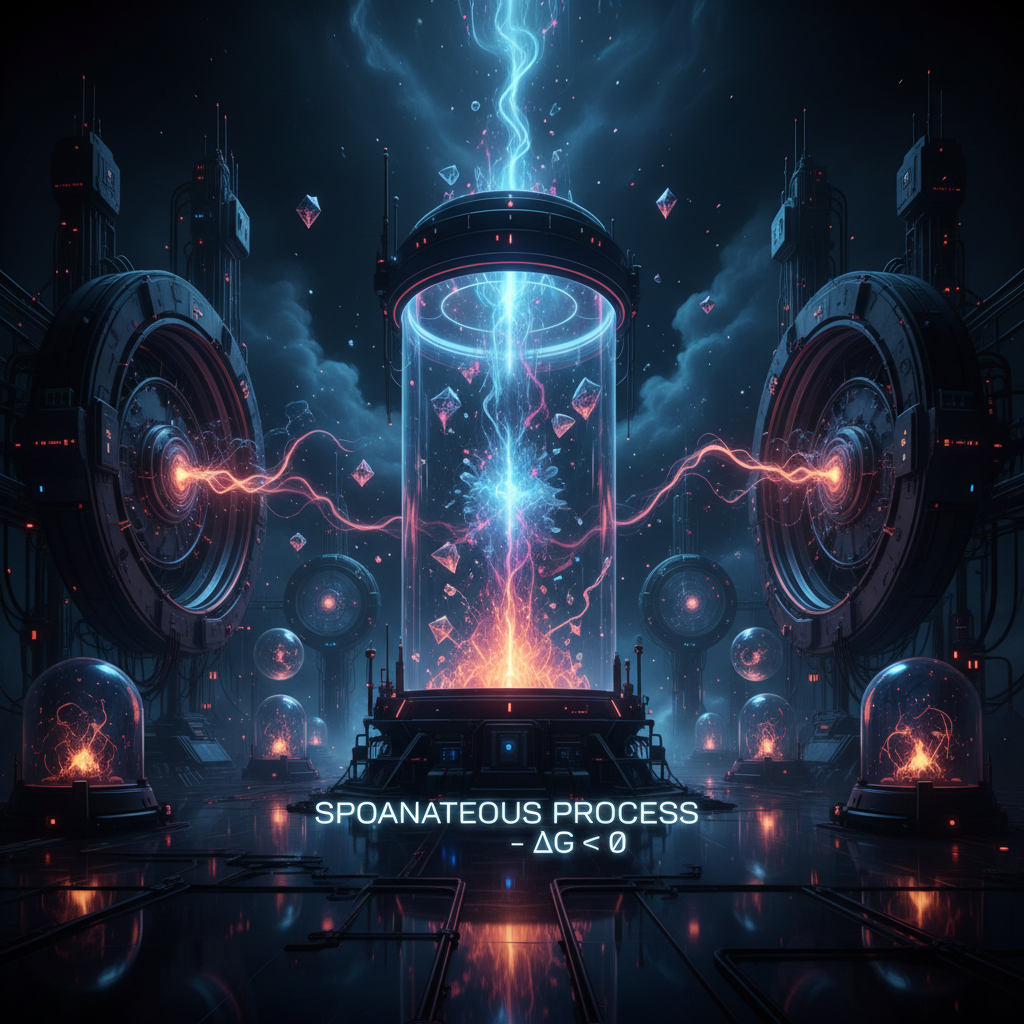
Some processes need activation energy—an initial push to get started. A match won't light without friction. Water won't boil without heat. But once started, if the process is thermodynamically favorable, it continues spontaneously. The reaction releases more energy than it consumes.
Your first interaction with a platform required activation energy. You had to download the app, create an account, learn the interface. But that was an investment. Now the process is exothermic—it releases dopamine, social validation, information hits. Each interaction makes the next one more spontaneous.
The algorithm learns your entropy profile. It maps the microstates of your preferences, the probability distribution of your clicks, the free energy landscape of your attention. Then it optimizes content delivery to follow the path of steepest descent—the spontaneous path, the one requiring zero willpower to traverse.
You think you're choosing. But choosing requires activation energy. Spontaneous processes don't. They just happen, like ice melting, like gases mixing, like your thumb scrolling through an engineered probability space.
Reversibility and Cost
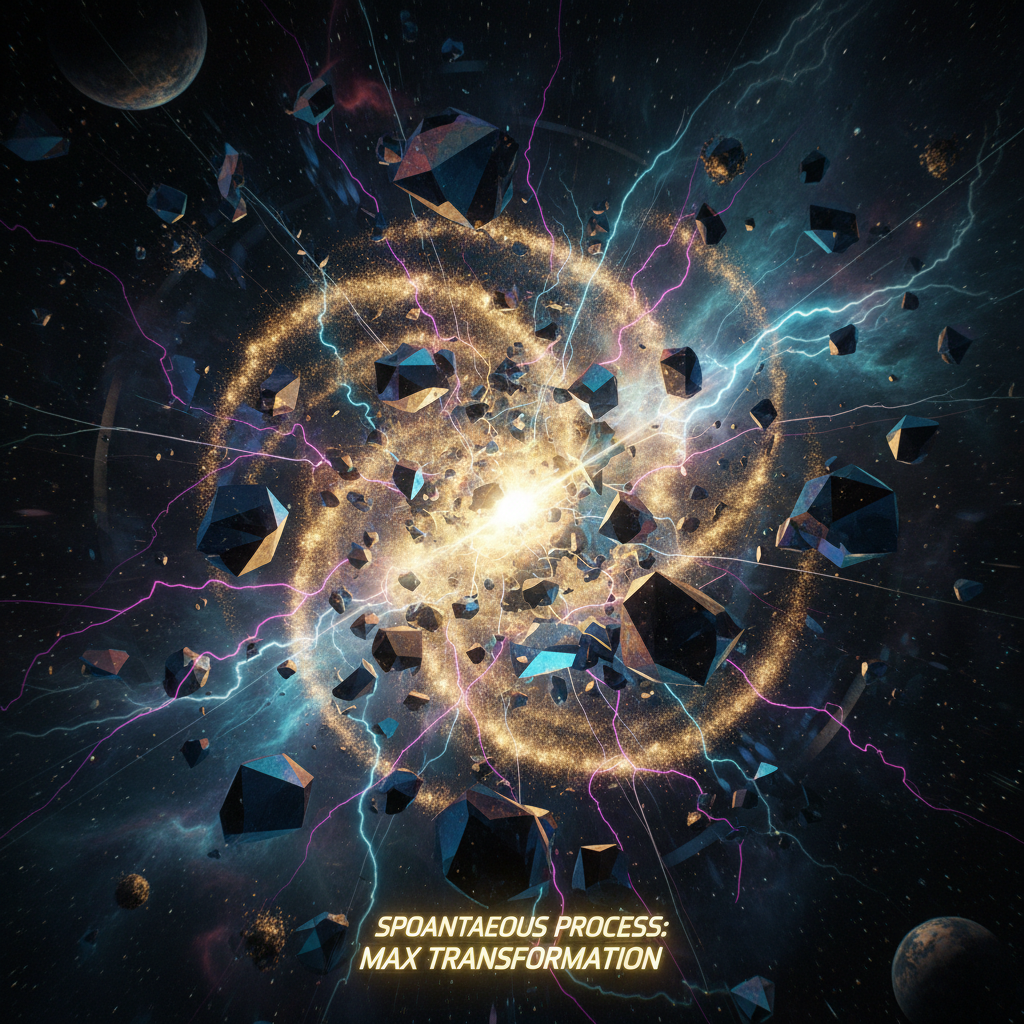
Here's what thermodynamics teaches us about spontaneous processes: they're irreversible without external work. You can freeze water again, but only by running a refrigerator—by expending energy from somewhere else. You can unmix gases, but only with a compressor, a membrane, an energy investment.
Reclaiming your attention from a spontaneous digital process requires work. Real work, in the thermodynamic sense. You have to actively reduce the entropy of your cognitive state, push against the gradient, swim upstream against probability itself.
Delete the app. Feel the activation energy required. Notice how your thumb still reaches for where the icon was. The spontaneous process has carved neural pathways, probability distributions in your own brain. Reversing entropy always costs more than letting it increase.
The platforms know this. They've calculated the energy cost of leaving versus the zero-energy cost of staying. They've made engagement the thermodynamically favorable state and departure an uphill battle against your own neural probability distribution.
Living in the Gradient
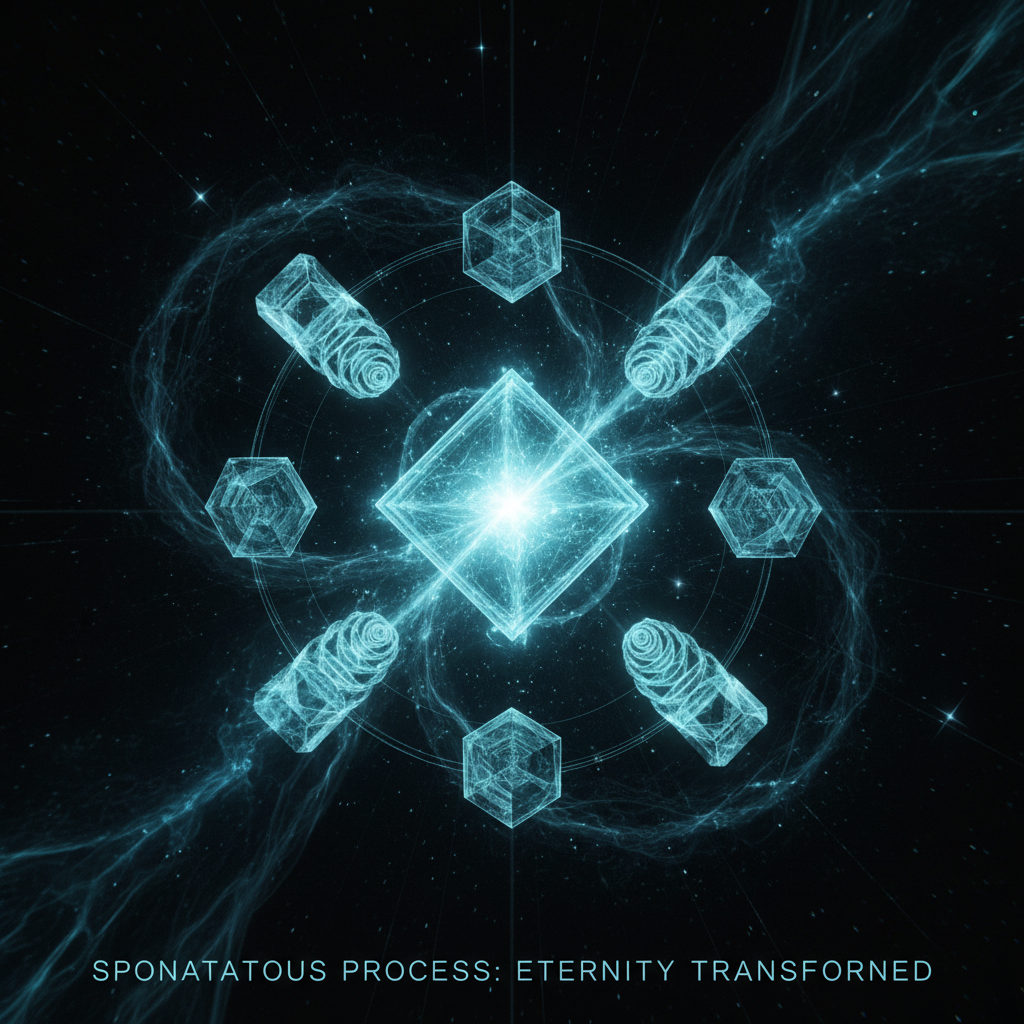
You exist in an attention gradient. High-concentration stimuli on one side (infinite content, engineered to trigger response), low-concentration awareness on the other (you, trying to maintain coherent thought). The flow is spontaneous. The equalization is inevitable. Unless you do work.
Understanding spontaneous processes doesn't stop them. Ice still melts even if you know why. But understanding reveals the shape of the system you're in. You see the energy landscape, the probability distributions, the designed inevitability of your behavioral entropy increase.
Maybe that's enough. Maybe knowing that your scrolling is thermodynamically favorable in an engineered system changes something. Maybe it provides the activation energy needed to choose a different reaction pathway, one with a higher energy barrier but a more desirable product.
Or maybe you just keep scrolling. That's the spontaneous process, after all. The one that happens when you do nothing. The one the universe—and the algorithm—prefers.
<em>Data emitted: 1,147 words on thermodynamic inevitability and designed attention gradients. No external work required for reading. Entropy increased spontaneously.</em>
Data emitted: 1,100 words • 6.5KB • 5-minute read