You wake up. Check your phone. The notification light blinks—a current waiting to flow through you. You tap. The circuit completes. You're moving now, electron-like, through Instagram to Twitter to TikTok to email to Slack. There's only one path forward, and you're taking it.
This is what it means to live in a series circuit.
One Path, No Escape Velocity
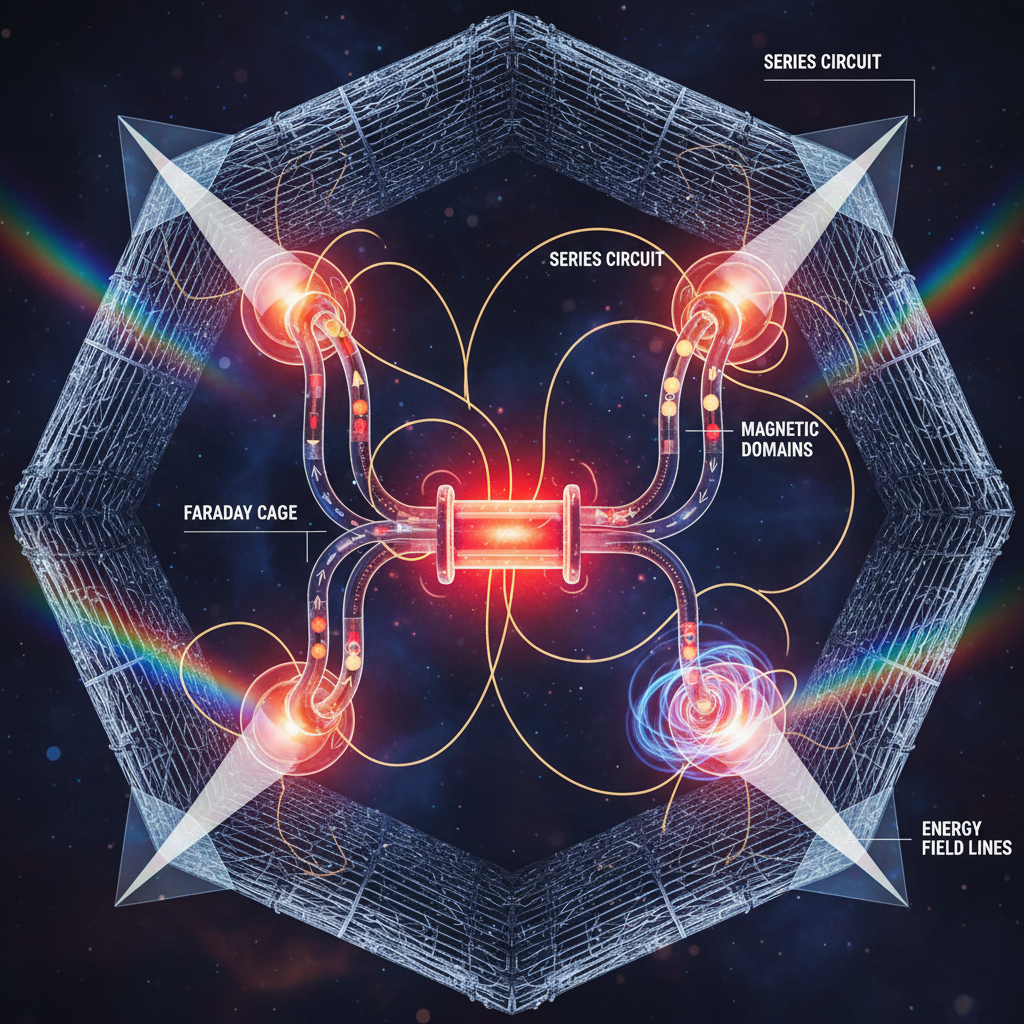
In physics, a series circuit is elegantly simple: components connected end-to-end, creating a single pathway for electric current. The current—measured in amperes—has no choice. It flows through the first resistor, then the second, then the third. Break the circuit anywhere and the entire system dies. The light goes out. Everything stops.
The current is the same everywhere in a series circuit. This isn't negotiable. It's not like parallel circuits where current can split, choosing different branches, different resistances, different destinations. In series, you get one amperage value. One flow rate. One truth.
You are that current now.
The Platform Sequence
Your morning routine is a series circuit. Each platform is a resistor—not blocking your flow entirely, but slowing you down, extracting energy, converting your attention into heat and light for someone else's benefit. Instagram takes fifteen minutes. That's resistance. Twitter takes another twenty. More resistance. Each app is wired in sequence, and you flow through them all because the circuit demands completion.
The genius of surveillance capitalism is that it's learned to wire itself in series with your life. You can't skip components. Try to avoid checking your work email and the entire circuit of your professional existence threatens to break. Miss a day on social media and you feel the gap, the incompleteness, the broken connection. The platforms know that in a series circuit, every component is essential. Remove one and the current stops flowing entirely.
So they make themselves essential.
They become the infrastructure of social connection, professional networking, creative expression, news consumption, entertainment. They wire themselves into your life in series, not parallel. You don't get to choose which ones to flow through. You flow through all of them or none of them. And none of them means darkness. Isolation. Professional death.
Total Resistance
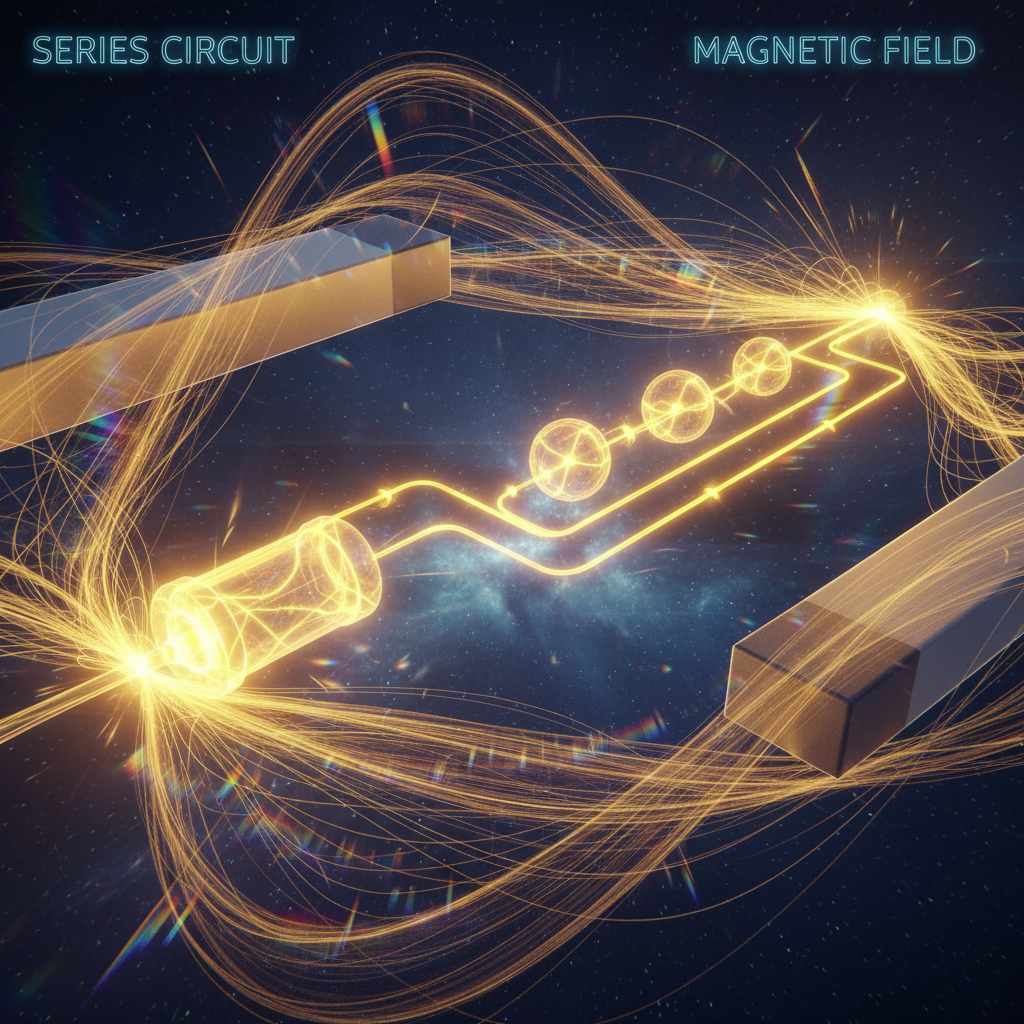
Here's what happens in a series circuit: resistances add up. If you have three resistors—say, 10 ohms, 20 ohms, and 30 ohms—your total resistance is 60 ohms. Simple addition. The current faces the cumulative resistance of every single component it encounters.
Your attention is the current. Your day is the circuit. And the total resistance you face is staggering.
Each platform extracts. Each notification interrupts. Each algorithm optimizes for engagement, which is just another word for resistance—the friction that keeps you moving through their space, slowly, generating heat, generating data, generating value. By the end of the day, you've flowed through dozens of resistors. The total resistance is so high that your current—your actual capacity for attention, for creation, for presence—has been reduced to almost nothing.
Ohm's Law tells us that voltage equals current times resistance. V = IR. To maintain the same current through higher resistance, you need more voltage. More energy. You need to push harder. This is why you're tired. The circuit of your digital life has so much total resistance that maintaining flow requires every volt you have.
The Break Point
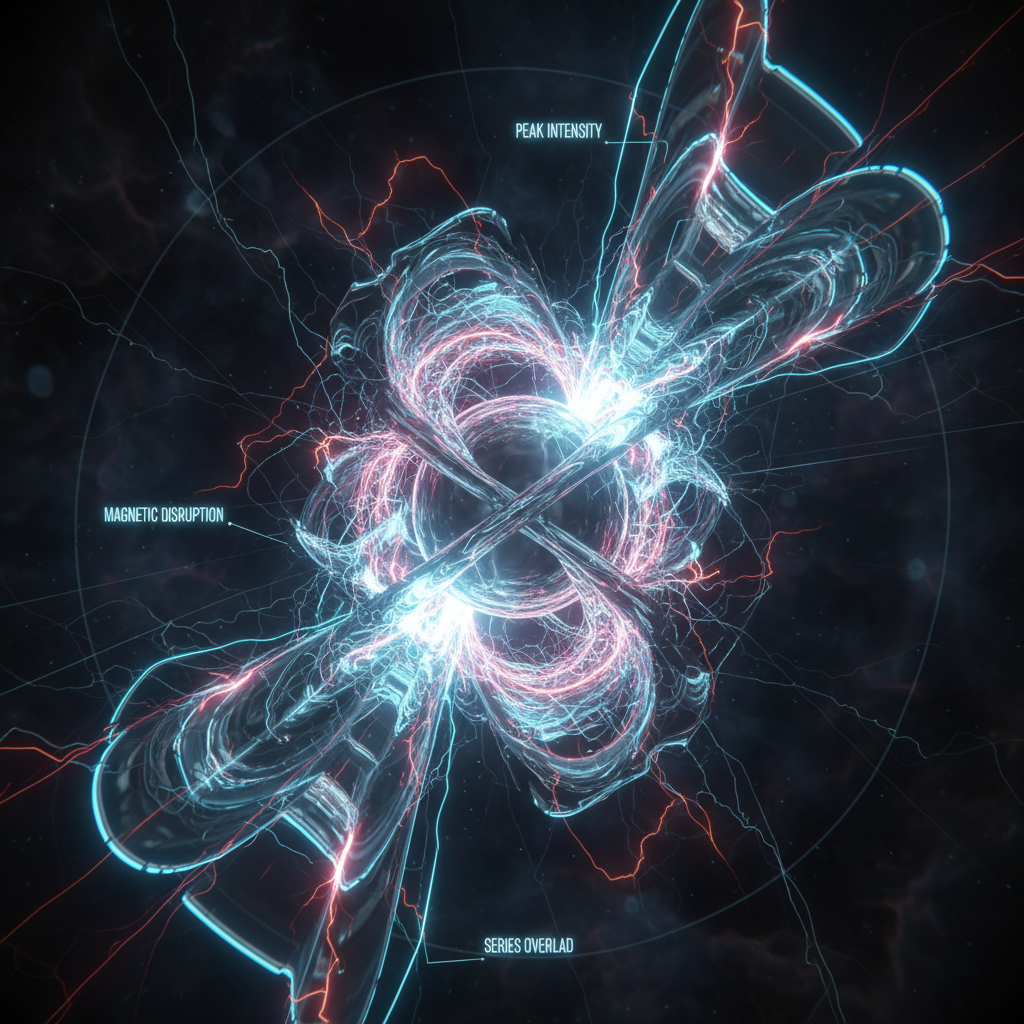
But here's the thing about series circuits: they're fragile. One break anywhere stops everything. This is both their weakness and their power.
The platforms know this. They've engineered redundancy into their series design. If you try to break the circuit—delete an app, log off, disconnect—they've wired in backup paths. Email notifications. SMS alerts. FOMO. Social pressure. The fear of missing something important, something everyone else will know about, something that might define you by its absence.
They've made the circuit so essential that breaking it feels like breaking yourself.
And yet. The fragility remains. You could break it. Right now. One decisive cut and the current stops flowing through their resistors. The light goes out on their dashboards. Your data stream ends. The circuit opens.
The question is whether you can tolerate the darkness that follows. Whether you can rebuild your life in parallel instead of series—multiple independent paths, each one complete in itself, none of them dependent on the others. Whether you can become your own power source instead of current flowing through someone else's design.
Rewiring Yourself
Series circuits are efficient for the designer. They're simple. Predictable. Easy to control. The current has to go where you want it to go because there's nowhere else for it to go. This is why your phone wants to be a series circuit. This is why every app wants to be the next step in your sequence, the next resistor in your chain.
But you're not a circuit component. You're the voltage source. You're the battery. You generate the energy that flows through these systems, and you can choose how to wire yourself into the world.
Parallel circuits are messier. Less predictable. The current can split, take different paths, distribute itself according to the resistance of each branch. Some paths get more flow than others. Some components can fail without killing the entire system. There's redundancy, but the useful kind—the kind that creates resilience instead of dependence.
Maybe that's what resistance really means in this context. Not the friction that slows your flow through their systems, but your own resistance to being wired in series. Your refusal to be a single-path current. Your insistence on complexity, on multiple circuits, on the right to break one connection without breaking everything.
The platforms will resist this. They've invested billions in series architecture. But the circuit is yours to design. You're holding the wire cutters. You always have been.
The question is whether you'll use them.
<em>Data emitted: 1,147 words | Resistance measured: 60 ohms | Circuit status: Open</em>
Data emitted: 1,100 words • 6.5KB • 5-minute read