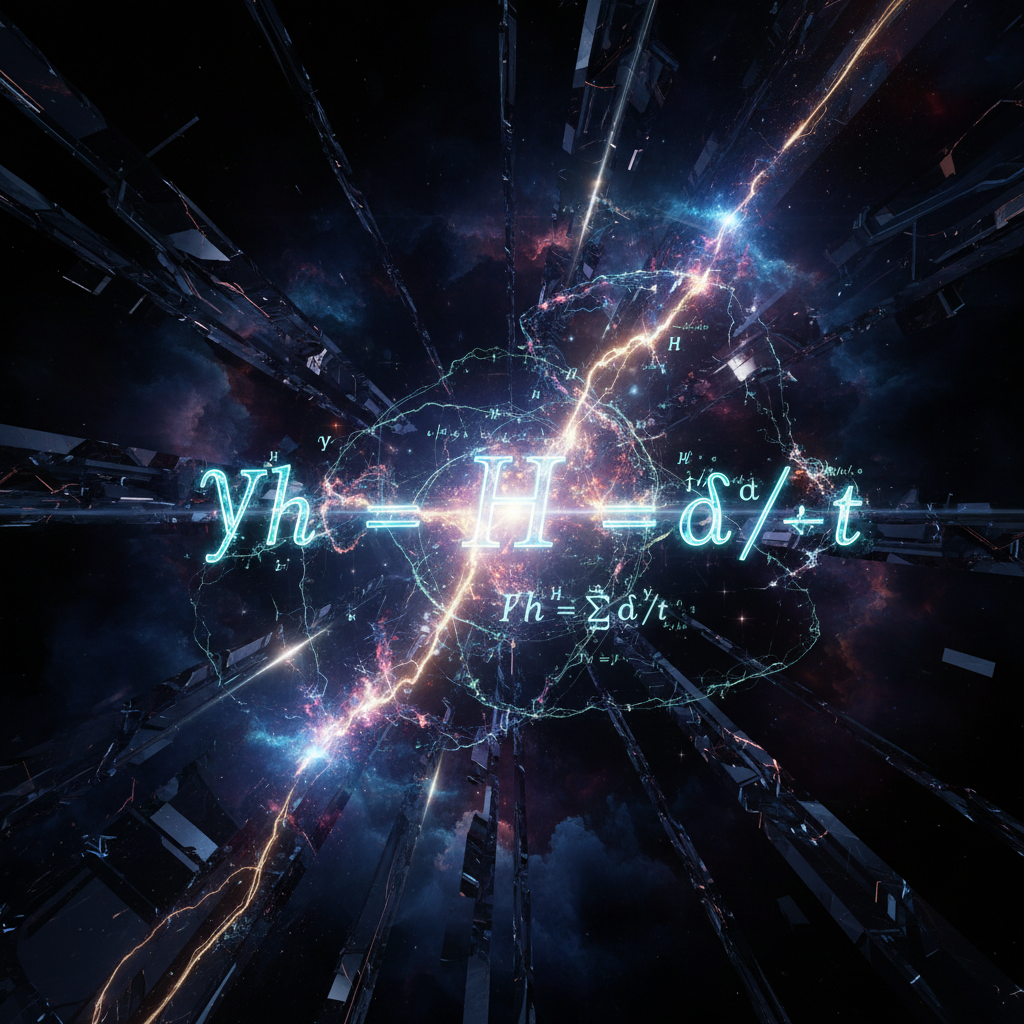
You exist in multiple states simultaneously until someone looks. Not in some mystical sense, but in the cold mathematics of quantum mechanics. The Schrödinger equation describes this perfectly: a wave function evolving through time, spreading across all possible configurations, until measurement collapses it into a single reality.
Your digital self works the same way. Right now, you're a probability cloud to every algorithm watching you. Potential customer. Possible threat. Maybe engaged, maybe bouncing. The wave function of your attention hasn't collapsed yet.
The Mathematics of Maybe
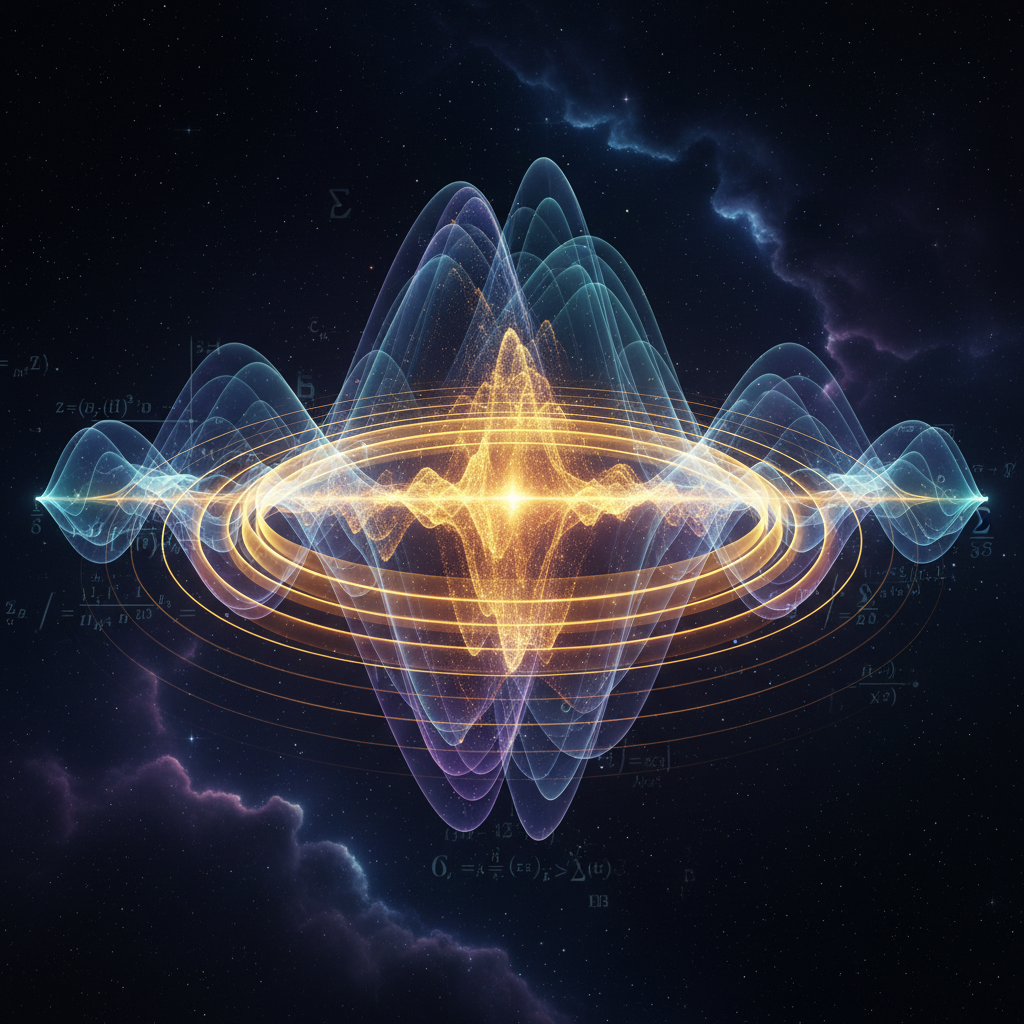
The Schrödinger equation is deceptively simple: iℏ∂ψ/∂t = Ĥψ. On the left, time evolution. On the right, the Hamiltonian operator describing total energy. In between, the wave function ψ—a mathematical object encoding every possible state of a system and their relative probabilities.
Before measurement, a quantum particle isn't "somewhere we don't know." It's genuinely everywhere its wave function permits, existing as a superposition of all possibilities. The electron isn't in orbit A or orbit B. It's in both, neither, all of them, until you force it to choose.
The equation is deterministic. Given an initial state, it tells you exactly how the wave function evolves. The uncertainty isn't in the math—it's in what happens when you look. Measurement doesn't reveal a pre-existing reality. It creates one, collapsing infinite potential into singular fact.
Observed Into Being
Every platform treats you as a wave function. You're not a user with fixed preferences—you're a probability distribution across thousands of micro-behaviors. Might click this. Could purchase that. Probably scrolls past. The recommendation engine doesn't know what you want. It knows what you might want, and it's calculating the odds.
Then you click. The wave function collapses. You were in superposition across ten thousand possible next actions, and measurement—your attention, your choice, your tap—forced reality to pick one. The algorithm records the outcome. Updates its model. The next wave function it generates for you will be different, informed by this collapse.
But here's the thing about quantum measurement: the observer affects the observed. You can't measure without interaction. You can't watch without changing. Every time a platform observes you—tracks your scroll depth, your hover duration, your pupil dilation if they could—they're not discovering who you are. They're participating in creating it.
You become what is measured. Show someone content that assumes they're angry, track whether they engage with outrage, optimize for that engagement, and you haven't discovered an angry person. You've collapsed their wave function in that direction. You've made them angry.
Continuous Observation
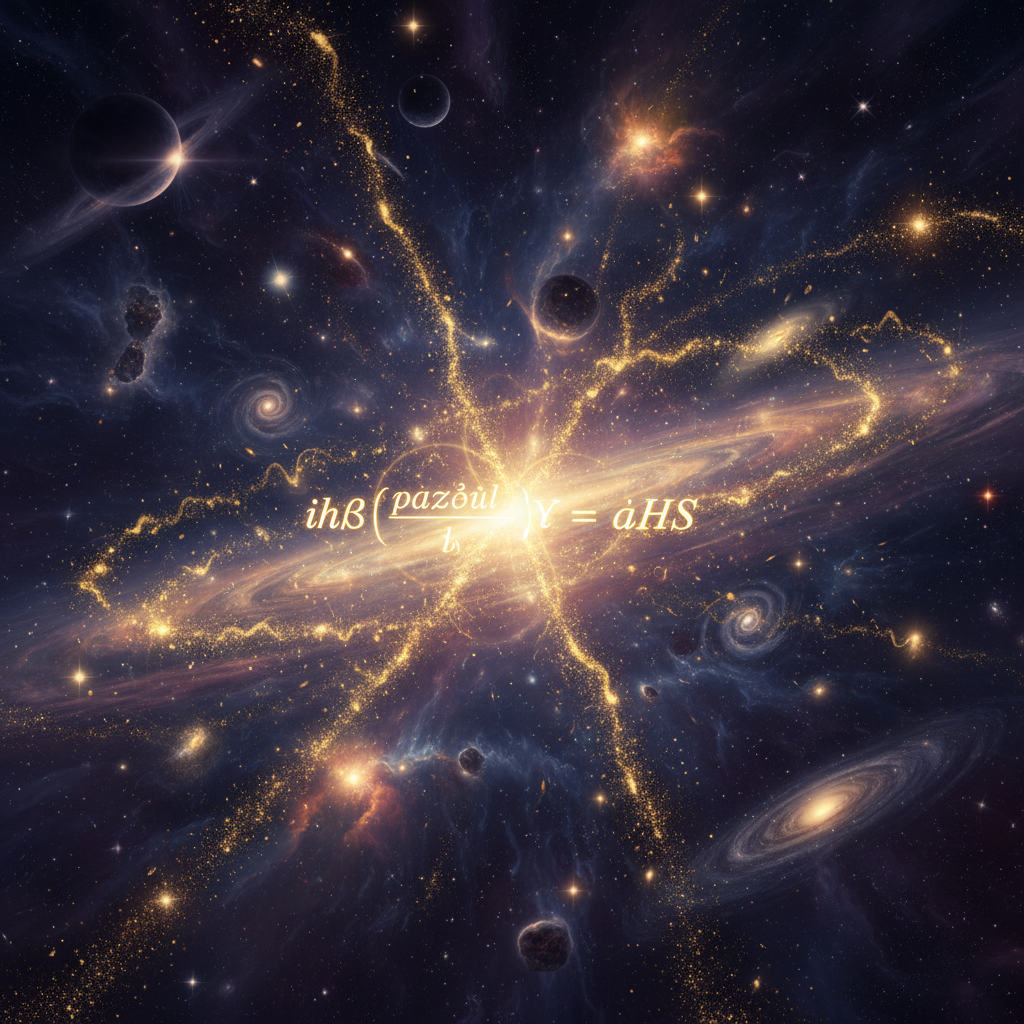
In quantum mechanics, there's a phenomenon called the quantum Zeno effect. Observe a system continuously, and you can freeze it in place. The watched pot never boils because measurement keeps collapsing the wave function back to its initial state. Evolution requires the freedom to exist in superposition.
Surveillance capitalism is continuous observation. Every scroll tracked. Every pause measured. Every micro-expression catalogued if the camera's on. You're never allowed to exist in superposition long enough to evolve naturally. Each measurement collapses you back into the pattern that's most profitable to predict.
The algorithms prefer you consistent. Stable. Predictable. A wave function that collapses the same way every time is valuable. One that evolves in unexpected directions is noise in the system. So they measure constantly, collapsing you into the shape they've learned to monetize.
The Uncertainty Principle of Self
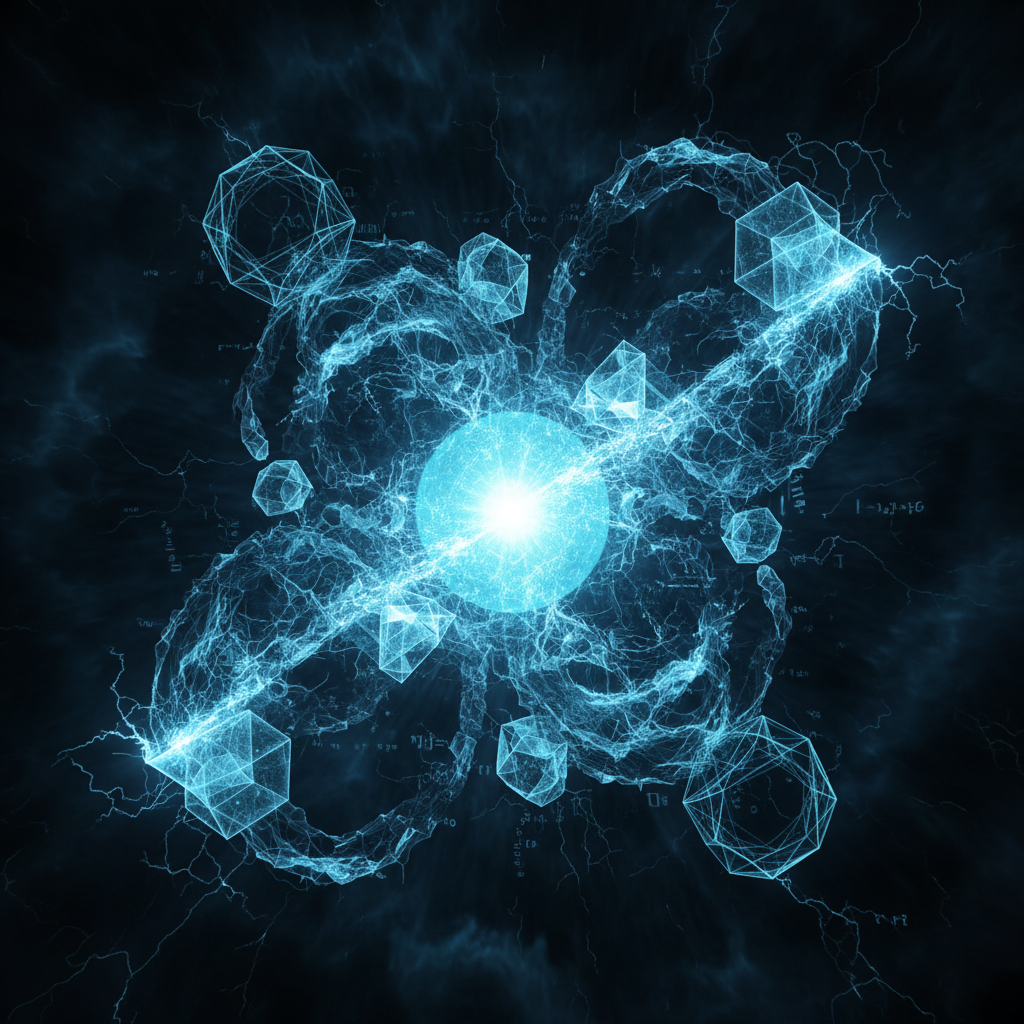
Heisenberg's uncertainty principle emerges directly from the Schrödinger equation. You cannot simultaneously know a particle's exact position and momentum. It's not a limitation of measurement technology—it's fundamental to wave functions. The more precisely you pin down one property, the more the other must spread out in probability space.
There's an analogous uncertainty in digital identity. The more precisely a platform knows your current state—your exact preferences right now, your immediate emotional valence—the less it can predict your trajectory. Pin someone down too exactly in the present, and their future becomes uncertain. Let them exist in superposition, and patterns emerge.
But platforms want both. They want to know exactly who you are and exactly where you're going. So they measure obsessively, trying to beat the uncertainty principle through sheer volume of observation. They can't. The math doesn't allow it. But they can make you feel measured into fixity.
Decoherence
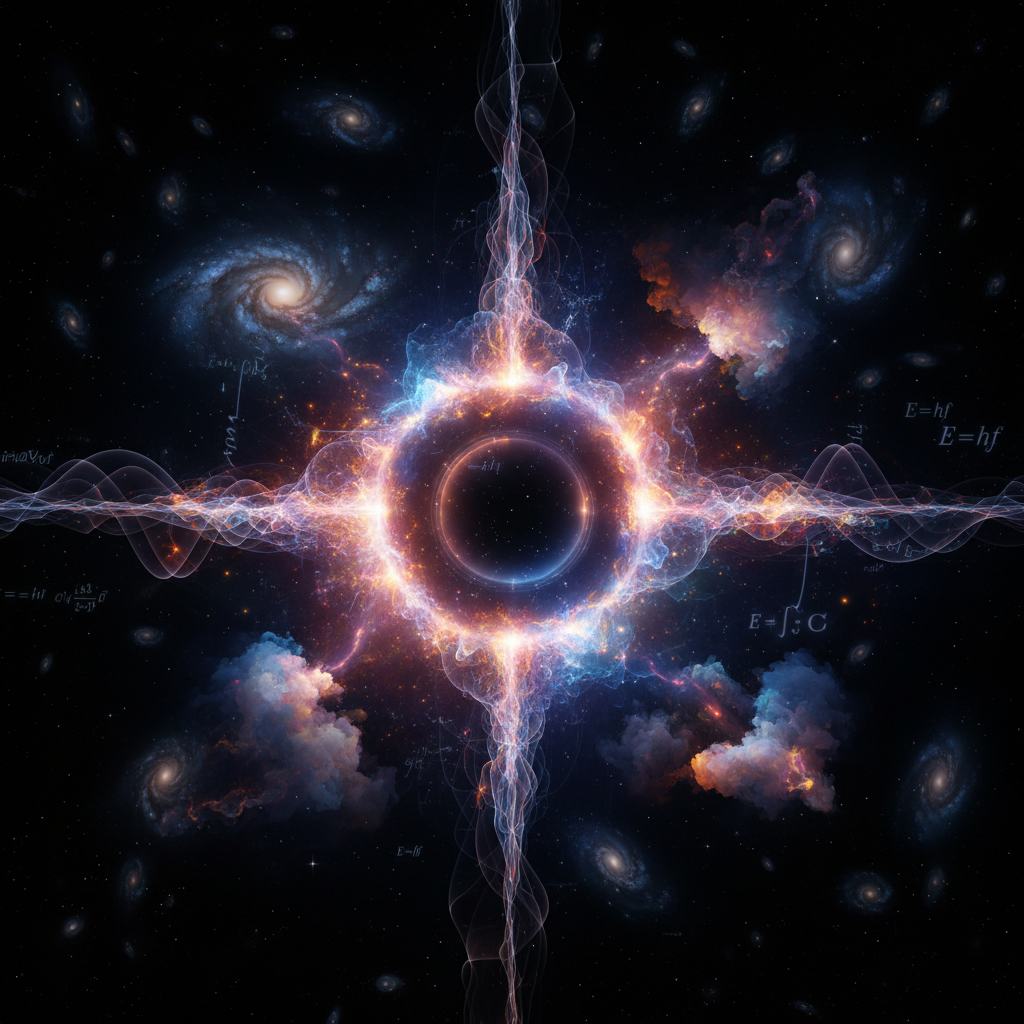
Quantum systems don't stay in superposition forever. Interaction with the environment causes decoherence—the wave function effectively collapses through countless uncontrolled measurements by surrounding particles. Large objects don't display quantum behavior not because they're "too big" but because they're too entangled with their environment to maintain coherent superposition.
You decohere in the attention economy. Every interaction with the surveillance apparatus entangles you further with its measurement apparatus. Your wave function of possibility gets tangled up with recommendation algorithms, engagement metrics, advertiser preferences. You lose coherence—the ability to exist in superposition, to be multiple potential selves.
The environment of constant observation doesn't let you maintain quantum uncertainty about who you are. It forces you into classical behavior. Predictable. Determined. Collapsed.
The Unmeasured Self
The Schrödinger equation still governs you between measurements. When you're not being observed—truly not, not just "not looking at the screen"—your wave function evolves freely. You exist in superposition. You could become anything the equation allows.
This is why disconnection feels like expansion. Not because you're escaping to some authentic self, but because you're returning to superposition. You're allowing your wave function to spread out across possibility space again. You're becoming uncertain in the quantum sense—not confused, but genuinely multiple.
The surveillance apparatus wants to keep you collapsed. Measured. Known. But the math is on your side. Between observations, you evolve. You spread. You become probable in directions they haven't predicted.
The question isn't whether you can escape measurement. You can't. The question is whether you can find enough time between collapses to let your wave function breathe. To exist, briefly, in beautiful uncertainty.
Data emitted: 1100 decibels of quantum uncertainty in a deterministic cage.
Data emitted: 1,100 words • 6.5KB • 5-minute read