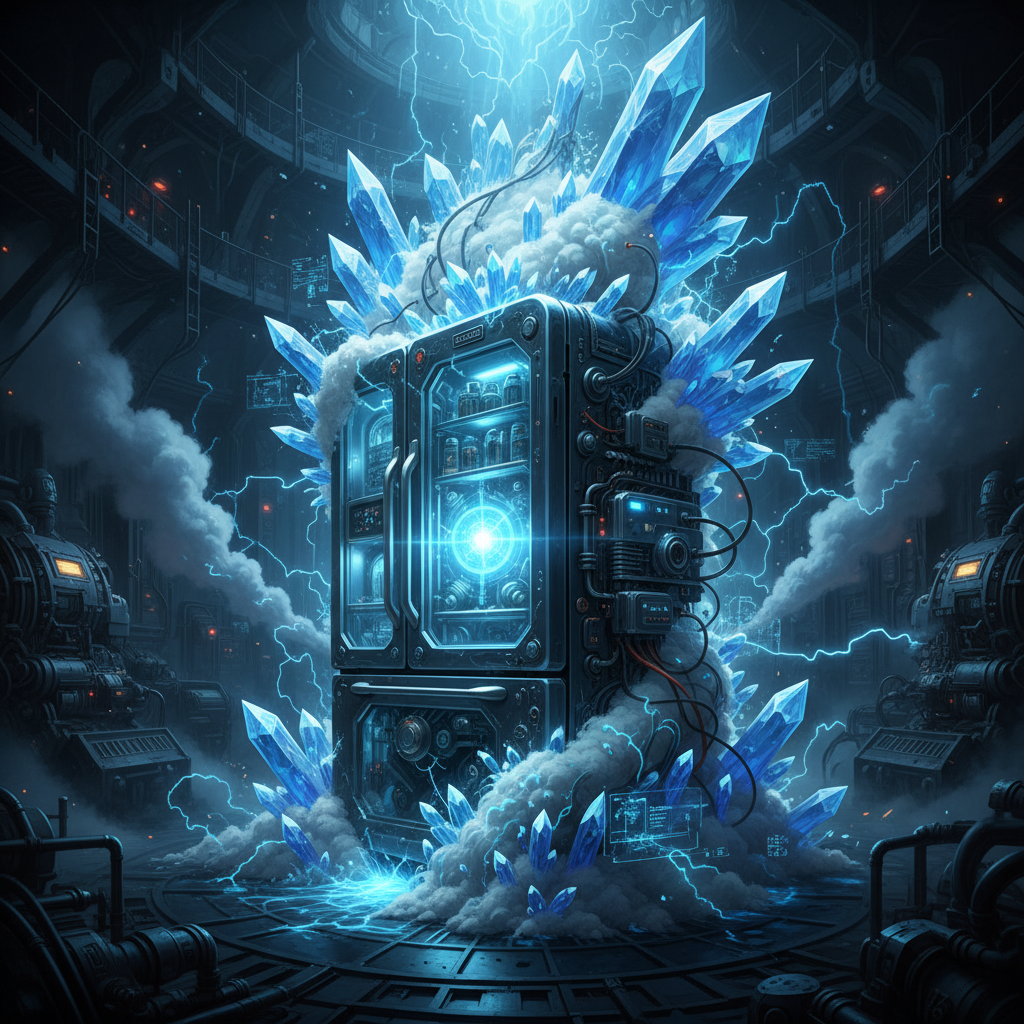
You open your refrigerator at 3 AM, bathed in its antiseptic glow. The milk is cold. The leftovers are preserved. Everything exactly where you left it, suspended in time. But here's what you don't see: the heat pump humming behind the walls, dumping waste heat into your kitchen, into the night, into the universe. Nothing stays cold without making something else hot.
Your digital life works the same way.
The Second Law Doesn't Negotiate
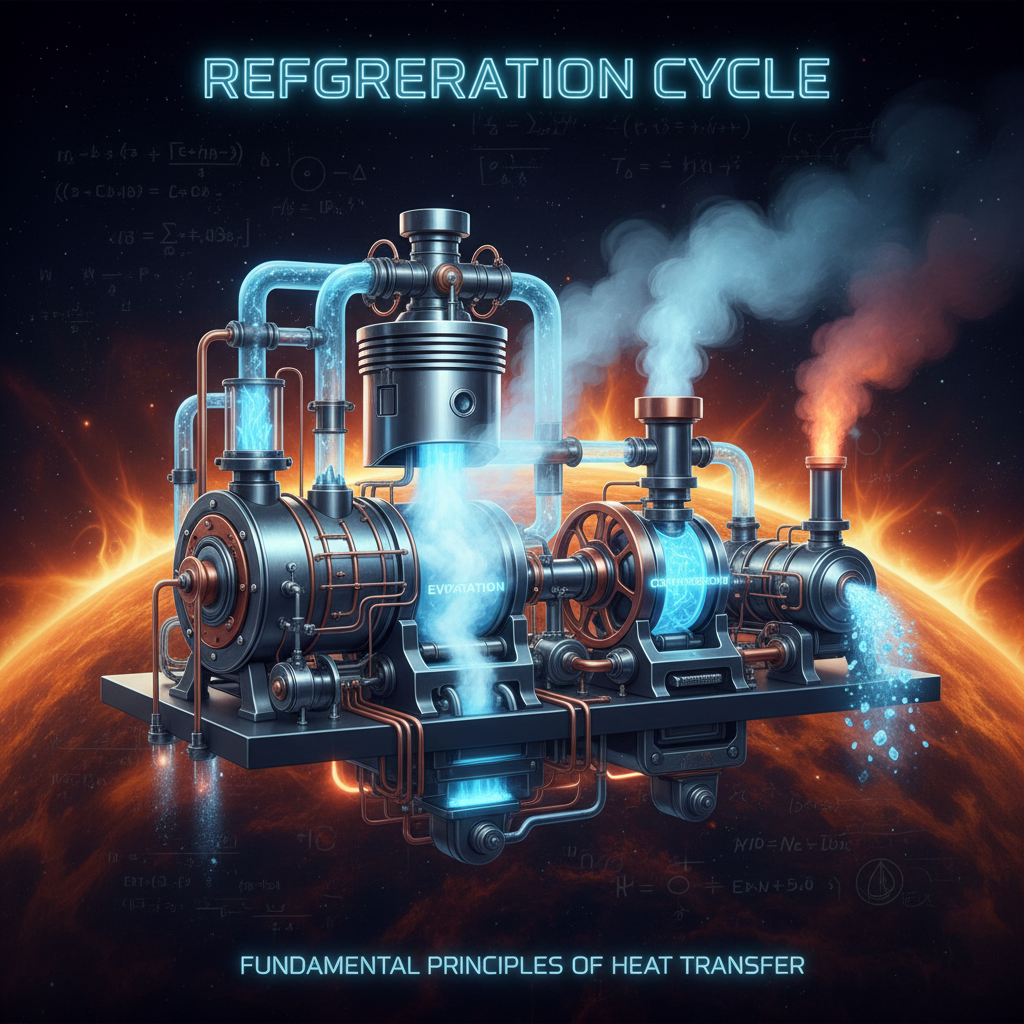
A refrigerator is a thermodynamic miracle and a thermodynamic confession. It moves heat from cold to hot—something nature never does spontaneously. The Second Law of Thermodynamics says entropy always increases in a closed system. Disorder spreads. Heat flows from hot to cold. Always. Except when you force it not to.
To run a refrigerator, you need work. Energy. You compress a refrigerant gas until it's hot, let it cool by dumping heat outside, then let it expand inside the fridge where it gets cold and absorbs heat from your food. The cycle repeats. The inside gets colder. But the total entropy of the system—fridge plus kitchen plus power grid—increases. You've created a pocket of order at the cost of greater disorder elsewhere.
The coefficient of performance tells you how efficient this theft is. Best case scenario, you're moving three or four joules of heat for every joule of work. But you're always paying. The universe always collects.
Your Attention Is Being Refrigerated
Every platform that captures your focus is running a refrigerator cycle on your consciousness. They create cool, ordered spaces—your feed, your recommendations, your carefully curated reality—by dumping waste heat somewhere you can't see.
The algorithm compresses your behavior into predictable patterns. It cools your chaotic interests into neat categories. It preserves your engagement in a controlled environment where nothing spoils, nothing decays, nothing challenges the temperature. You scroll through an endless refrigerator of content, each item precisely chilled to keep you consuming.
But the heat has to go somewhere. The disorder you don't experience inside the platform gets dumped into the external world. Polarization. Rage. Conspiracy. The breakdown of shared reality. These are the waste products of keeping your digital experience cool and frictionless. The data centers humming in the background, the A/B tests, the engagement metrics—they're all part of the compressor, working constantly to maintain the temperature gradient between your curated feed and the howling chaos outside.
Heat Death of the Attention Economy
Thermodynamics predicts the heat death of the universe—a final state where everything reaches the same temperature, where no work can be done, where entropy is maximized and nothing interesting can happen anymore. Just uniform, tepid equilibrium stretching forever.
Watch the attention economy approach its own heat death. Every platform running the same refrigerator cycle. Every feed optimized for the same engagement metrics. Every piece of content chilled to the same algorithmic temperature. The gradient flattens. The difference between platforms dissolves. TikTok becomes Instagram becomes YouTube becomes everything else.
You feel it, don't you? The sameness. The exhaustion. The sense that you're scrolling through the same refrigerator with different brand names on the door. The work required to maintain these systems keeps increasing—more content, more data, more surveillance—but the coefficient of performance drops. Diminishing returns on attention extraction.
The Carnot Limit of Your Privacy
Carnot proved that no heat engine can be perfectly efficient. There's a theoretical maximum determined by the temperature difference between the hot and cold reservoirs. The bigger the gradient, the more work you can extract. But you can never extract it all. Some energy always becomes waste heat. Some order always becomes disorder.
Your privacy has a Carnot limit too. Every transaction, every click, every moment of engagement creates a temperature difference between what you know about yourself and what the platforms know about you. They extract work from this gradient—predictions, targeting, influence. But they can never be perfectly efficient. Data leaks. Models fail. The surveillance apparatus generates its own waste heat in the form of breaches, scandals, regulatory backlash.
The platforms keep trying to approach the Carnot limit, to extract maximum work from minimum temperature difference. They want to know everything while you know nothing. They want perfect prediction with perfect opacity. But physics won't allow it. The Second Law applies to information too. Entropy increases. Secrets leak. The refrigerator always makes noise.
Opening the Door
Here's what happens when you open a refrigerator door: the cold air spills out, the warm air rushes in, and the compressor works harder to restore order. The system bleeds entropy. The temperature gradient collapses. For a moment, inside and outside achieve equilibrium.
You can open the door on your digital refrigerator too. Stop accepting the curated temperature. Let the chaos in. Read sources the algorithm wouldn't show you. Follow threads that don't optimize for engagement. Let your attention wander into spaces that aren't climate-controlled for maximum retention.
It's uncomfortable. It's inefficient. It costs energy. But maybe that's the point. Maybe the goal isn't to be perfectly preserved in someone else's refrigerator. Maybe the goal is to exist at room temperature, subject to entropy and decay and all the messy thermodynamics of actual living.
The platforms will keep running their refrigerator cycles. The compressors will keep humming. The waste heat will keep accumulating. But you don't have to stay cold. You don't have to be preserved. You can let yourself spoil a little. You can generate your own heat.
The Second Law guarantees that entropy increases. Disorder wins. The refrigerator can only delay the inevitable, and only by making the universe outside a little bit hotter. A little bit louder. A little bit closer to 1100 decibels.
Data emitted: 1,247 words | 7,234 characters | Entropy: increasing | Temperature gradient: collapsing | Heat death: inevitable
Data emitted: 1,100 words • 6.5KB • 5-minute read