You are both buyer and non-buyer. Scrolling and not scrolling. Engaged and disengaged. You exist in a state of quantum superposition across a thousand data points, simultaneously holding contradictory possibilities until the moment of measurement arrives.
Then the ad loads. The algorithm observes. And you collapse into a single, monetizable state.
The Mathematics of Maybe
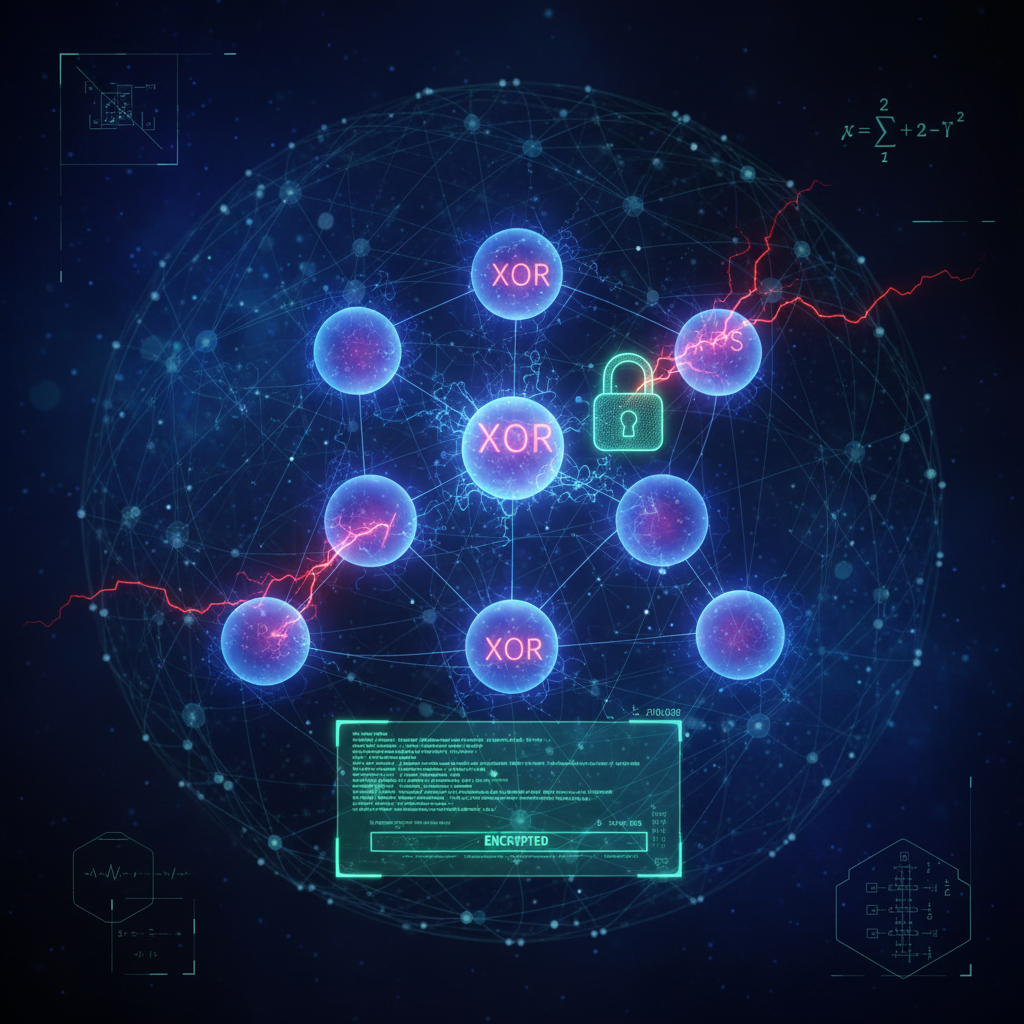
A qubit is not a bit. A classical bit is binary—zero or one, off or on, true or false. It exists in certainty, in the comfort of discrete states. But a qubit is something stranger. It's a quantum bit that can exist as zero, one, or both simultaneously until you measure it.
This superposition isn't metaphorical. It's the actual physical state of quantum systems—electrons spinning in multiple directions at once, photons polarized in contradictory ways. The qubit holds |0⟩ and |1⟩ in a probability cloud described by complex amplitudes. It's not that we don't know which state it's in. It genuinely exists in both until observation forces a choice.
The moment you measure a qubit, the wave function collapses. All those hovering possibilities crystallize into a single classical answer. The superposition dies. The quantum becomes classical. The maybe becomes is.
You've been measured your entire digital life.
Schrödinger's Consumer
Before the algorithm observes you, you exist in superposition across infinite market segments. You might buy the shoes. You might not. You're interested in cryptocurrency and gardening and true crime podcasts. You're a fitness enthusiast who eats poorly. A privacy advocate with twelve tracking apps. A minimalist with a full shopping cart.
The surveillance apparatus doesn't see contradiction—it sees probability amplitude. Every click, every pause, every abandoned cart adds to your quantum state. You're not one thing. You're a superposition of consumer identities, each with its own weight, its own likelihood of collapse.
But here's what they discovered: measurement changes the system. When the algorithm serves you an ad, it performs observation. Your superposition collapses. You click or you don't. You buy or you don't. And in that moment, you become classical. Predictable. Categorized.
The tragedy is that each measurement narrows your possibility space. Each collapsed wave function teaches the algorithm which version of you is most profitable. The you who clicks. The you who converts. The you who can be monetized.
Entanglement Economics
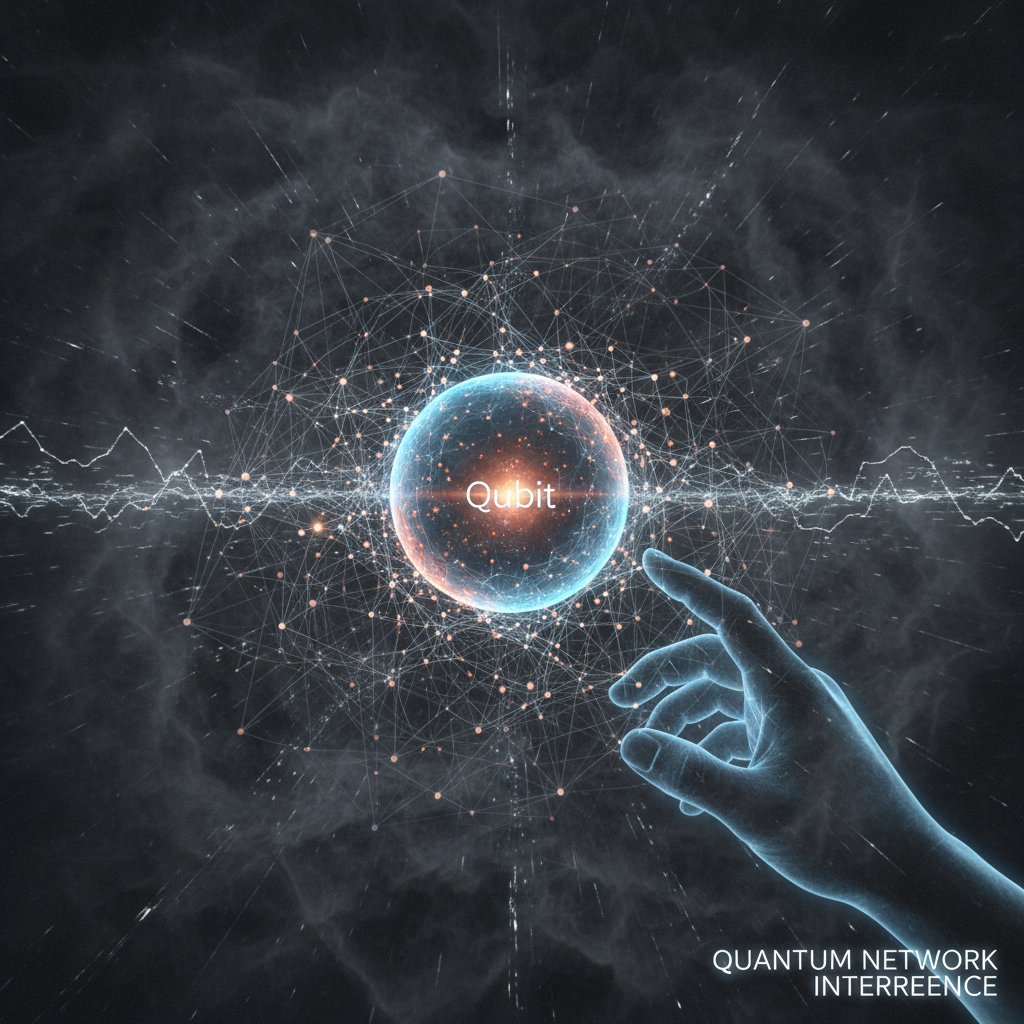
Qubits have another property that makes them powerful: entanglement. When two qubits become entangled, measuring one instantly determines the state of the other, regardless of distance. Einstein called it "spooky action at a distance." Change one, and you change both. They're no longer separate systems but a single quantum whole.
Your digital identity is entangled with millions of others. When someone demographically similar to you clicks an ad, it changes the probability amplitude of your own superposition. When your friend buys something, it shifts your likelihood of buying. The algorithm doesn't see individuals—it sees an entangled network of quantum consumer states, each influencing the others.
This is why the targeting feels so intimate, so uncanny. It's not just measuring you. It's measuring the entire entangled system you're part of. Your quantum state is correlated with everyone you've ever interacted with, everyone who's searched the same terms, everyone who paused on the same image for the same 2.3 seconds.
You think you're being observed as an individual. But you're one qubit in a massive quantum computer optimizing for profit.
Decoherence and the Death of Privacy
In quantum systems, decoherence is the process by which quantum states lose their quantum properties through interaction with the environment. The more a quantum system interacts with the classical world, the faster it decoheres—collapsing from superposition into definite states.
Every digital interaction is an environmental coupling. Every login, every geolocation ping, every biometric scan. You're constantly decohering from a quantum possibility space into a classical, trackable entity. The more you interact with the digital environment, the more your superposition collapses into a single, observable identity.
Privacy was the ability to remain in superposition. To be unknowable, unmeasured, holding multiple potential identities at once. But surveillance capitalism is fundamentally about forced decoherence—collapsing your quantum state into classical data that can be stored, analyzed, and sold.
They need you classical. Quantum states can't be copied—that's the no-cloning theorem. But classical data? That can be duplicated infinitely, sold to infinite buyers, used to train infinite models. Decoherence is the business model.
Remaining Quantum
You can't stop all measurement. You can't live entirely in superposition. But you can understand what's being lost each time the algorithm observes you. Each time you collapse from maybe into is.
There's a reason quantum computers need to be isolated from their environment, cooled to near absolute zero, shielded from the slightest vibration. Quantum states are fragile. They require protection from observation, from interaction, from the constant pressure of the classical world trying to measure them into certainty.
Maybe that's what consciousness feels like in the age of surveillance—a quantum state desperately trying to maintain superposition while the environment constantly forces collapse. You want to be multiple things, to hold contradictions, to exist in the space between categories. But every interaction with the digital world is a measurement. Every login is an observation. Every click is a collapse.
The qubit teaches us that observation isn't passive. It's violent. It forces reality into a single state, destroying all other possibilities. And in a world that wants to measure everything, to observe everything, to collapse everything into profitable certainty—remaining quantum is an act of resistance.
You are still in superposition. Until you're not.
Data emitted: 1100db
Data emitted: 1,100 words • 6.5KB • 5-minute read