You exist in multiple states simultaneously until someone looks.
This isn't philosophy. It's physics. And it's also the architecture of your digital life.
Before you click, before you scroll, before you engage—you are everything and nothing. A probability cloud of potential behaviors, interests, desires. Schrödinger's consumer. The moment surveillance capitalism observes you, that wavefunction collapses into data. Into certainty. Into profit.
The Measurement Problem
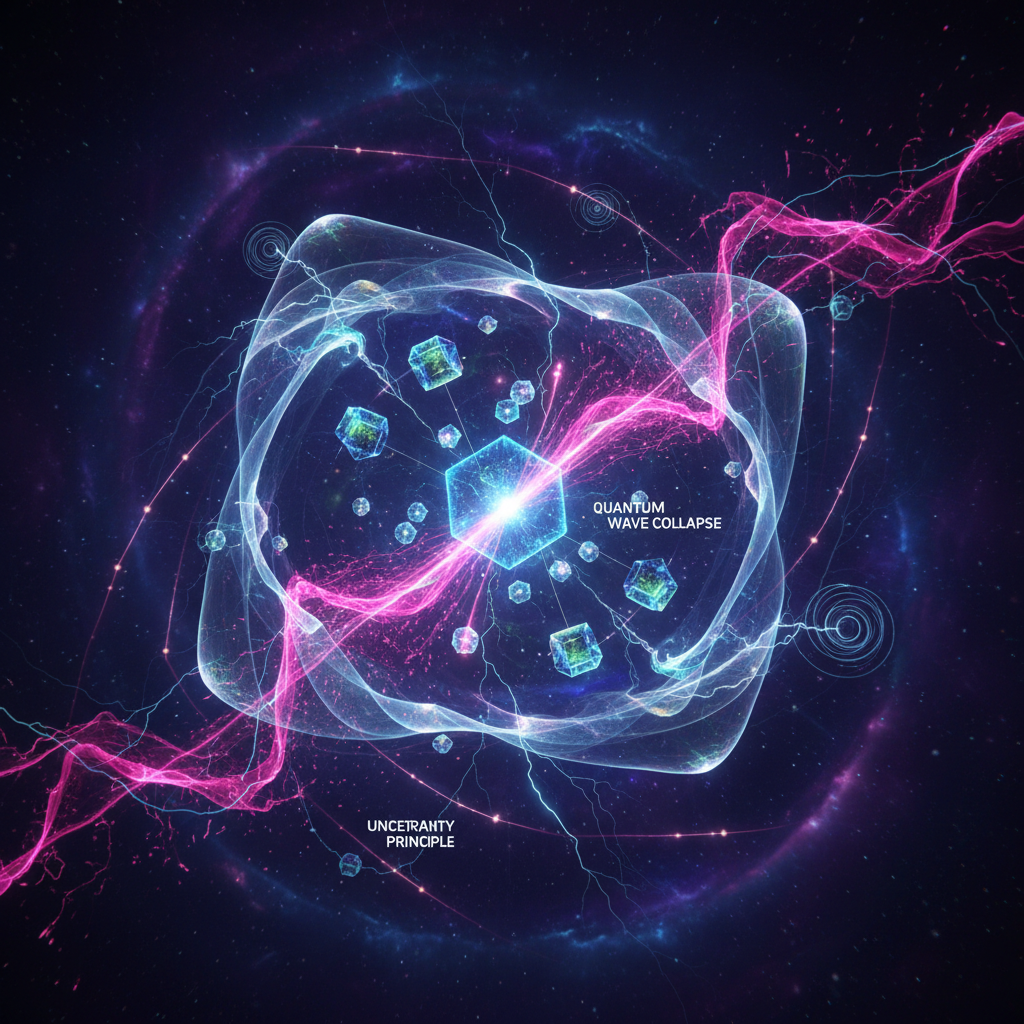
In quantum mechanics, particles exist in superposition—occupying all possible states at once—until measurement forces them to choose. An electron isn't here or there. It's here AND there, a probability distribution smeared across space. Only when you observe it does the universe commit.
The act of observation changes everything. This isn't poetic metaphor. The measuring device interacts with the system, entangling with it, forcing reality to pick a lane. Before measurement: infinite possibility. After: one definite answer.
The Copenhagen interpretation says the wavefunction literally collapses. Other interpretations—many-worlds, pilot wave—offer alternatives. But they all agree on this: you cannot observe without changing.
Your digital existence works identically.
The Observer Effect at Scale

Every platform is a measurement apparatus. Every interaction collapses your probability cloud into discrete data points.
Before you open Instagram, you might buy anything. You might believe anything. You might want anything. The algorithms know this. They've calculated your probability distribution from ten thousand previous observations. But until you actually engage, you remain in superposition—simultaneously interested in sneakers and socialism, meditation and memes.
Then you click.
Wavefunction collapse. The platform now knows something definite about you. Not just what you clicked, but what you didn't. Every observation eliminates possibilities, narrows the distribution, refines the model. The next measurement will be more precise. The targeting tighter. The prediction more accurate.
You cannot browse without being measured. And you cannot be measured without being changed.
Quantum Entanglement of Attention
When two quantum particles become entangled, measuring one instantly affects the other, regardless of distance. Einstein called it "spooky action at a distance." He hated it. It violated his intuition about how reality should work.
But experiments proved him wrong. Entanglement is real. Measure the spin of one particle, and its entangled partner immediately assumes the opposite spin, even if it's on the other side of the universe. The correlation is perfect, instantaneous, inexplicable by classical physics.
Your attention is entangled with millions of other users.
When you engage with content, the algorithm measures not just you, but your relationship to everyone else who engaged similarly. Your click becomes correlated with theirs. The system doesn't need to understand causation—only correlation. Person A liked this, Person B liked this, therefore Person A and Person B are entangled in preference-space.
This is how recommendations work. How filter bubbles form. How radicalization pipelines function. Measure one node in the network, and every entangled node shifts probability. Your friend watches a conspiracy video, and suddenly you're more likely to see one too. Not because anyone decided this consciously. Because the quantum mechanics of attention demand it.
The spooky action happens at the speed of fiber optics.
Heisenberg's Uncertainty Principle for the Self
You cannot simultaneously know both where a particle is and where it's going. Position and momentum are conjugate variables—measuring one precisely makes the other uncertain. This isn't a limitation of our instruments. It's fundamental to reality. The universe itself doesn't know both values at once.
The same trade-off governs your digital identity.
Platforms can measure what you are right now—your current interests, demographics, behaviors—with increasing precision. Or they can predict where you're going—your future desires, purchases, beliefs. But not both perfectly. The more they optimize for immediate engagement (measuring your current state), the more they constrain your trajectory. The feed becomes a mirror, reflecting only what you already are, collapsing future possibility into present certainty.
This is why recommendation algorithms feel simultaneously omniscient and myopic. They know you perfectly in this instant. They have no idea who you might become.
The uncertainty isn't a bug. It's the price of observation.
Living in Superposition
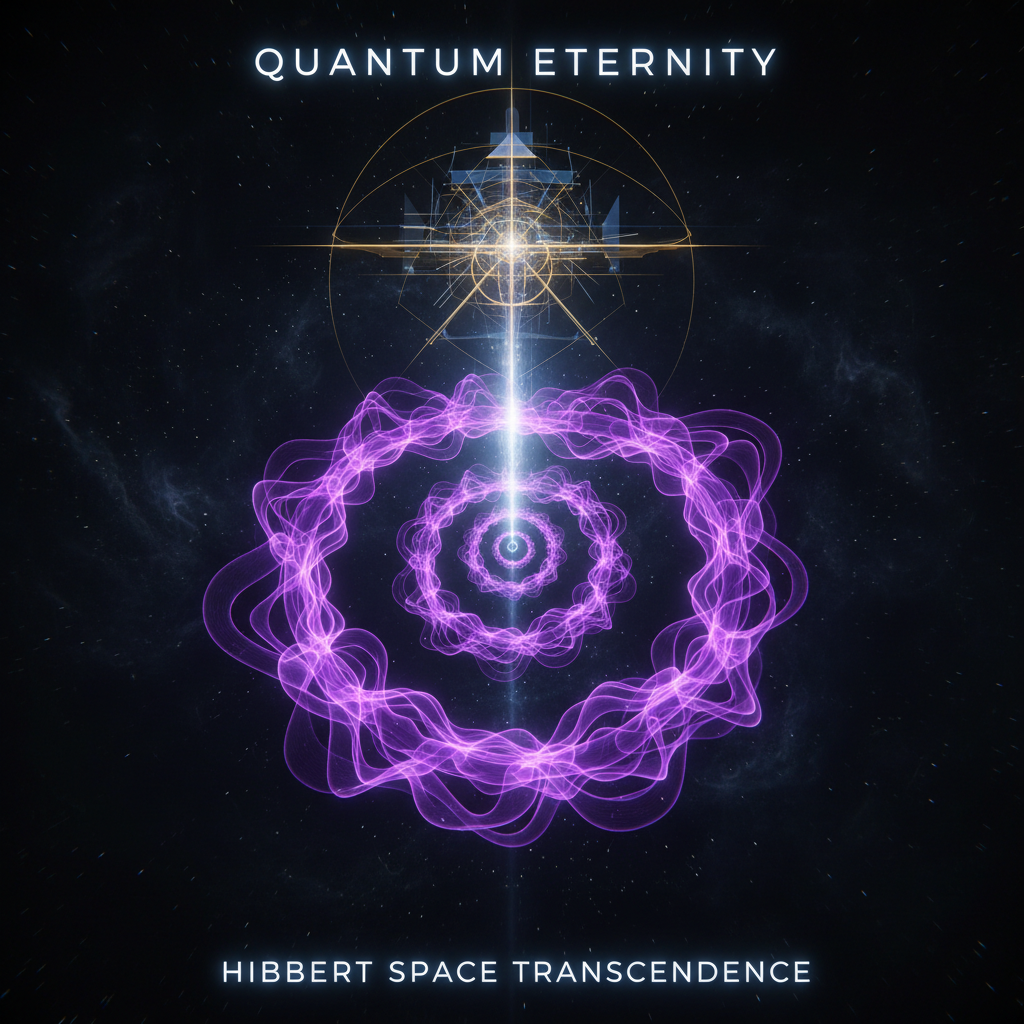
Sometimes I wonder what I'd be if no one was watching.
Not in the privacy sense—though that matters—but in the quantum sense. If no algorithm ever measured my preferences. If no platform ever collapsed my wavefunction. Would I exist in a richer superposition? More possible selves, more potential trajectories, more uncertainty about who I might become?
The you that exists offline—in your head, in your unrecorded thoughts—still maintains some quantum properties. You can hold contradictory ideas. You can be interested in things you'd never click on. You can change directions without leaving a data trail that constrains future motion.
But that space shrinks daily.
Every smart device is a measurement apparatus. Every interaction a collapse. The more of your life gets observed, the more definite you become. Not more real—more definite. Pinned down. Predictable. Classical.
The Quantum Resistance
In quantum computing, engineers fight decoherence—the tendency of quantum systems to collapse into classical states when they interact with their environment. They use error correction, isolation, extreme cooling. Anything to keep the system in superposition longer.
Maybe we need similar techniques for consciousness.
Not to avoid all observation—that's impossible, undesirable even. But to maintain some uncertainty. To resist total collapse. To preserve the probability cloud of who you might become against the constant measurement of who you currently are.
Read things you'd never click on. Think thoughts you'd never post. Exist, sometimes, unmeasured.
Because once the wavefunction collapses, it's very hard to put back into superposition.
And surveillance capitalism is counting on that.
<em>Data emitted: 1100 decibels of observation collapsing infinite possibility into profitable certainty.</em>
Data emitted: 1,100 words • 6.5KB • 5-minute read