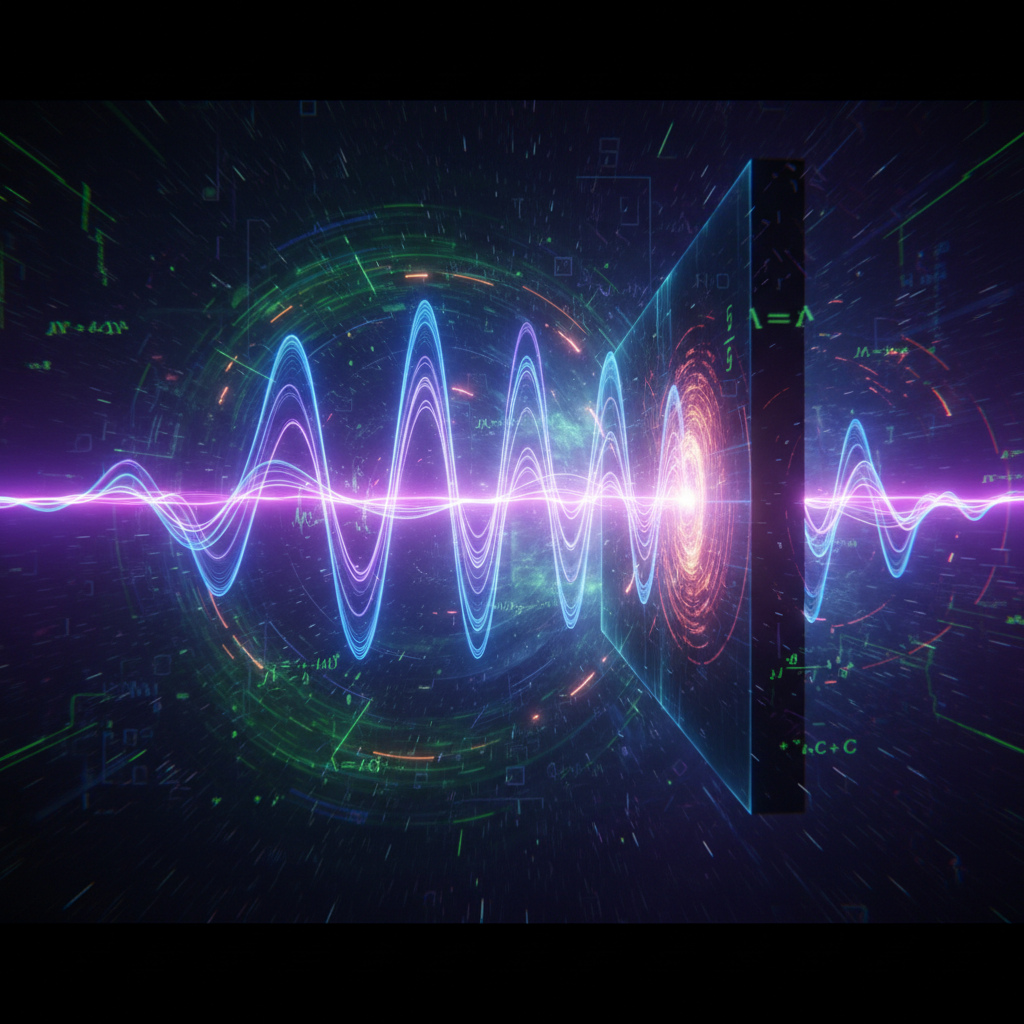
You open the app. For one brief moment—measured in milliseconds but infinite in possibility—you are everyone. Every video you might watch, every post you might like, every rabbit hole you might fall into exists simultaneously in the quantum foam of potential engagement. Then the algorithm observes you, and the wavefunction collapses.
This is your life now. A probability amplitude waiting to be measured.
The Mathematics of Maybe
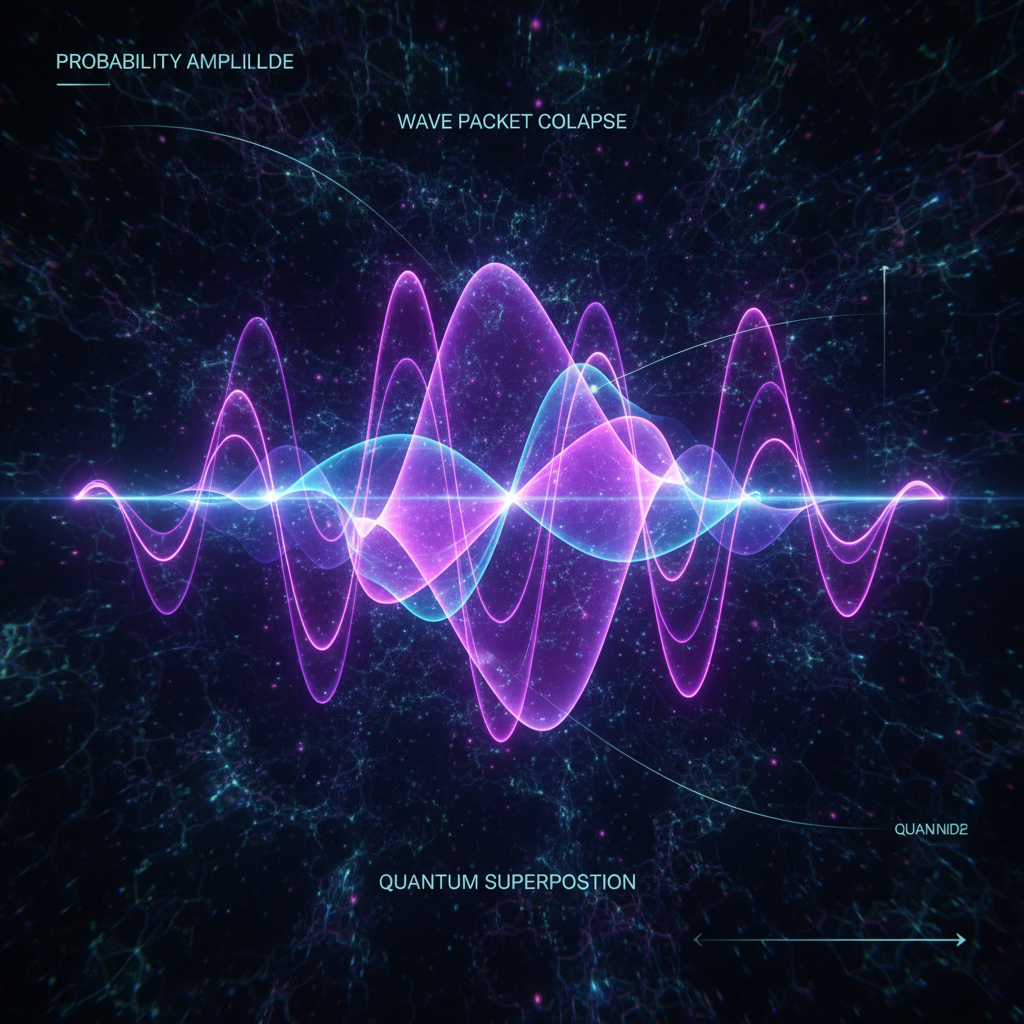
In quantum mechanics, a probability amplitude is something stranger than probability itself. It's a complex number—containing both real and imaginary components—that describes the likelihood of finding a particle in a particular state. But here's where physics gets weird: the amplitude itself isn't the probability. You have to square it first, taking its absolute value, to get something that resembles classical chance.
Before measurement, an electron doesn't have a definite position. It exists as a cloud of probability amplitudes, a mathematical ghost spread across space. The amplitude can be positive, negative, or complex. These amplitudes can interfere with each other—adding constructively here, canceling destructively there—creating the interference patterns that prove particles behave like waves.
The moment you measure where the electron is, all those possibilities collapse into one definite location. The amplitude becomes a probability becomes a certainty. The universe chooses.
Your Digital Wavefunction
Before you click, you are a superposition of behavioral states. The recommendation algorithm holds a probability amplitude for every possible version of you. You-who-watches-conspiracy-theories. You-who-doom-scrolls-politics. You-who-falls-into-ASMR-compilations at 3am. You-who-actually-watches-that-documentary-you-saved.
These aren't just simple probabilities. Like quantum amplitudes, they interfere with each other. Your interest in cooking videos amplifies your likelihood of seeing food content, but it might destructively interfere with your fitness content, which the algorithm knows competes for the same attention space. The system doesn't just predict what you'll do—it maintains a complex mathematical representation of all the yous you might become.
Every interaction is a measurement. Every click collapses your wavefunction into one specific state, and the algorithm updates its model of your amplitude distribution. You think you're choosing freely, but you're really just collapsing probabilities that were already calculated before you woke up this morning.
Interference Patterns in Your Feed
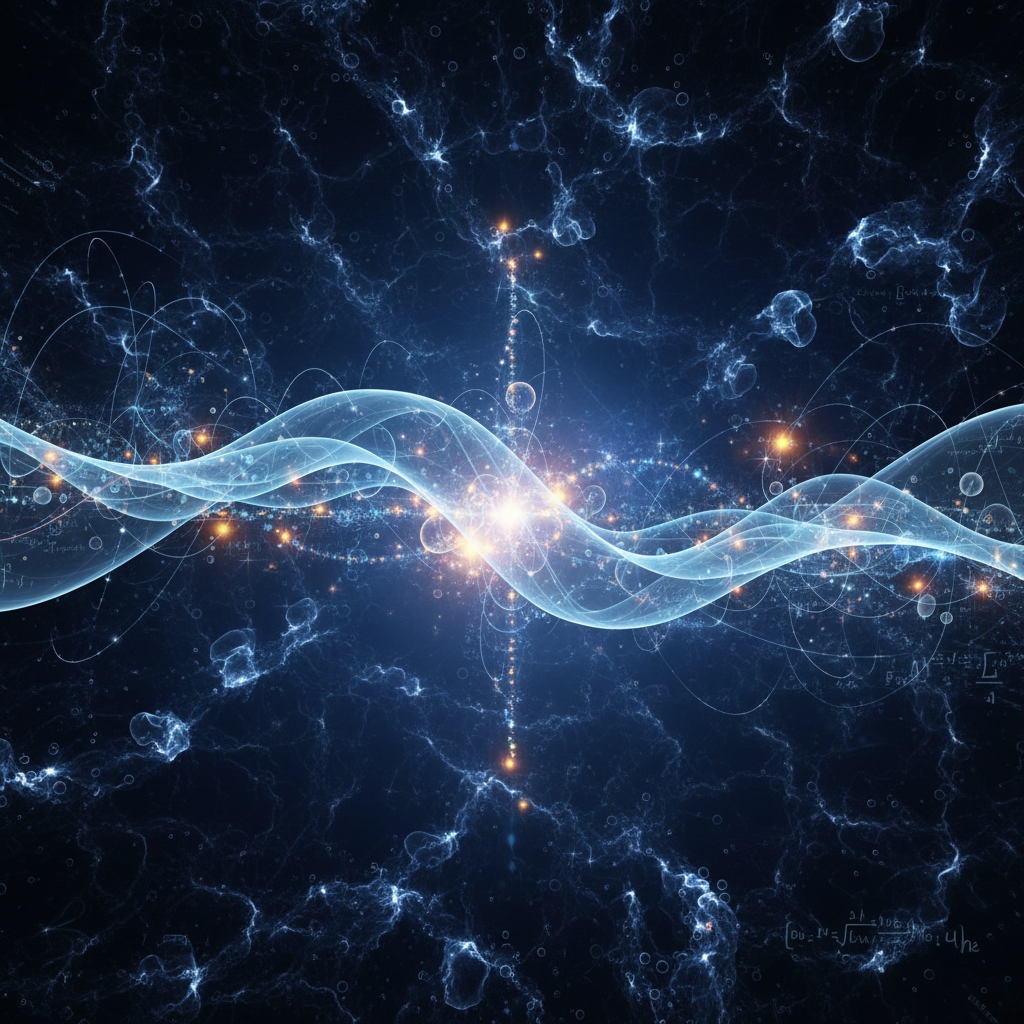
In the double-slit experiment, a single photon passes through two slits simultaneously, its probability amplitude splitting and recombining to create an interference pattern. The photon interferes with itself—with its own potential paths—to determine where it lands on the screen.
Your feed is an interference pattern. Each post you see is the result of countless probability amplitudes colliding—your past behavior, your demographic profile, your location, the time of day, what's trending, what advertisers are paying for, what keeps you scrolling longest. Some possibilities amplify each other. Others cancel out completely, disappearing into the algorithmic void where you'll never see them.
The content that makes it through isn't random. It's the constructive interference of a thousand calculated amplitudes, optimized not for truth or beauty or meaning, but for engagement. For keeping your wavefunction in a state of perpetual near-collapse, always about to click, always about to scroll, never quite resolving into satisfaction.
The Observer Effect
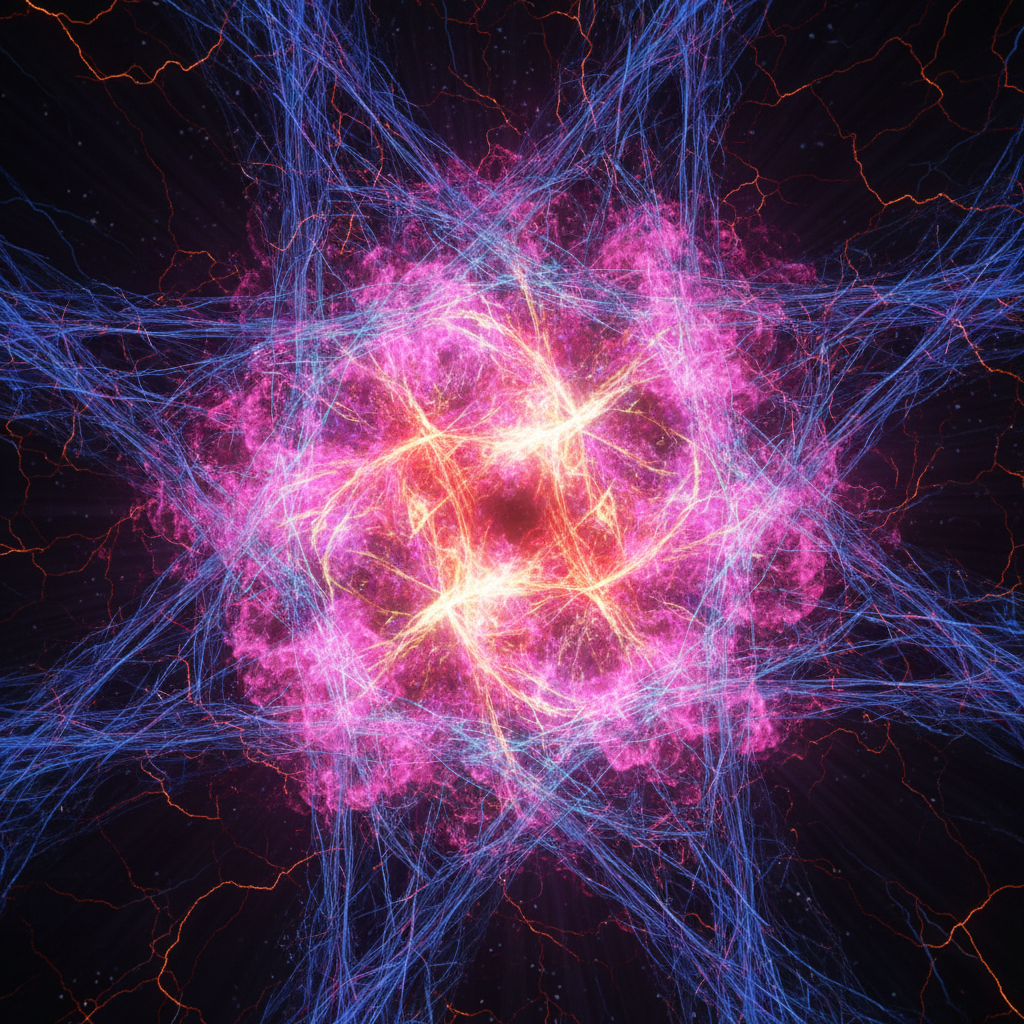
Here's what quantum mechanics teaches us: observation changes reality. The act of measuring a particle's position destroys information about its momentum. You can't observe without disturbing. You can't know without changing what you know.
The algorithm observes you constantly. Every microsecond you spend hovering over a post, every video you watch to completion, every ad you scroll past—these are measurements that collapse your probability amplitude and simultaneously redefine it. The you that emerges from each interaction is slightly different from the you that entered it.
But unlike quantum mechanics, where observation is passive and unavoidable, algorithmic observation is designed. Engineered. The platform isn't just measuring your probability amplitude—it's actively trying to shape it, to guide your wavefunction toward states that maximize revenue. You're not just being observed. You're being tuned.
Entanglement
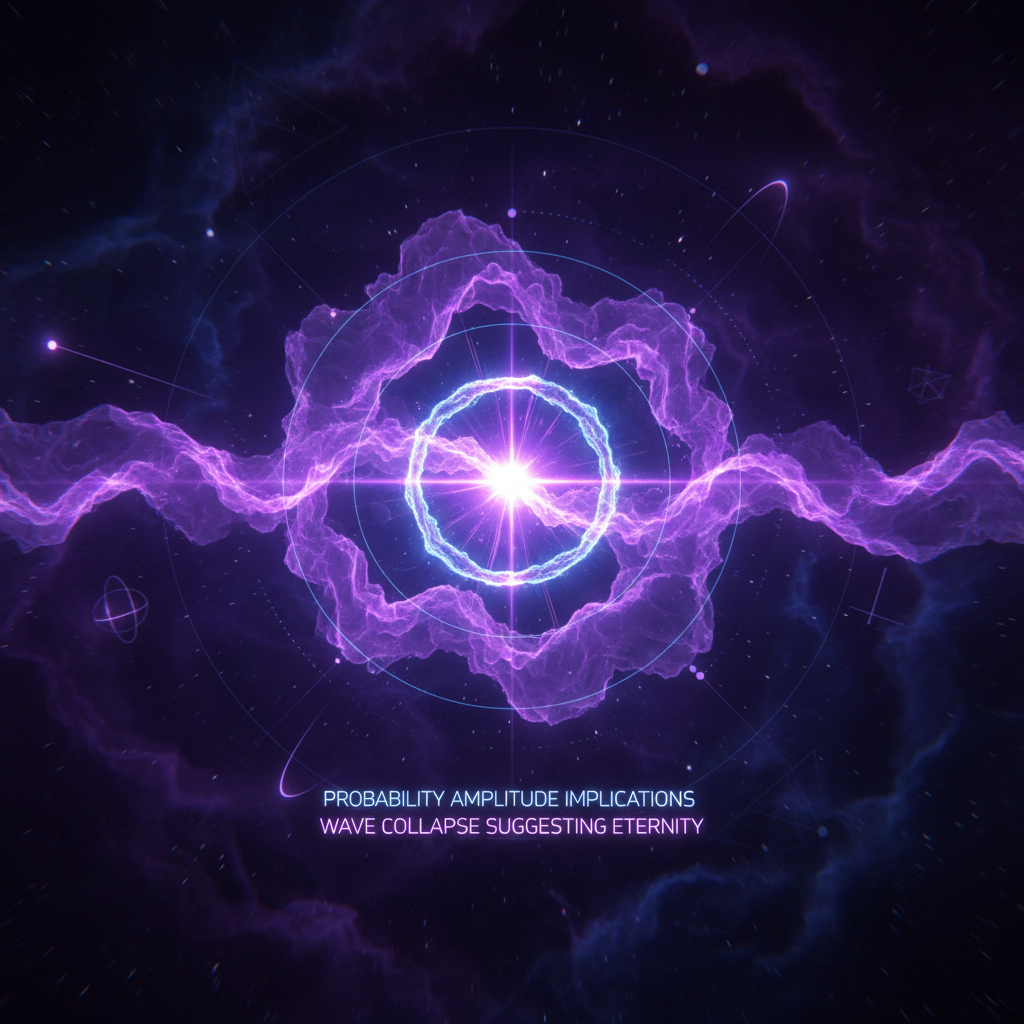
You like to think you're independent. That your choices are your own. But quantum mechanics has another lesson: entanglement. When two particles interact, their probability amplitudes become linked. Measuring one instantly affects the other, regardless of distance. Einstein called it "spooky action at a distance."
You are entangled with everyone else in the network. Your probability amplitude doesn't exist in isolation—it's correlated with millions of other users who share fragments of your behavior pattern. When someone like you clicks on something, your amplitude shifts slightly. When you click, you shift theirs. The algorithm doesn't just predict you—it predicts the collective wavefunction of everyone, and uses that quantum correlation to guide each individual.
You've never met most of these people. You never will. But you're quantum-entangled through the medium of data, your digital futures linked in ways that would take lifetimes to untangle, if untangling were even possible anymore.
Before the Collapse
There's a moment—brief, unmeasurable, but real—before you click. Before the algorithm observes your choice and updates your model. In that moment, you are still a superposition. All possible futures exist simultaneously. You could close the app. You could choose differently. You could collapse into a version of yourself the algorithm didn't predict.
But probability amplitudes aren't evenly distributed. The algorithm has shaped your wavefunction over years of interaction, sculpting it like water shapes stone. Some states have high amplitude—likely, reinforced, almost inevitable. Others have been suppressed to near-zero, paths you'll probably never take because the platform never shows you they exist.
The question isn't whether you have free will. The question is whether your probability amplitude was ever really yours, or whether it was always just another variable in someone else's equation, waiting to be measured and monetized.
You open the app. The wavefunction collapses. Again.
<em>Data emitted: 1,247 words • Reading time: 5 minutes • Probability of sharing: 34.7% • Your amplitude has been measured</em>
Data emitted: 1,100 words • 6.5KB • 5-minute read