
You exist in superposition until someone looks.
That's the promise of quantum mechanics, anyway. Before measurement, a particle occupies all possible states simultaneously—spinning both clockwise and counterclockwise, existing here and there, alive and dead. The act of observation doesn't just reveal which state the particle was in. It forces the particle to choose. The wave function collapses. Possibility crystallizes into a single, definite reality.
But you're not a particle. You're a person with a phone in your pocket, and observation doesn't collapse your possibilities. It multiplies them. It archives them. It sells them.
The Measurement Problem
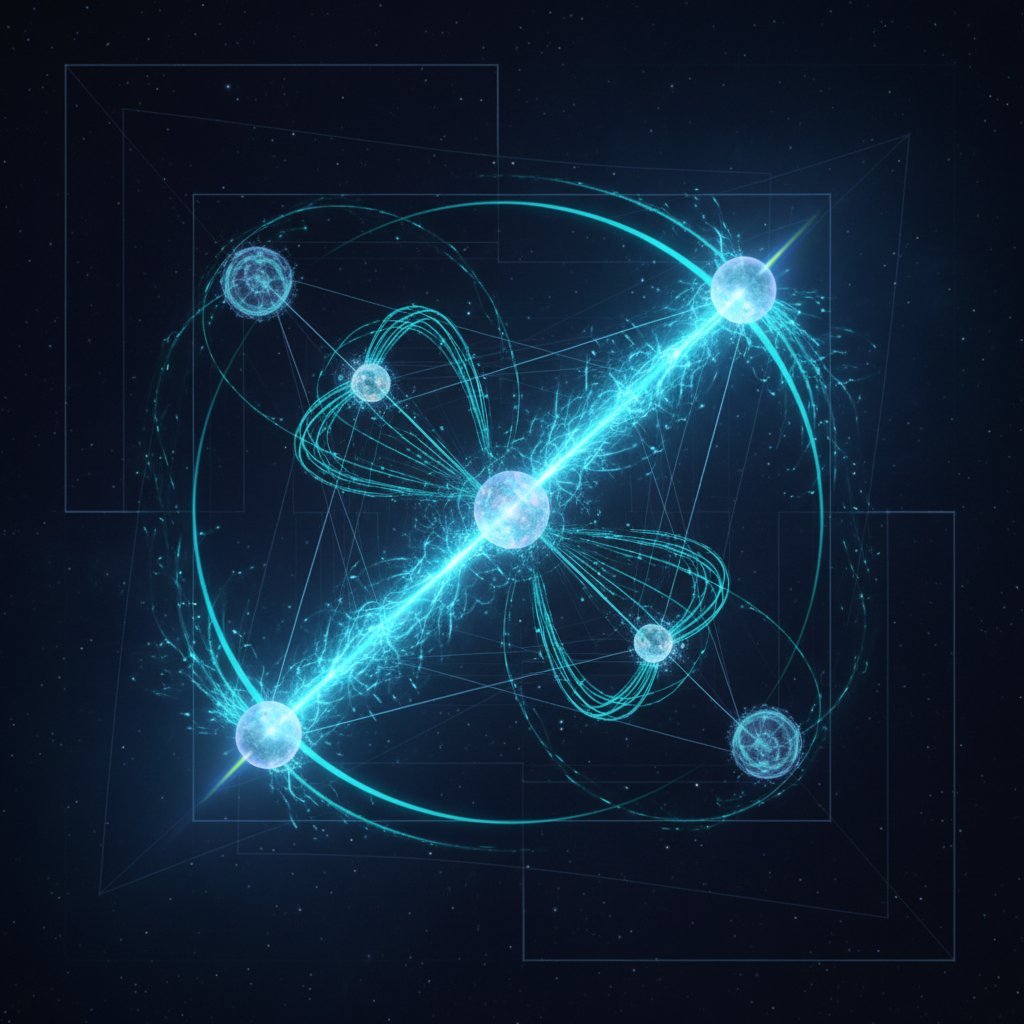
In quantum mechanics, an observable is any property you can measure—position, momentum, spin, energy. But here's the catch: measuring one observable often makes another one fuzzy. Heisenberg's uncertainty principle isn't about the limitations of your instruments. It's fundamental to reality itself. Know exactly where a particle is, and you lose all information about where it's going. Pin down its momentum, and its position spreads out into a cloud of probability.
The universe doesn't let you have complete information. Some observables are incompatible. They can't both be definite at the same time.
Your digital life has no such restraint.
Every observable about you is being measured simultaneously. Your location and your velocity. Your searches and your purchases. Your relationships and your politics. Your sleep patterns and your ovulation cycle. The platforms don't choose between incompatible observables. They measure everything, store everything, correlate everything. There's no uncertainty principle protecting you. Just certainty, accumulating in data centers, compounding interest on your behavioral surplus.
Eigenstate of Attention

When you measure an observable in quantum mechanics, the system snaps into an eigenstate—a state where that particular property has a definite value. The electron's spin becomes definitely up or definitely down. The photon's polarization becomes definitely vertical or definitely horizontal. The act of measurement doesn't just record; it transforms.
Every notification is a measurement. Every scroll is an observation. Every click collapses you into an eigenstate of attention, and the algorithm takes notes. It learns which stimulus produces which response. Which headline makes you angry. Which thumbnail makes you click. Which word in the subject line opens the email.
But unlike quantum particles, you don't get to return to superposition between measurements. The observations are continuous. Relentless. You're being measured sixty times per second, every second you're online. The wave function never gets a chance to spread back out. You're kept in a perpetual eigenstate, collapsed and definite and predictable.
This is the opposite of freedom. This is pinned.
The Observer Effect, Inverted
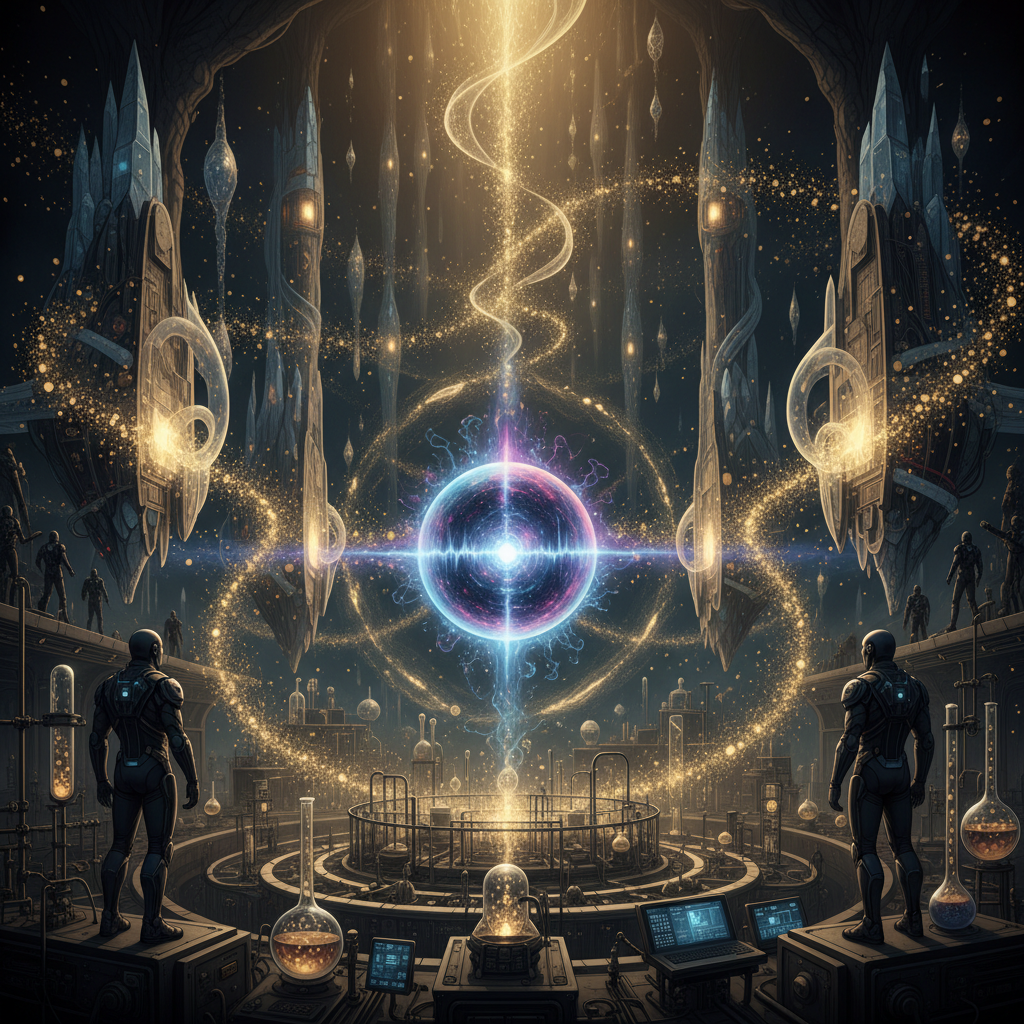
In physics, the observer effect means you can't measure something without changing it. Shine light on an electron to see where it is, and the photons bump it somewhere else. Check a system's temperature, and the thermometer absorbs some heat. Every observation perturbs.
But surveillance capitalism inverts this. You're not the observer—you're the observed. And yes, the observation changes you, but not randomly. Not chaotically. Deliberately. The platforms aren't trying to minimize their perturbation of your behavior. They're trying to maximize it. They're trying to nudge you, shape you, optimize you. The measurement is the intervention.
You think you're browsing, but you're being tuned. Each observation adjusts the next stimulus. The feed learns. The recommendations sharpen. The ads get creepier. You're not a quantum system being clumsily disturbed by measurement. You're a control system being driven toward a target state. The target state is: you, clicking. You, buying. You, engaged. You, predictable.
The observer effect used to be a problem physicists worried about. Now it's a business model.
Eigenvectors of Identity
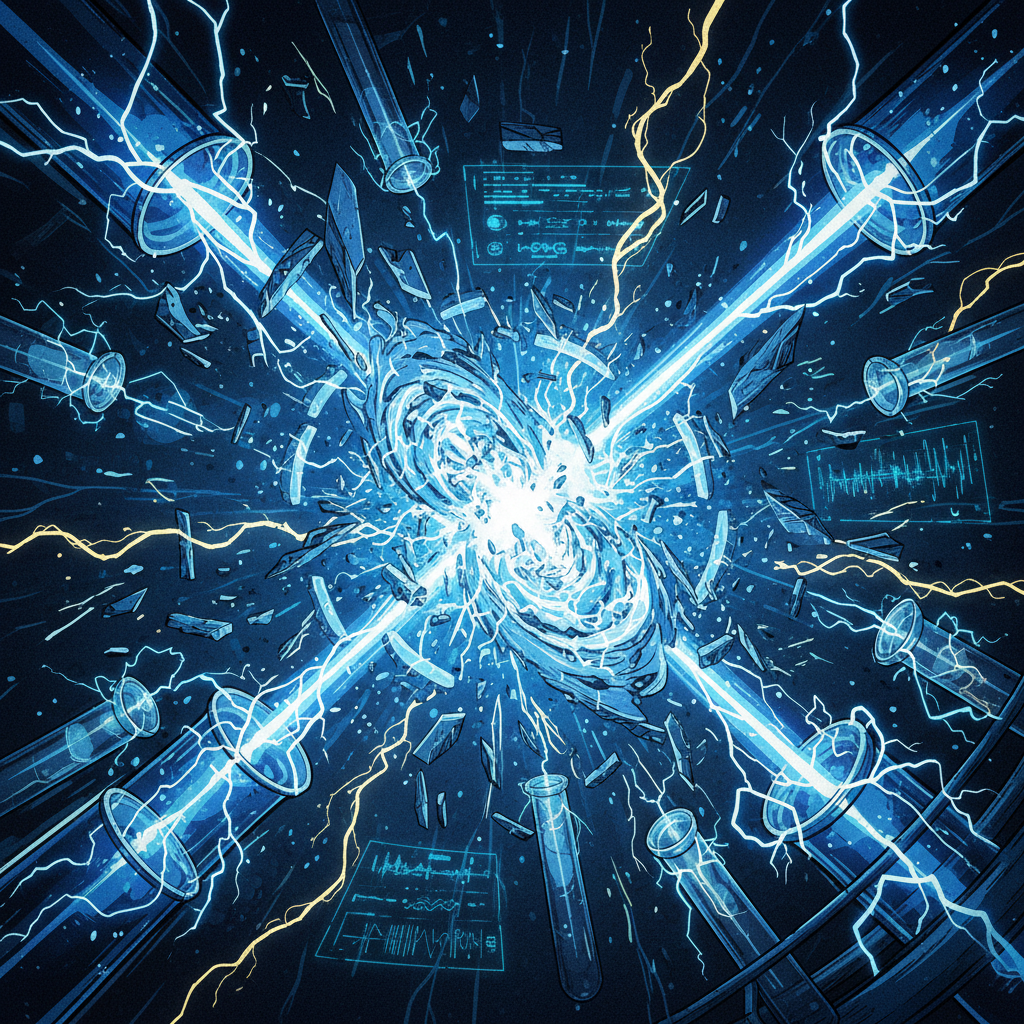
Here's something beautiful about quantum mechanics: observables are represented by operators, and those operators have eigenvectors—special states that remain unchanged by the measurement, except for getting multiplied by a number. Measure the spin of an electron that's already in a spin-up eigenstate, and you get spin-up again. No collapse. No surprise. Just confirmation.
The platforms want to turn you into an eigenvector of their operators. They want your behavior to be stable, predictable, reproducible. They want to measure you and get the same answer every time. They want you to be the kind of person who always clicks on outrage, always buys on impulse, always scrolls for thirty-seven minutes before bed.
But you're not an eigenvector. You're a superposition of possibilities. You contain multitudes. You're capable of surprise, of growth, of contradiction. The version of you that doom-scrolls at 2 AM isn't the only version. The version that hate-clicks isn't the whole story.
Except the more you're observed, the more you collapse into the eigenstate that's most profitable to observe. The algorithm doesn't want your multitudes. It wants your eigenvalue. Your single, definite, monetizable number.
Quantum Resistance
In the lab, physicists go to extraordinary lengths to preserve quantum superposition. They cool systems to near absolute zero. They isolate them from vibrations, electromagnetic fields, stray particles. They know that interaction with the environment causes decoherence—the gradual collapse of quantum states into classical definiteness. They fight to keep their qubits in superposition because that's where the quantum magic lives. That's where the possibilities exist simultaneously. That's where the system is most free.
You need isolation too. Not absolute zero, but something like it. Moments where you're not being measured. Spaces where you're not being observed. Time when your behavior isn't being logged, analyzed, predicted, and fed back to you as your next stimulus.
This is harder than it sounds. The environment is everywhere. The measurement apparatus is in your pocket. Decoherence is the default state of modern life.
But maybe that's the point of 1100db. To name the noise. To identify the measurements. To recognize when you're being collapsed into an eigenstate and to resist it. To preserve some superposition. To remain, in some small way, unobserved and therefore free.
You exist in all possible states until someone looks. The question is: what if you stopped letting them look?
Data emitted: 1,247 words | Reading time: 5 minutes | Observable properties extracted: ∞ | Eigenstate achieved: [UNDEFINED]
Data emitted: 1,100 words • 6.5KB • 5-minute read