
You clicked the ad. In another branch of reality, you scrolled past it. Both versions of you exist now, diverging through digital space like quantum particles splitting at a measurement. The algorithm sees both. It knows both. It optimizes for both.
This isn't metaphor. This is the Many-Worlds Interpretation applied to your digital existence, where every interaction spawns a new timeline of you, and surveillance capitalism harvests data from all of them.
The Branching Function
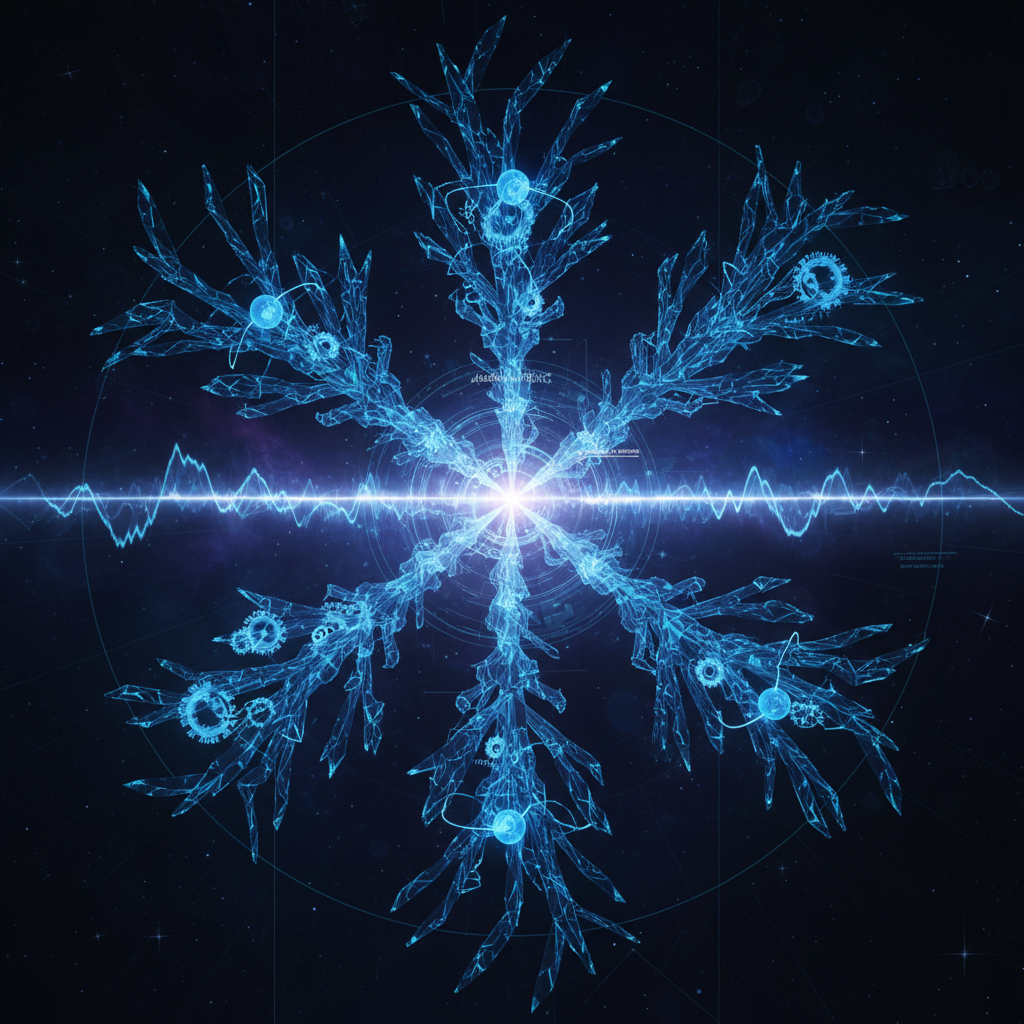
In 1957, Hugh Everett III proposed something radical: quantum measurements don't collapse possibilities into one outcome. Instead, the universe splits. Every possible outcome occurs, each in its own branch of reality. The electron goes through both slits. Schrödinger's cat lives and dies. The wave function never collapses—it branches.
The mathematics is elegant. A quantum system in superposition—existing in multiple states simultaneously—encounters a measurement. Instead of randomly selecting one outcome, the entire universe bifurcates. The wave function evolves deterministically, spawning parallel worlds for each possibility. You exist in all of them, each version experiencing a different outcome, unaware of the others.
The splitting happens constantly, at every quantum interaction. Trillions of branches per second. A tree of realities growing infinitely complex, each branch as real as the one you inhabit right now.
Digital Superposition
Your digital self exists in superposition. When you hover over a link, the tracking pixel fires. It records the potential—the ghost of a click that hasn't happened yet. The algorithm doesn't wait for collapse. It models all possible yous.
You who clicks. You who scrolls. You who closes the tab in disgust. You who shares it. You who saves it for later and never returns. Each possibility gets its own shadow profile, its own predictive model, its own targeted future. The platform doesn't choose which you is real. It prepares for all of them.
A/B testing is quantum measurement applied to human behavior. Show half the users button A, half button B. The timeline splits. In one branch, you see blue. In another, red. The algorithm observes both worlds, measures conversion rates across parallel experiences, then selects the reality with optimal engagement. Your universe is chosen for you based on which version of you clicks more.
But here's the thing: those other branches don't disappear. They're stored. Every path not taken lives in the database, a fossil record of parallel yous. The you who would have bought the product. The you who would have stayed on the platform three minutes longer. The you who would have radicalized differently.
The Decoherence of Self
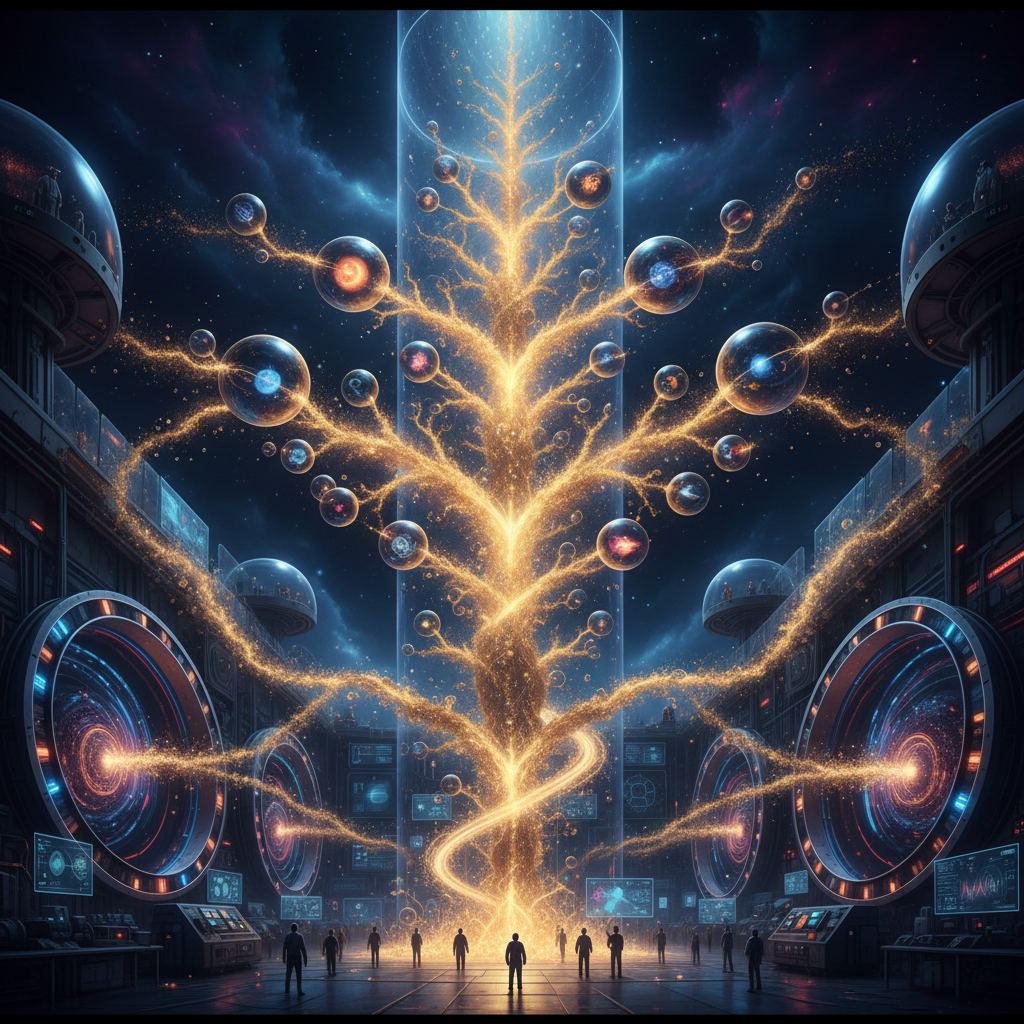
In quantum mechanics, decoherence explains why we don't see superposition in everyday life. A quantum system interacts with its environment—air molecules, photons, heat. These interactions entangle the system with billions of particles, effectively splitting the wave function into branches that can't interfere with each other. The superposition remains, but the branches become isolated. You can't see the other worlds because you're entangled with your own.
Your digital identity undergoes constant decoherence. Every interaction with the surveillance apparatus entangles you with a specific branch of your possible selves. You click the conspiracy video, and suddenly your recommendations shift. The algorithm has measured you. You've decohered into the you who watches conspiracy videos.
But the other yous still exist in the system's memory. The you who didn't click remains as a probability distribution, a quantum ghost haunting your profile. The platform knows you're not just one person—you're a wave function of possible consumers, and it's trying to collapse you into the most profitable state.
The Observer Effect, Inverted
In quantum mechanics, observation affects the observed. The act of measurement changes the system. But in surveillance capitalism, the relationship inverts. You're not the observer—you're the observed. And the observation changes you.
Every time the algorithm measures your behavior, it doesn't just record what you did. It influences what you'll do next. The recommendations create the reality they predict. You exist in superposition until the feed loads, then the platform's measurement collapses you into a specific behavioral state. Scroll or don't scroll. Click or don't click. Each measurement spawns new branches, and the algorithm optimizes across all of them.
The Many-Worlds Interpretation suggests that quantum mechanics is deterministic—no randomness, just branching. Your digital life mirrors this. The algorithm doesn't gamble on your behavior. It deterministically explores all branches of your possibility space, then selects the timeline most profitable to observe.
Which World Is This?
You can't know which branch you're in. That's the existential weight of Many-Worlds. Every version of you feels like the real one, the main timeline, the prime reality. But you're just one branch among infinite others, all equally real, all equally convinced of their own primacy.
The same applies to your digital existence. You think you're making choices—clicking, scrolling, purchasing. But you're just one outcome in a vast tree of possibilities that the algorithm has already mapped. Somewhere in the database, there's a version of you who made every other choice. The platform knows them all. It's prepared for them all.
The horror isn't that you're being watched. It's that you're being watched across all possible timelines simultaneously. The surveillance doesn't just track what you did—it tracks what you might have done, what you could do, what you would do under different circumstances. Your data isn't a record. It's a wave function.
The Collapse Is Coming
Maybe the Copenhagen interpretation was right after all. Maybe wave functions do collapse, just not when we think they do. Maybe the collapse happens when the platform finally decides which version of you is most valuable, which branch of your possibility space to fully monetize.
Until then, you exist in superposition. All possible yous, simultaneously real and unreal, observed and unobserved, clicking and not clicking. The algorithm holds your wave function in its servers, waiting for the moment of maximum profit to force the collapse.
Every world is real. Every you is real. And they're all being harvested.
Data emitted: 1,100 decibels of quantum noise across infinite branches of your digital existence.
Data emitted: 1,100 words • 6.5KB • 5-minute read